About This Image
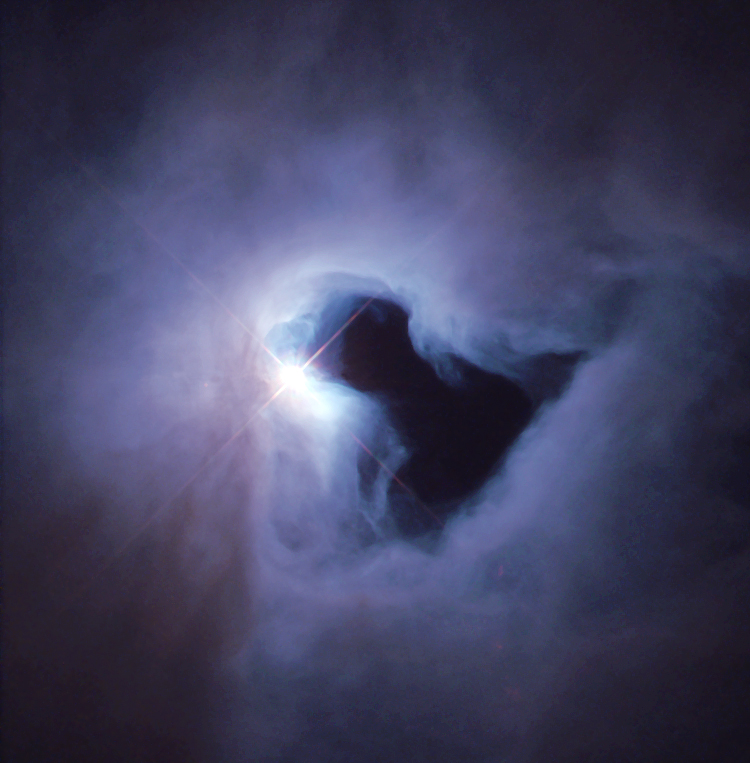
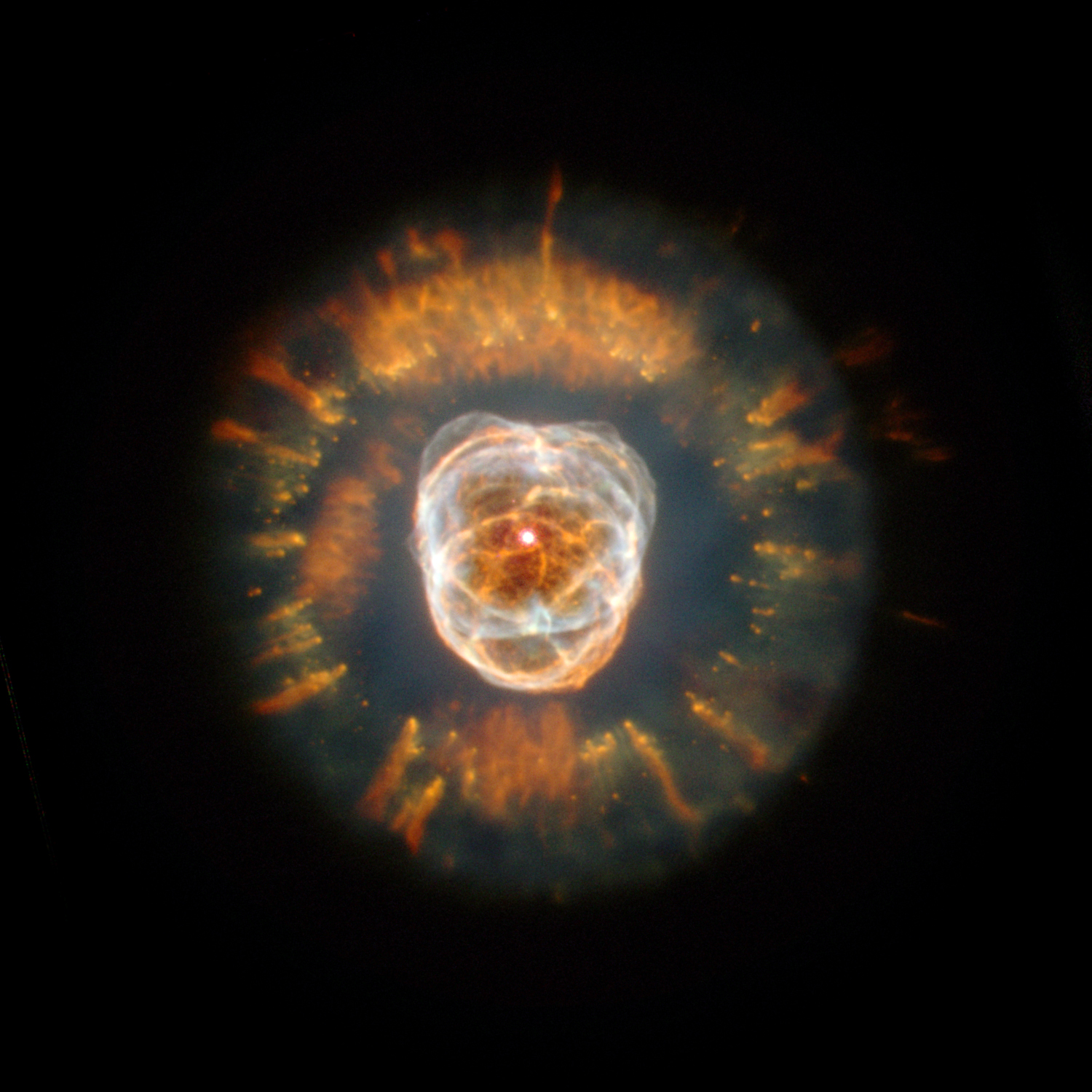
NGC 2392 is a stunning planetary nebula containing the glowing remains of a dying Sun-like star that has shed its outer layers in the final stages of its stellar evolution. The bright, luminous central region reveals material being actively blown away by powerful stellar winds from the nebula's hot central star, which has temperatures reaching tens of thousands of degrees. This dramatic process creates intricate structures of expanding gas shells, giving the nebula its distinctive appearance that has earned it the nickname 'Eskimo Nebula' due to its resemblance to a face surrounded by a fur parka hood. Located approximately 5,000 light-years away in the constellation Gemini, NGC 2392 provides astronomers with a preview of the fate awaiting our own Sun in about 5 billion years, when it too will exhaust its nuclear fuel and cast off its outer layers to create a similar celestial spectacle.
Scientific Significance
NGC 2392 is one of the most structurally complex planetary nebulae known and provides critical insights into the final evolutionary stages of intermediate-mass stars. Its double-shell morphology reveals that the mass-loss process at the end of a star's life occurs in multiple distinct episodes rather than a single smooth event. The inner shell's elongated, bubble-like shape suggests that the fast stellar wind from the hot central star is interacting with a previously ejected, slower-moving equatorial torus of gas, creating a bipolar structure. The outer shell's remarkable comet-shaped filaments — dense knots with tails pointing radially away from the central star — demonstrate how instabilities develop at the interface between fast and slow winds. These structures have been instrumental in refining the generalized interacting stellar winds model, which describes how planetary nebulae are shaped. NGC 2392's relatively high surface brightness and moderate distance make it an ideal target for detailed spectroscopic studies of nebular abundances, which constrain nucleosynthesis processes in the progenitor star's interior.
Observation Details
Hubble imaged NGC 2392 using the Wide Field Planetary Camera 2 (WFPC2) with a combination of narrowband filters isolating specific emission lines. Filters centered on the nitrogen [NII] emission line at 658.4 nanometers traced the distribution of nitrogen-rich gas, while the hydrogen-alpha filter mapped the bulk of the ionized hydrogen. An oxygen [OIII] filter at 500.7 nanometers highlighted the hottest, most highly ionized regions closest to the central star. The false-color composite assigned these emission lines to different color channels, revealing the temperature and ionization structure of the nebula with extraordinary clarity. The high spatial resolution of WFPC2 was essential for resolving the intricate comet-shaped filaments in the outer shell, each only a few hundred astronomical units across.
Location in the Universe
Constellation
Gemini
Distance from Earth
5,000 light-years
Fun Facts
- 1
The central star of NGC 2392 has a surface temperature of roughly 40,000 Kelvin — about seven times hotter than the Sun — and its intense ultraviolet radiation is what causes the surrounding gas shells to glow in vivid colors of green, red, and blue.
- 2
NGC 2392 has a complex double-shell structure: the inner shell is an elongated bubble of gas expelled about 10,000 years ago, while the outer shell consists of filaments and streamers from an earlier ejection episode, creating its distinctive layered appearance.
- 3
Despite being called a 'planetary nebula,' NGC 2392 has nothing to do with planets — the name dates back to the 18th century when William Herschel thought these round, greenish objects resembled the disks of planets like Uranus through his telescope.
Image credit: NASA, ESA, Hubble Space Telescope