About This Image
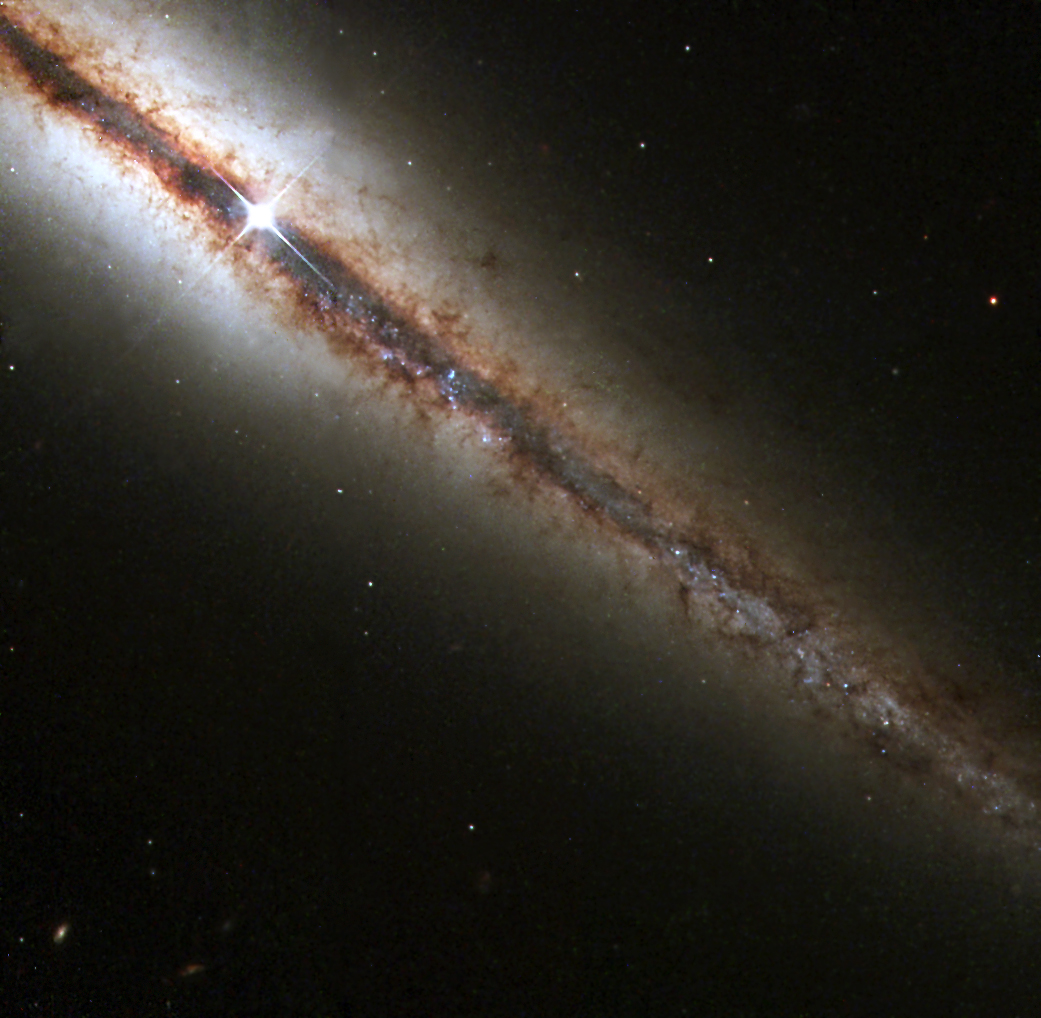
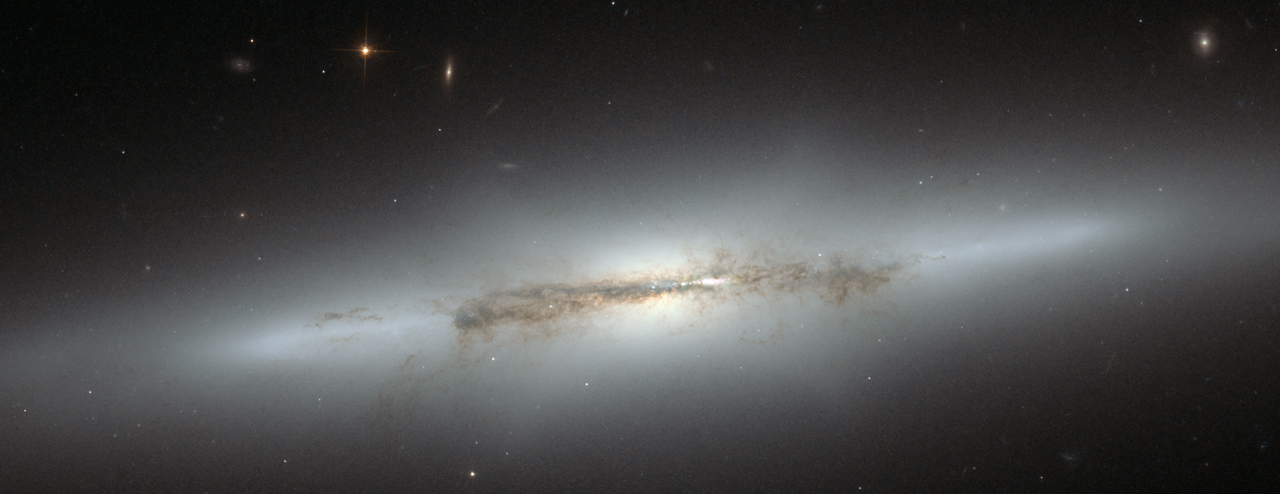
The magnificent galaxy NGC 4710 is tilted nearly edge-on to our view from Earth, providing a unique perspective that showcases the three-dimensional architecture of spiral galaxies. This orientation allows astronomers to easily distinguish the central bulge—a densely packed sphere of older, yellowish stars—from the galaxy's pancake-flat disk of stars, dust, and gas that extends outward in a thin plane. The edge-on view reveals the true thinness of the galactic disk and the prominent dust lane running along its midplane, appearing as a dark ribbon that bisects the galaxy. This geometry offers valuable insights into galactic structure, the vertical distribution of stars and gas, and the dynamics of stellar populations at different heights above the disk. NGC 4710 serves as an excellent example of how viewing angle dramatically affects our perception and understanding of galaxy morphology.
Scientific Significance
NGC 4710 is a key object for understanding the three-dimensional structure of spiral galaxies, particularly the formation and evolution of galactic bulges. Its nearly perfect edge-on orientation allows astronomers to study the vertical distribution of stars, gas, and dust in a way that face-on galaxies cannot provide. The galaxy's prominent X-shaped bulge is of particular interest because it is a signature of a buckled stellar bar — a bar that has become vertically unstable and puffed up over time. This buckling process is a predicted outcome of secular evolution in disk galaxies and represents a fundamentally different bulge formation pathway from the violent mergers thought to build classical bulges. By measuring the kinematics of stars at different heights above the disk, astronomers can constrain the gravitational potential of the galaxy, including the contribution of dark matter. NGC 4710's membership in the Virgo Cluster also makes it valuable for studying how the cluster environment influences galaxy morphology and gas content through processes like ram-pressure stripping.
Observation Details
Hubble captured NGC 4710 using the Advanced Camera for Surveys (ACS) as part of a survey of edge-on galaxies in the Virgo Cluster. The observations employed broadband filters in visible wavelengths to map the stellar light distribution and reveal the prominent dust lane along the galactic midplane. The ACS's wide field of view encompassed the full extent of the galaxy in a single pointing, while its fine pixel scale resolved individual bright stars and star clusters along the disk. Careful modeling and subtraction of the smooth stellar light was required to fully reveal the X-shaped bulge structure embedded within the galaxy's central regions.
Location in the Universe
Constellation
Coma Berenices
Distance from Earth
65 million light-years
Fun Facts
- 1
NGC 4710 displays a distinctive X-shaped or peanut-shaped bulge when viewed edge-on, a feature created by the vertical oscillation of stars in the galaxy's central bar structure.
- 2
This galaxy is a member of the Virgo Cluster, the nearest large galaxy cluster to our own Local Group, containing over 1,300 member galaxies spread across a region of space 15 million light-years wide.
- 3
The razor-thin dust lane bisecting NGC 4710 is so narrow and well-defined that it helped astronomers confirm that spiral galaxy disks can be remarkably flat, with thickness-to-diameter ratios of roughly 1 to 100.
Image credit: NASA, ESA, Hubble Space Telescope