About This Image
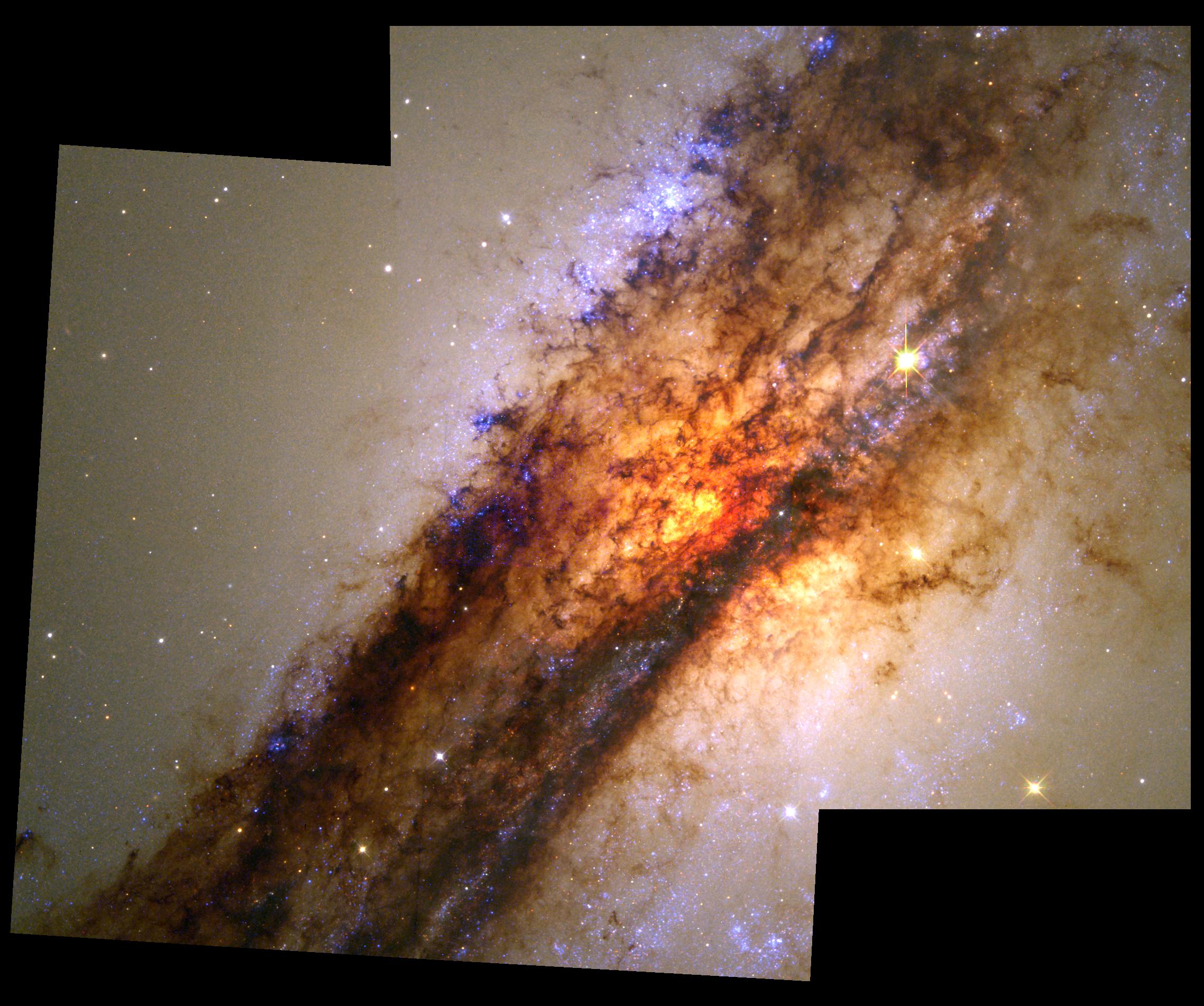
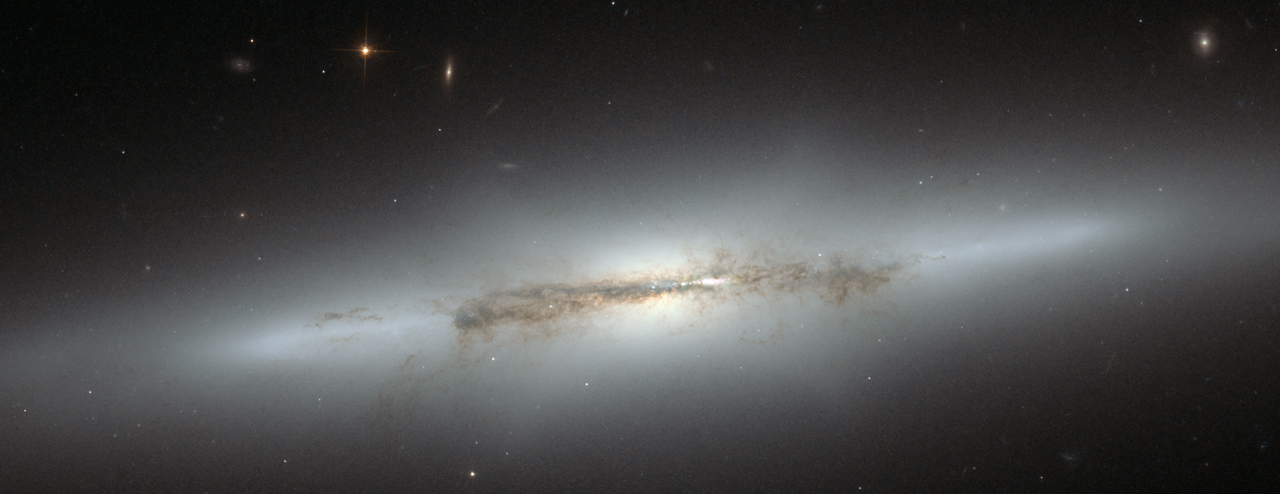
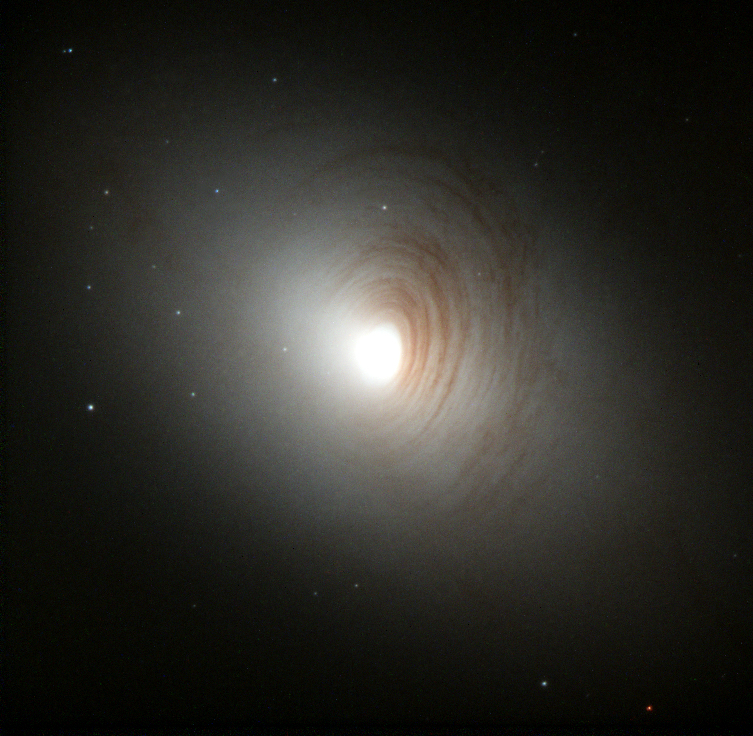
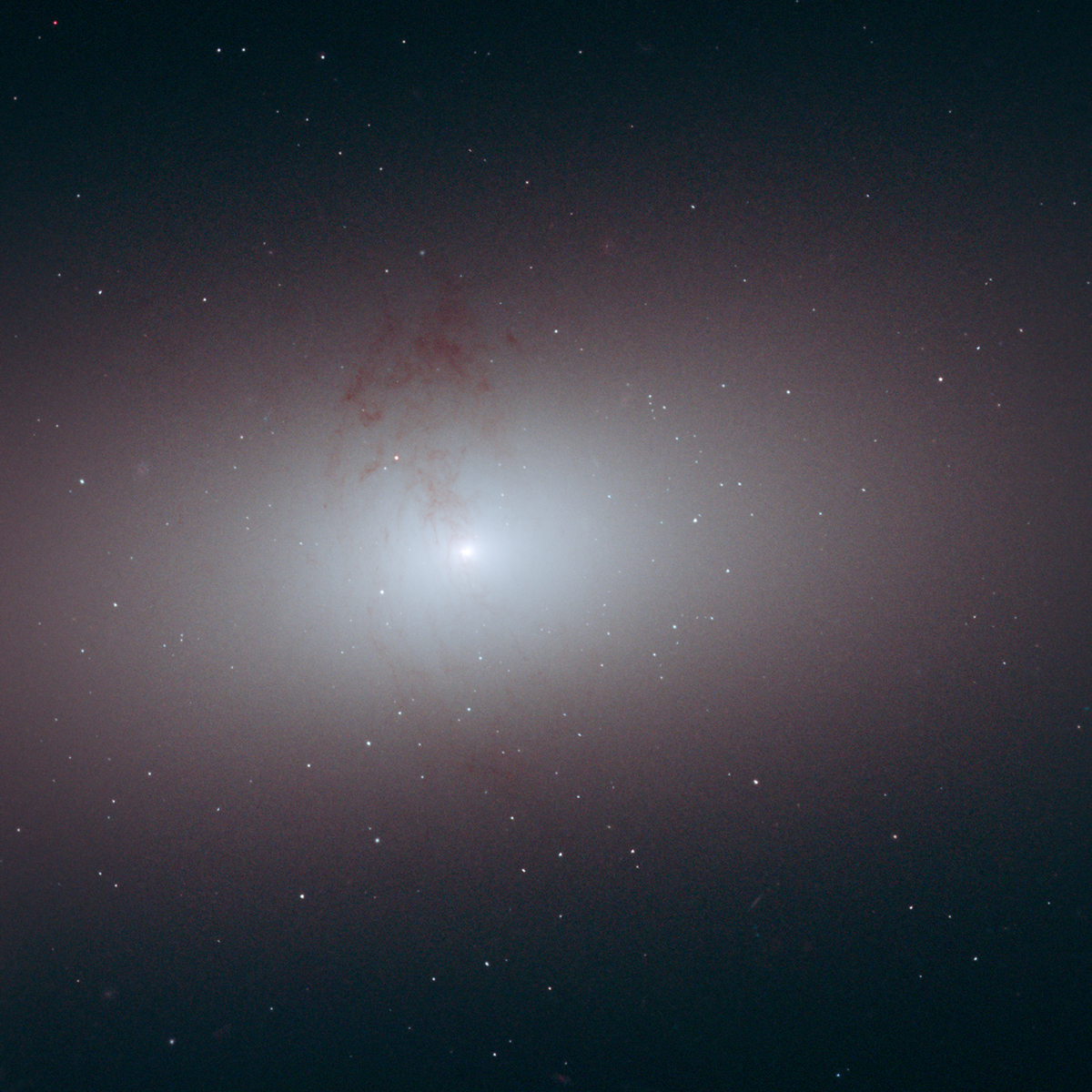
NGC 2768 is a majestic elliptical galaxy located 65 million light-years away in the constellation Ursa Major, the same region of sky that contains the famous Big Dipper asterism. Unlike spiral galaxies with their elegant arms and active star formation, elliptical galaxies like NGC 2768 are dominated by older stellar populations and possess a smooth, elongated appearance. At the heart of this galaxy lies a supermassive black hole millions of times more massive than our Sun, actively feeding on surrounding material and powering energetic jets of particles and radiation from its active galactic nucleus. These jets, launched from the immediate vicinity of the black hole, extend far beyond the visible galaxy and can be detected across vast distances. NGC 2768 serves as an important example of how supermassive black holes influence their host galaxies and the surrounding intergalactic environment.
Scientific Significance
NGC 2768 occupies a scientifically important niche as an elliptical galaxy with a low-luminosity active galactic nucleus (AGN). Most elliptical galaxies are considered 'red and dead' — dominated by old stars with little ongoing activity. However, NGC 2768's LINER nucleus and its central dust and gas structures challenge this simplistic picture, revealing that even apparently quiescent ellipticals can harbor significant activity. The galaxy's AGN-driven radio jets provide a nearby example of AGN feedback, the process by which energy from a supermassive black hole heats and expels surrounding gas, potentially suppressing future star formation. Understanding AGN feedback is critical to explaining why massive elliptical galaxies stopped forming stars and why the most massive galaxies are not even larger than observed. NGC 2768 also exhibits kinematically decoupled components — its inner stellar orbits rotate in a different direction than the outer regions — providing strong evidence for a past galaxy merger that rearranged its internal dynamics.
Observation Details
Hubble observed NGC 2768 using the Wide Field and Planetary Camera 2 (WFPC2) in multiple optical filters to capture the galaxy's smooth stellar envelope and its distinctive central dust structure. Broadband filters in visible wavelengths revealed the distribution of older stellar populations, while narrowband imaging helped detect ionized gas emission from the active nucleus. The high angular resolution of Hubble was essential for separating the compact nuclear source from the surrounding stellar light and for resolving the fine dust lanes threading through the galaxy's core. Complementary observations at radio and X-ray wavelengths from other observatories provided a multi-wavelength picture of the AGN activity.
Location in the Universe
Constellation
Ursa Major
Distance from Earth
65 million light-years
Fun Facts
- 1
NGC 2768 is classified as a LINER galaxy (Low-Ionization Nuclear Emission-line Region), meaning its central black hole is actively accreting material but at a much lower rate than a full-blown quasar.
- 2
Despite being classified as an elliptical galaxy, NGC 2768 contains an unusual disk of dust and gas at its center, suggesting it may have swallowed a smaller gas-rich galaxy in the past.
- 3
The supermassive black hole at the center of NGC 2768 has a mass estimated at roughly 200 million times that of our Sun, making it considerably more massive than the Milky Way's central black hole.
Image credit: NASA, ESA, Hubble Space Telescope