About This Image
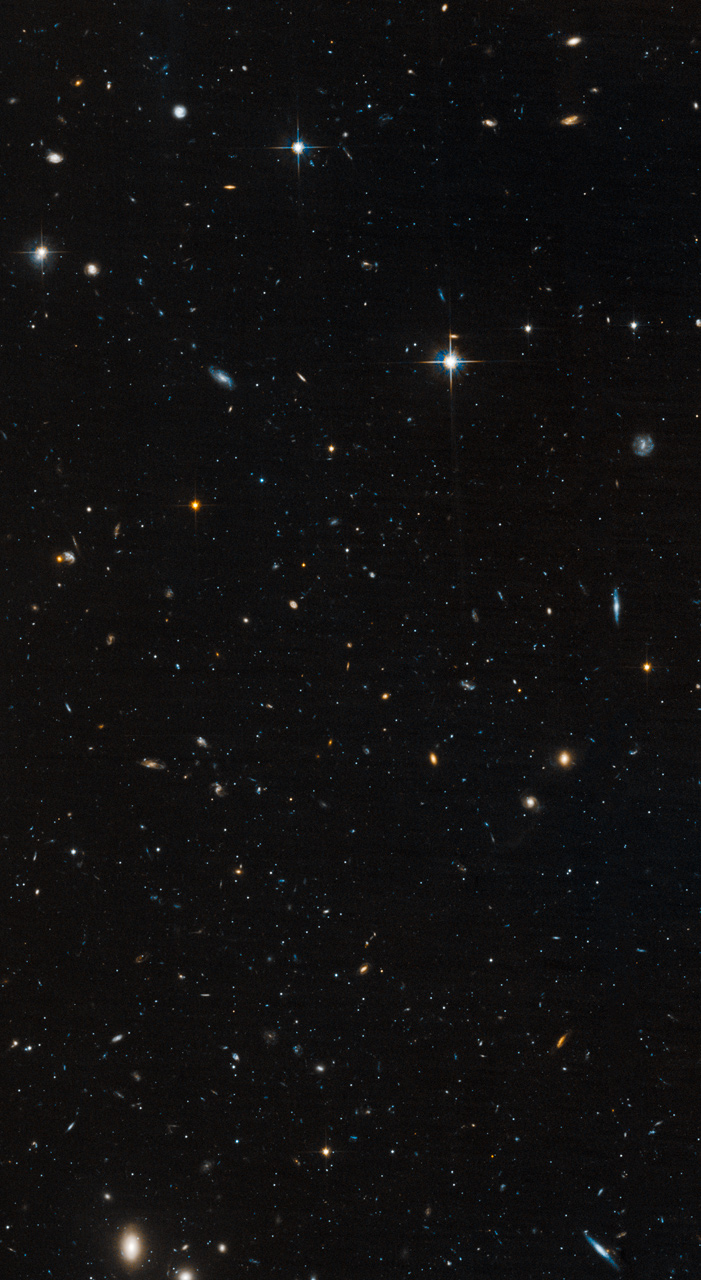
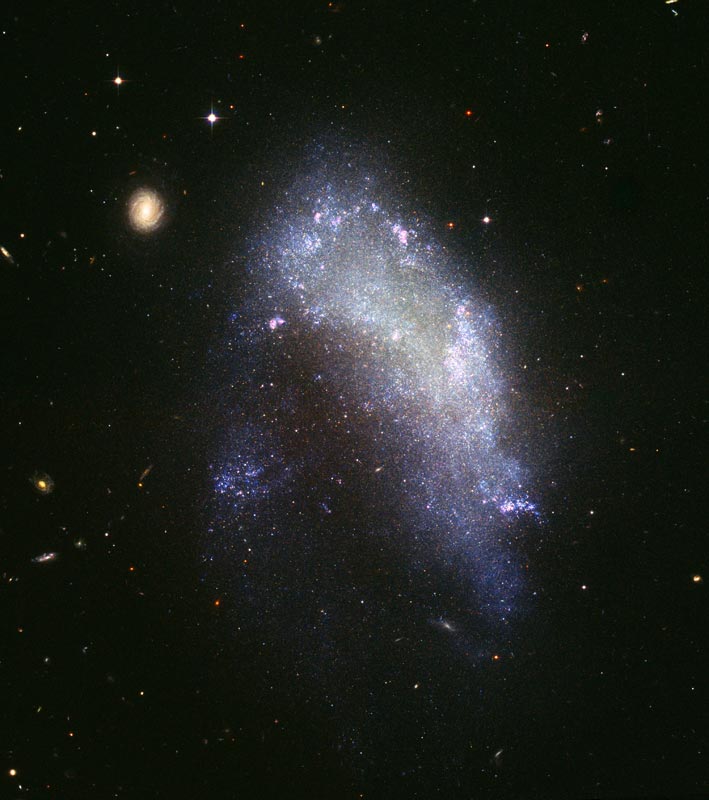
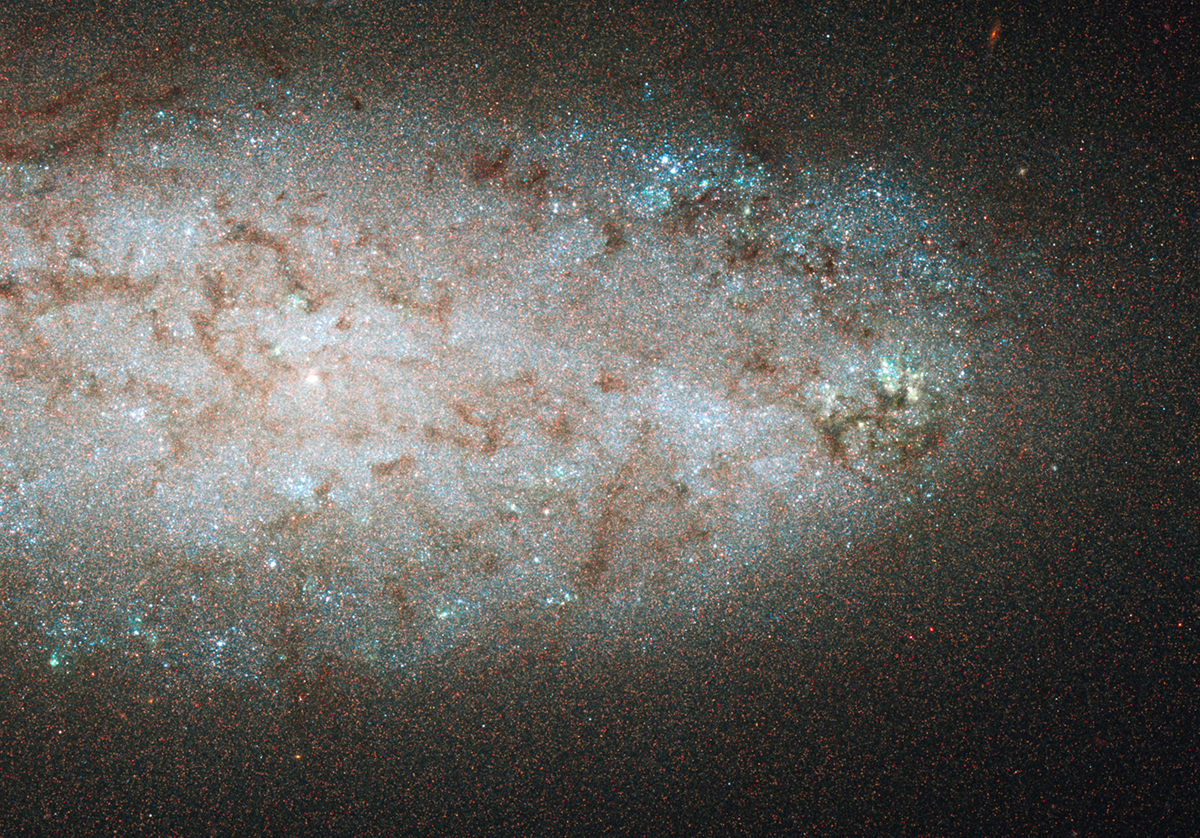
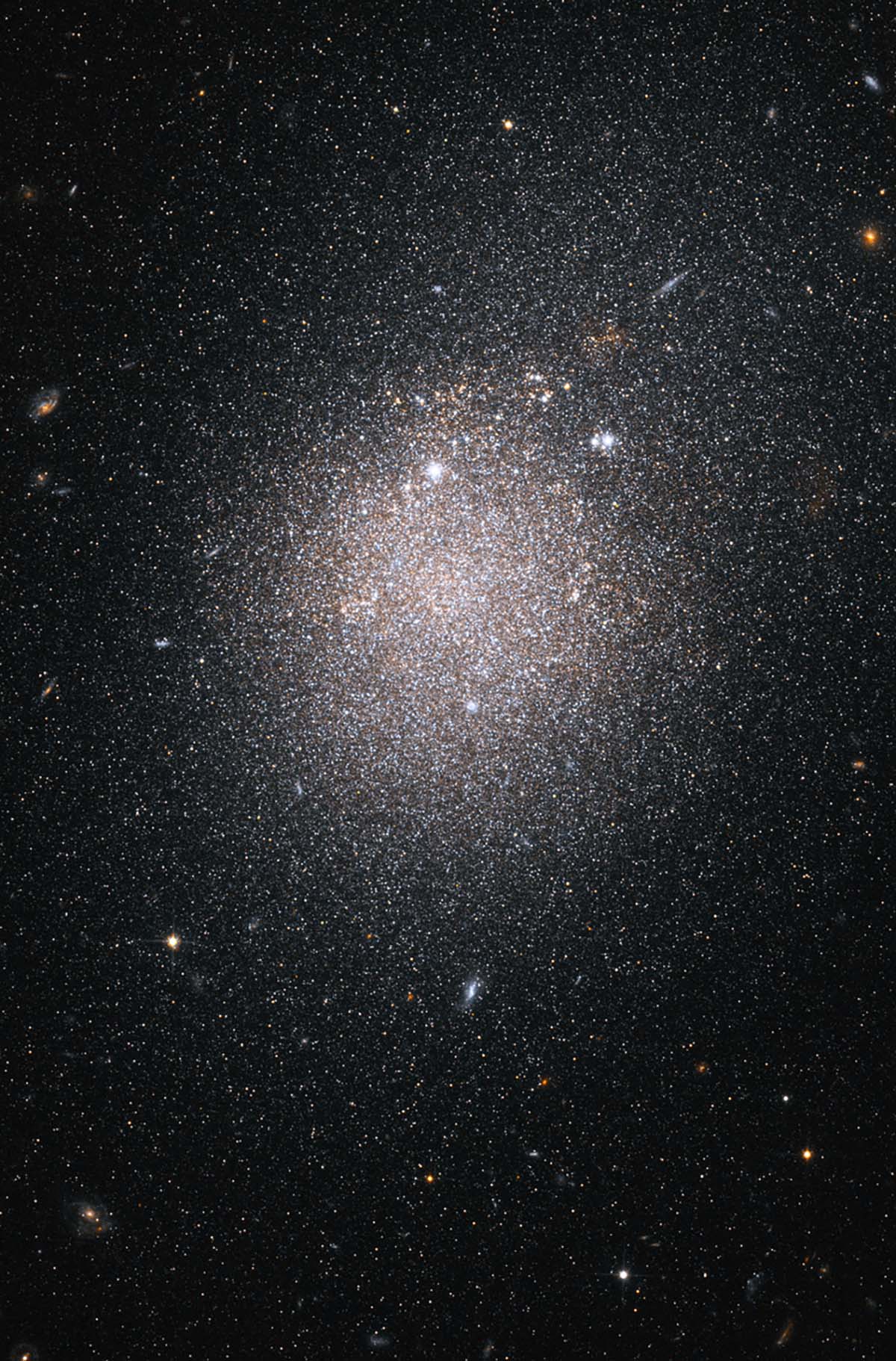
This swarm of stars is the dwarf galaxy NGC 4163, a small but dynamic stellar system located 10 million light-years from Earth in the constellation Canes Venatici (the Hunting Dogs). As a dwarf irregular galaxy, NGC 4163 lacks the organized spiral arms or elliptical shape of larger galaxies, instead displaying a chaotic and asymmetric structure. The irregularly shaped red blobs scattered throughout the galaxy are regions of active star formation, where dense clouds of gas and dust are collapsing to give birth to new generations of stars. These stellar nurseries glow brightly in the characteristic red light of ionized hydrogen gas, heated by the intense ultraviolet radiation from newly formed massive stars. Despite its modest size, NGC 4163 provides astronomers with valuable insights into star formation processes in low-mass galaxies and the role of dwarf galaxies in cosmic evolution.
Scientific Significance
NGC 4163 is a valuable laboratory for studying star formation in low-metallicity, low-mass environments that differ profoundly from the conditions in large spiral galaxies like the Milky Way. Dwarf irregular galaxies have shallow gravitational potential wells, meaning that energy from supernova explosions and stellar winds can easily blow gas out of the galaxy, temporarily or permanently halting star formation. This feedback cycle creates the episodic bursts of star formation observed in NGC 4163's color-magnitude diagram, where distinct stellar populations of different ages reveal the galaxy's stop-and-start star formation history. Understanding these feedback mechanisms is critical because dwarf galaxies were the dominant galaxy type in the early universe and their collective star formation contributed significantly to cosmic reionization. NGC 4163's relatively close distance of 10 million light-years allows Hubble to resolve individual stars, enabling direct comparisons between observed stellar populations and predictions from theoretical models of dwarf galaxy evolution.
Observation Details
Hubble imaged NGC 4163 using the Advanced Camera for Surveys (ACS) in broadband visible and near-infrared filters as part of programs studying nearby dwarf galaxies. The observations resolved the galaxy into tens of thousands of individual stars, enabling the construction of detailed color-magnitude diagrams that trace the galaxy's star formation history. Red giant branch stars, horizontal branch stars, and young main-sequence stars were all identified and classified. Hydrogen-alpha narrowband imaging highlighted the locations of active star-forming regions by detecting the emission from ionized hydrogen gas surrounding young massive stars.
Location in the Universe
Constellation
Canes Venatici
Distance from Earth
10 million light-years
Fun Facts
- 1
NGC 4163 experienced a dramatic burst of star formation roughly 1 billion years ago that produced the majority of its current stellar mass — today the galaxy is relatively quiescent by comparison.
- 2
Dwarf irregular galaxies like NGC 4163 are thought to be the modern counterparts of the small building-block galaxies that merged to form larger galaxies like the Milky Way in the early universe.
- 3
NGC 4163 is a member of the M94 galaxy group, a loose collection of galaxies relatively close to our own Local Group, making it one of the more accessible dwarf galaxies for detailed stellar population studies.
Image credit: NASA, ESA, Hubble Space Telescope