About This Image
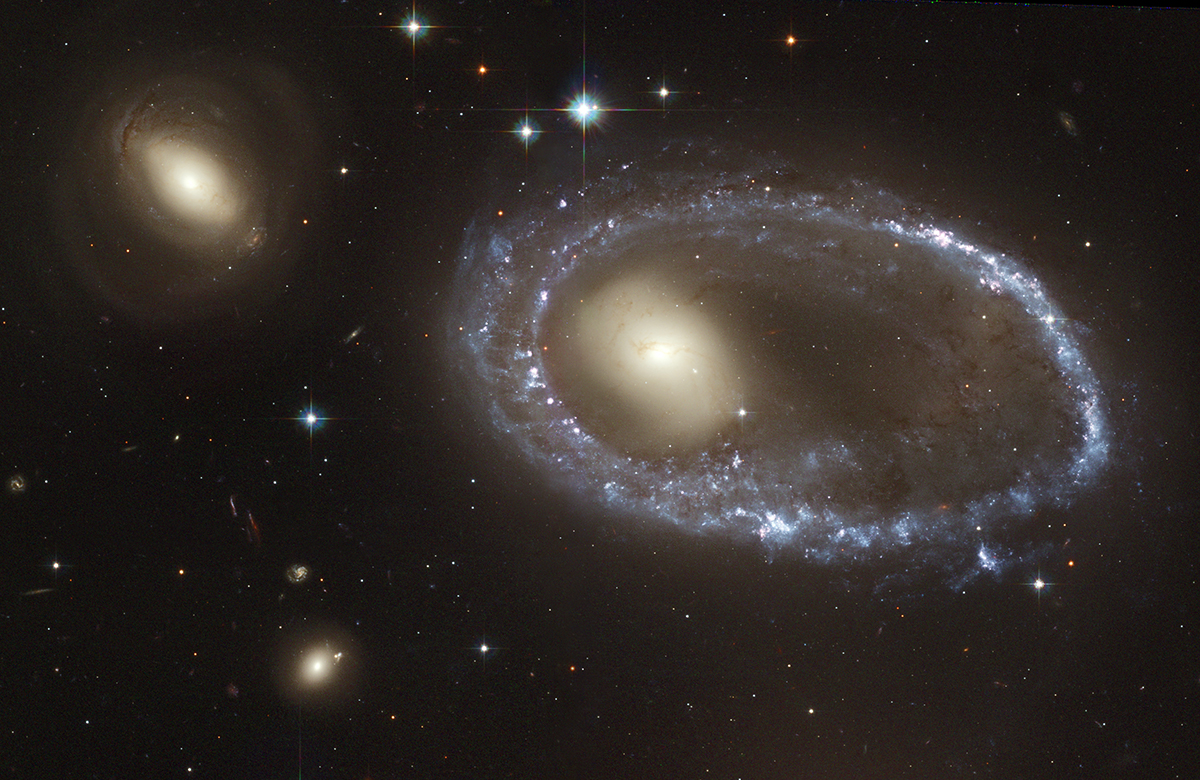
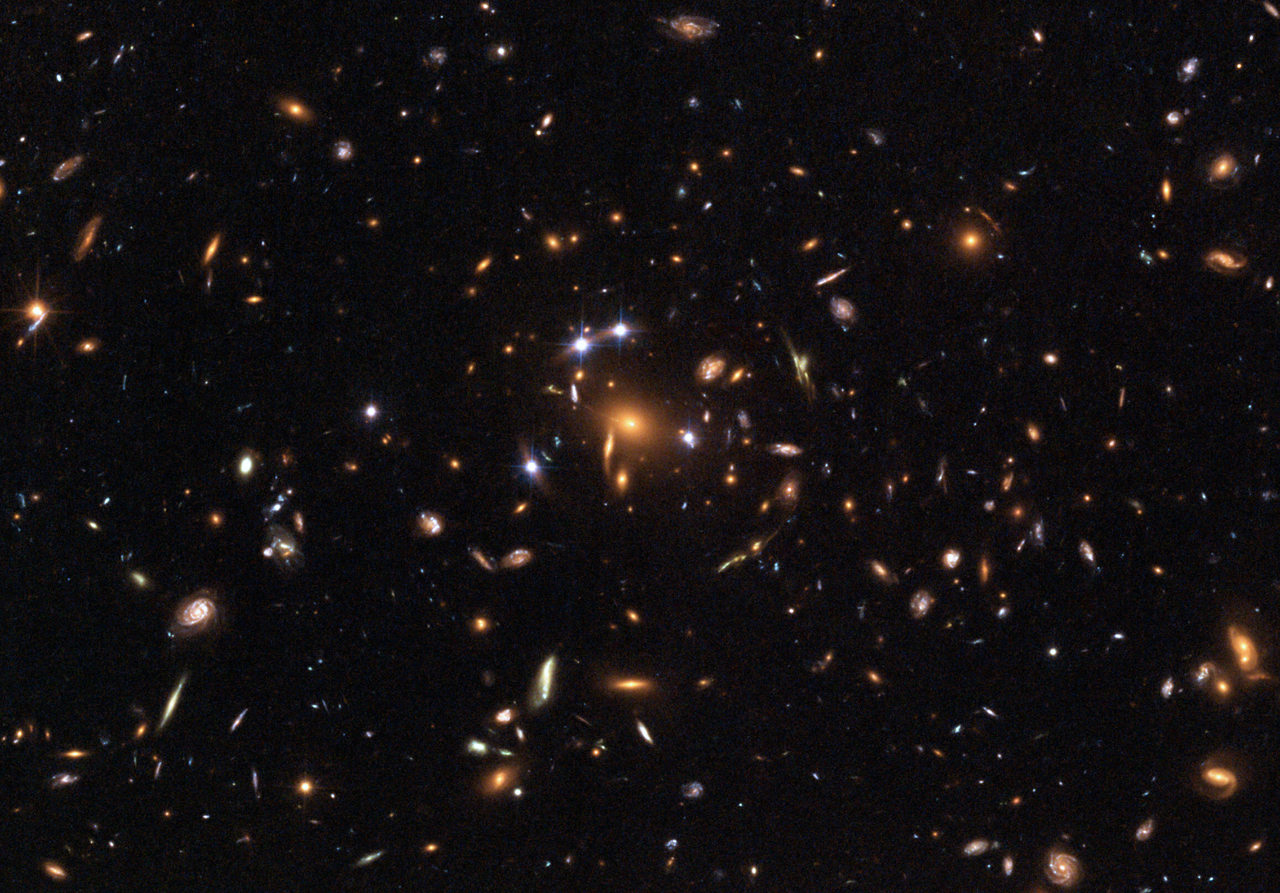
This remarkable image captures the galaxy cluster SDSS J1004+4112, a cosmic giant so massive that its immense gravity bends and distorts the fabric of spacetime itself. This gravitational lensing effect acts like a cosmic magnifying glass, warping the light from galaxies located billions of light-years behind it. Most dramatically, the light from a distant quasar—the brilliant, energetic core of an active galaxy—has been bent around the cluster's gravitational field, creating five distinct images of the same object in a stunning example of Einstein's general relativity in action. This phenomenon allows astronomers to study both the extreme mass of the galaxy cluster and the properties of distant cosmic objects that would otherwise be too faint to observe.
Scientific Significance
SDSS J1004+4112 is one of the most spectacular demonstrations of gravitational lensing ever observed, directly confirming predictions made by Einstein's general theory of relativity over a century ago. The quintuple lensing of a background quasar provides astronomers with a unique tool for mapping the distribution of both visible and dark matter within the cluster. By measuring the positions, brightnesses, and time delays of the five quasar images, researchers can reconstruct the mass distribution of the entire cluster with remarkable precision. This technique has revealed that dark matter accounts for approximately 80% of the cluster's total mass. Additionally, gravitational lensing magnifies distant background galaxies that would otherwise be undetectable, effectively turning the cluster into a natural cosmic telescope that allows astronomers to peer deeper into the early universe.
Observation Details
Hubble observed this galaxy cluster using the Advanced Camera for Surveys (ACS) in multiple optical and near-infrared filters. The observations combined deep imaging to detect the faint lensed arcs of background galaxies with spectroscopic follow-up to confirm the redshifts of the lensed quasar images. The angular separation between the outermost quasar images spans approximately 15 arcseconds — the largest known quasar lens separation, indicating the enormous mass of the lensing cluster. Ground-based telescopes provided complementary data to measure the time delays between the different quasar images.
Location in the Universe
Constellation
Leo Minor
Distance from Earth
7 billion light-years
Fun Facts
- 1
The gravitational lensing produced by this cluster creates five separate images of the same background quasar — the largest number of lensed quasar images ever observed from a single source at the time of discovery.
- 2
The light from the quasar follows different paths around the cluster, so each image shows the quasar at a slightly different time in its history, with delays ranging from days to years.
- 3
Galaxy clusters like SDSS J1004+4112 contain hundreds or thousands of galaxies held together by gravity, plus vast amounts of hot gas and dark matter that outweigh the visible galaxies by a factor of five.
Image credit: NASA, ESA, Hubble Space Telescope