About This Image
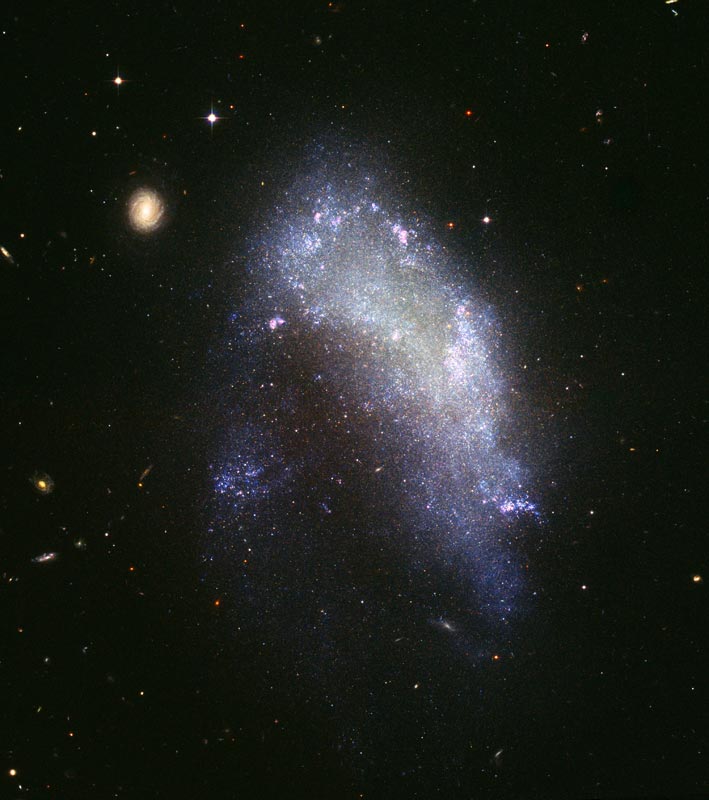
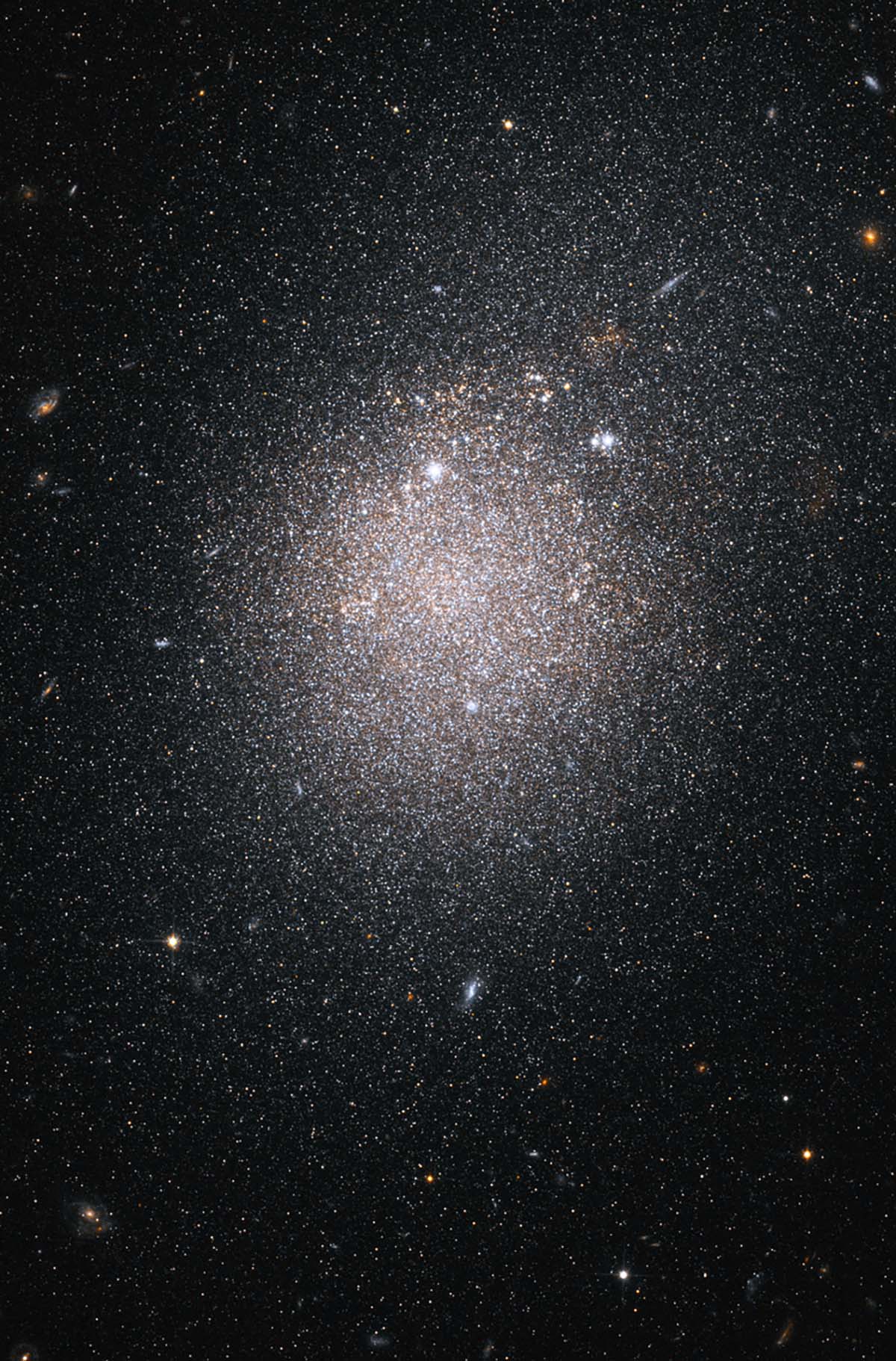
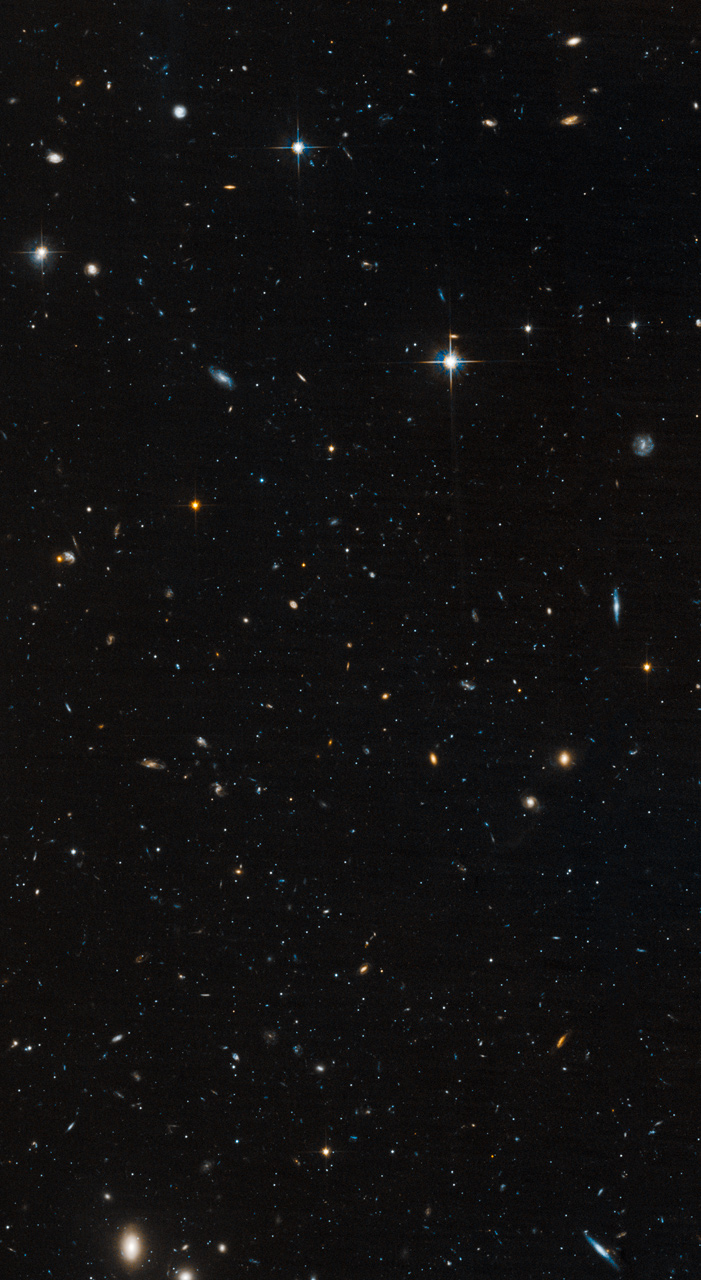
Leo IV is one of more than a dozen ultra-faint dwarf galaxies discovered near the Milky Way. These enigmatic galaxies are dominated by dark matter, the invisible substance that makes up most of the universe's mass. Despite containing relatively few visible stars, Leo IV's mass is primarily composed of dark matter, making it a crucial laboratory for studying this mysterious component of the cosmos. As a satellite galaxy of the Milky Way, Leo IV provides astronomers with valuable insights into galaxy formation, dark matter distribution, and the hierarchical assembly of galactic structures in the early universe.
Scientific Significance
Leo IV is a cornerstone object in the study of dark matter and galaxy formation on the smallest scales. Ultra-faint dwarf galaxies like Leo IV sit at the boundary between the smallest galaxies and the largest star clusters, and their very existence poses challenges to cosmological models. The Lambda-CDM model of the universe predicts far more satellite galaxies around the Milky Way than have been observed — a discrepancy known as the 'missing satellites problem.' Discoveries of ultra-faint dwarfs like Leo IV help close this gap. Furthermore, the extremely low metallicity of Leo IV's stars suggests they formed from nearly pristine gas in the early universe, making them fossil relics of the first epochs of star formation. Studying these ancient stellar populations provides direct constraints on the conditions of the universe just a few hundred million years after the Big Bang.
Observation Details
This image was captured using Hubble's Advanced Camera for Surveys (ACS) in visible light wavelengths. The extreme faintness of Leo IV required long exposure times to resolve individual stars against the background of distant galaxies. Hubble's superior angular resolution was essential for distinguishing Leo IV's sparse stellar population from foreground Milky Way stars and background galaxies. The observations were part of a program to characterize the stellar populations and structural properties of newly discovered ultra-faint satellites of the Milky Way.
Location in the Universe
Constellation
Leo
Distance from Earth
520,000 light-years
Fun Facts
- 1
Leo IV contains only a few thousand stars, making it one of the faintest galaxies ever discovered — you could not see it with the naked eye even if it were much closer.
- 2
Despite its tiny visible size, Leo IV is estimated to contain about 99% dark matter by mass, making it one of the most dark-matter-dominated objects known.
- 3
Leo IV was only discovered in 2006 using data from the Sloan Digital Sky Survey, highlighting how much of the universe remains hidden from casual observation.
Image credit: NASA, ESA, Hubble Space Telescope