About This Image
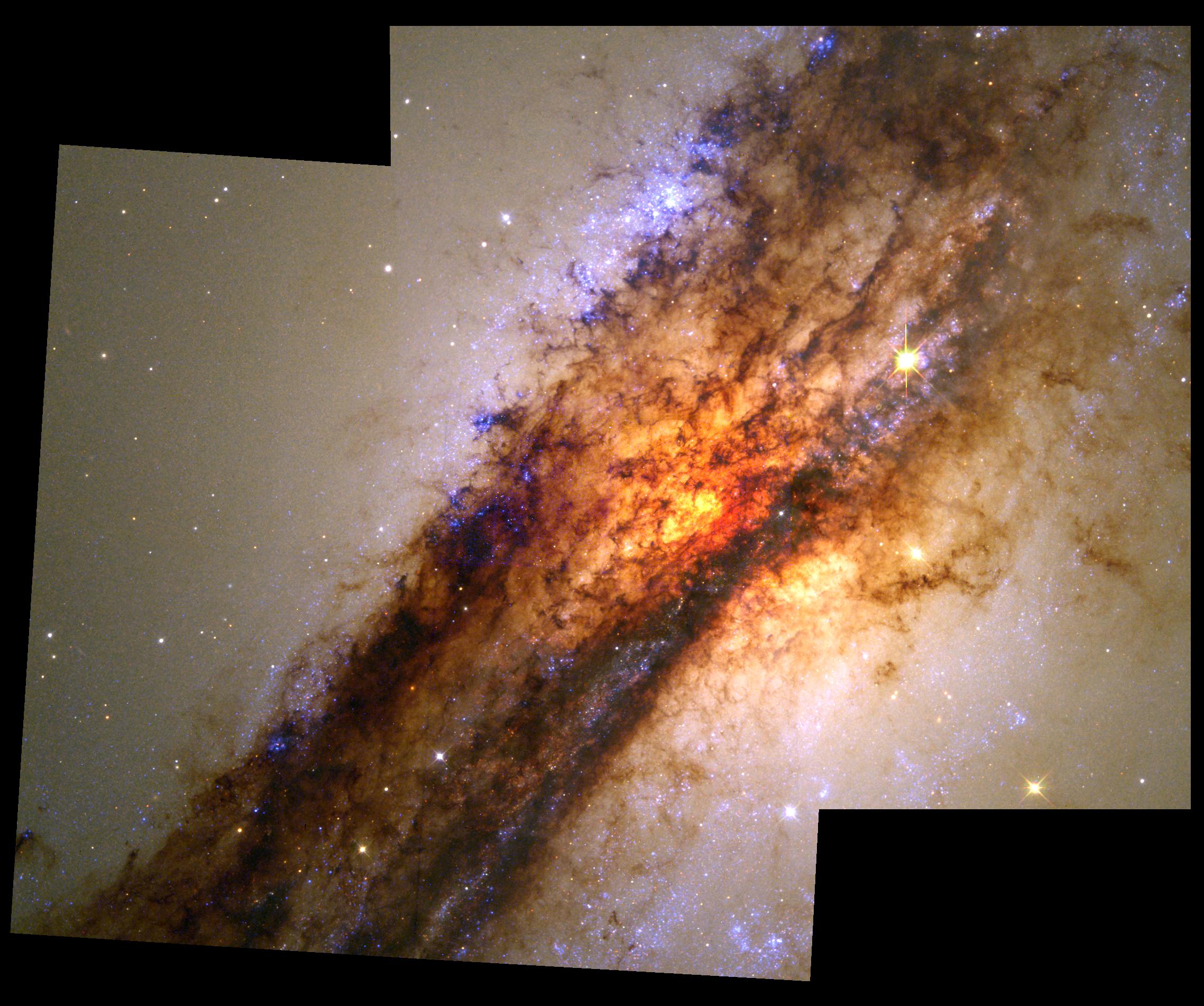
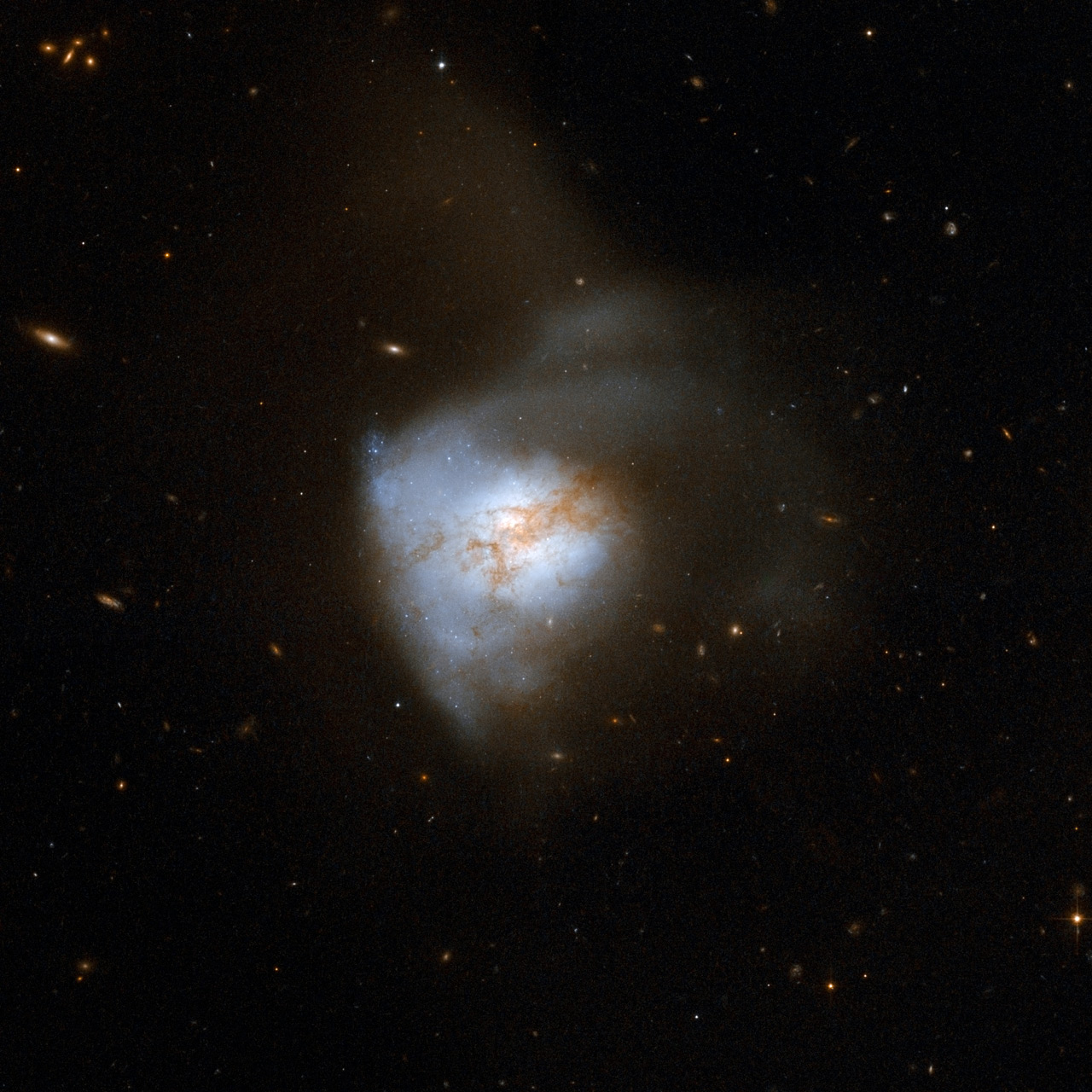
Arp 220 captures the dramatic aftermath of a cosmic collision between two spiral galaxies that began approximately 700 million years ago. This ongoing galactic merger, located about 250 million light-years from Earth, is one of the nearest examples of interacting galaxies to our planet, making it an invaluable laboratory for studying galactic evolution. The collision has triggered intense bursts of star formation as gas clouds from both galaxies compress and ignite, creating what astronomers classify as an ultraluminous infrared galaxy—one of the brightest objects in the infrared sky. The chaotic tangle of stars, gas, and dust showcases the violent yet creative forces at work during galactic mergers, offering a preview of what may occur when our own Milky Way eventually collides with the Andromeda Galaxy in several billion years.
Scientific Significance
Arp 220 is the prototypical ultraluminous infrared galaxy (ULIRG) and serves as the nearest laboratory for studying the most extreme phase of galaxy mergers. Its prodigious infrared luminosity — exceeding one trillion times the Sun's output — arises from massive starbursts deeply embedded in dust that absorbs ultraviolet and visible light and re-radiates it thermally in the infrared. The detection of two distinct nuclei within the merger remnant provides direct evidence for the hierarchical model of galaxy assembly, where larger systems grow through successive mergers. Arp 220 has also been critical for understanding the connection between galaxy mergers, starburst activity, and the fueling of active galactic nuclei. Observations have revealed over 200 massive star clusters forming in the merger's compressed gas, along with numerous supernovae detected via radio observations — the highest supernova rate of any known galaxy. The system also contains vast quantities of molecular gas, including complex organic molecules, making it a key object for studying interstellar chemistry under extreme conditions.
Observation Details
Hubble imaged Arp 220 using the Advanced Camera for Surveys (ACS) and the Wide Field Camera 3 (WFC3) in visible and near-infrared filters. The visible-light observations reveal the chaotic outer structure of tidal tails and loops created by the gravitational interaction, while near-infrared imaging partially penetrates the dense dust obscuring the central starburst regions. Due to the extreme dust extinction in the core — exceeding 50 magnitudes in the visible — Hubble's optical images primarily trace the outer merger structure, with the true power of the starburst hidden at longer infrared and radio wavelengths. Complementary observations from ground-based radio interferometers resolved the twin nuclei and individual supernovae within the dust-enshrouded core.
Location in the Universe
Constellation
Serpens
Distance from Earth
250 million light-years
Fun Facts
- 1
Arp 220 produces new stars at a rate more than 100 times greater than the Milky Way, forming the equivalent of several hundred solar masses of new stars every year within its compact, dust-shrouded core.
- 2
The two original galaxy nuclei are still visible as separate infrared sources only 1,200 light-years apart — cosmically speaking, they are moments away from their final coalescence into a single nucleus.
- 3
Arp 220 emits more energy in the far-infrared than it does at all other wavelengths combined, earning it the classification of an ultraluminous infrared galaxy (ULIRG) — it is in fact the nearest ULIRG to Earth.
Image credit: NASA, ESA, Hubble Space Telescope