About This Image
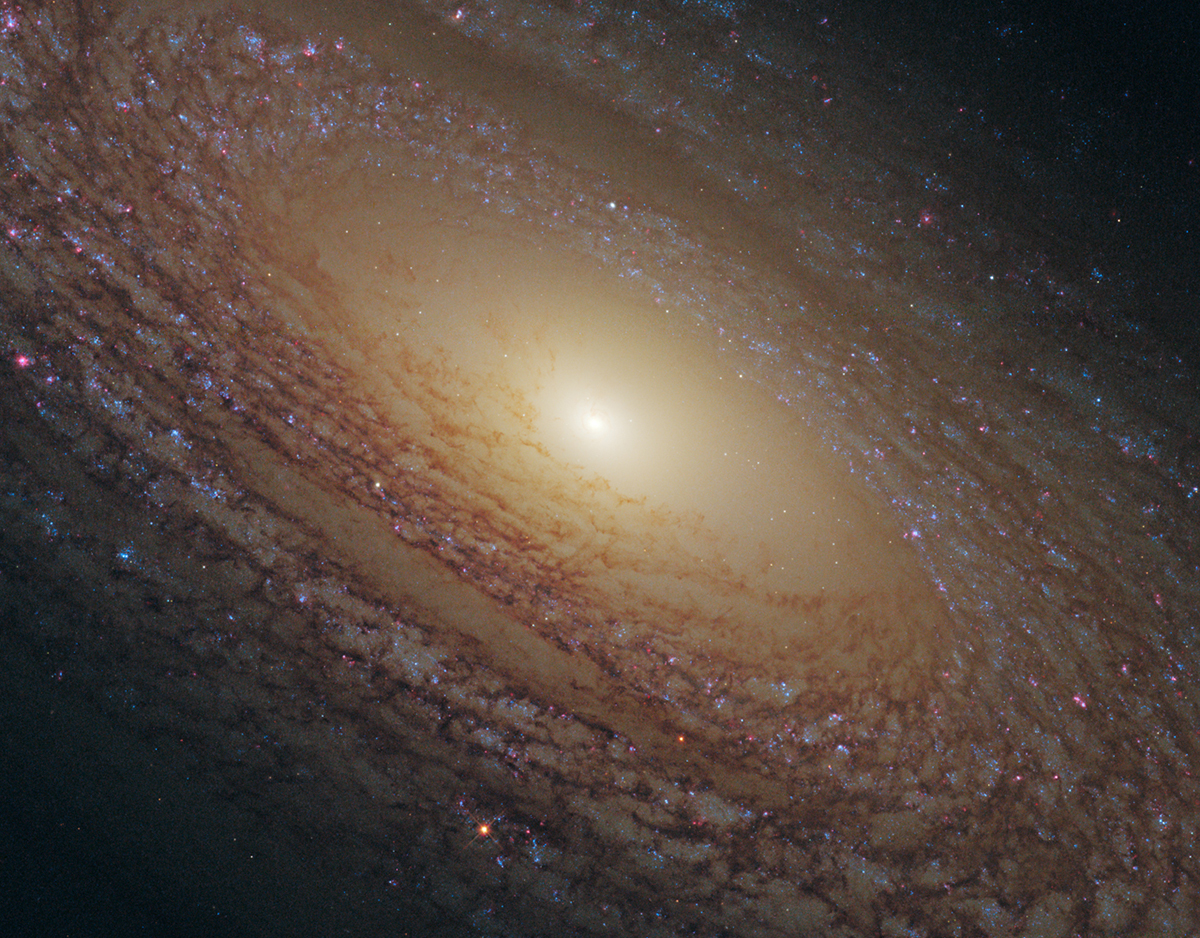
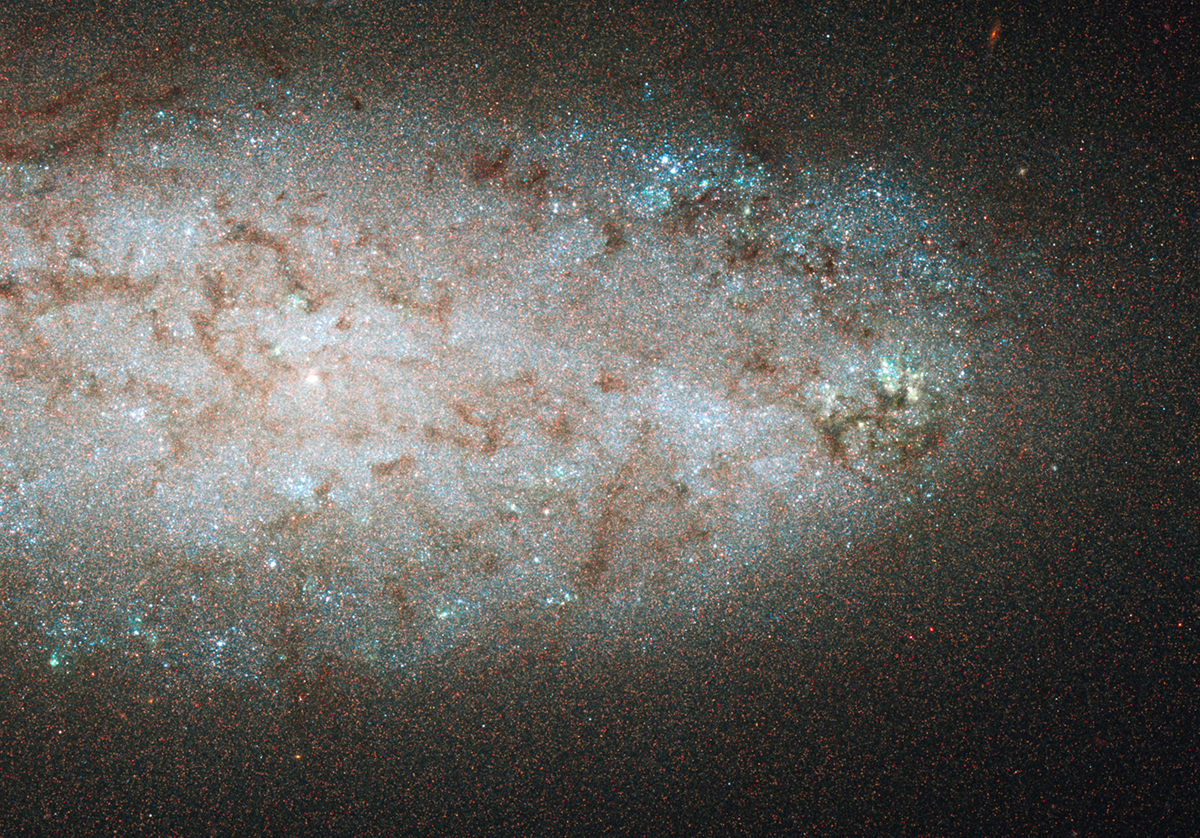
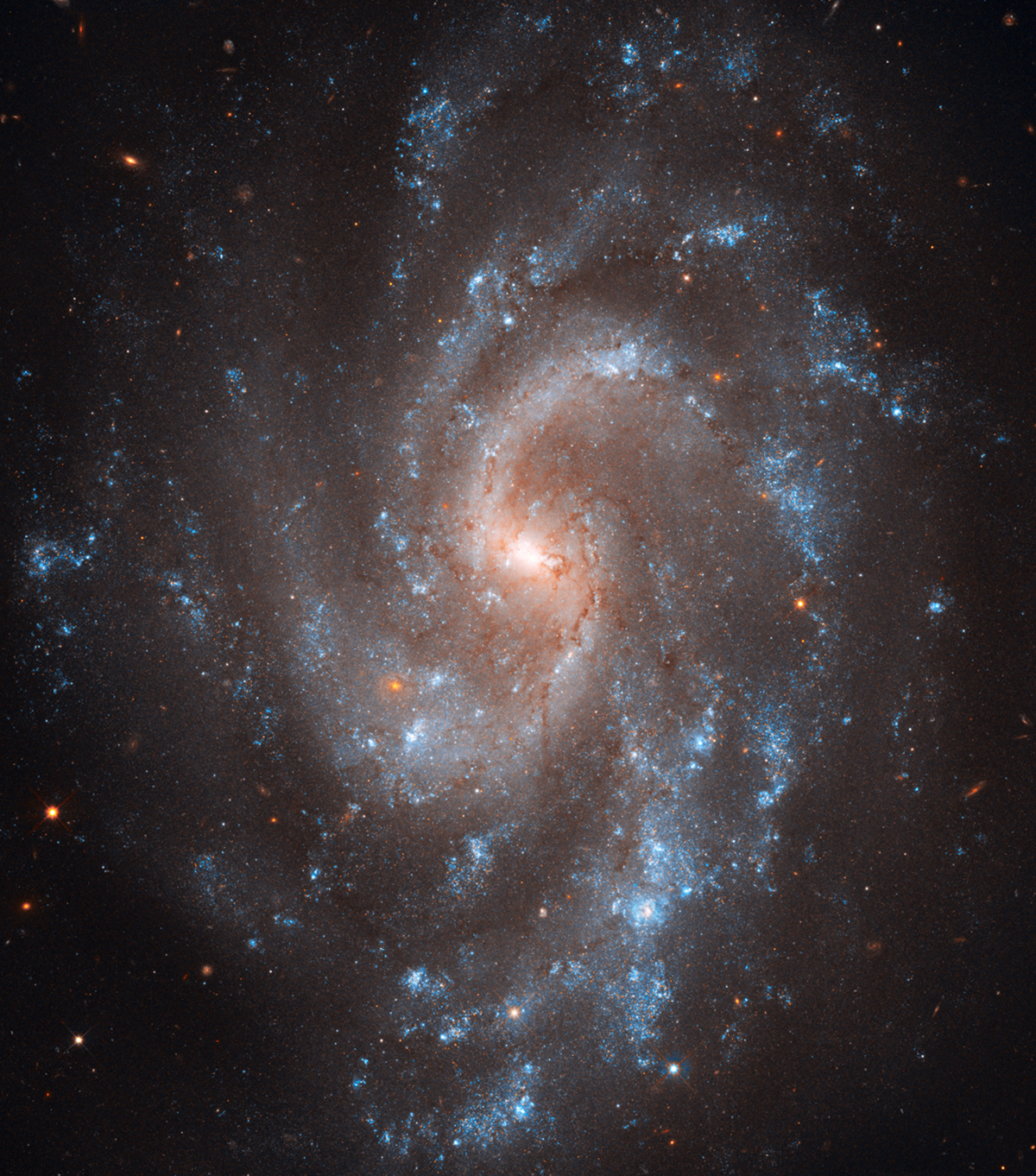
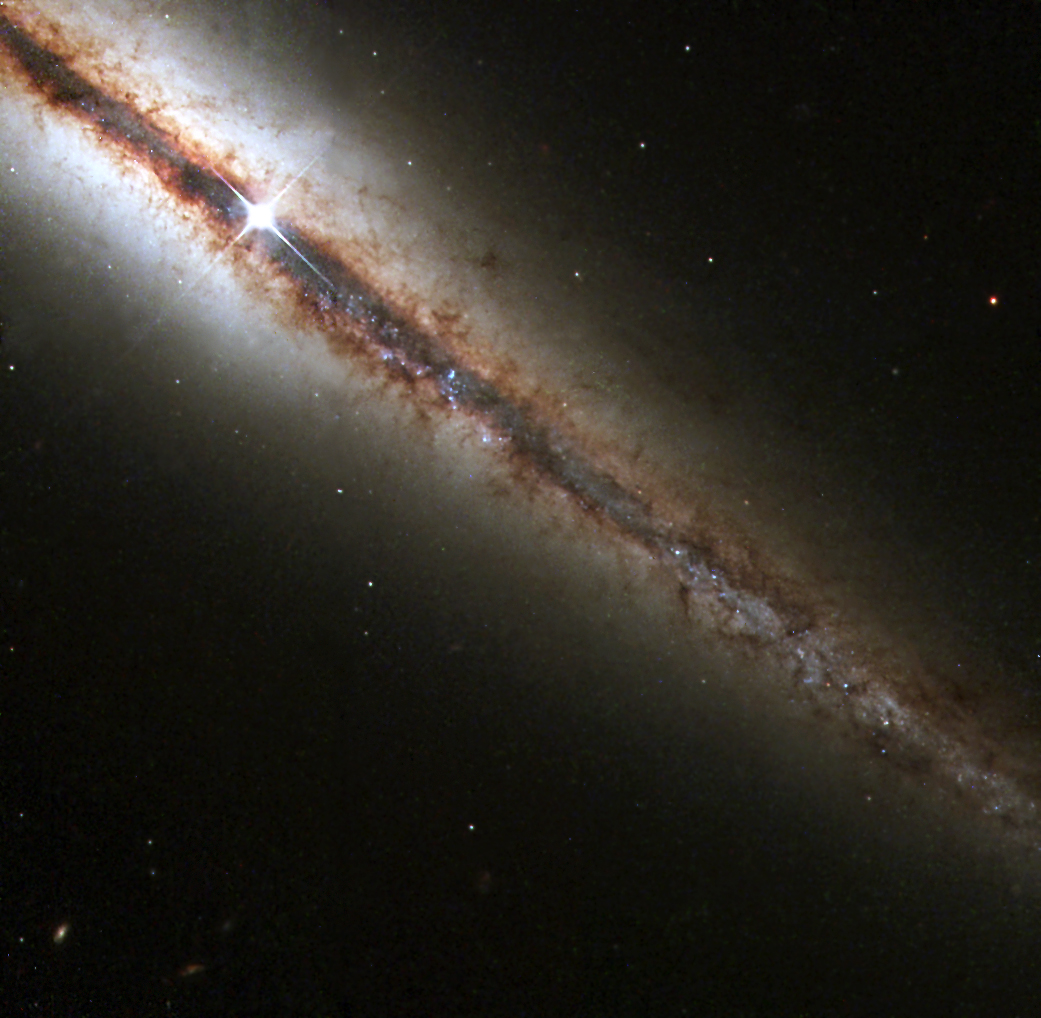
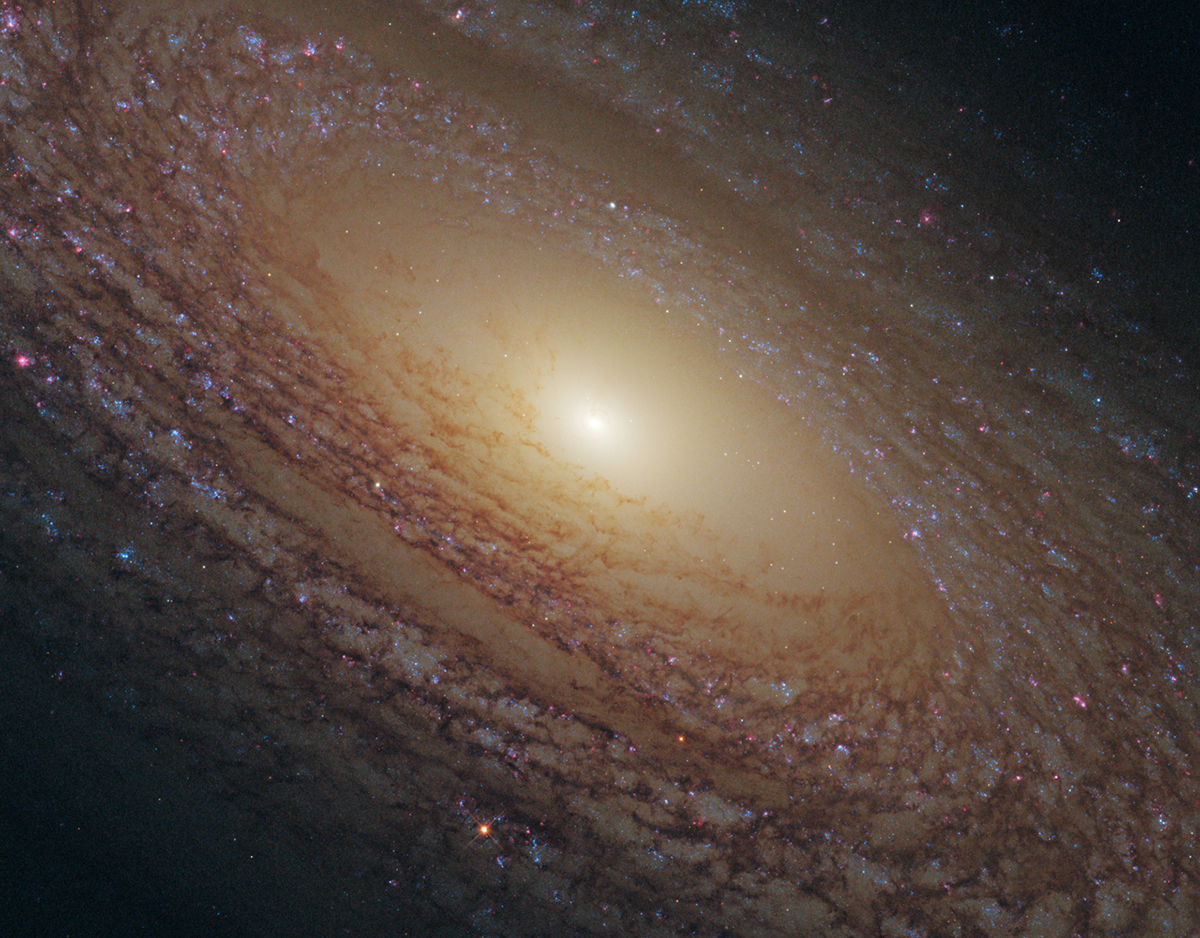
The majestic spiral galaxy NGC 2841 displays elegant winding arms traced by young, luminous blue stars and intricate dark lanes of cosmic dust. This galaxy presents a fascinating case study in stellar evolution and galactic dynamics. The powerful stellar winds emanating from massive young stars appear to have swept away much of the interstellar gas—the raw material necessary for forming new generations of stars. This clearing process may have effectively halted ongoing star formation within the galaxy's spiral arms, creating a cosmic paradox where the very act of star birth prevents future stellar generations. NGC 2841's tightly wound spiral structure and the interplay between its young stellar population and the remaining dust lanes offer astronomers valuable insights into the lifecycle of galaxies and the delicate balance between star formation and the processes that can shut it down.
Scientific Significance
NGC 2841 holds a distinguished place in observational cosmology as one of the galaxies used to calibrate the cosmic distance ladder. The Hubble Key Project identified Cepheid variable stars within NGC 2841 whose period-luminosity relationship provided a precise distance measurement, which in turn helped refine the Hubble constant — the rate at which the universe expands. Beyond cosmology, the galaxy presents a puzzle in star formation physics. Its flocculent spiral structure, lacking the density wave patterns that drive star formation in grand-design spirals, challenges models that link spiral arm morphology to star-forming activity. The galaxy possesses a substantial reservoir of neutral hydrogen gas extending well beyond its visible disk, yet its star formation rate remains anomalously low. This discrepancy suggests that additional factors — such as the stability of the gas disk, magnetic fields, or the dark matter halo profile — play critical roles in regulating when and where stars can form. NGC 2841 thus serves as a critical testbed for theories of galactic self-regulation.
Observation Details
Hubble observed NGC 2841 using the Wide Field Camera 3 (WFC3) in multiple broadband filters spanning ultraviolet, visible, and near-infrared wavelengths. The ultraviolet observations were particularly important for identifying hot, young stellar populations and mapping recent star formation across the disk. Visible-light filters captured the older stellar populations and the distribution of dust lanes, while near-infrared imaging penetrated dust obscuration to reveal the underlying mass distribution. The composite image was constructed from observations taken across several orbits to achieve sufficient depth for resolving individual bright stars and star clusters at NGC 2841's distance.
Location in the Universe
Constellation
Ursa Major
Distance from Earth
46 million light-years
Fun Facts
- 1
NGC 2841 is classified as a 'flocculent' spiral galaxy, meaning its spiral arms are patchy and fragmented rather than the bold, sweeping grand-design arms seen in galaxies like the Whirlpool Galaxy.
- 2
Despite being one of the most massive spiral galaxies known — with a diameter of about 150,000 light-years, larger than the Milky Way — NGC 2841 has a surprisingly low rate of star formation for its size.
- 3
NGC 2841 was used as one of the key calibration galaxies for the Hubble Space Telescope Key Project, which measured the expansion rate of the universe by observing Cepheid variable stars within it.
Image credit: NASA, ESA, Hubble Space Telescope