About This Image
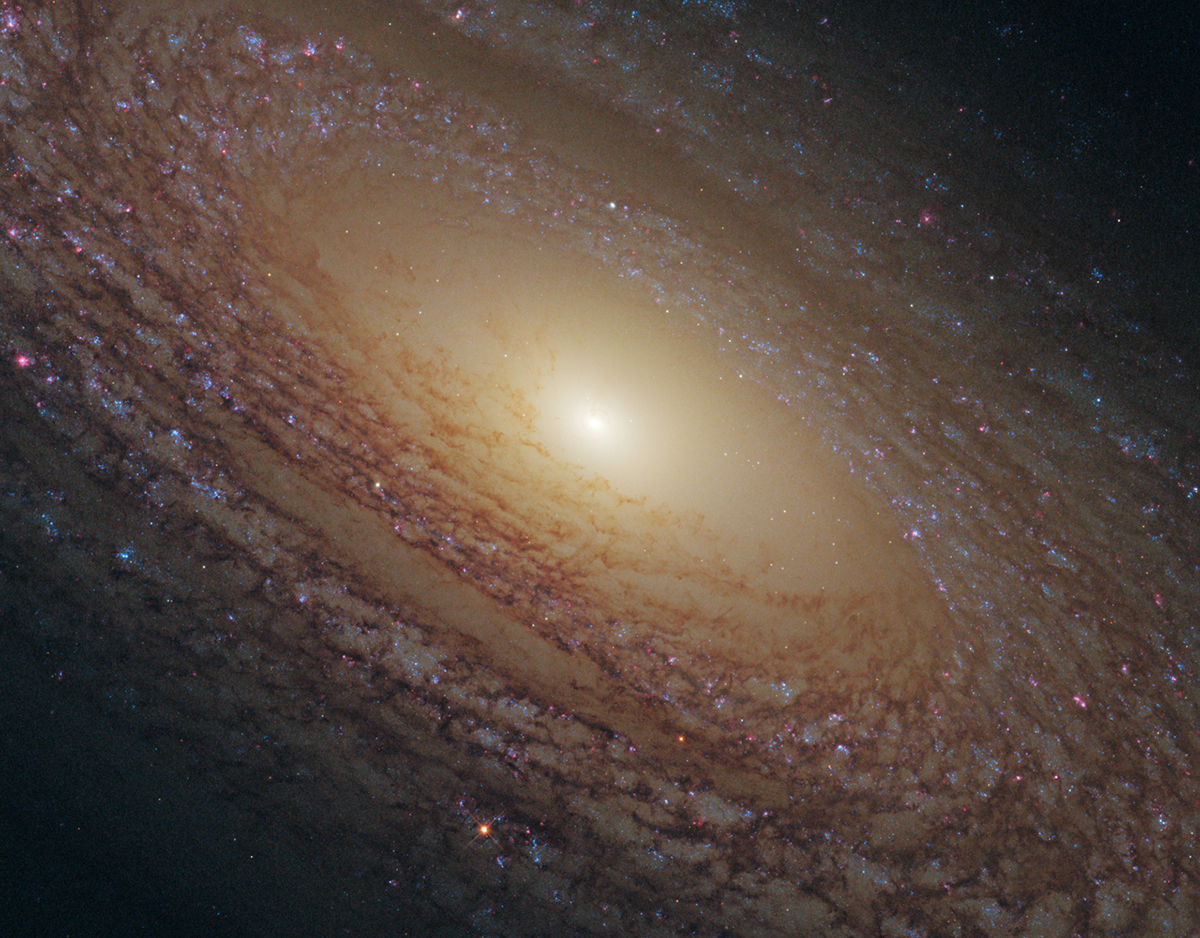
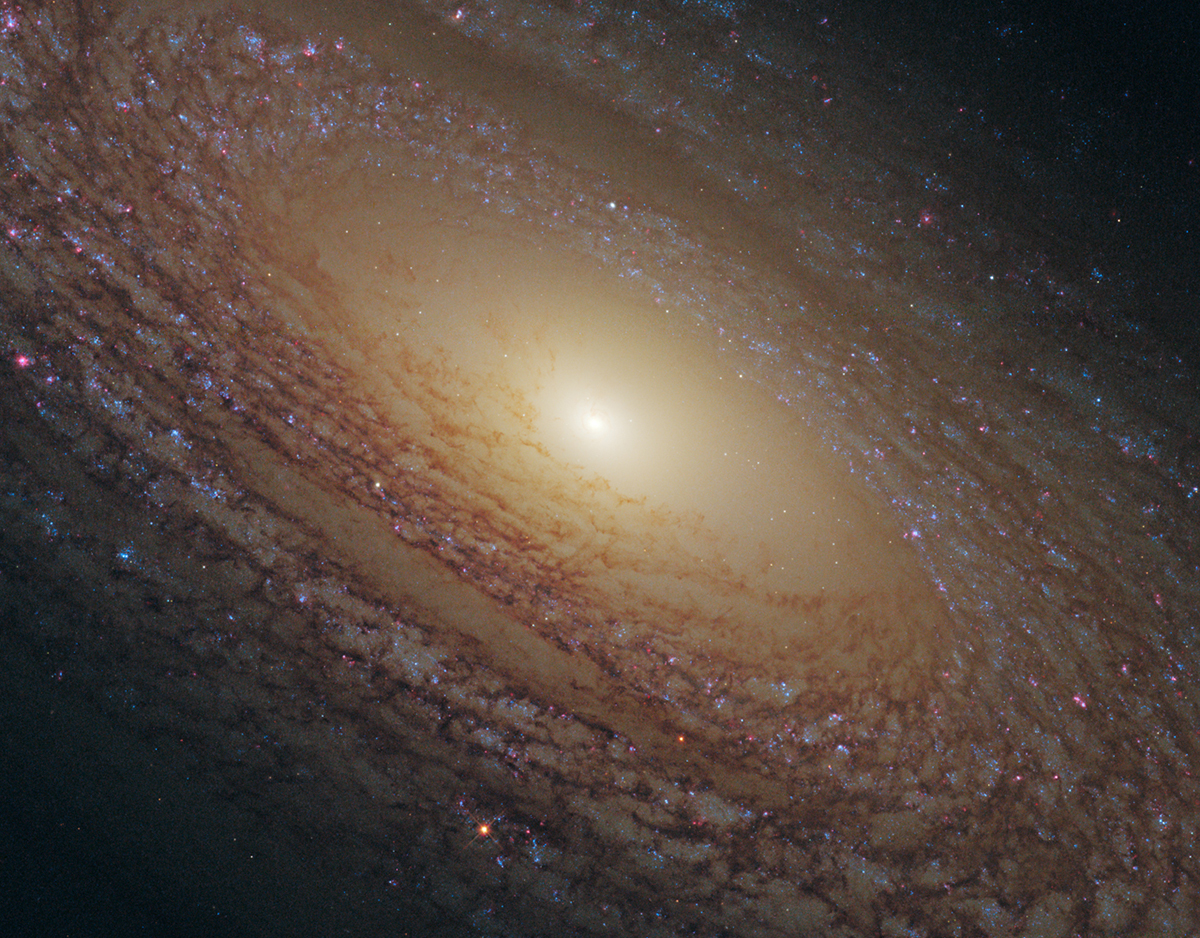
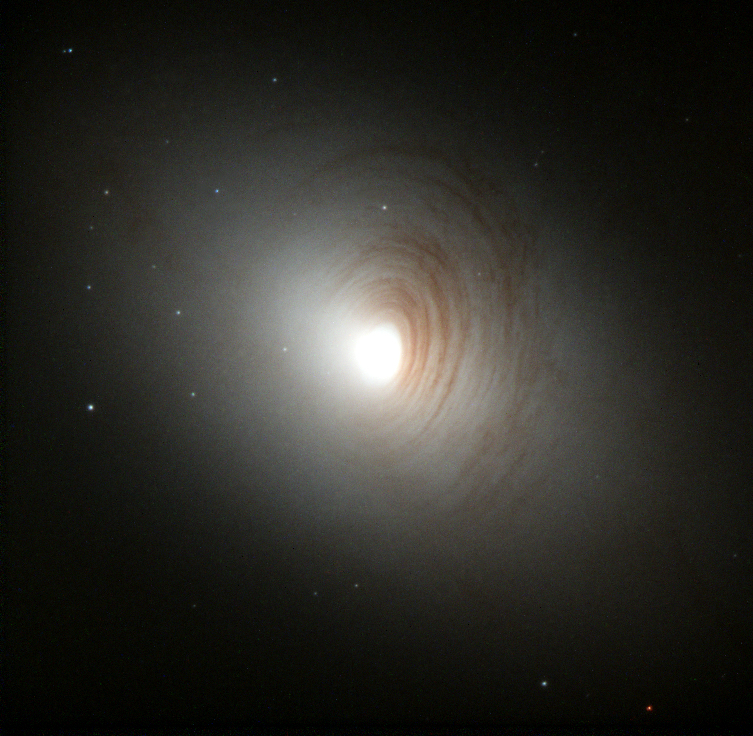
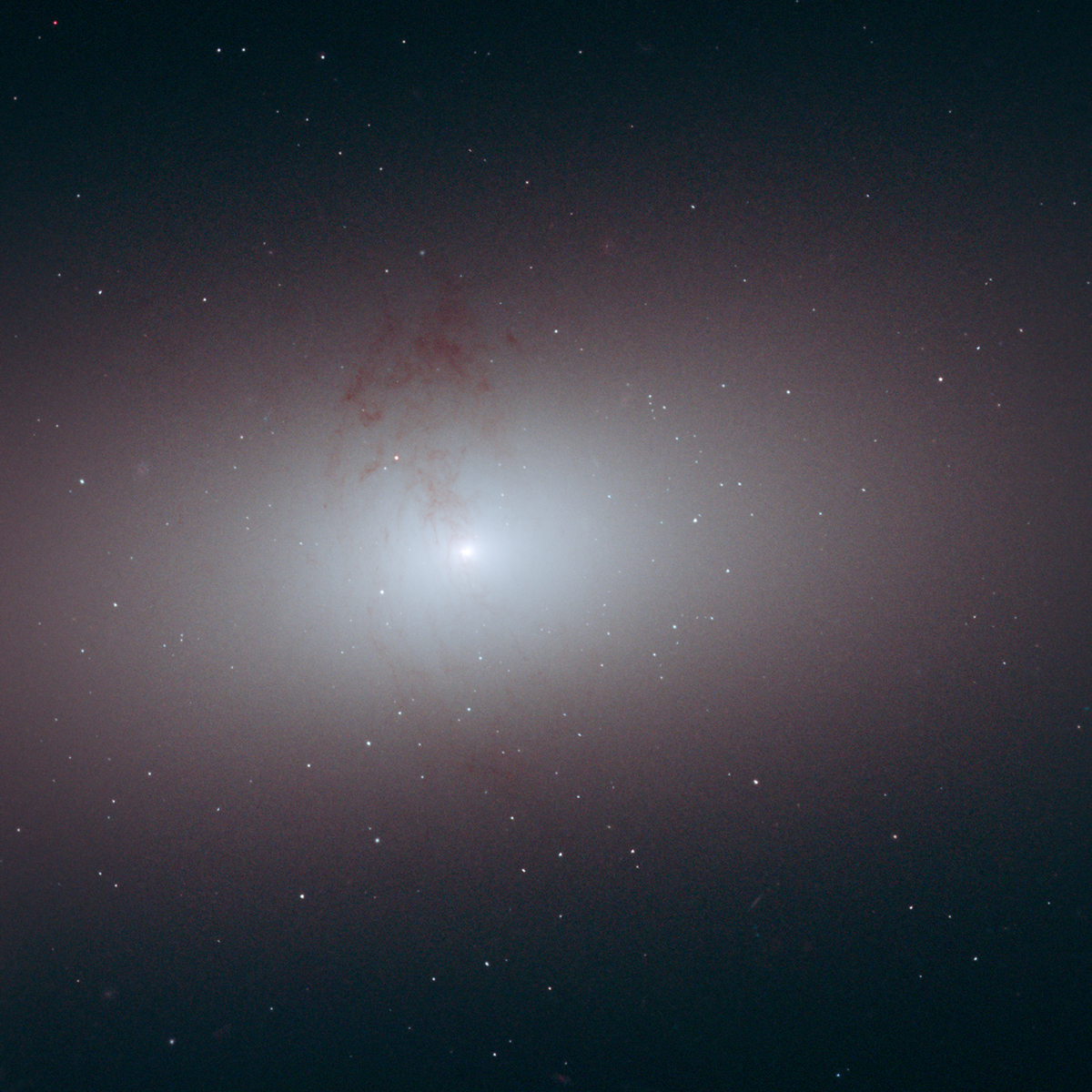
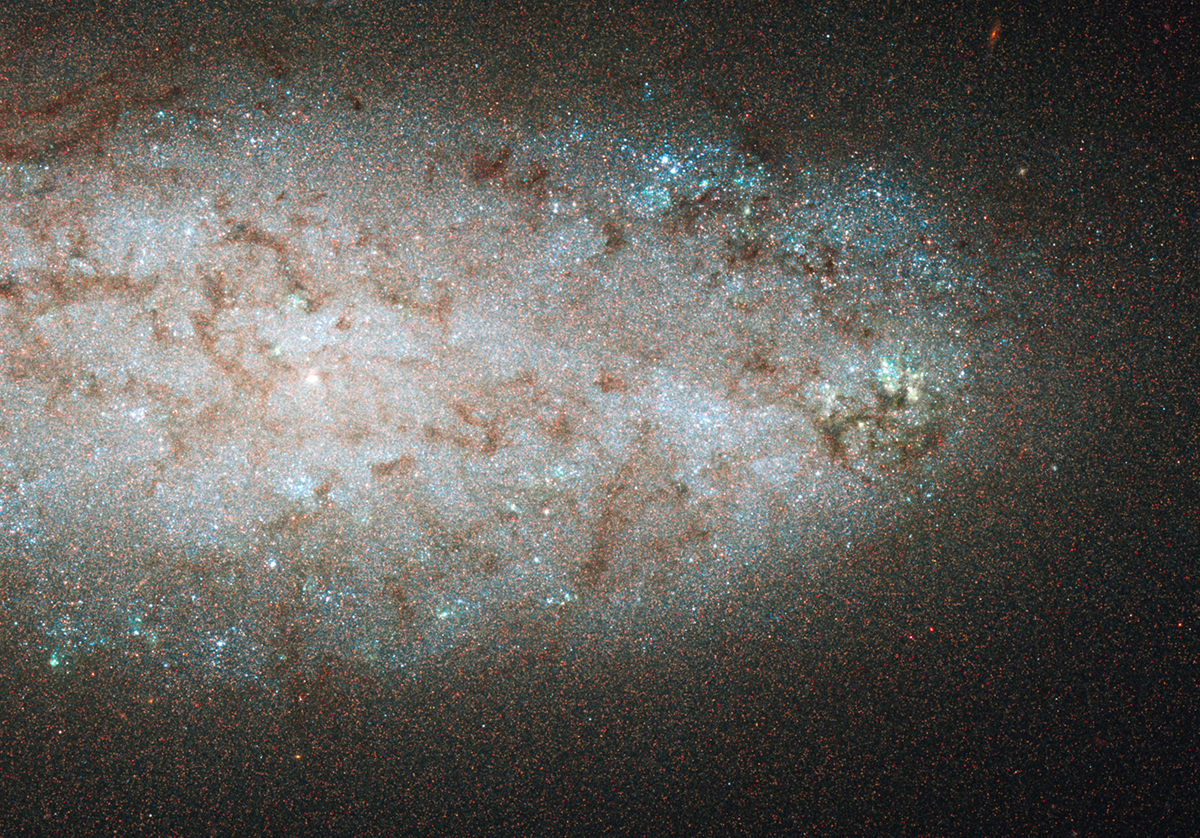
This detailed image reveals the inner region of NGC 2976, a peculiar spiral galaxy located roughly 11 million light-years away in the constellation Ursa Major, home to the famous Big Dipper asterism. Despite the absence of well-defined spiral arms typically associated with spiral galaxies, NGC 2976 is indeed classified as a spiral galaxy—albeit an unusual one. The galaxy's disrupted and asymmetric structure suggests it may have experienced gravitational interactions with nearby galaxies in the past, distorting its once-orderly spiral pattern. Its relatively close proximity to Earth makes NGC 2976 an excellent subject for studying stellar populations, star formation processes, and the effects of galactic interactions. The mottled appearance of star-forming regions and older stellar populations creates a complex tapestry that illustrates the diverse evolutionary pathways galaxies can take.
Scientific Significance
NGC 2976 provides a compelling case study in how environment shapes galaxy evolution. As a member of the M81 Group, it has undergone gravitational interactions that dramatically altered its morphology and star formation patterns. Tidal forces from M81 and M82 appear to have stripped gas from NGC 2976's outer regions, truncating its once-extended disk and concentrating residual star formation into a central ring. This environmental processing — known as tidal stripping — is a major driver of galaxy evolution in group and cluster environments, and NGC 2976 offers one of the nearest and most detailed examples. The galaxy's resolved stellar populations have enabled astronomers to reconstruct its star formation history with remarkable precision, revealing episodes of enhanced and suppressed activity that correlate with past close encounters with M81. NGC 2976's dark matter distribution is also notable: mass modeling suggests it possesses a constant-density dark matter core rather than the cuspy profile predicted by cold dark matter simulations, contributing to the 'cusp-core problem' debate in cosmology.
Observation Details
Hubble observed NGC 2976 using the Advanced Camera for Surveys (ACS) in multiple optical filters as part of the ANGST (ACS Nearby Galaxy Survey Treasury) program, which systematically imaged nearby galaxies to study their resolved stellar populations. The observations resolved millions of individual stars down to approximately one magnitude below the tip of the red giant branch, enabling construction of detailed color-magnitude diagrams across the galaxy's face. Different spatial regions were analyzed separately to map how the star formation history varies from the actively star-forming central ring to the quiescent outer disk. The high angular resolution of ACS was essential for separating closely spaced stars in the galaxy's crowded inner regions.
Location in the Universe
Constellation
Ursa Major
Distance from Earth
11 million light-years
Fun Facts
- 1
NGC 2976 is a member of the M81 Group of galaxies, the same neighborhood as the famous Bode's Galaxy (M81) and the Cigar Galaxy (M82), and gravitational interactions with these larger neighbors likely stripped away its outer spiral arms.
- 2
Star formation in NGC 2976 is concentrated almost entirely in a ring-like zone around the galaxy's center, with virtually no star formation occurring in the outer disk — a pattern thought to result from tidal stripping of its outer gas reservoir.
- 3
At only 11 million light-years away, NGC 2976 is close enough for Hubble to resolve individual red giant stars, allowing astronomers to construct a detailed color-magnitude diagram and reconstruct the galaxy's star formation history over billions of years.
Image credit: NASA, ESA, Hubble Space Telescope