About This Image
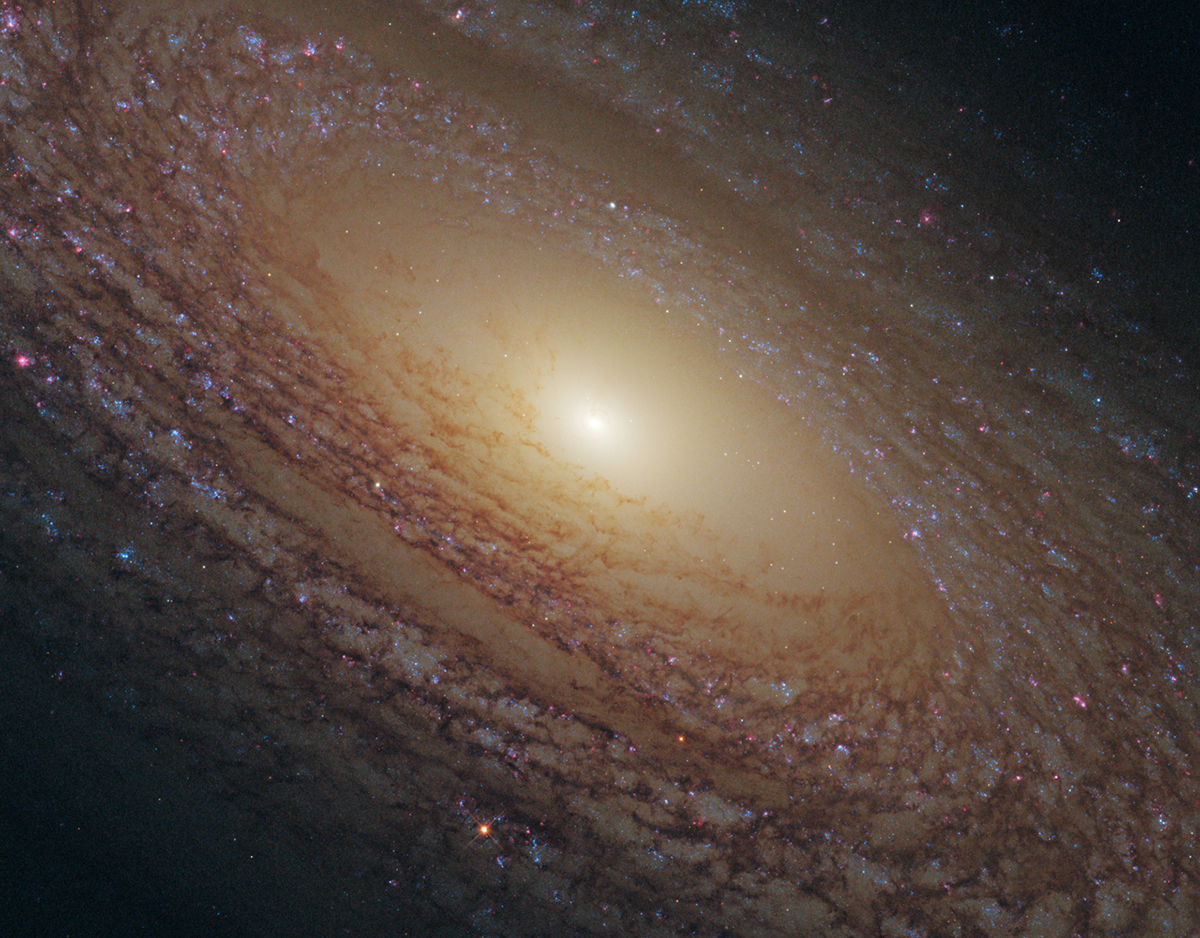
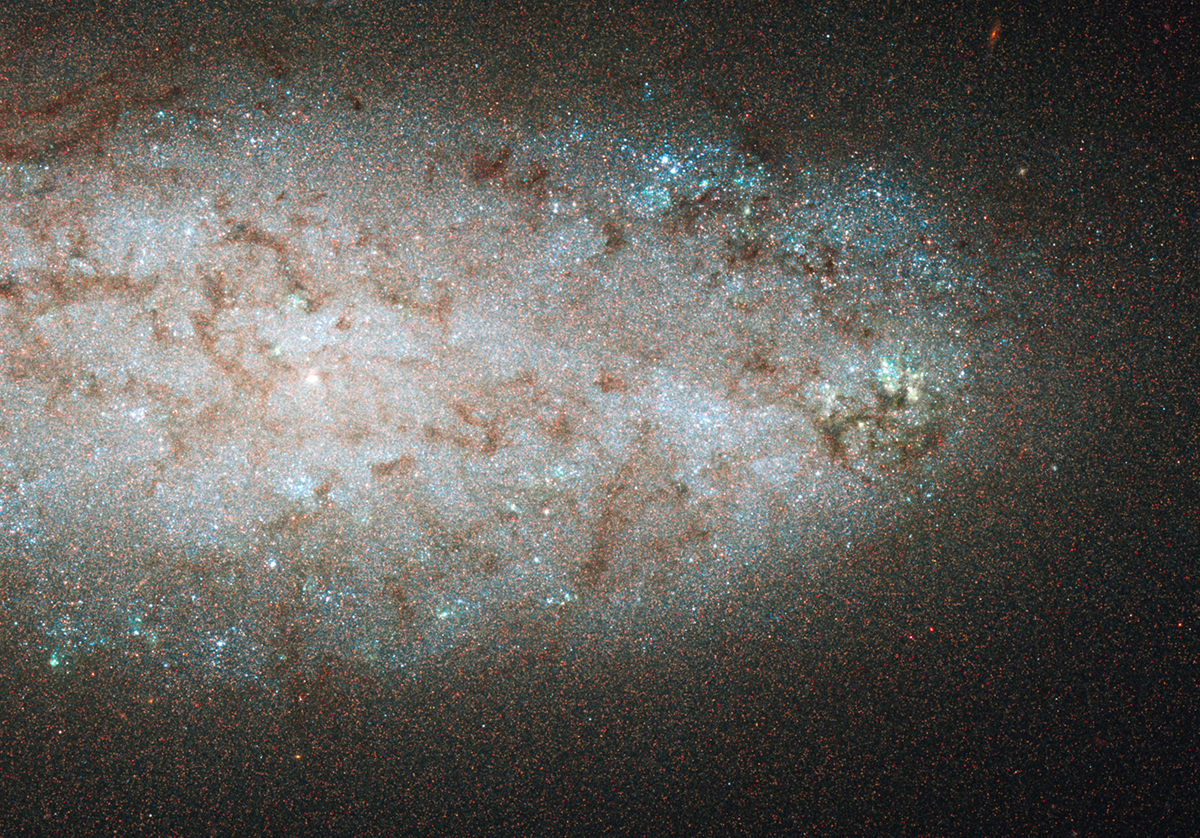
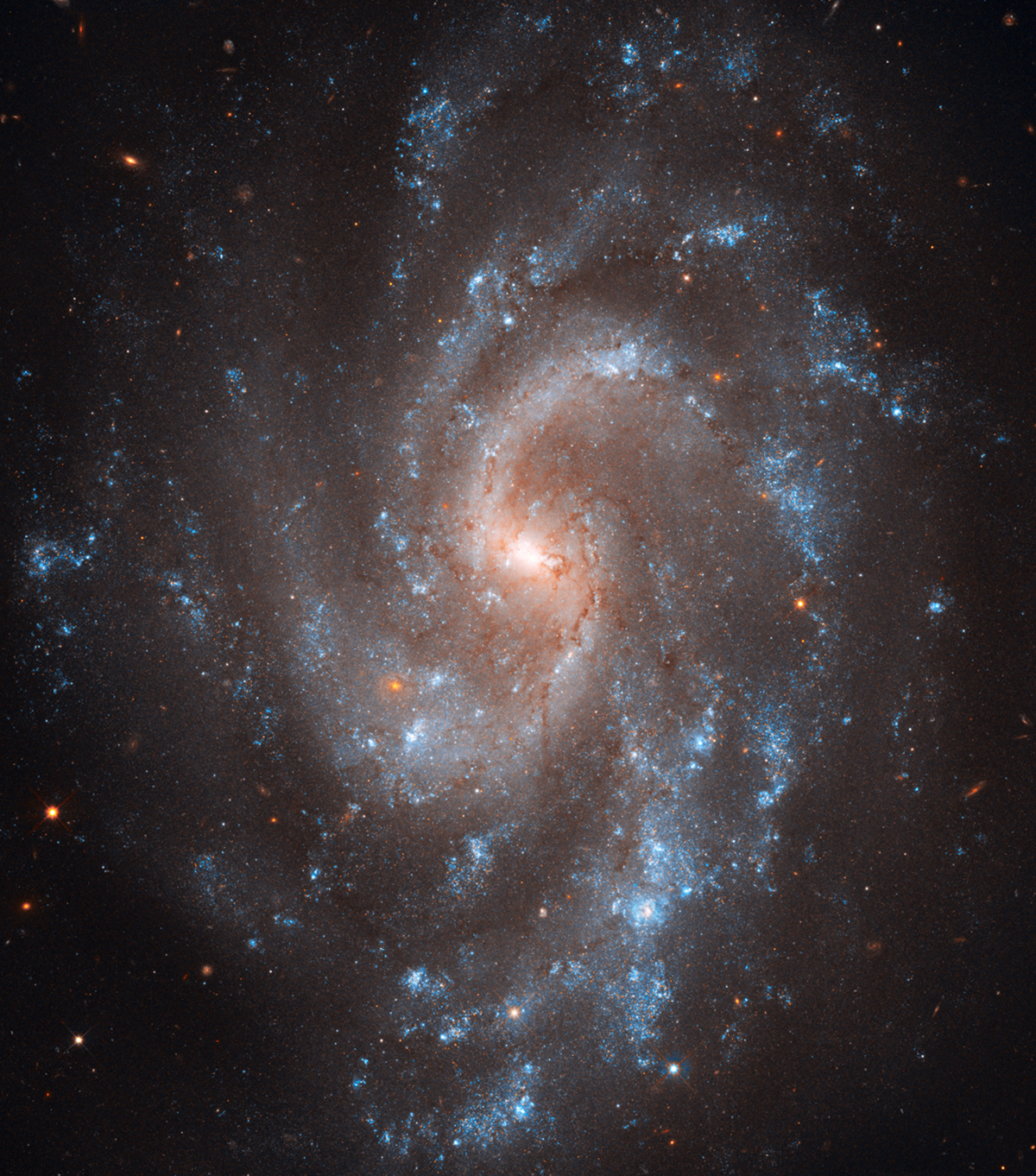
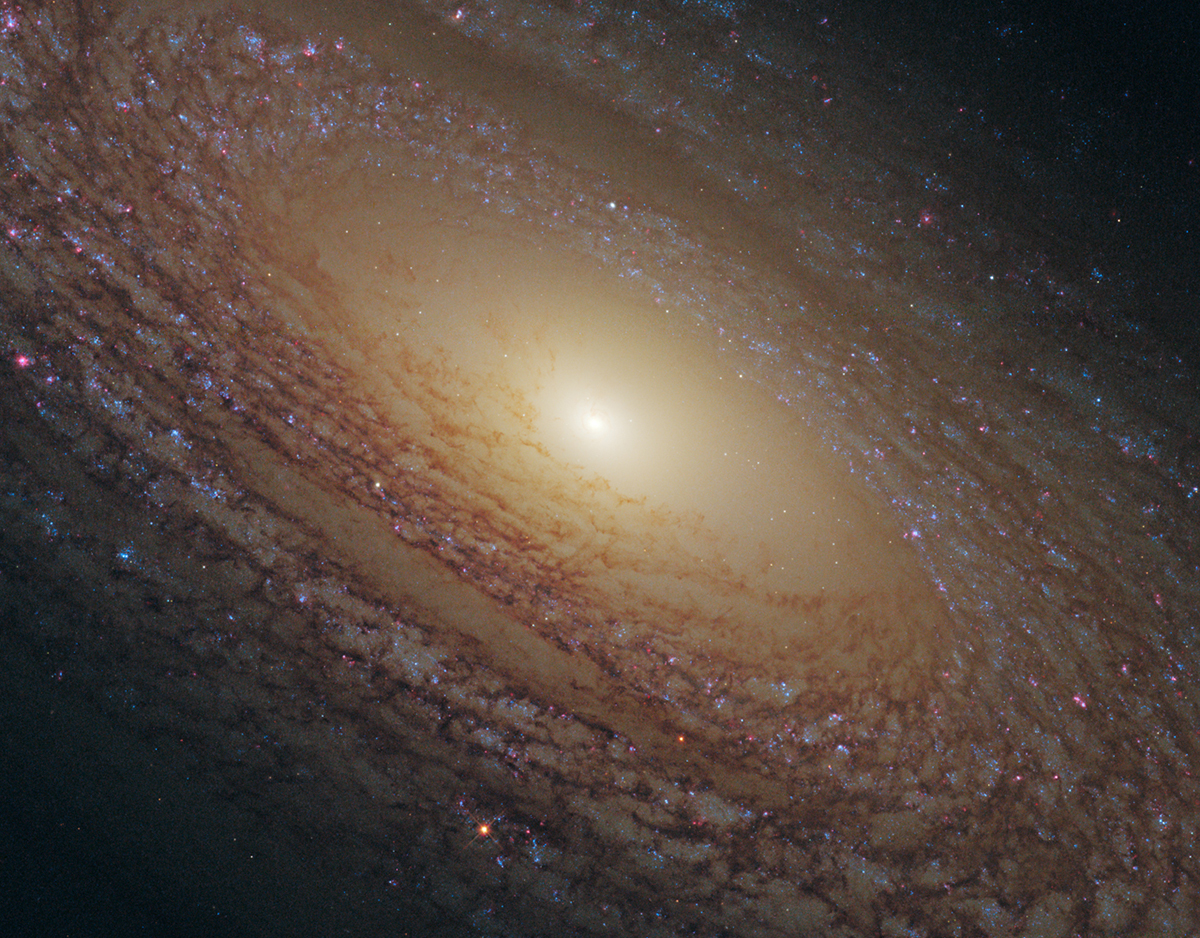
The majestic spiral galaxy NGC 2841 displays elegant winding arms traced by young, luminous blue stars and intricate dark lanes of cosmic dust. This galaxy presents a fascinating case study in stellar evolution and galactic dynamics. The powerful stellar winds emanating from massive, super-hot young stars appear to have swept away much of the interstellar gas—the raw material necessary for forming new generations of stars. This clearing process may have effectively halted ongoing star formation within the galaxy's spiral arms, creating a cosmic paradox where the very act of star birth prevents future stellar generations. NGC 2841's tightly wound spiral structure and the interplay between its young stellar population and the remaining dust lanes offer astronomers valuable insights into the lifecycle of galaxies and the delicate balance between star formation and the processes that can shut it down.
Scientific Significance
This alternate Hubble view of NGC 2841 emphasizes different aspects of the galaxy's structure and stellar populations compared to earlier observations. NGC 2841 is particularly significant for testing theories of spiral arm formation. Unlike grand-design spirals where prominent arms are driven by density waves, NGC 2841's flocculent arms arise from local gravitational instabilities and the self-propagating nature of star formation — where supernova explosions from one generation of stars trigger the collapse of nearby gas clouds to form the next generation. This process creates the galaxy's characteristic patchy, irregular arm pattern. The galaxy's extended neutral hydrogen disk, mapped by radio telescopes, shows that the dark matter halo dominates the gravitational potential at large radii, providing critical constraints on dark matter halo profiles. NGC 2841's LINER-type active nucleus also makes it valuable for studying the low-luminosity end of active galactic nuclei, where accretion onto the central black hole proceeds at rates far below the Eddington limit.
Observation Details
This observation of NGC 2841 utilized Hubble's Wide Field Camera 3 (WFC3) with a complementary set of filters emphasizing different stellar populations and interstellar medium components. Narrowband H-alpha imaging isolated regions of ionized hydrogen gas associated with active star formation, revealing the sparse distribution of HII regions across the disk. Broadband blue and ultraviolet filters highlighted the young, hot OB-type stars that dominate the flocculent arm fragments, while red and near-infrared filters traced the older, cooler stellar population that constitutes the bulk of the galaxy's stellar mass. The combination provides a comprehensive census of stellar ages across the galaxy's disk.
Location in the Universe
Constellation
Ursa Major
Distance from Earth
46 million light-years
Fun Facts
- 1
NGC 2841 has an unusually extended disk of neutral hydrogen gas that stretches far beyond its visible stellar disk — this enormous gas reservoir extends to nearly twice the optical diameter yet produces remarkably few new stars.
- 2
The galaxy's rotation curve — the speed at which stars orbit at different distances from the center — was one of the early compelling pieces of evidence for the existence of dark matter haloes surrounding spiral galaxies.
- 3
NGC 2841 hosts an active galactic nucleus classified as a LINER (Low-Ionization Nuclear Emission-line Region), indicating low-level activity from its central supermassive black hole that falls far short of a full quasar.
Image credit: NASA, ESA, Hubble Space Telescope