About This Image
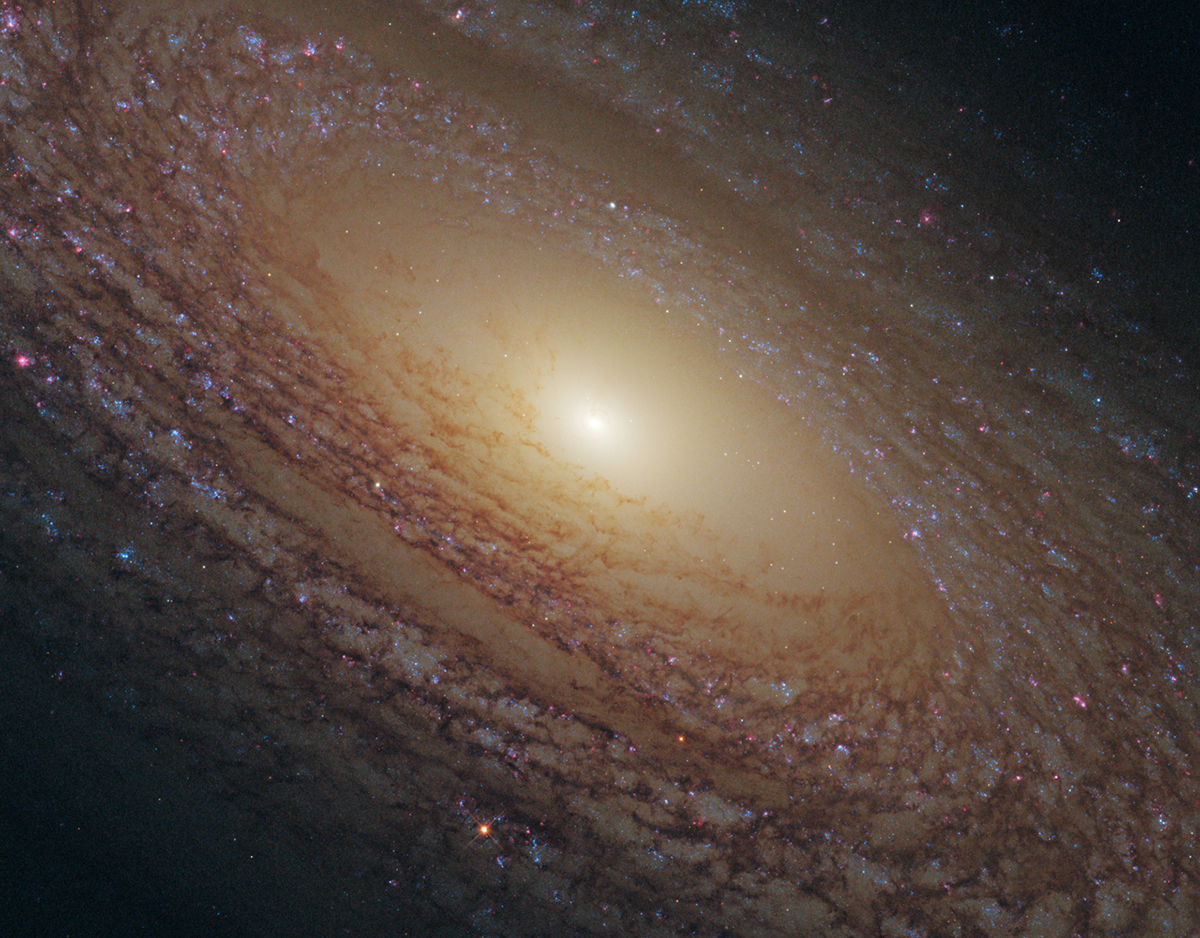
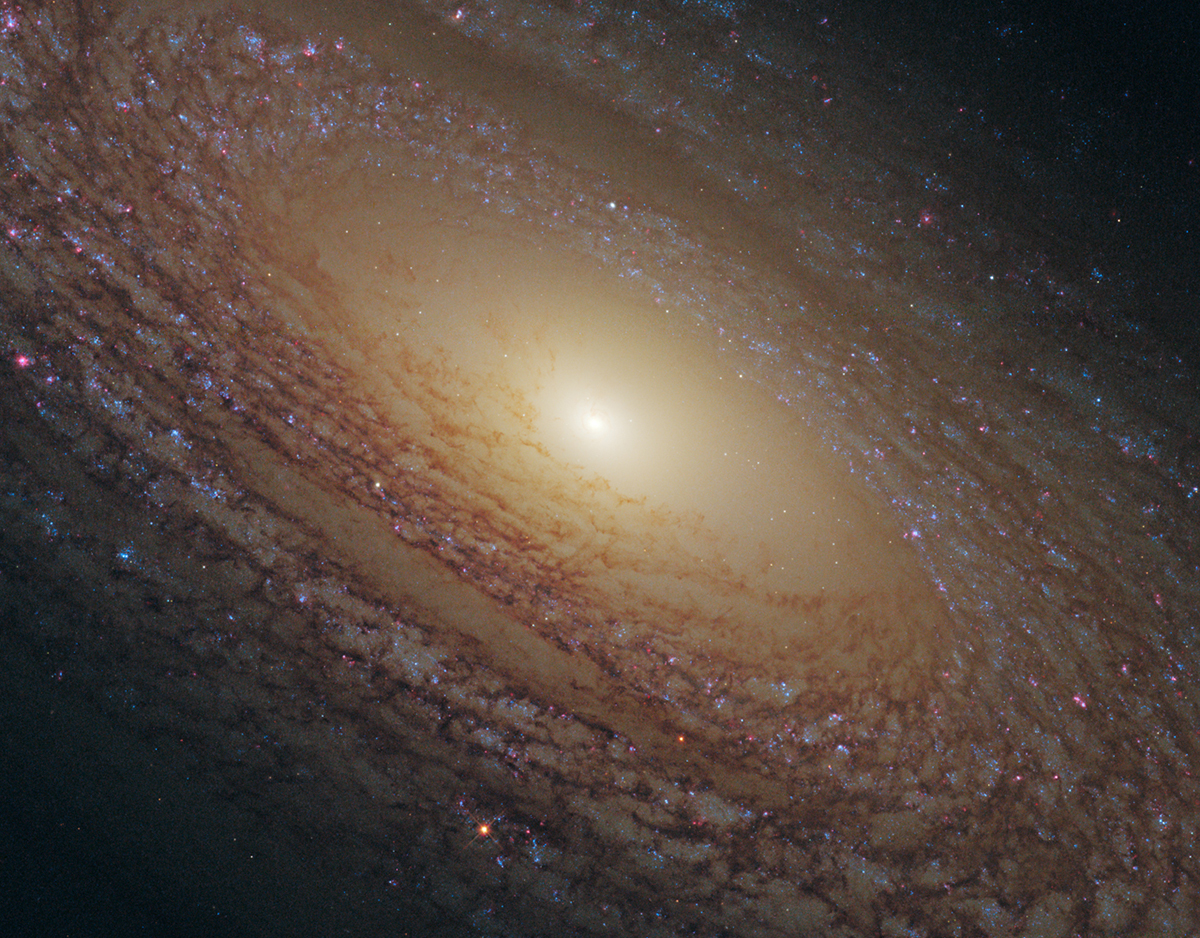
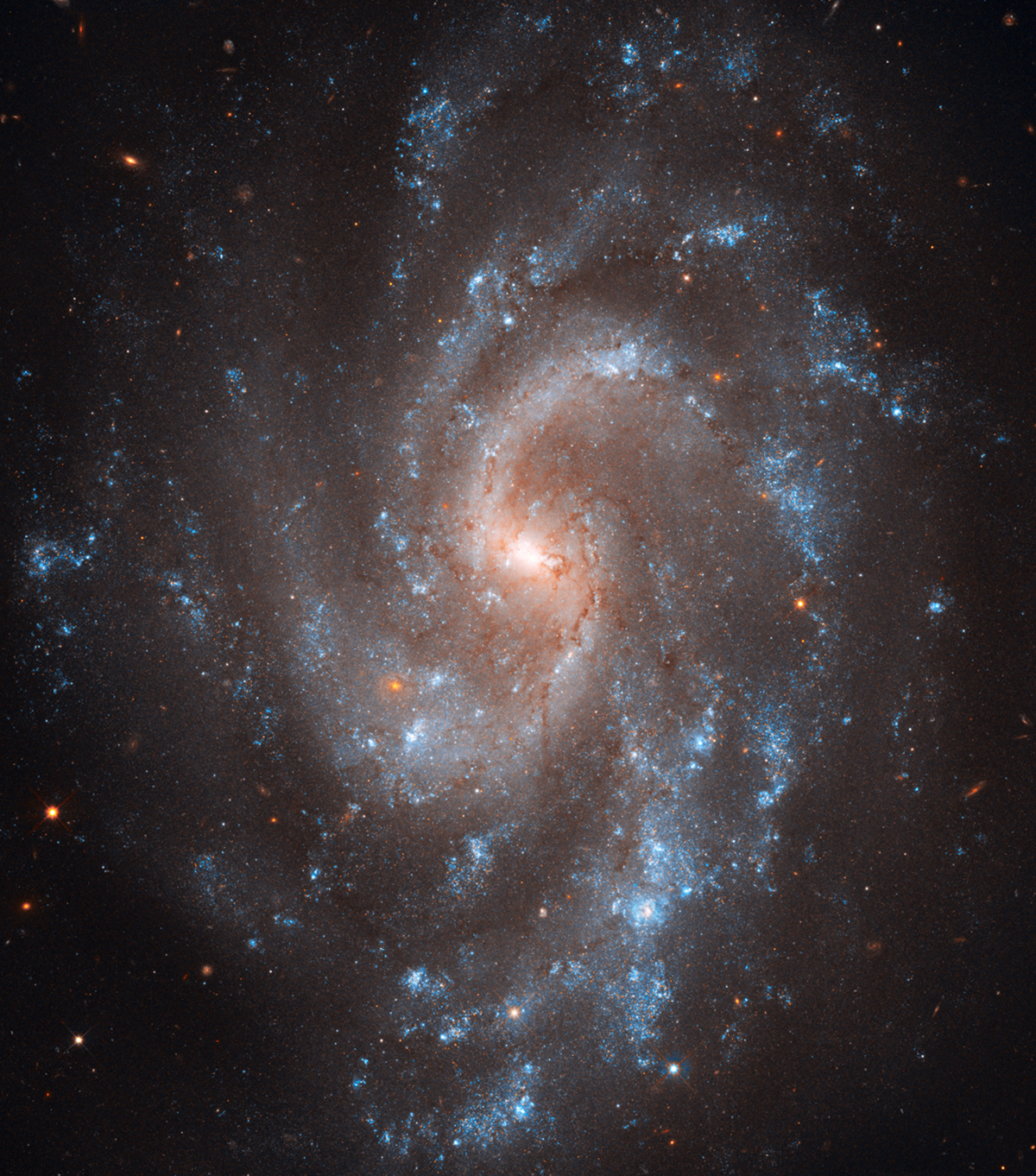
The brilliant, blue glow of young, massive stars traces the graceful spiral arms of galaxy NGC 5584, creating a stunning display of stellar architecture. These hot, young stars illuminate the galaxy's structure, marking sites of recent star formation along the sweeping curves of its spiral pattern. Thin, dark dust lanes appear to be flowing from the yellowish core, where older, cooler stars reside in a more densely packed environment. This striking color contrast reveals the galaxy's stellar demographics—the blue arms represent stellar nurseries with ongoing star birth, while the golden center harbors ancient stars that formed billions of years ago. NGC 5584 has been particularly valuable to astronomers as a cosmic distance marker, containing Cepheid variable stars and Type Ia supernovae that help calibrate the cosmic distance ladder and measure the expansion rate of the universe, contributing to our understanding of dark energy and the fate of the cosmos.
Scientific Significance
NGC 5584 plays a pivotal role in one of the most important measurements in modern cosmology: determining the Hubble constant, the rate at which the universe is expanding. The galaxy contains both Cepheid variable stars — whose brightness pulsations provide reliable distance measurements — and hosted a Type Ia supernova, which serves as a standardizable candle for measuring far greater cosmic distances. By combining these two distance indicators within the same galaxy, astronomers can cross-calibrate their measurements with exceptional precision. NGC 5584 was a key target of the SH0ES (Supernova H0 for the Equation of State) project led by Nobel laureate Adam Riess. The results from this galaxy and others like it have contributed to a growing tension between the locally measured expansion rate and the rate predicted by observations of the cosmic microwave background, a discrepancy known as the 'Hubble tension' that may point to new physics beyond the standard cosmological model.
Observation Details
Hubble observed NGC 5584 using the Wide Field Camera 3 (WFC3) in both optical and near-infrared wavelengths over multiple epochs spanning several months. The repeated observations were essential for identifying Cepheid variable stars by detecting their characteristic brightness variations over periods of days to weeks. Near-infrared filters (F160W) were particularly important because infrared light is less affected by dust absorption, providing more accurate brightness measurements of the Cepheids. The optical filters captured the galaxy's spiral structure and star-forming regions in vivid color detail.
Location in the Universe
Constellation
Virgo
Distance from Earth
72 million light-years
Fun Facts
- 1
NGC 5584 hosted the Type Ia supernova SN 2007af, which was used alongside its Cepheid variable stars to independently calibrate the cosmic distance ladder — helping refine our measurement of how fast the universe is expanding.
- 2
Hubble identified over 250 Cepheid variable stars in NGC 5584, making it one of the most important galaxies for the SH0ES project (Supernova H0 for the Equation of State), which measures the Hubble constant.
- 3
The striking color contrast between the blue spiral arms and the golden core reflects a 10-billion-year age difference — the core stars formed when the universe was young, while arm stars are only millions of years old.
Image credit: NASA, ESA, Hubble Space Telescope