About This Image
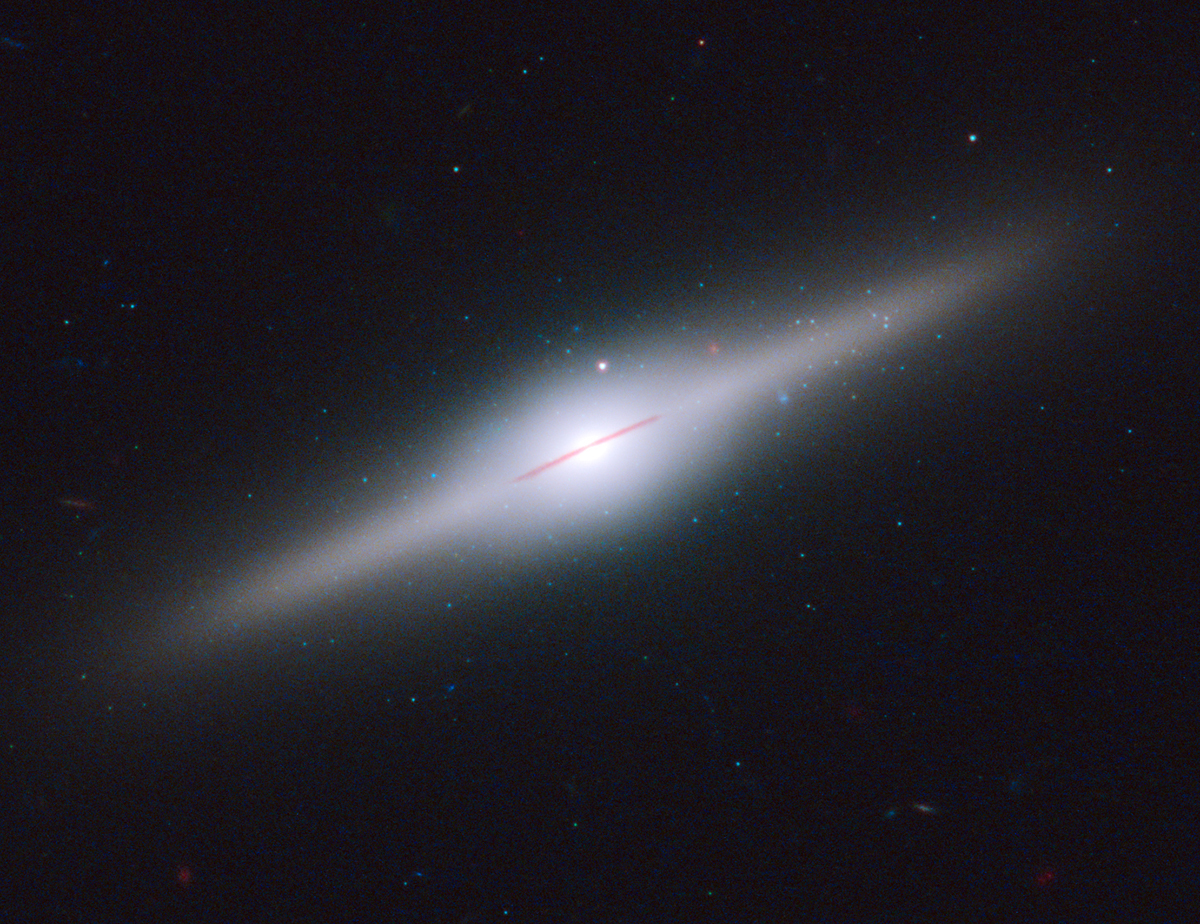
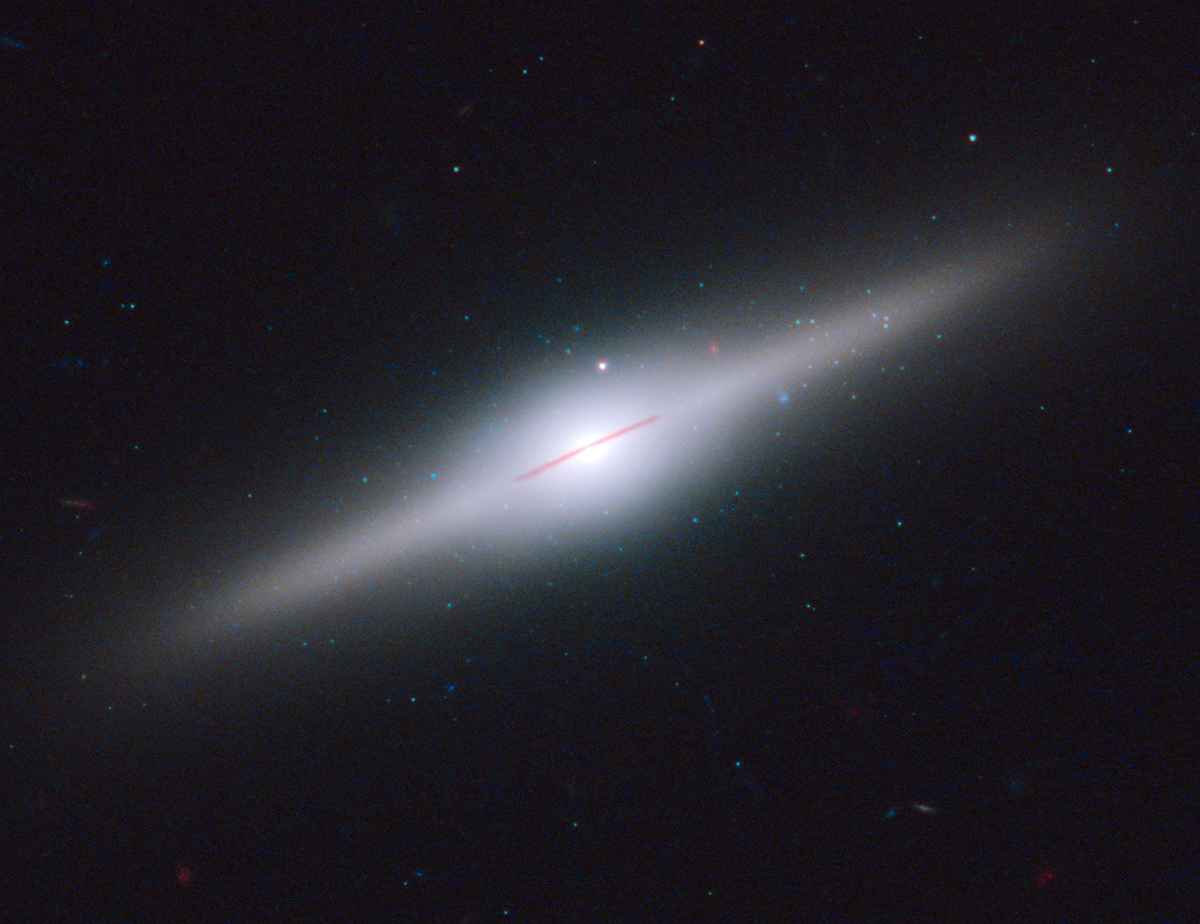
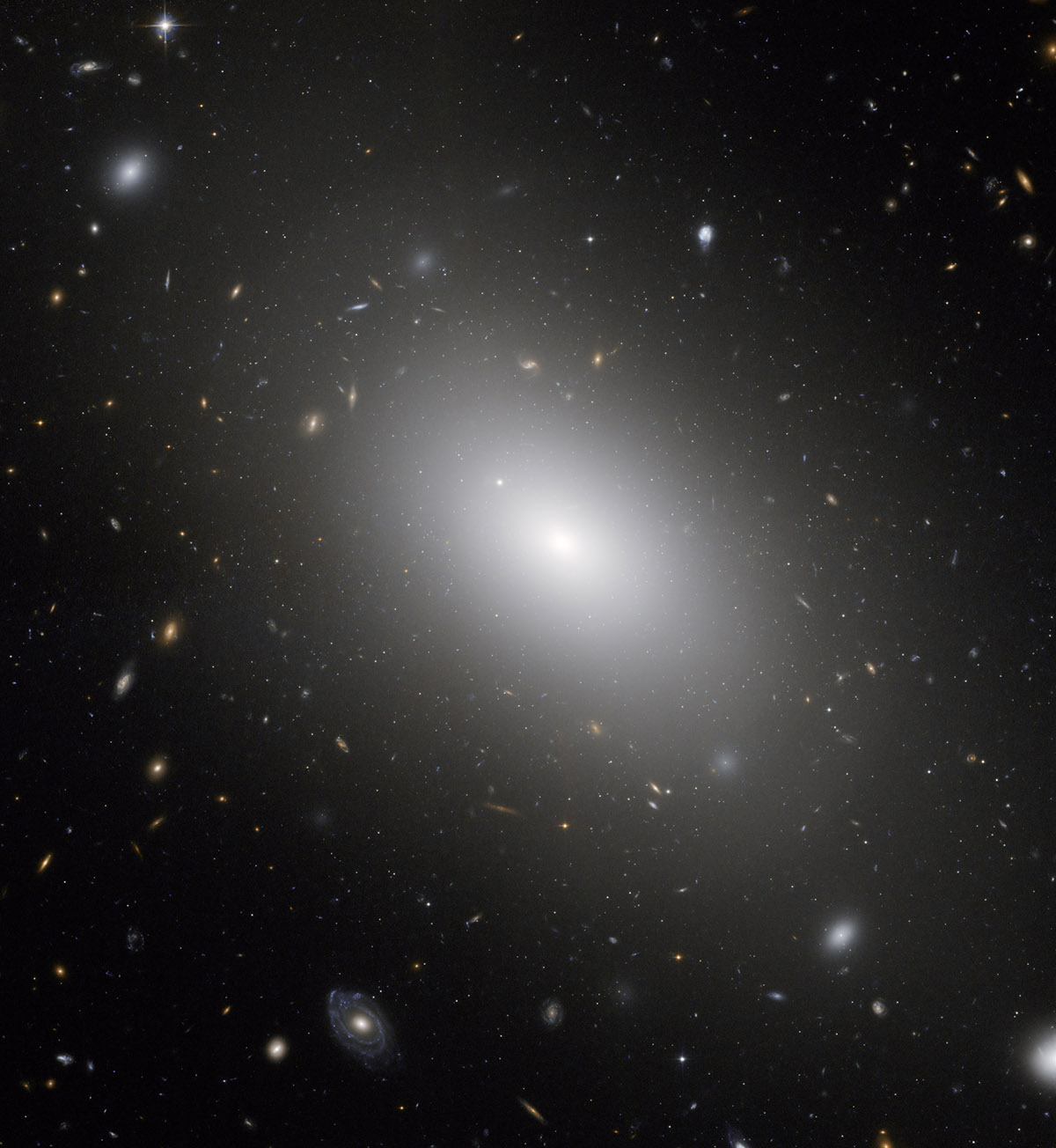
The large elliptical galaxy NGC 1132 likely formed from a group of galaxies that merged together. The galaxy is dubbed a "fossil group" because it contains enormous concentrations of dark matter, comparable to the dark matter found in an entire group of galaxies.
Scientific Significance
NGC 1132 is a benchmark fossil-group system that tests long-term galaxy-group evolution. Its massive dark-matter halo and hot X-ray gas suggest it descended from a full galaxy group whose luminous members merged over time into one dominant elliptical. Studying such systems constrains merger timescales, dynamical friction, and the buildup of intragroup stars. NGC 1132 also helps bridge our understanding between isolated ellipticals and cluster-central galaxies, showing that environmental history can remain encoded in halo properties even after obvious companions disappear.
Observation Details
Hubble observations of NGC 1132 emphasize its smooth elliptical body, extended stellar envelope, and faint shell-like substructure that may trace past accretion events. Multi-band imaging supports analysis of stellar populations and color gradients from core to halo. In parallel, comparison with X-ray maps reveals a hot gaseous atmosphere expected for a deep group-scale potential well. The combination of optical morphology and halo context provides evidence for a merger-built origin. High-resolution imaging is particularly useful for identifying subtle tidal signatures that ground-based data can miss.
Location in the Universe
Constellation
Eridanus
Distance from Earth
About 320 million light-years
Fun Facts
- 1
NGC 1132 appears isolated in visible light but is embedded in an extended halo and dark-matter structure comparable to a galaxy group.
- 2
Fossil groups are thought to form when a once-rich group of galaxies merges into a single dominant giant elliptical.
- 3
The system preserves clues to past mergers in its stellar halo, globular clusters, and surrounding hot gas.
Image credit: NASA, ESA, Hubble Space Telescope