About This Image
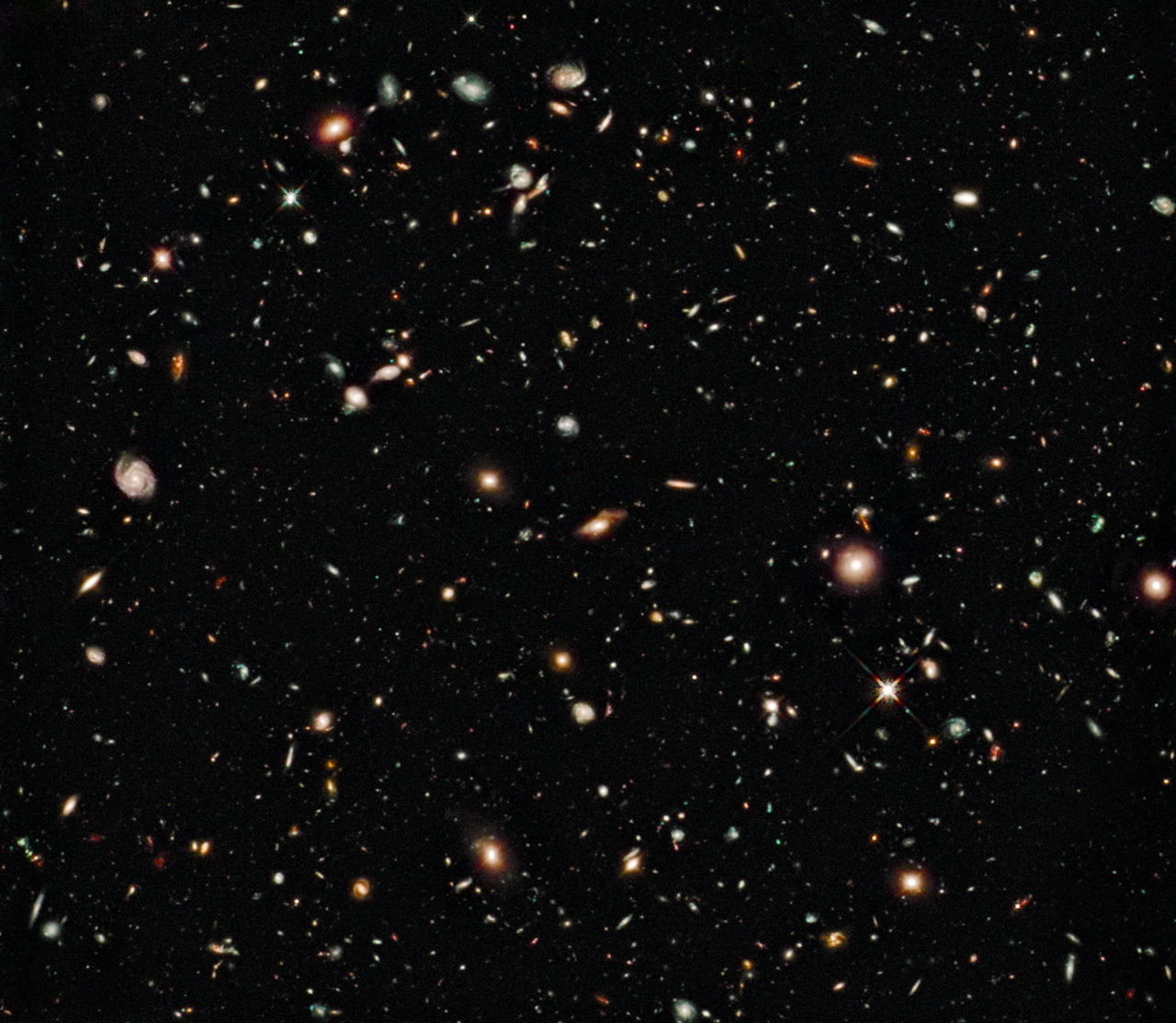
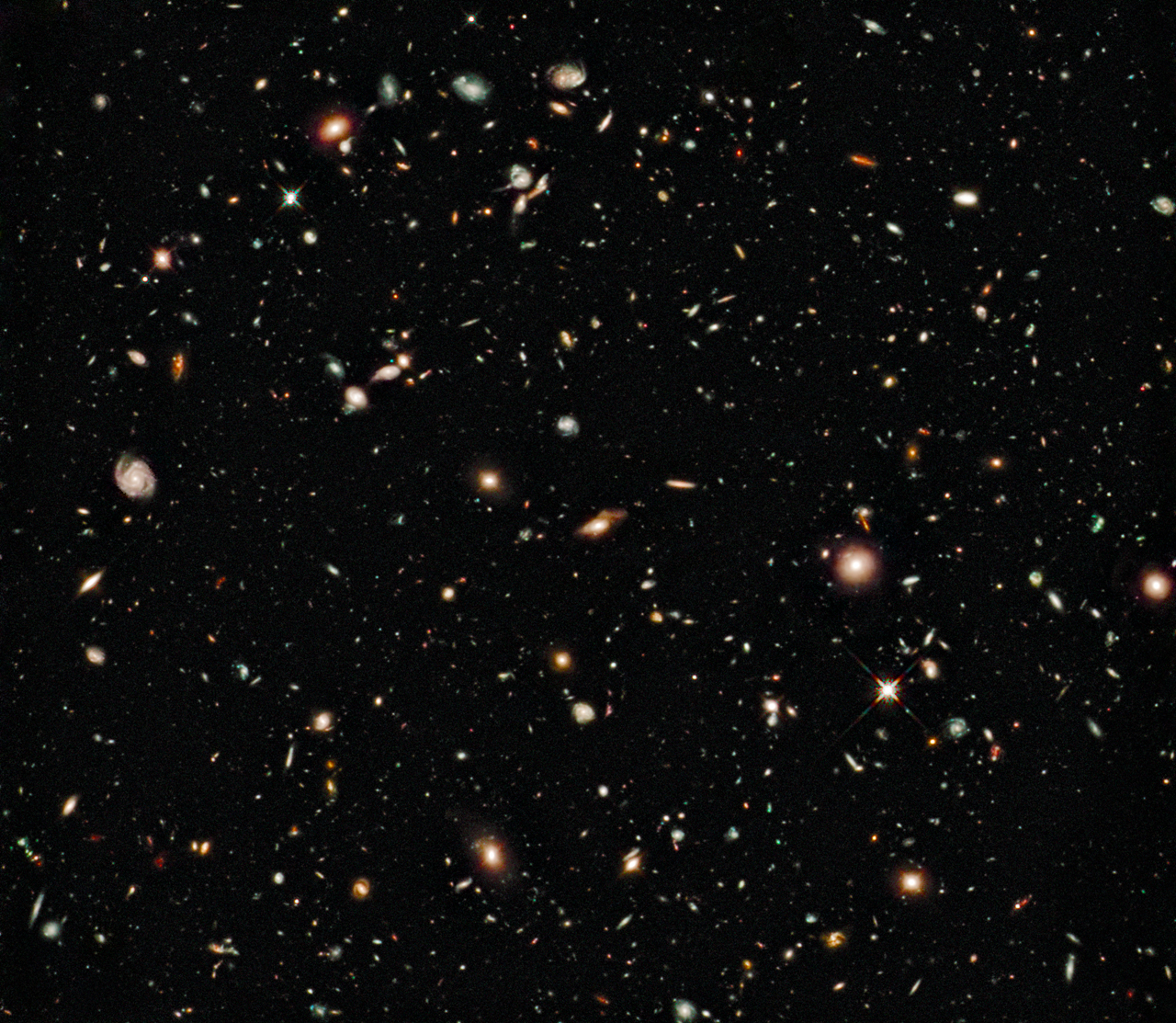
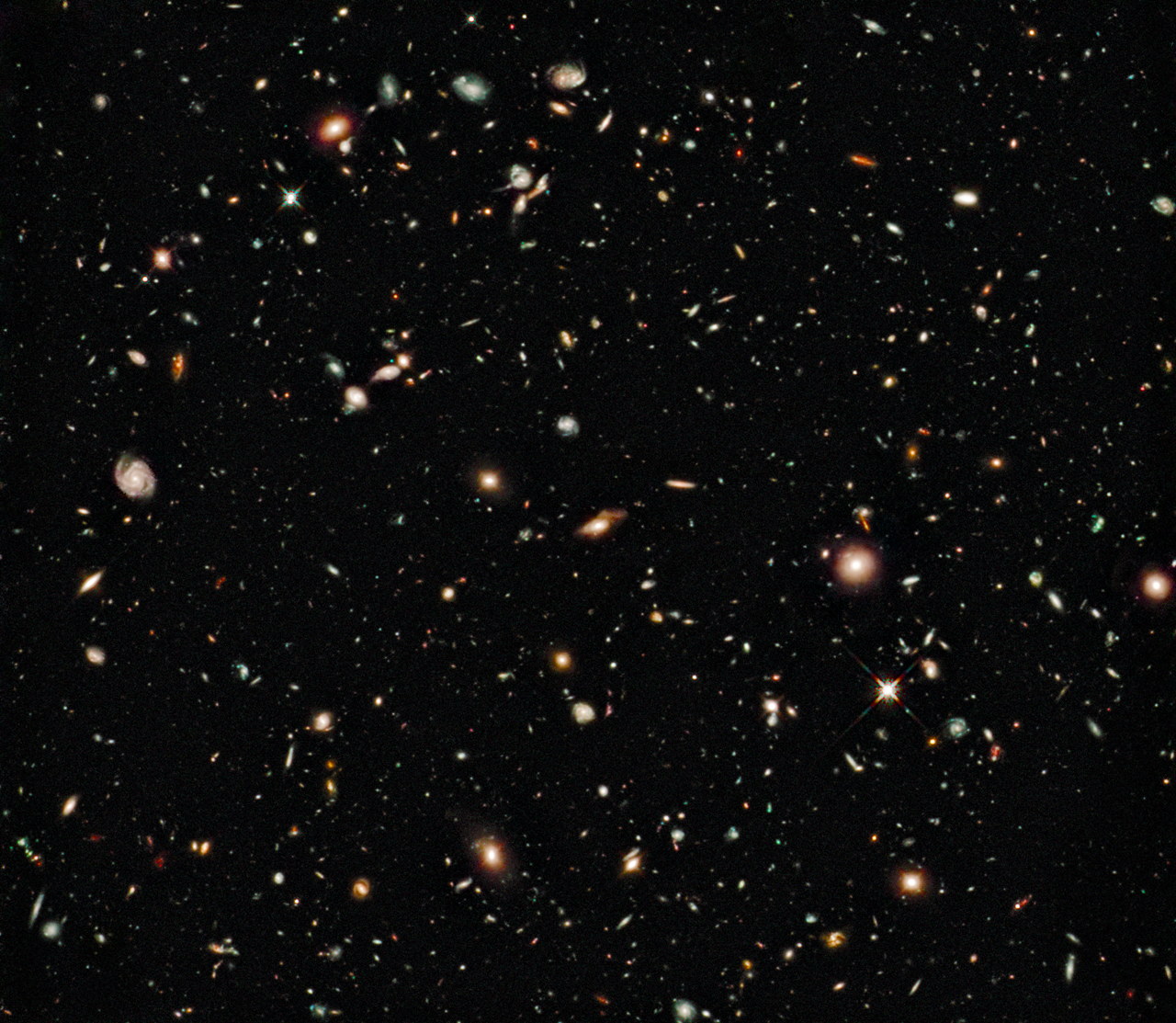
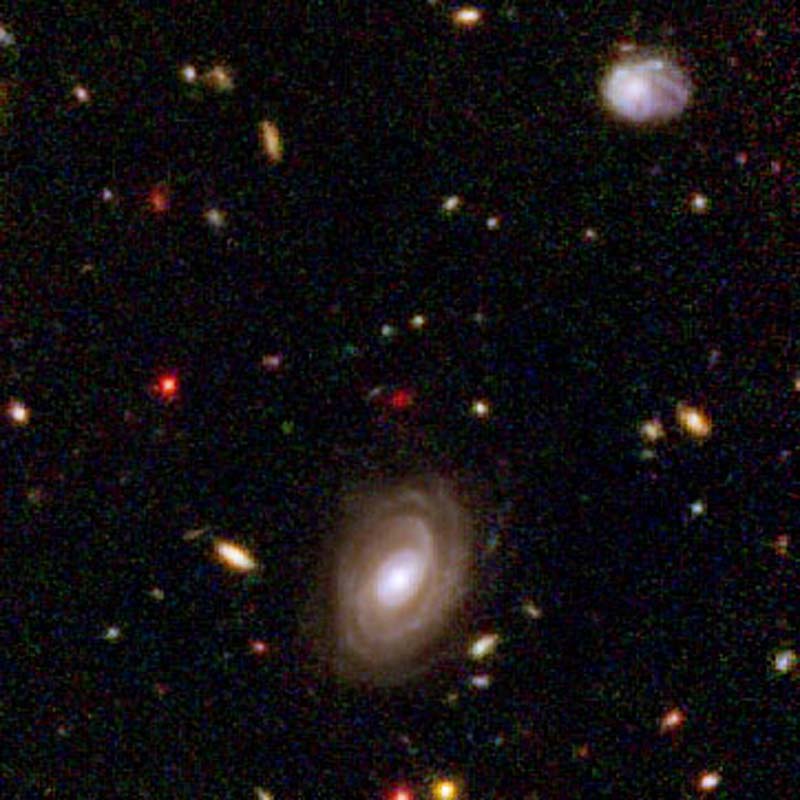
The small red object at the center of this image (just above the large spiral galaxy) is one of the most distant galaxies ever seen. Called HUDF-JD2, it is one of about 10,000 galaxies found in the Hubble Ultra Deep Field.
Scientific Significance
HUDF-JD2 became important because it was proposed as a very massive galaxy candidate in the first billion years of cosmic history. If such systems were common, galaxies must have assembled stars much faster than many early models predicted. Even when follow-up studies revise redshift or mass estimates, candidates like HUDF-JD2 remain scientifically valuable: they test the limits of photometric redshift methods, motivate deeper spectroscopy, and sharpen our understanding of selection effects in deep surveys. In practice, it is a case study in how frontier cosmology progresses through iterative measurements and improved instrumentation.
Observation Details
Hubble identified HUDF-JD2 in the Ultra Deep Field using multi-band imaging from ACS and infrared follow-up. The object is very faint in optical bands but stronger in infrared filters, a pattern consistent with high redshift where the Lyman break shifts beyond visible light. Researchers modeled its spectral energy distribution by combining flux measurements across filters and comparing them with galaxy templates. Because no strong emission lines were available in the original imaging data, interpretation depended on careful photometry, deblending from nearby sources, and statistical redshift fitting.
Location in the Universe
Constellation
Fornax
Distance from Earth
About 13 billion light-years
Fun Facts
- 1
HUDF-JD2 appears as a tiny red smudge because its ultraviolet light has been stretched into infrared wavelengths by cosmic expansion.
- 2
Astronomers estimated that it may have built up a large stellar mass very early, making it a surprising object for galaxy formation models.
- 3
Objects like this are found by combining many filters and searching for color signatures of the Lyman break at extreme redshift.
Image credit: NASA, ESA, Hubble Space Telescope