About This Image
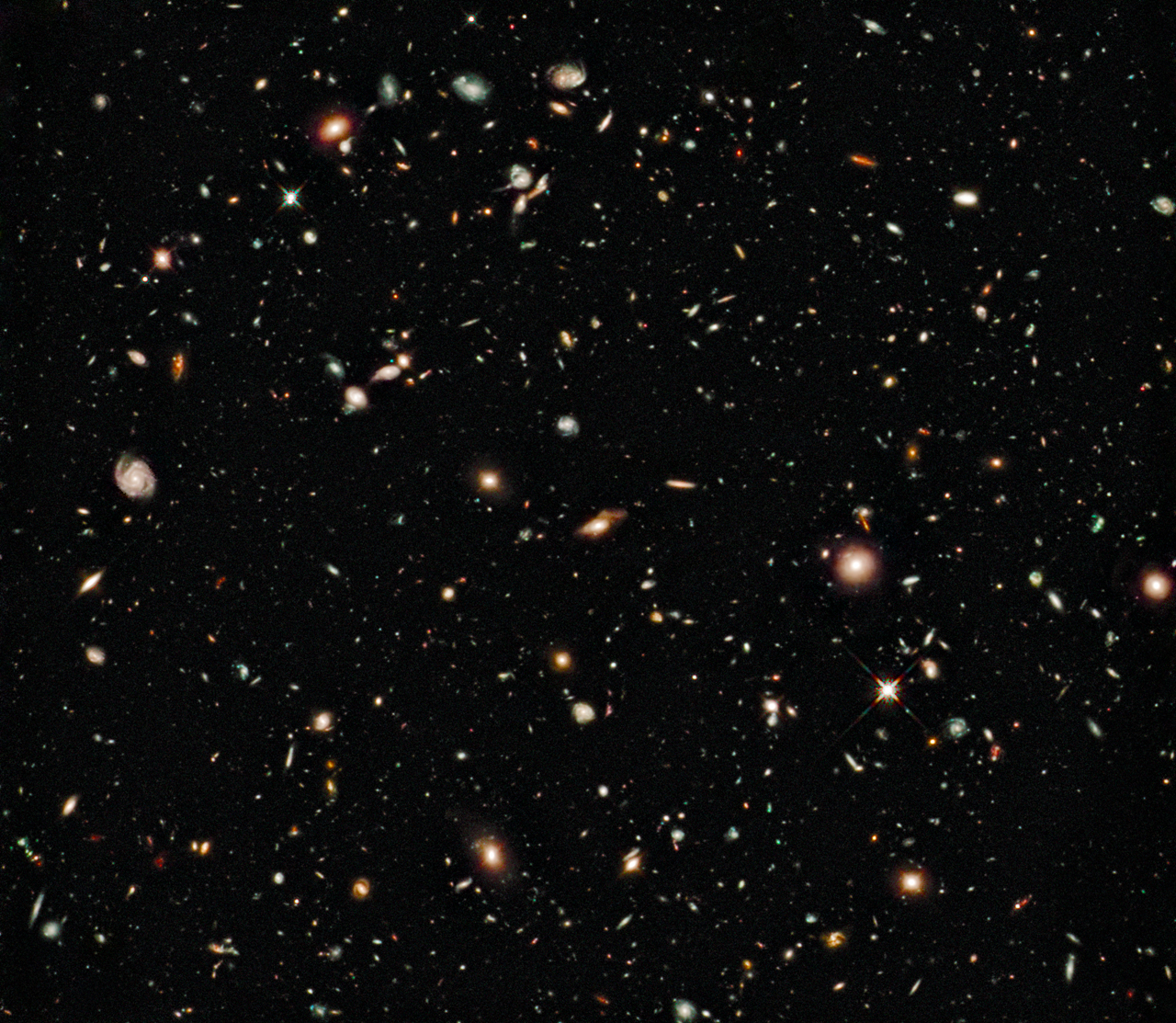
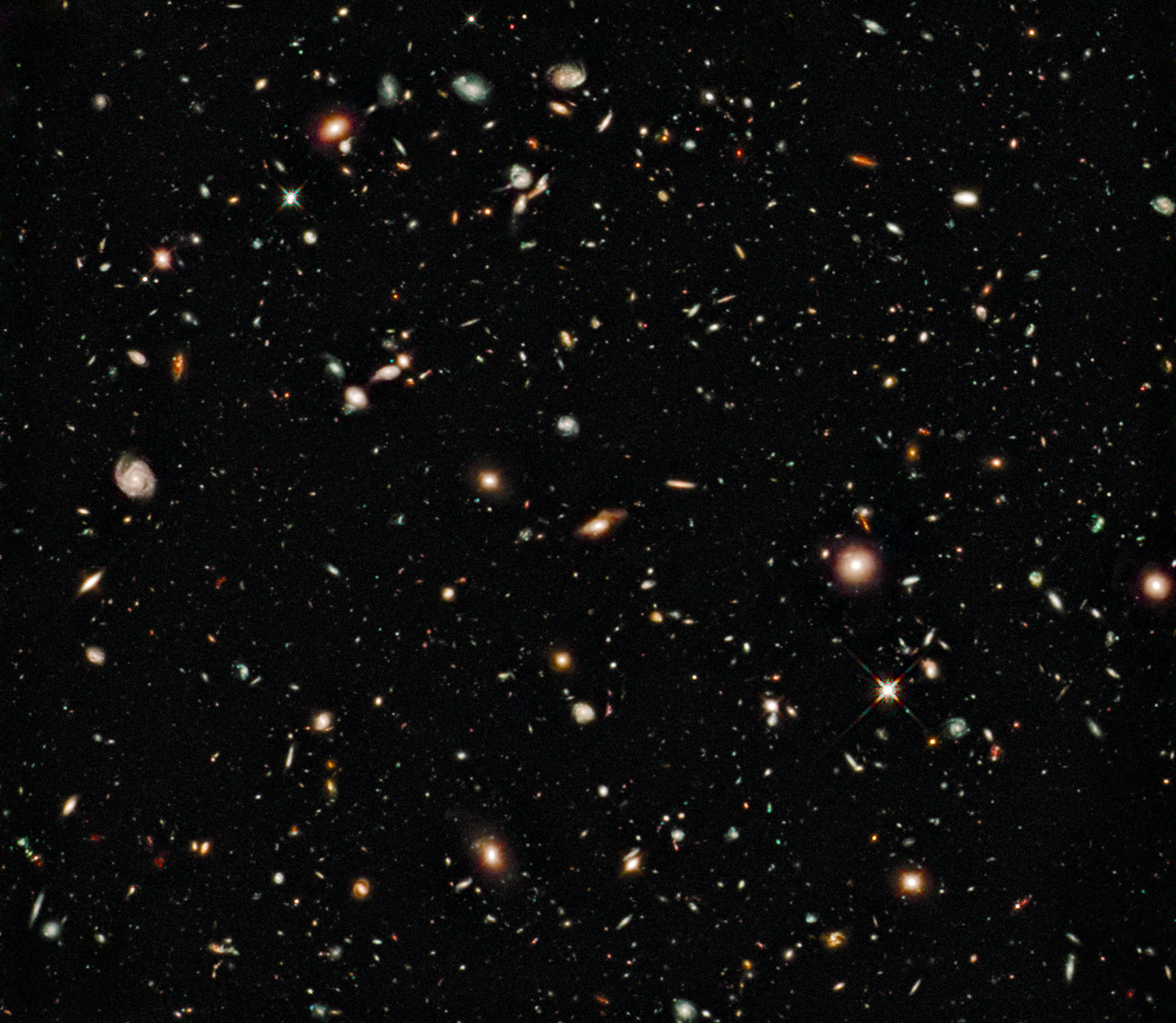
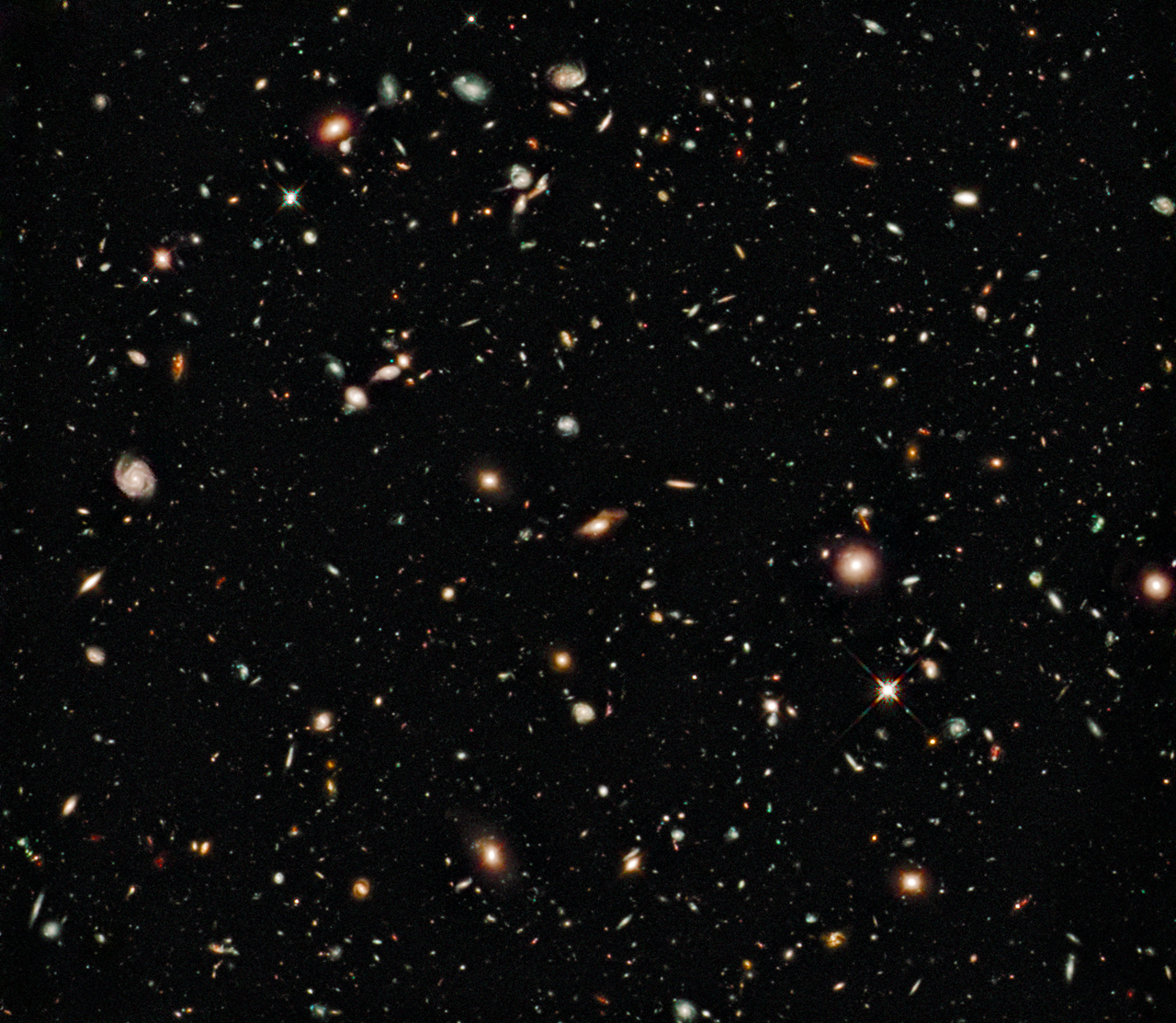
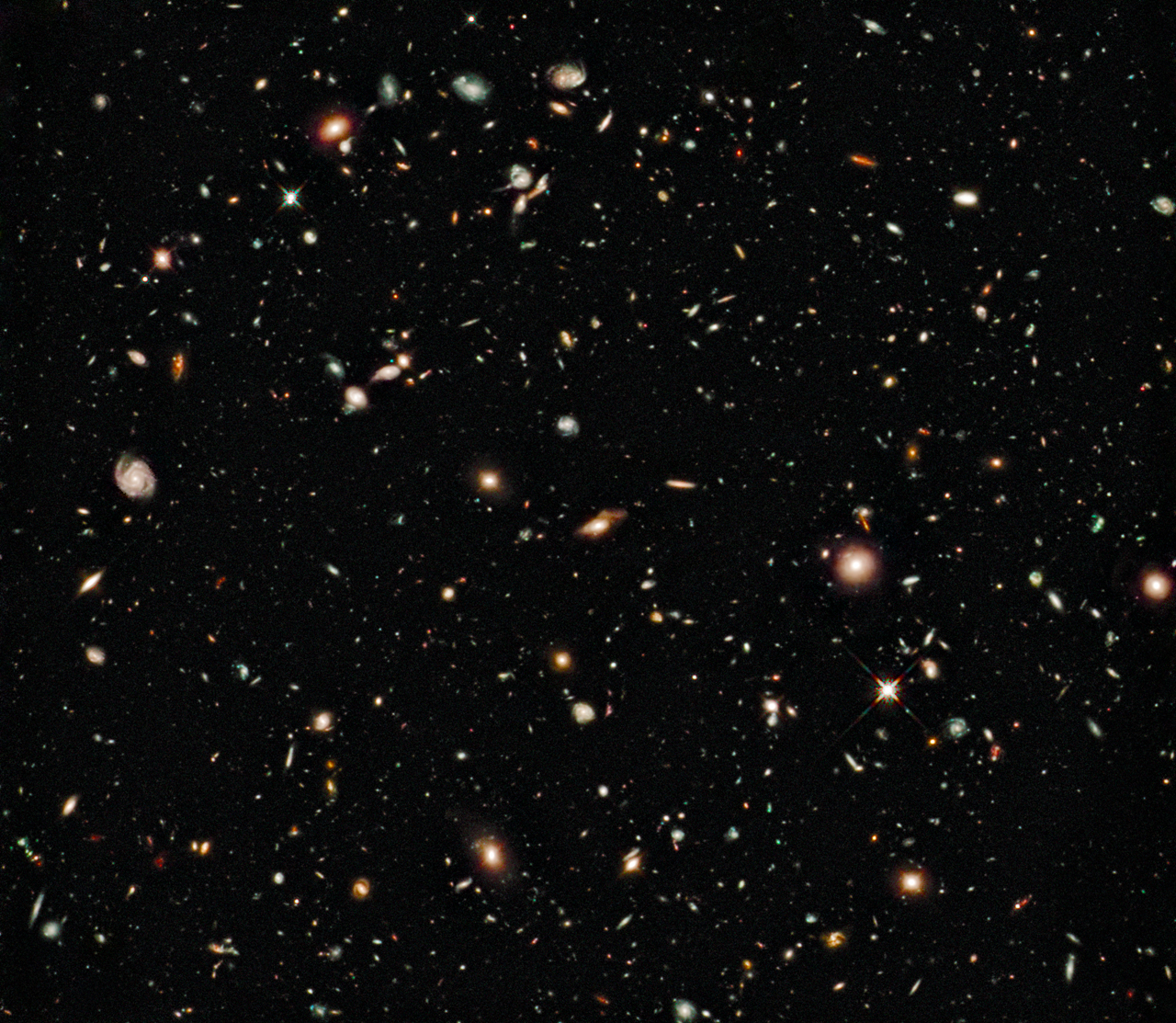
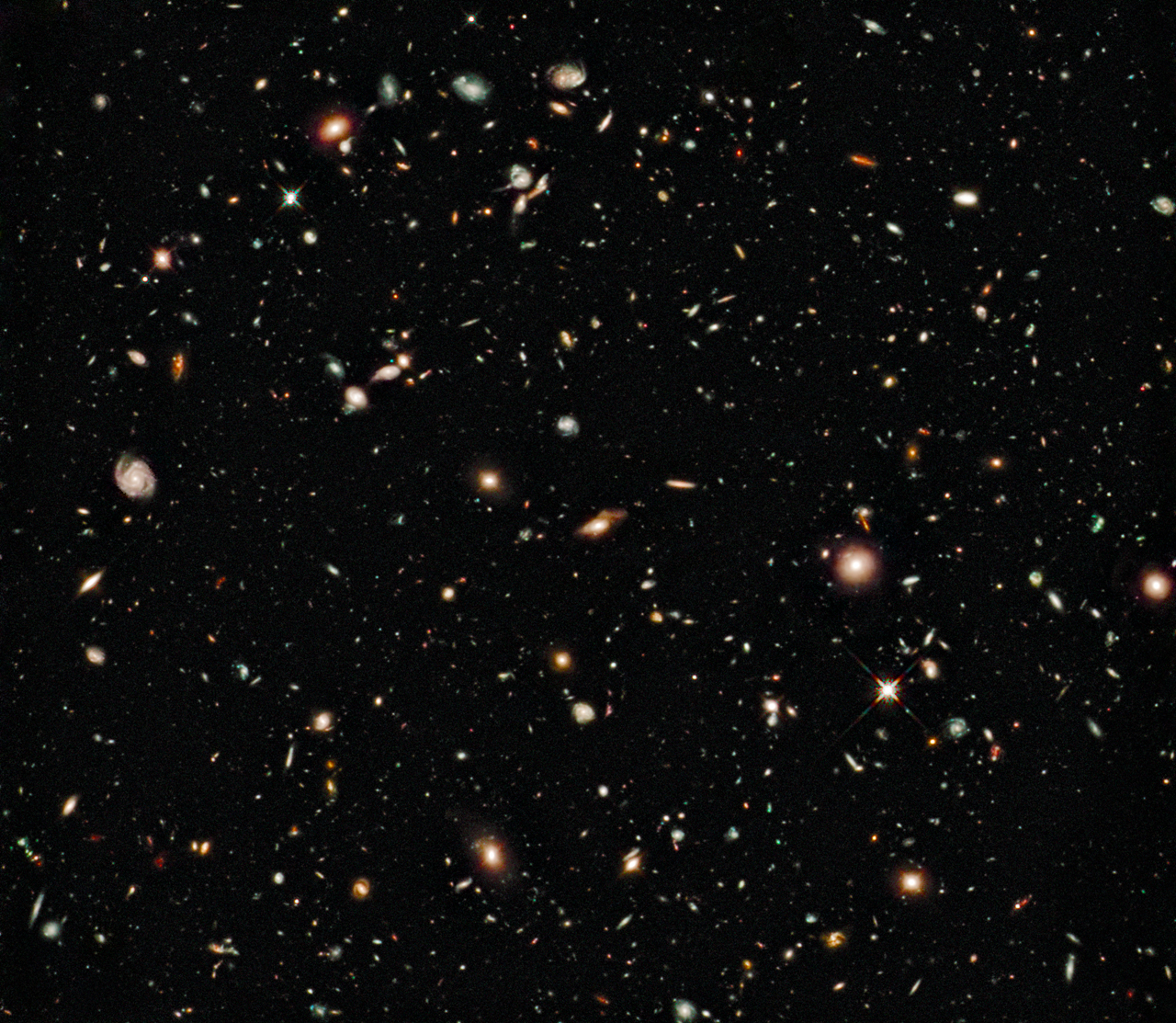
This image of the Hubble Ultra Deep Field includes infrared observations that allowed Hubble to peer deeper into the universe than it ever had before. The faintest and reddest objects in the image are galaxies that formed 600 million years after the big bang.
Scientific Significance
The infrared observations incorporated into this Hubble Ultra Deep Field image were crucial for pushing galaxy detection to the highest redshifts. At these extreme distances, the universe's expansion has stretched the light from young galaxies beyond visible wavelengths into the infrared. The WFC3 infrared observations detected several candidate galaxies at redshifts beyond z=8, corresponding to the epoch of reionization when the first galaxies were transforming the universe from opaque to transparent. These observations constrained the cosmic star formation rate density at early times and provided targets for follow-up spectroscopy. The Ultra Deep Field remains one of the most important datasets for understanding galaxy formation and evolution across cosmic time.
Observation Details
This version of the Hubble Ultra Deep Field combines the original 2004 ACS observations in visible light with new infrared observations from the Wide Field Camera 3 (WFC3) installed during Servicing Mission 4 in 2009. The WFC3 infrared observations added three near-infrared filters (F105W, F125W, and F160W) to the wavelength coverage, enabling photometric redshift estimation for the most distant sources. The total exposure time for this field exceeds 200 hours of Hubble time accumulated over multiple observing campaigns spanning years. Careful data processing removed cosmic rays, detector artifacts, and other systematic effects while preserving the faintest astronomical signals. The resulting catalog contains photometric measurements for tens of thousands of sources.
Location in the Universe
Constellation
Fornax
Distance from Earth
Up to 13 billion light-years
Fun Facts
- 1
The patch of sky covered by the Ultra Deep Field is smaller than a 1mm x 1mm square held at arm's length — yet it contains 10,000 galaxies.
- 2
Light from the most distant galaxies in this image has been traveling for over 13 billion years, meaning we see them as they were when the universe was an infant.
- 3
If similar observations were made across the entire sky, they would reveal approximately 200 billion galaxies — far more than there are grains of sand on all of Earth's beaches.
Image credit: NASA, ESA, Hubble Space Telescope