About This Image
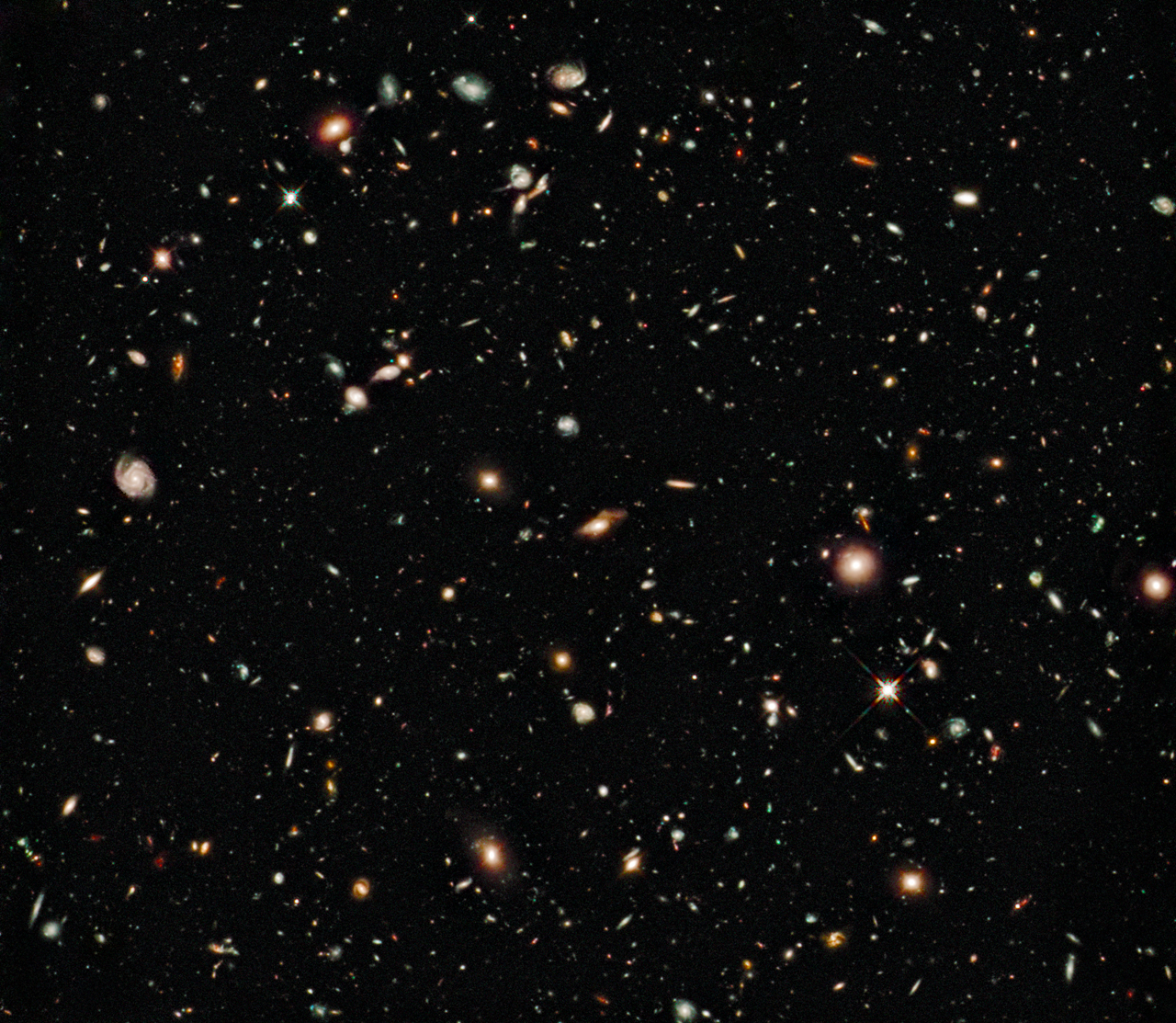
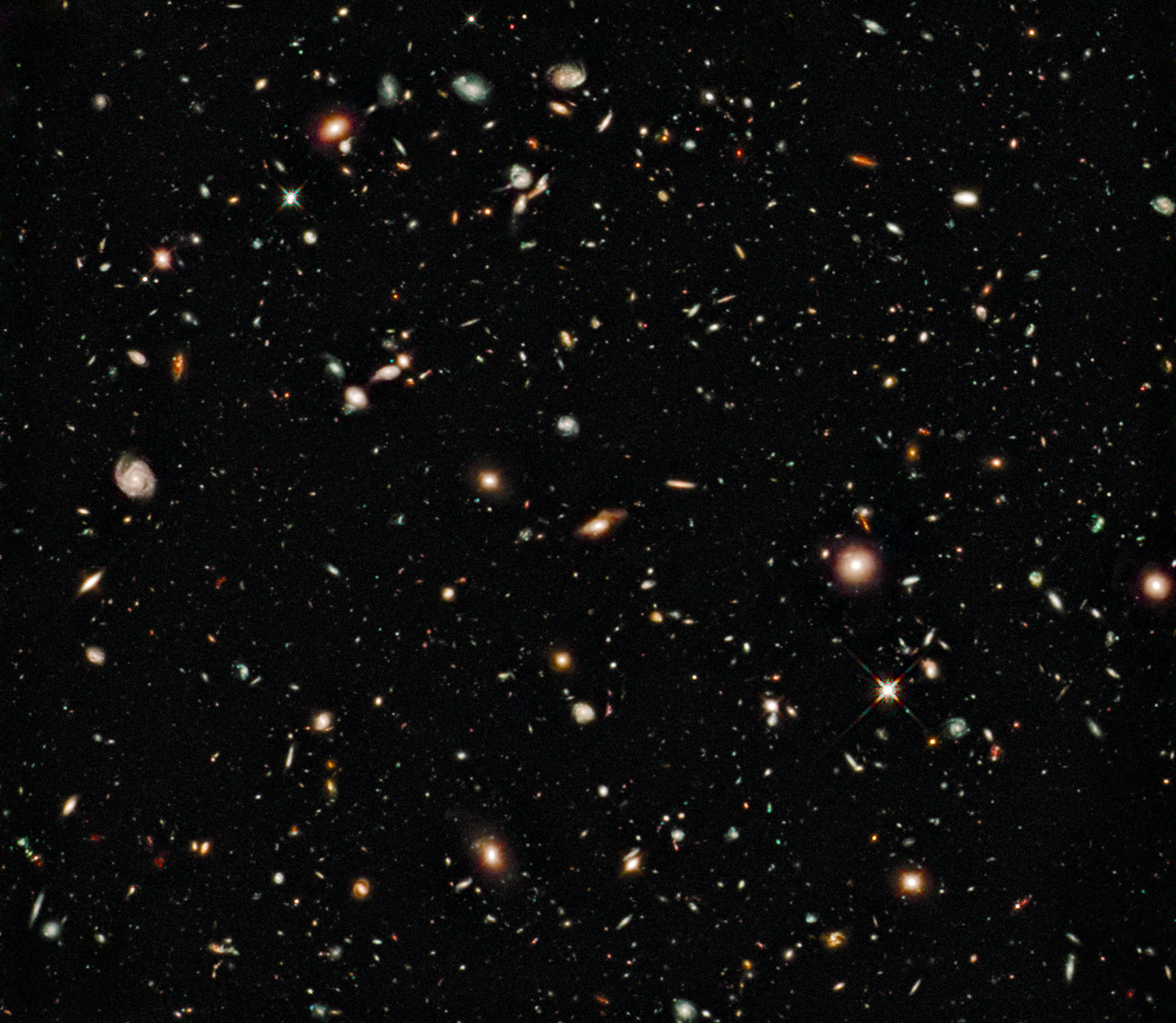
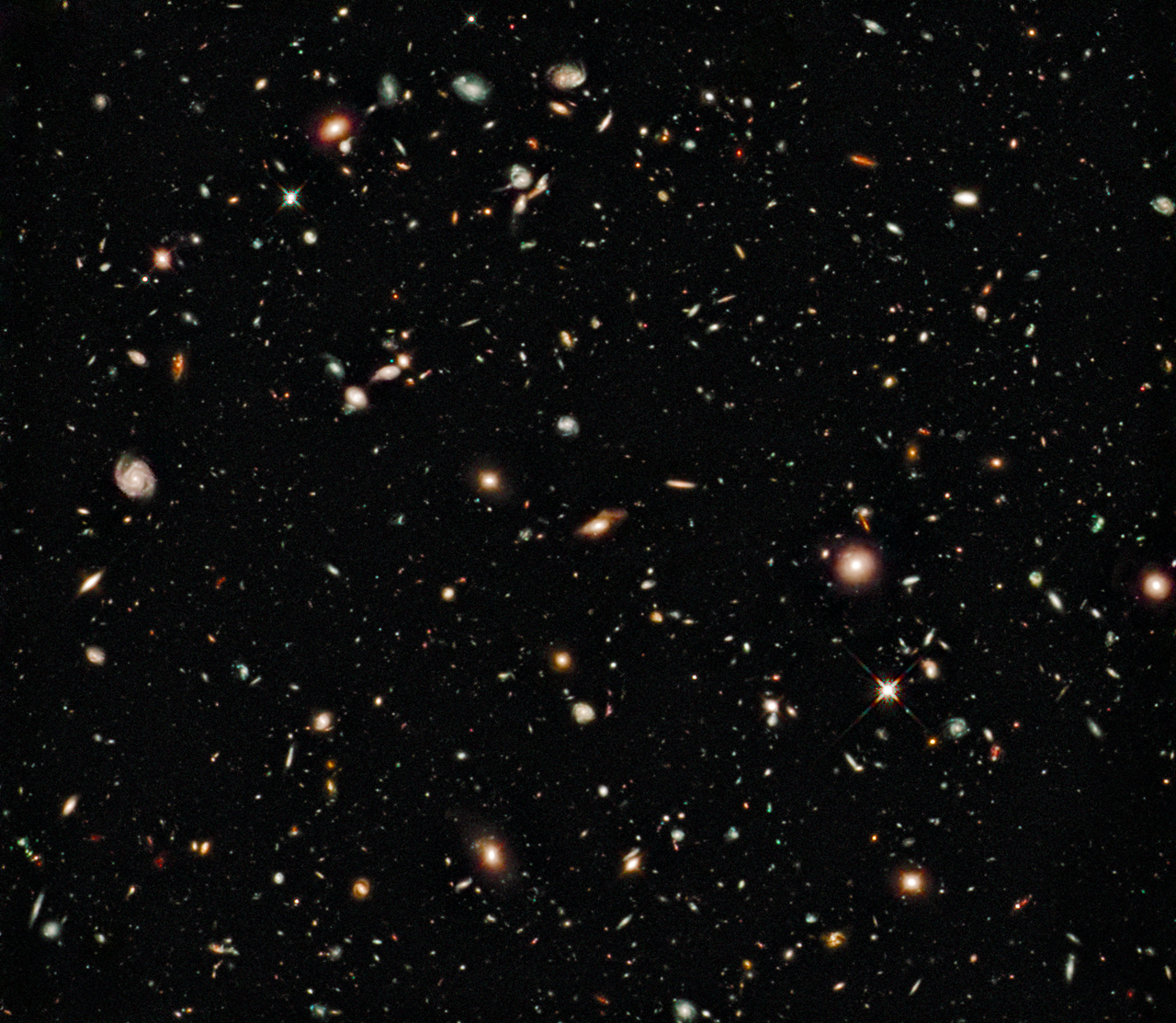
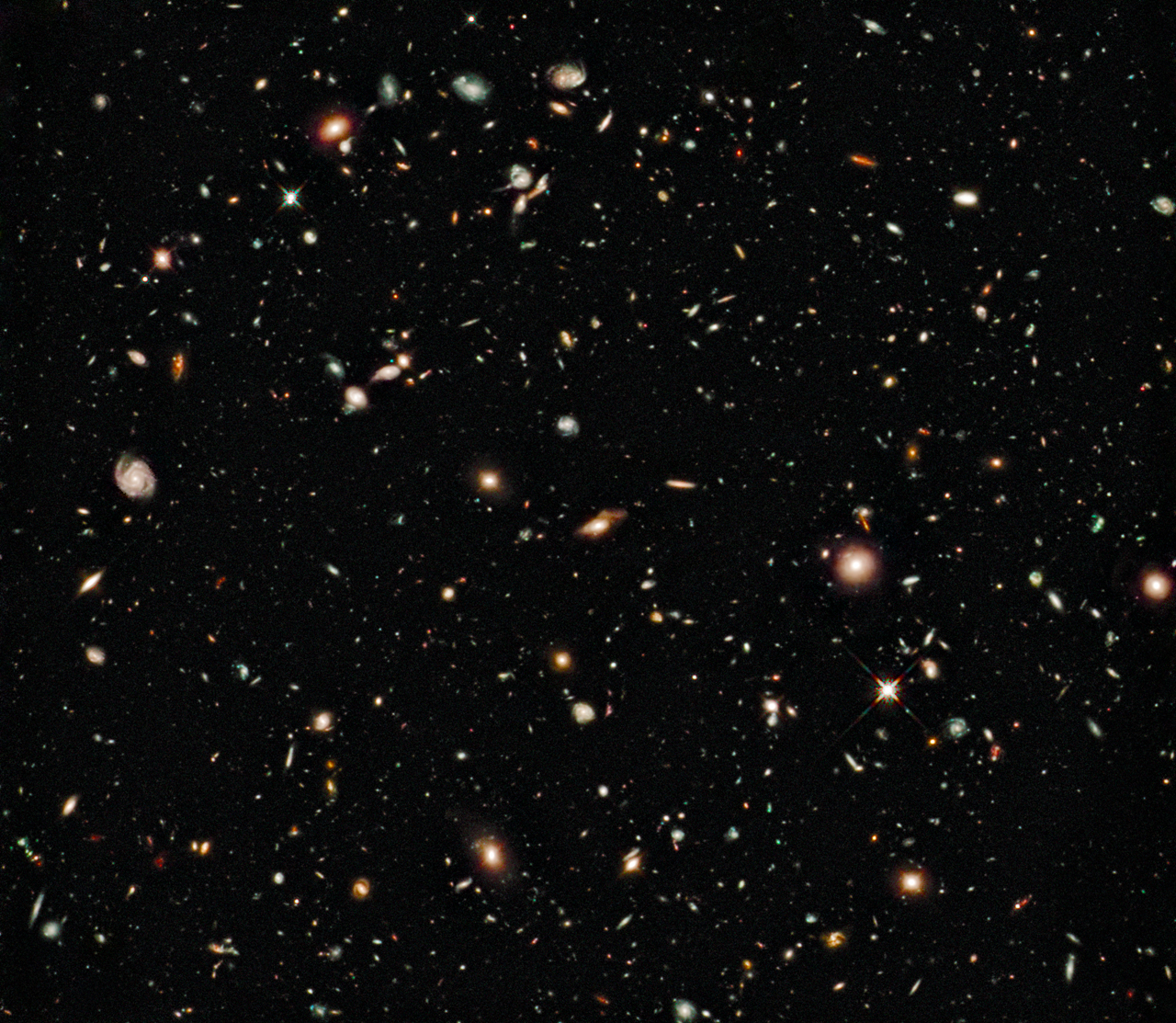
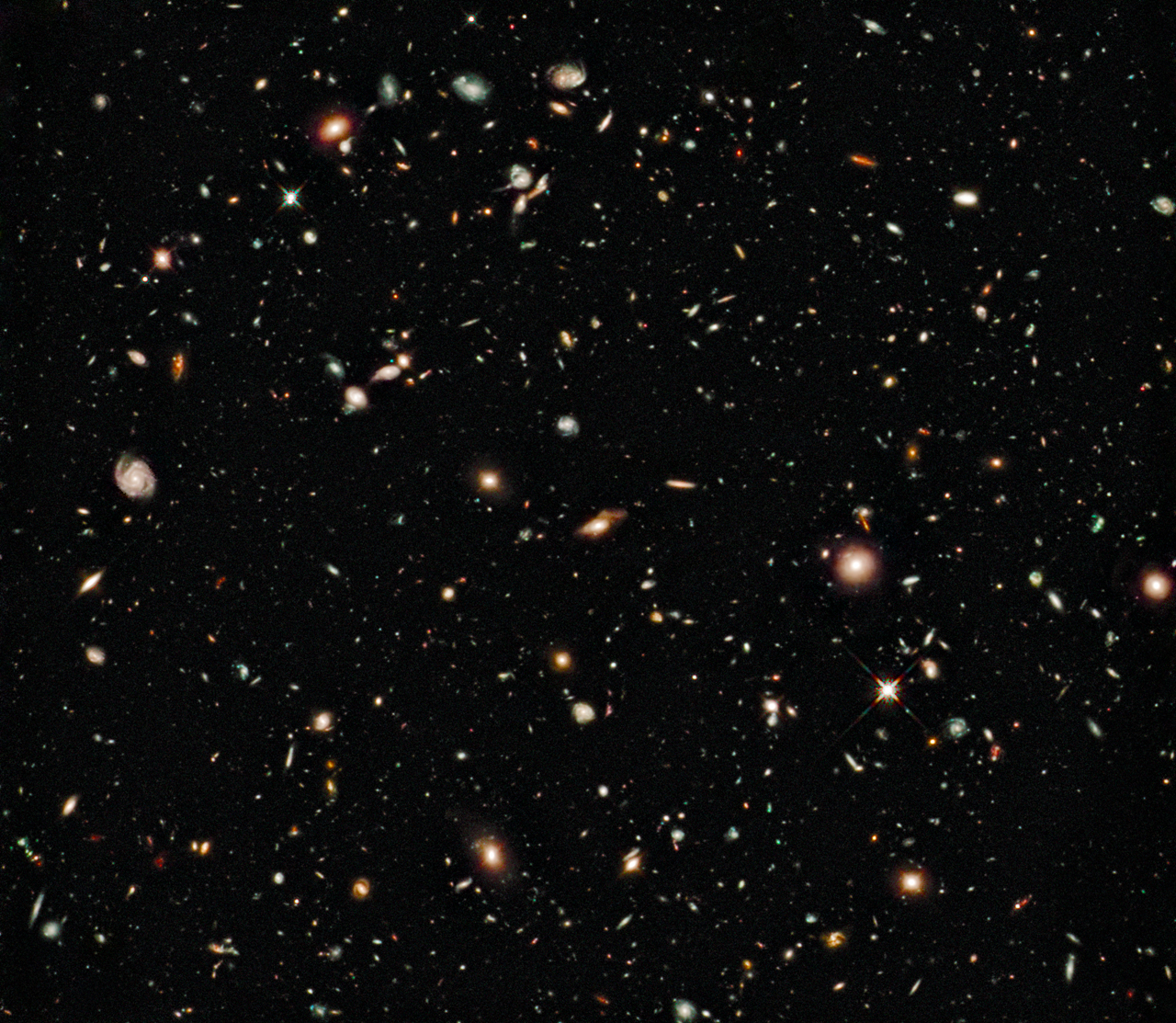
This section of the Hubble Ultra Deep Field showcases the incredible diversity of galaxies across cosmic time, from nearby spirals to primordial galaxies at the edge of the observable universe. The image includes infrared observations that allowed Hubble to detect galaxies whose light has been stretched to longer wavelengths by the expansion of the universe. Among the approximately 10,000 galaxies visible in the full Ultra Deep Field, the faintest and reddest objects formed just 600 million years after the Big Bang. This cosmic archaeology reveals galaxies in all stages of their evolution — from the chaotic, irregular shapes of young galaxies still assembling through mergers to the elegant spiral and elliptical forms of mature systems. Each galaxy represents an island universe of billions of stars, planets, and possibilities.
Scientific Significance
The Ultra Deep Field provides fundamental constraints on how galaxies assembled and evolved over 13 billion years of cosmic history. By counting galaxies at different distances (redshifts), astronomers measure the cosmic star formation history — the rate at which the universe converted gas into stars over time. The observations reveal that star formation peaked when the universe was about 3 billion years old and has declined ever since. The morphologies of distant galaxies show that today's elegant spirals and smooth ellipticals evolved from much more chaotic, irregular progenitors through successive mergers and internal dynamical processes. The Ultra Deep Field remains the definitive reference for galaxy evolution studies, with thousands of papers analyzing its treasures.
Observation Details
The infrared extension to the Hubble Ultra Deep Field used the Wide Field Camera 3 (WFC3) in its infrared channel, adding observations at 1.05, 1.25, and 1.6 micrometers to the existing optical data from ACS. The infrared observations required approximately 50 hours of Hubble time, with careful dithering to improve spatial sampling and reject cosmic rays. The combined optical and infrared photometry enables photometric redshift estimation for sources too faint for spectroscopy, using the distinctive features in galaxy spectra that shift through the filters at different redshifts. The catalogs derived from this image contain positions, brightnesses, and estimated properties for tens of thousands of galaxies spanning the observable universe.
Location in the Universe
Constellation
Fornax
Distance from Earth
Up to 13 billion light-years
Fun Facts
- 1
Some galaxies in the Ultra Deep Field appear distorted into arcs and multiple images by gravitational lensing from intervening clusters — Einstein's general relativity acting as a natural telescope.
- 2
The most distant galaxies in this image are so young that they predate the formation of most heavy elements — the stars within them contained almost no carbon, oxygen, or iron.
- 3
Light from the most distant galaxies left its source when the universe was only about 5% of its current age, before the Earth, Sun, or Milky Way even existed.
Image credit: NASA, ESA, Hubble Space Telescope