About This Image
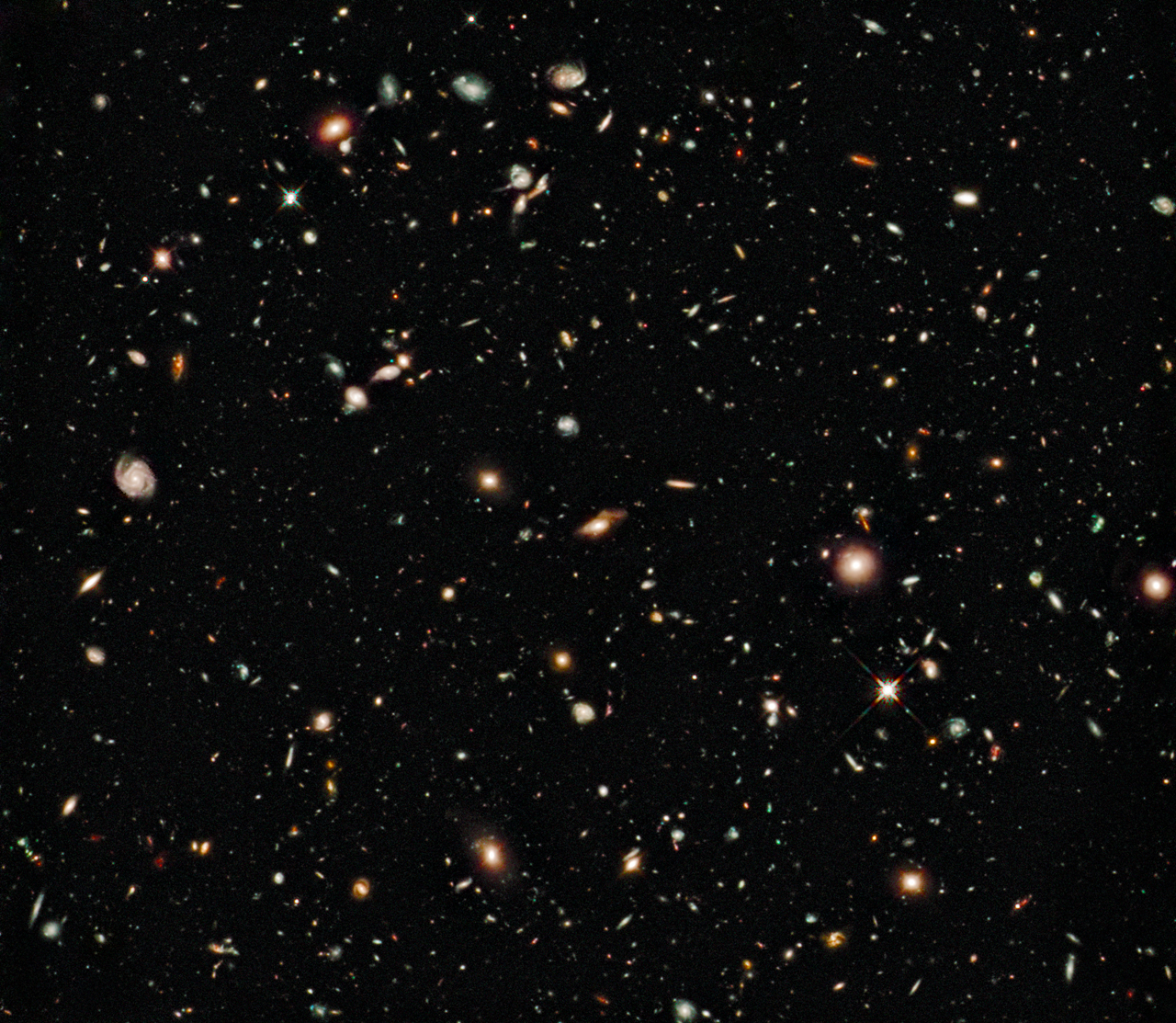
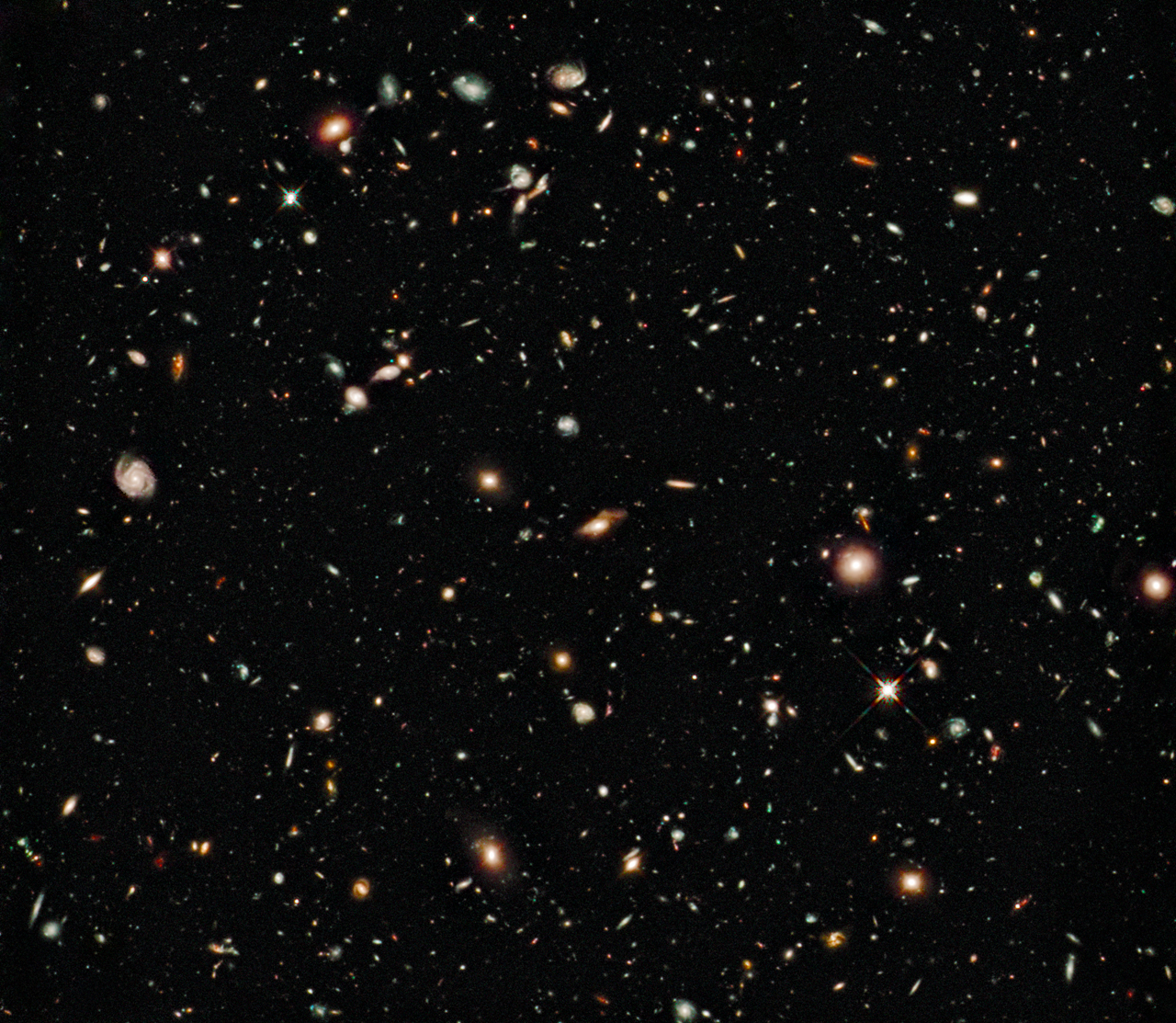
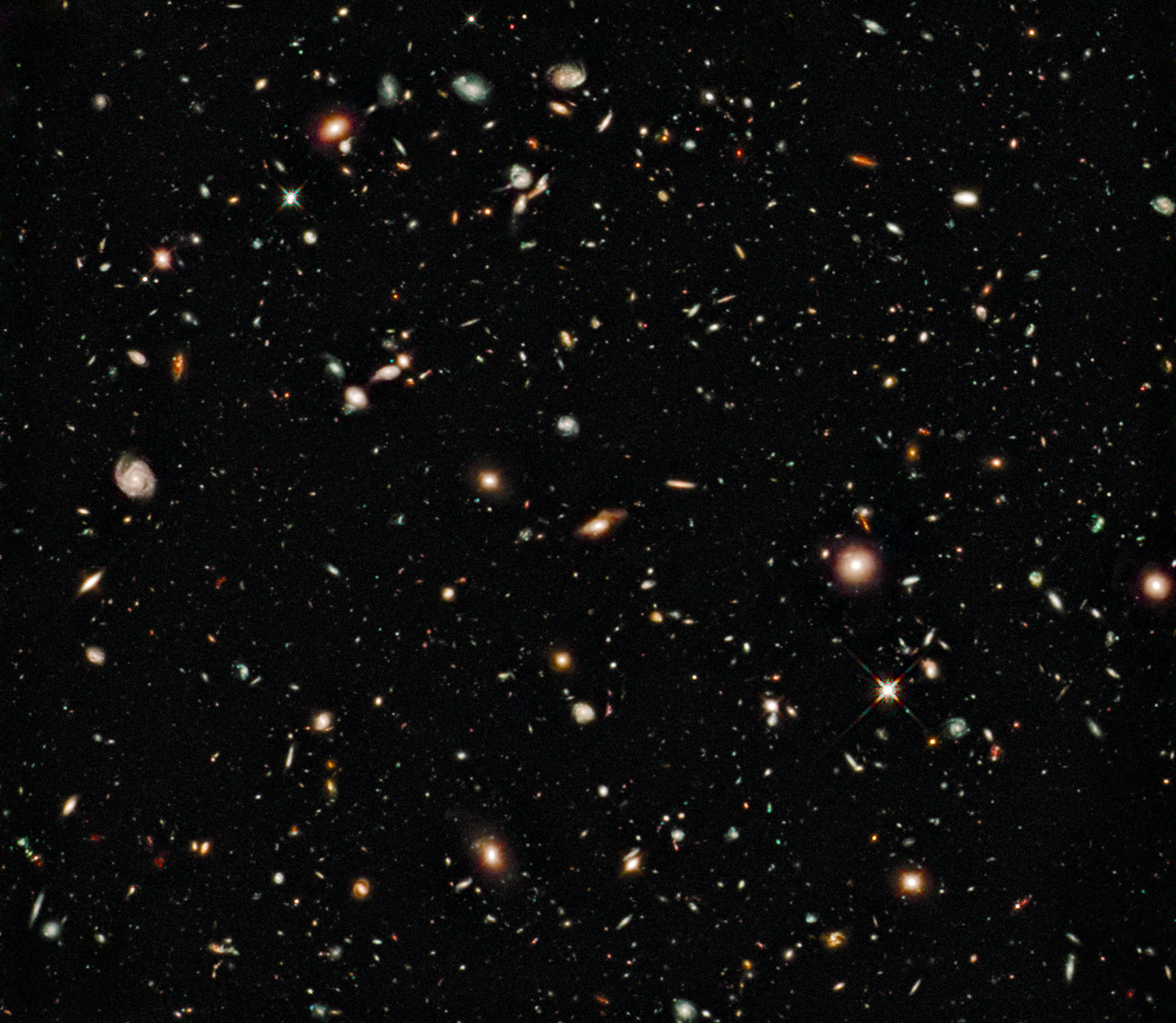
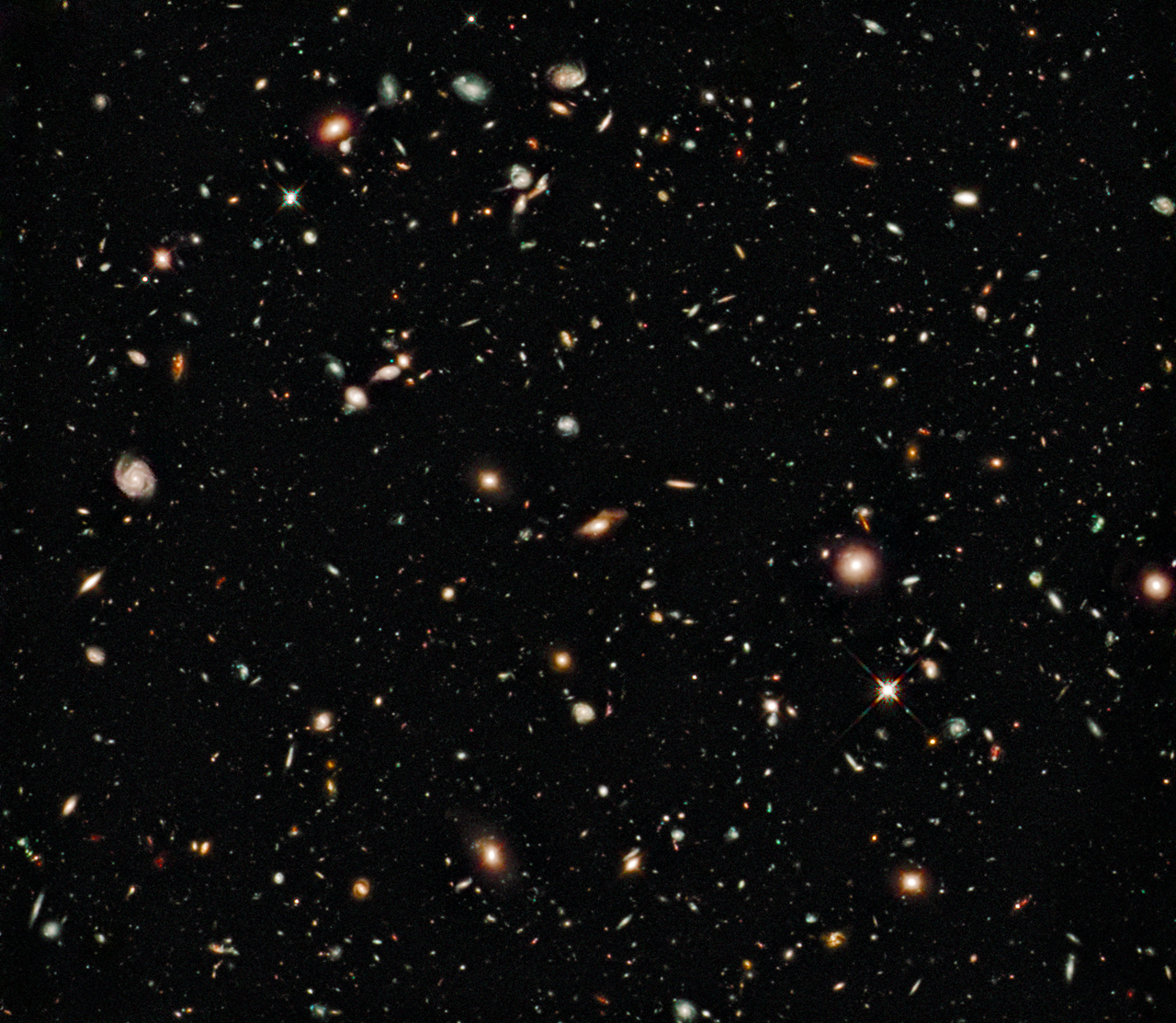
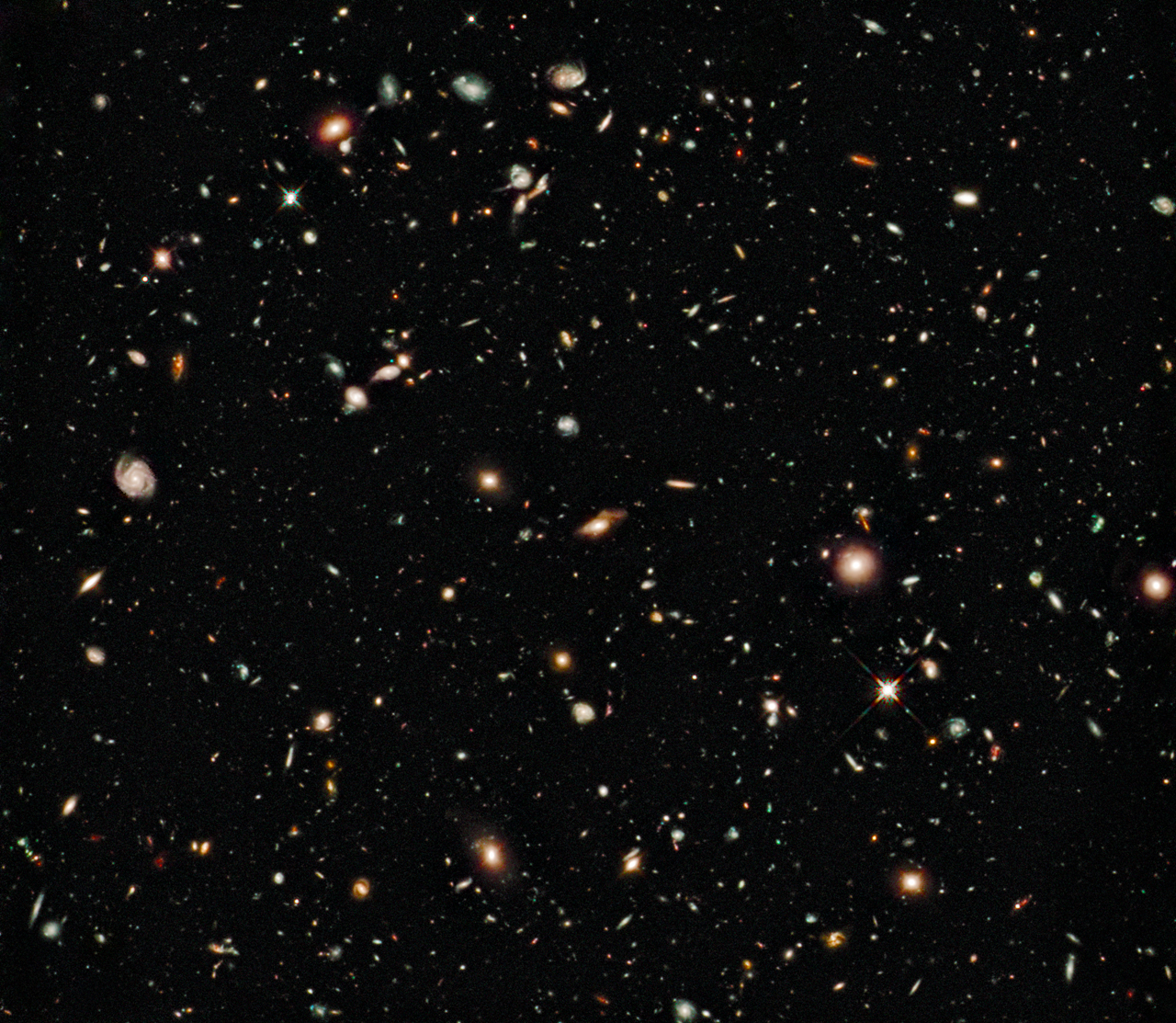
The Hubble Ultra Deep Field represents one of the most important astronomical images ever captured, peering to the very edge of the observable universe. This version, enhanced with infrared observations, allowed Hubble to detect galaxies that formed during the cosmic dark ages, before the universe became transparent to visible light. The faintest and reddest objects in this image are infant galaxies glimpsed when the universe was less than one billion years old, their light having traveled for over 13 billion years to reach us. This extraordinary dataset has enabled hundreds of scientific papers and fundamentally changed our understanding of how galaxies form and evolve. The Ultra Deep Field demonstrates that even the most apparently empty regions of sky are filled with galaxies, and that the universe teems with structure on every observable scale.
Scientific Significance
The Hubble Ultra Deep Field has become the definitive benchmark for deep galaxy surveys and a cornerstone of observational cosmology. It established that the cosmic star formation rate density has evolved dramatically over time, peaking when the universe was about 3 billion years old and declining by a factor of 10 since then. The high-redshift galaxy candidates detected in the infrared observations demonstrated that substantial galaxy populations existed within the first billion years after the Big Bang, constraining the timeline of cosmic structure formation. The Ultra Deep Field also revealed that early galaxies were remarkably compact and gas-rich, undergoing rapid evolution through mergers and internal processes to become the diverse galaxy population observed today. This legacy dataset continues to guide the design and interpretation of observations with newer facilities including JWST.
Observation Details
The complete Hubble Ultra Deep Field combines observations from three major camera systems spanning the telescope's history. The original 2004 ACS observations provided deep imaging in four optical filters (B, V, i, z). The 2009 WFC3/IR observations added three near-infrared filters (Y, J, H). Additional observations with WFC3/UVIS extended coverage into the ultraviolet. The combined dataset spans wavelengths from 0.23 to 1.6 micrometers, enabling photometric redshift estimation across a wide range of cosmic distances. The meticulous calibration and reduction of this multi-epoch, multi-instrument dataset required years of effort and represents one of the most carefully characterized astronomical images ever produced. Public release of all data has enabled independent scientific analysis by the global astronomical community.
Location in the Universe
Constellation
Fornax
Distance from Earth
Up to 13 billion light-years
Fun Facts
- 1
The total exposure time for the Ultra Deep Field across all observing campaigns exceeds 11.3 days of continuous observation — spread over months of actual telescope time.
- 2
Every galaxy in this image is moving away from us due to cosmic expansion, with the most distant galaxies receding at velocities exceeding 95% of the speed of light.
- 3
The Ultra Deep Field contains galaxies at distances where the universe's expansion means the light we see today will never reach them again — we observe regions now beyond our cosmic horizon.
Image credit: NASA, ESA, Hubble Space Telescope