About This Image
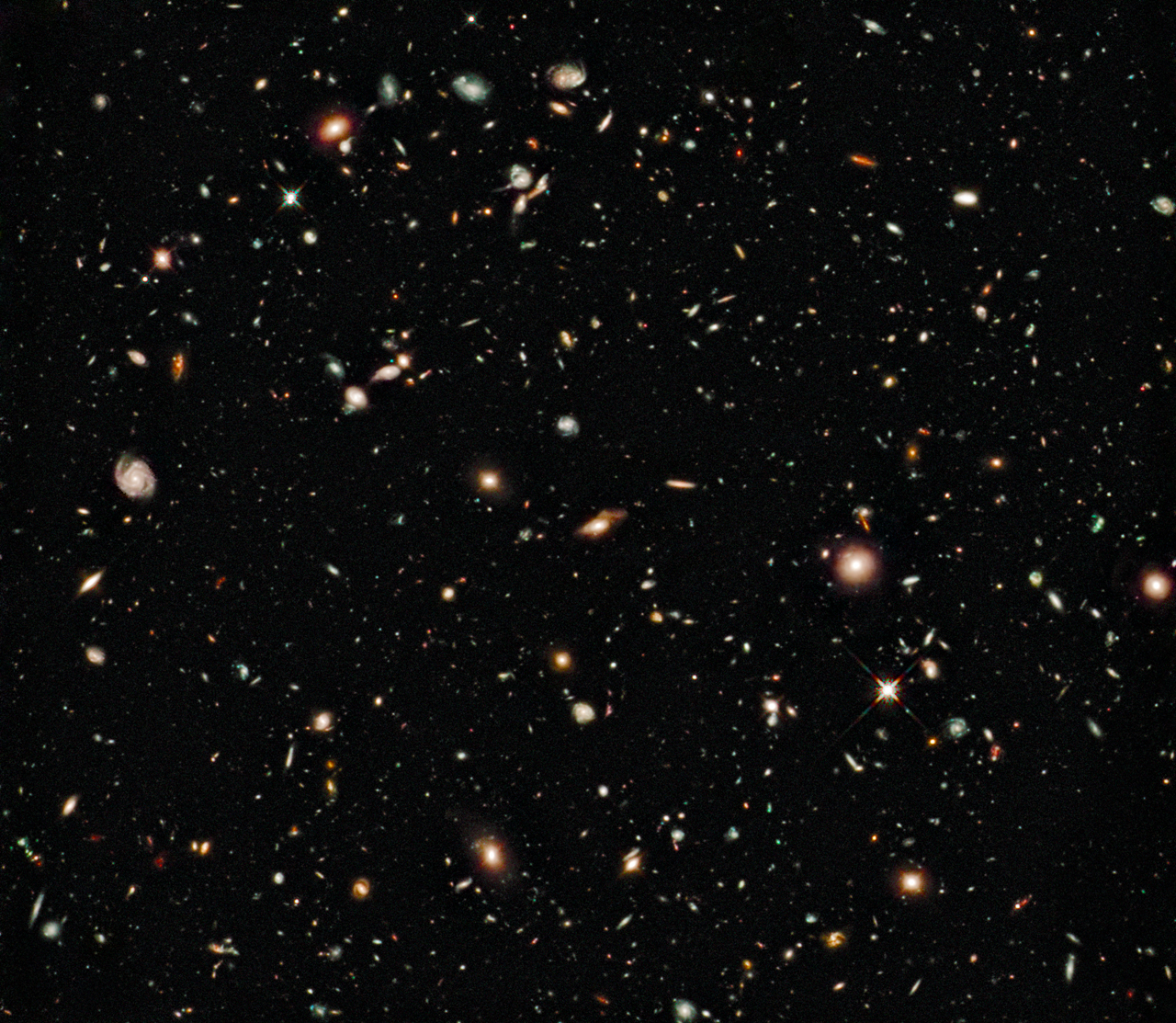
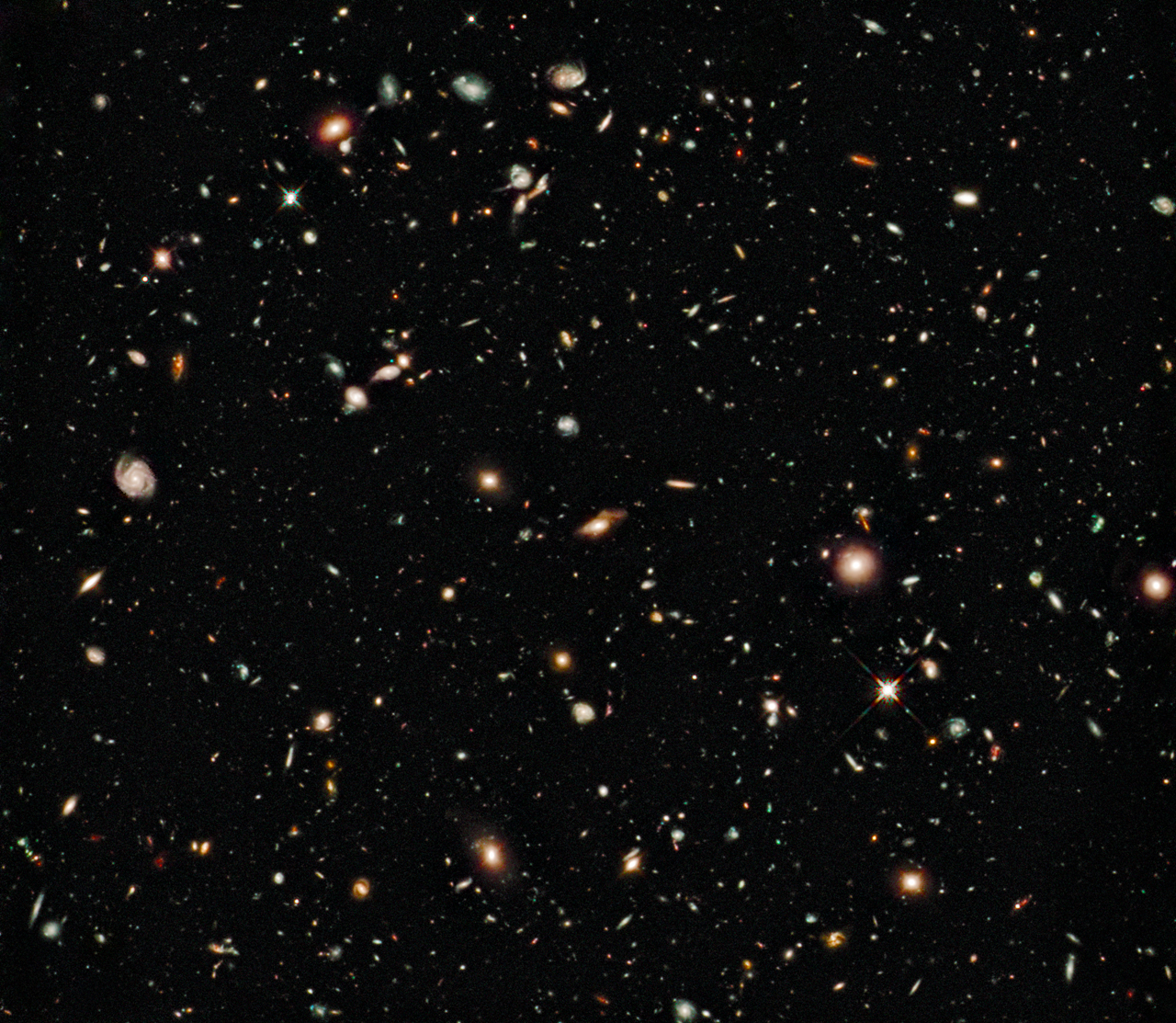
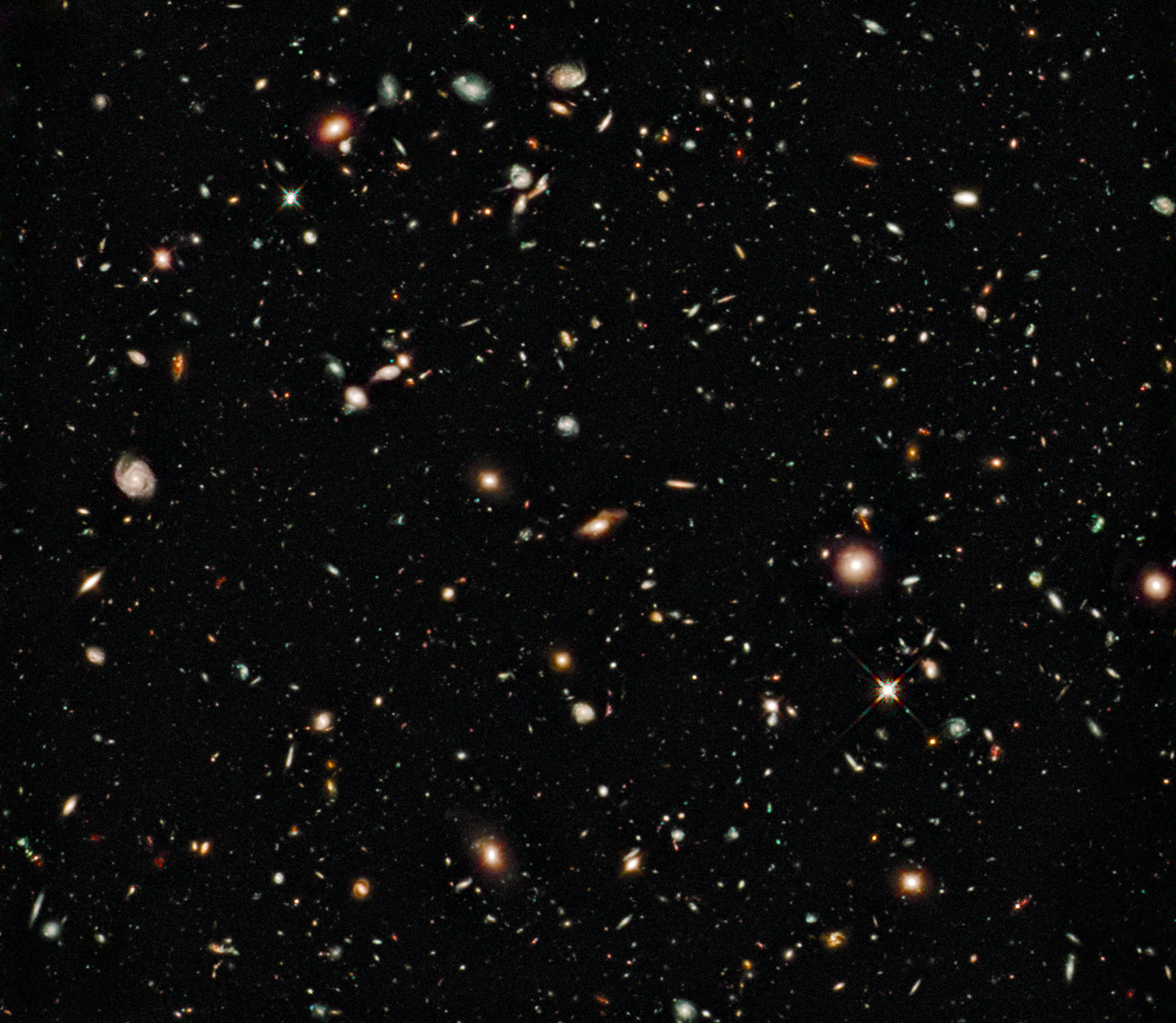
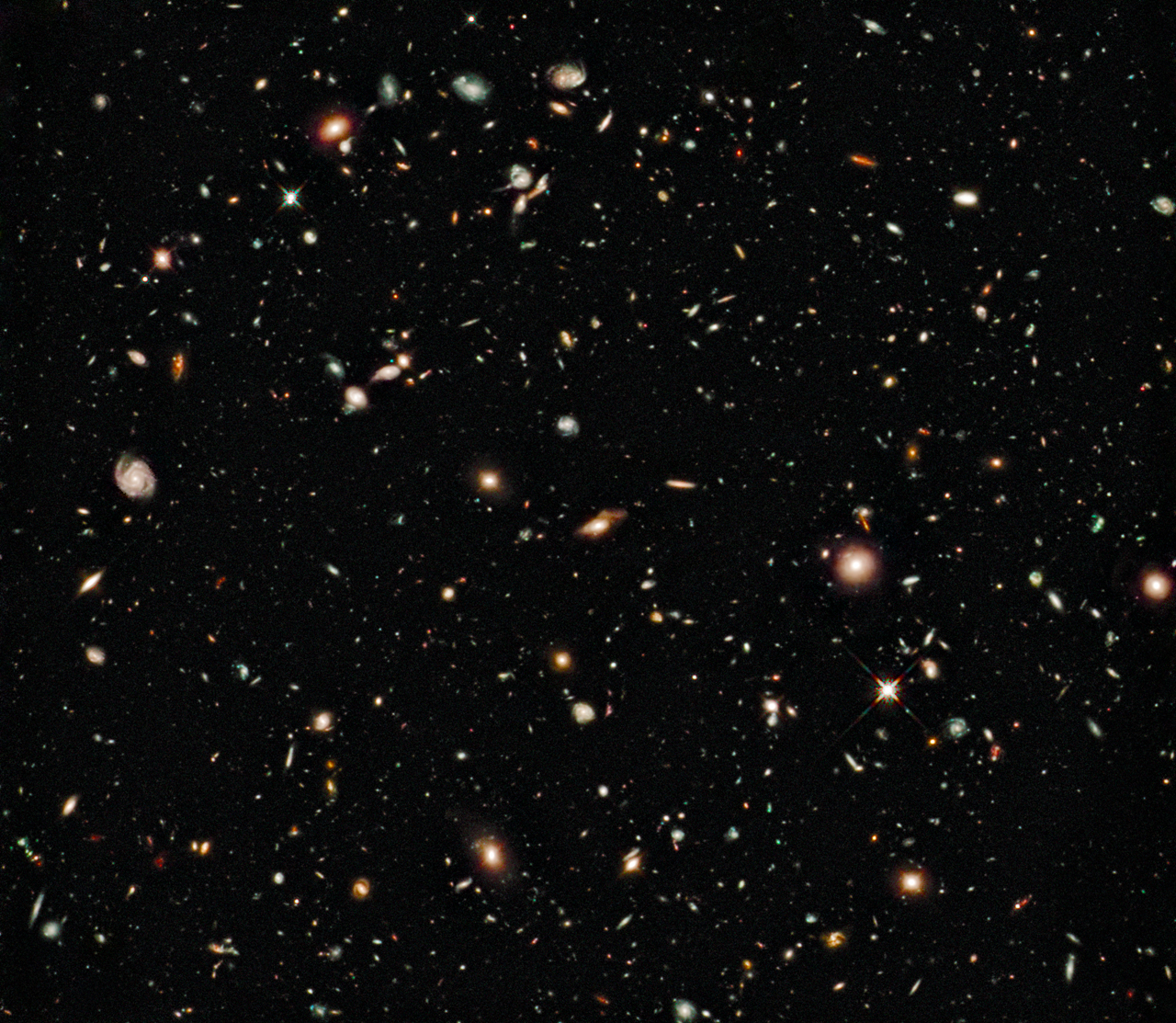
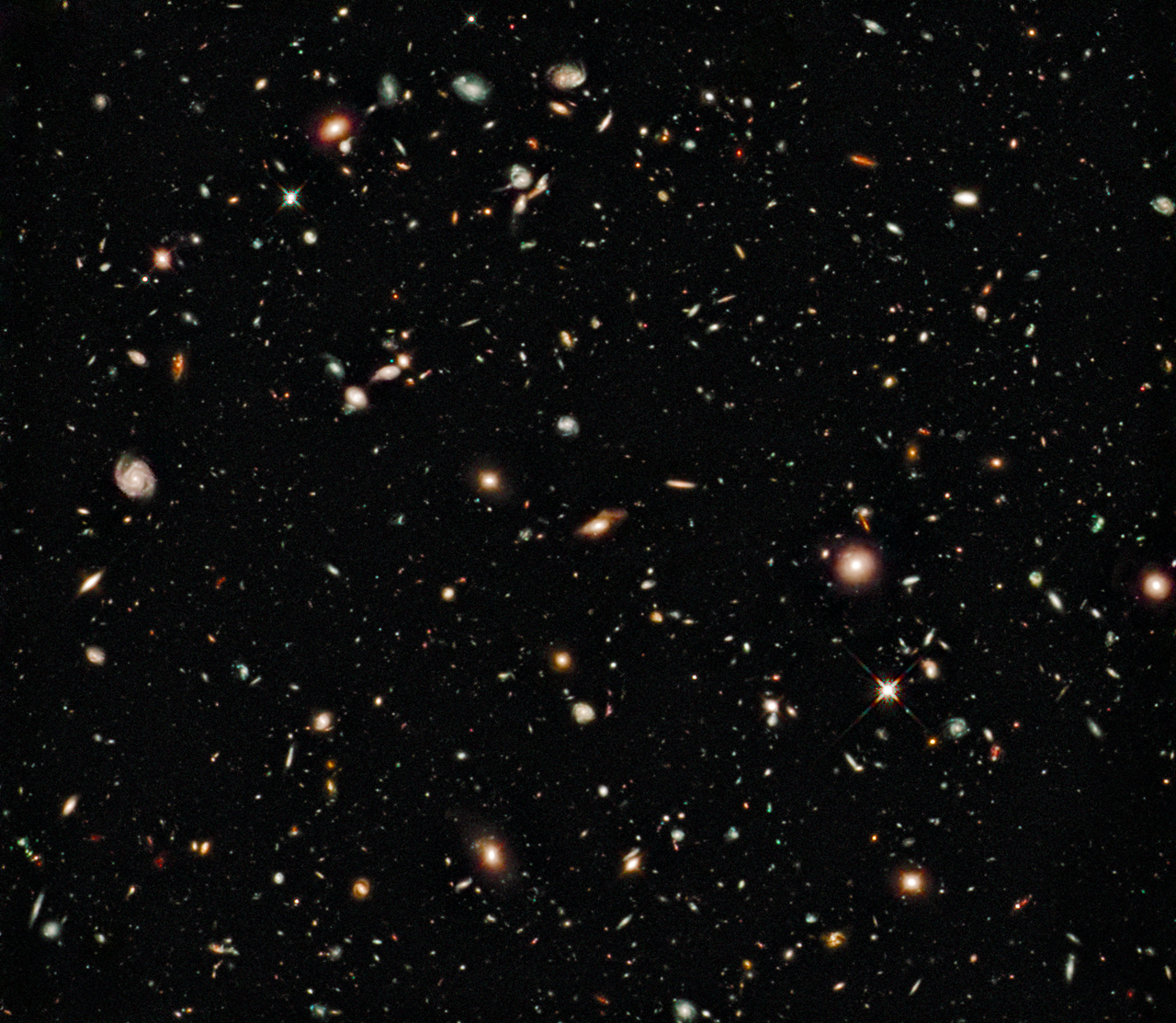
Within this remarkable view of the Hubble Ultra Deep Field lies a cosmic time capsule spanning over 13 billion years of universal history. The inclusion of infrared observations from Hubble's newest camera allowed astronomers to push the boundaries of galaxy detection further than ever before. Each point of light in this image represents not a single star but an entire galaxy, with the reddest and faintest objects having emitted their light when the universe was in its infancy. The diversity of galaxy shapes and sizes visible here — from grand spirals to compact ellipticals to irregular, chaotic systems — charts the evolutionary pathways that galaxies have followed from the first cosmic structures to the mature systems we see in the nearby universe today.
Scientific Significance
The Ultra Deep Field has transformed our understanding of galaxy assembly. The infrared data reveal that massive galaxies assembled surprisingly quickly in the early universe, challenging models that predicted slow, gradual growth. Many galaxies at z>6 show evidence of mature stellar populations mixed with recent star formation, indicating complex formation histories even at early times. The observations also constrain the faint end of the galaxy luminosity function — the distribution of galaxy brightnesses — which is crucial for understanding whether low-luminosity galaxies could have reionized the universe. The Ultra Deep Field continues to yield new discoveries as improved analysis techniques extract additional information from this extraordinary dataset.
Observation Details
The creation of the infrared Ultra Deep Field required careful coordination between different observing programs and instruments. The WFC3 infrared observations were optimized for depth rather than area, concentrating all available exposure time in the small field centered on the original ACS Ultra Deep Field. The F105W, F125W, and F160W filters were chosen to bracket the redshifted Lyman break feature that allows identification of high-redshift galaxies through their colors. Sophisticated photometric techniques measured colors and brightnesses consistently across the combined optical and infrared dataset, enabling construction of spectral energy distributions for thousands of galaxies. These photometric measurements form the basis for statistical studies of galaxy populations across cosmic time.
Location in the Universe
Constellation
Fornax
Distance from Earth
Up to 13 billion light-years
Fun Facts
- 1
The galaxies in this image span a factor of over 1000 in distance — some are relatively nearby while others are at the edge of the observable universe.
- 2
Because light takes time to travel, we see nearby galaxies as they were recently and distant galaxies as they were billions of years ago — the image is a timeline, not a snapshot.
- 3
Extrapolating from the Ultra Deep Field, astronomers estimate the observable universe contains 2 trillion galaxies — 10 times more than previous estimates.
Image credit: NASA, ESA, Hubble Space Telescope