About This Image
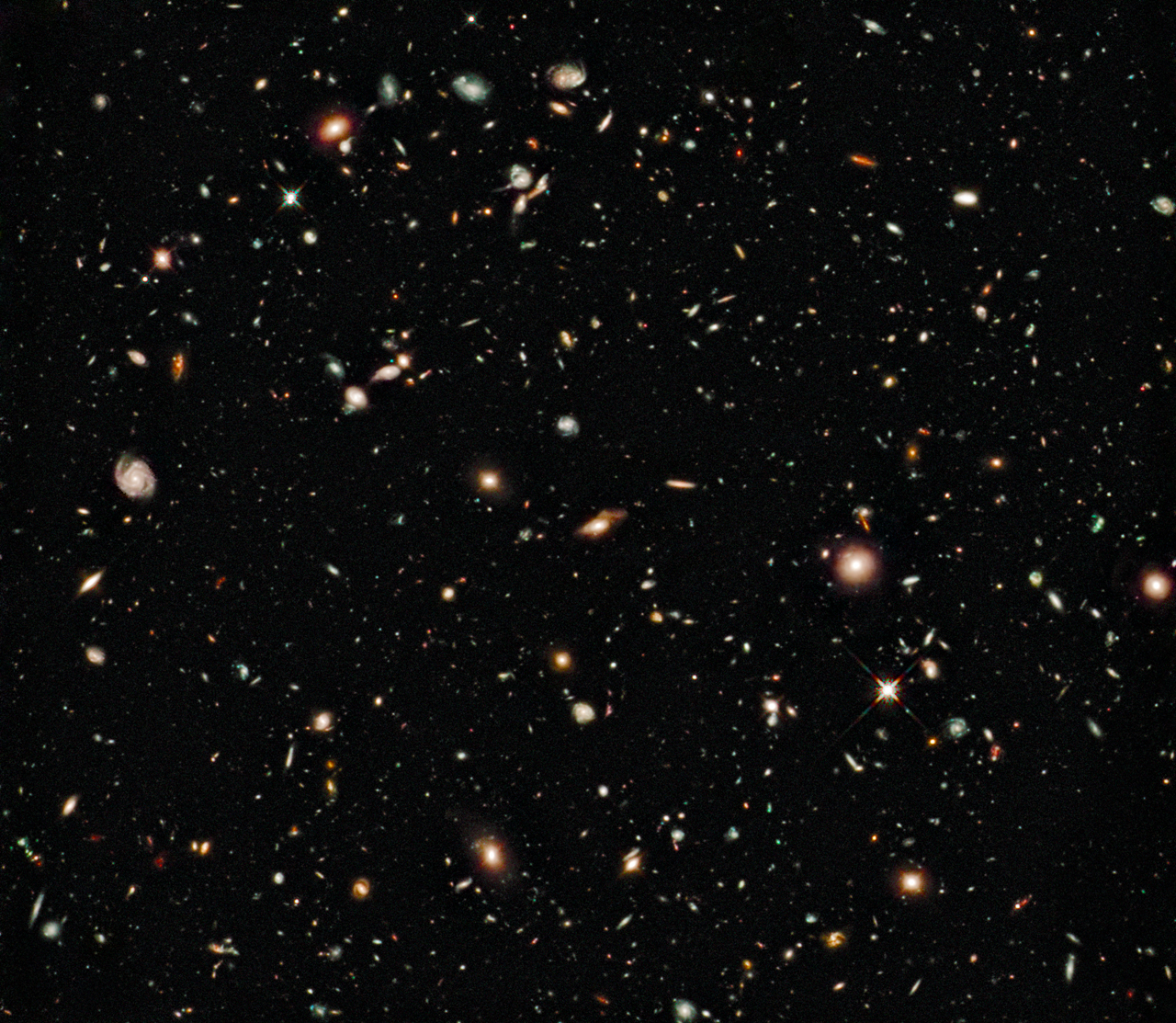
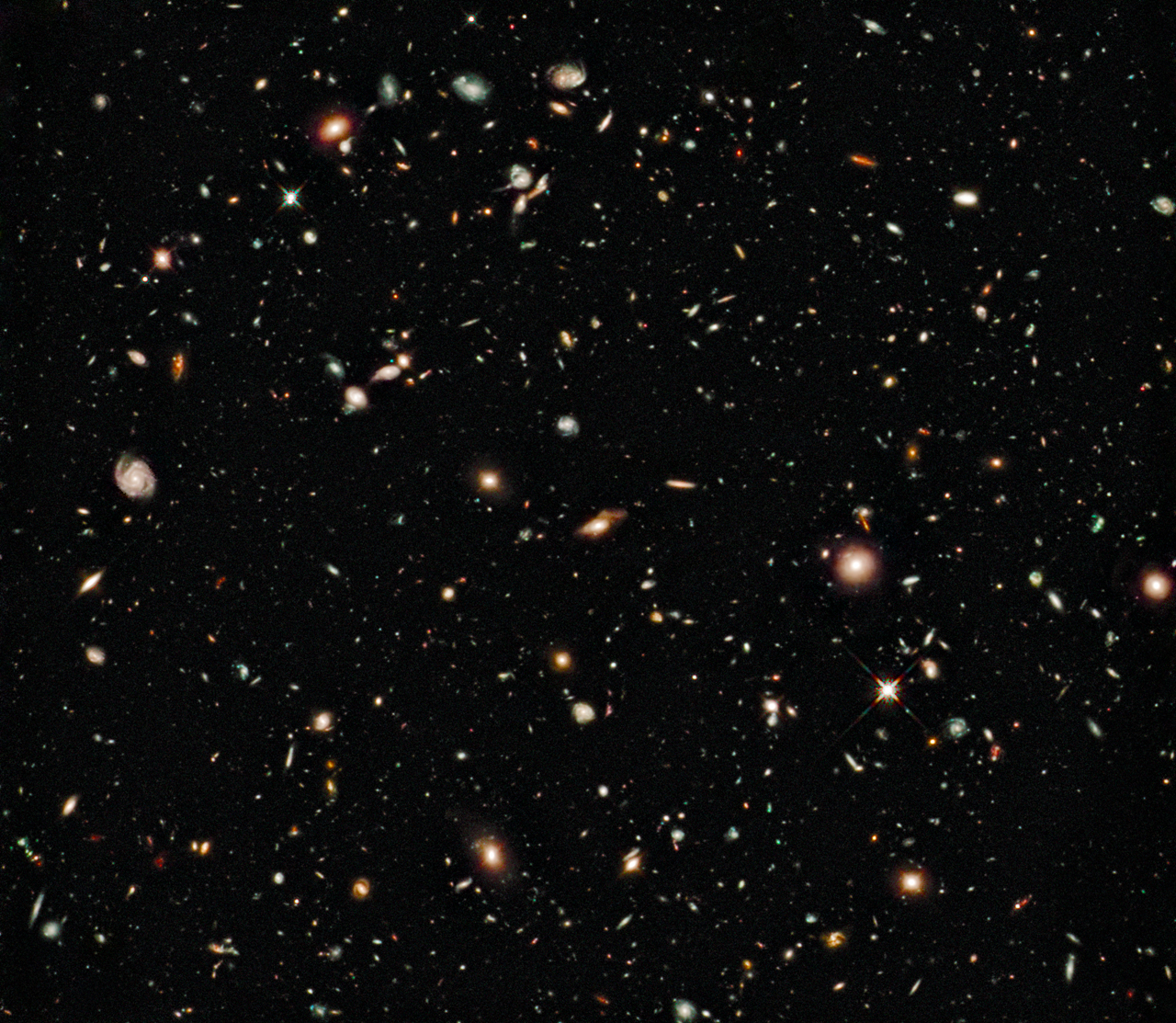
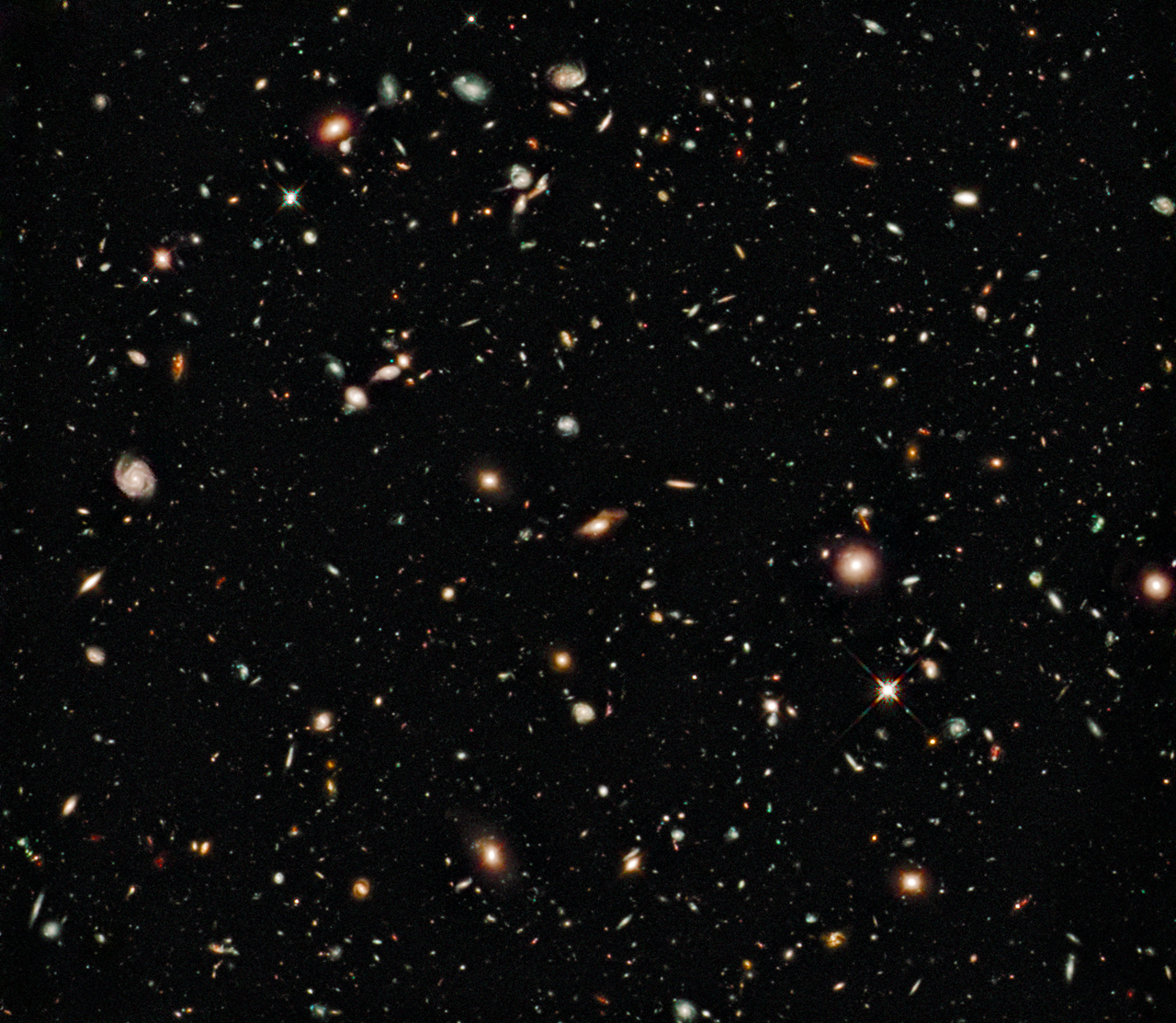
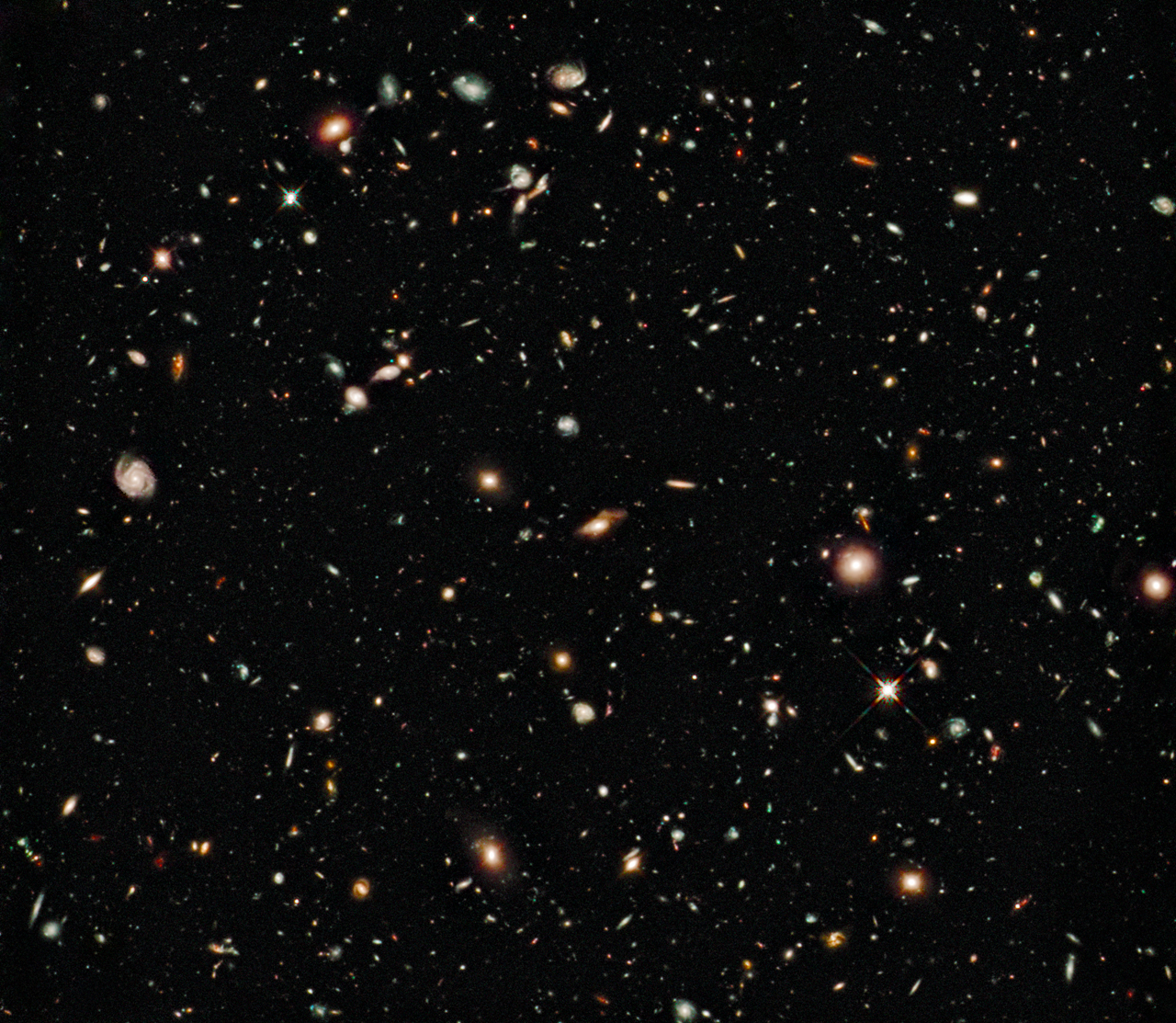
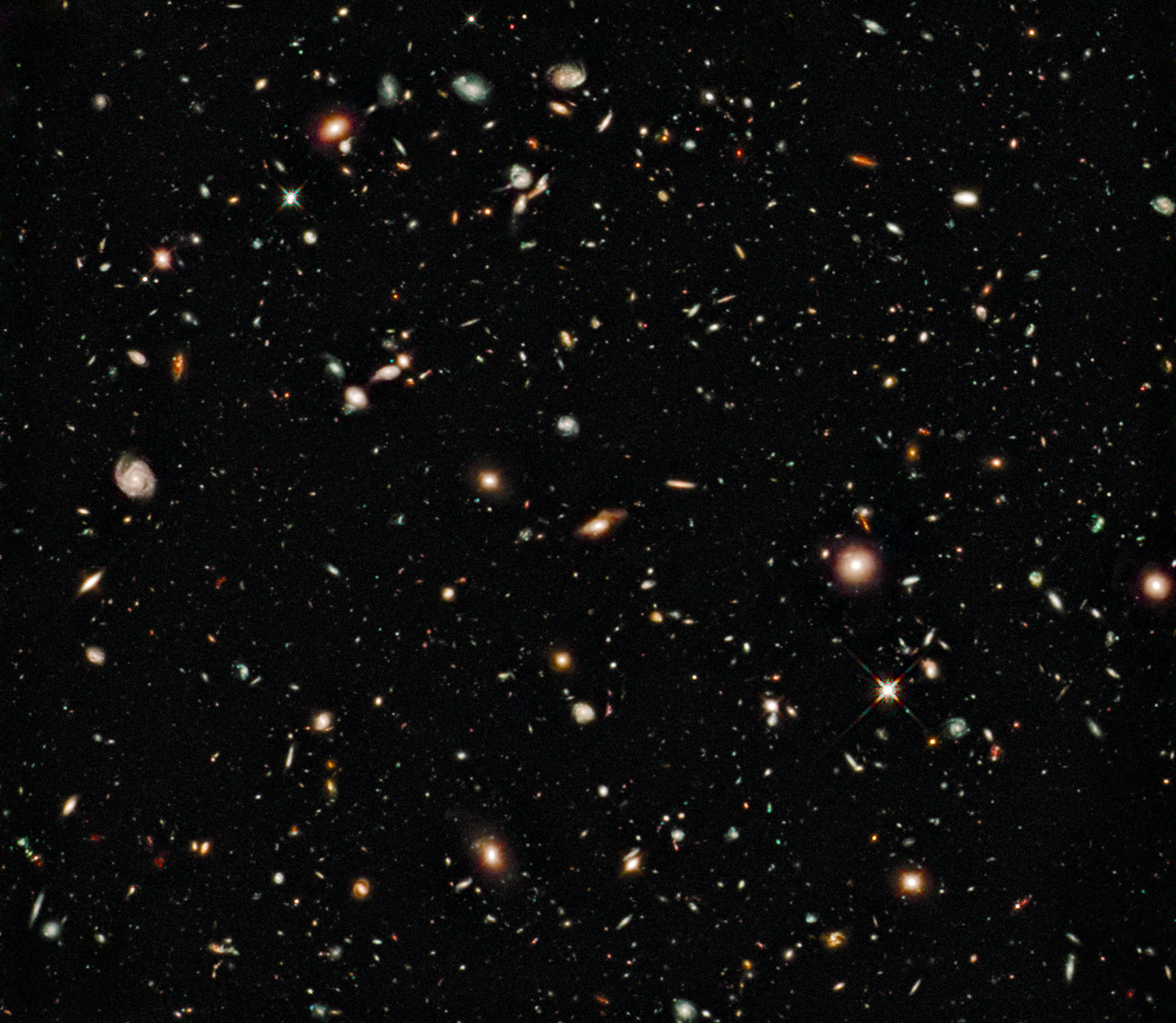
The Hubble Ultra Deep Field continues to reveal new discoveries with every analysis, and this view represents one of humanity's most profound glimpses into cosmic history. By combining visible and infrared observations, Hubble detected light from galaxies so distant that their original ultraviolet emissions have been redshifted to infrared wavelengths by the expanding universe. The faintest objects in this image are over 4 billion times fainter than what the human eye can see, requiring exposure times measured in hundreds of hours to detect. This seemingly blank patch of sky, smaller than a grain of sand held at arm's length, contains sufficient galaxies to suggest that the observable universe contains at least 200 billion galaxies — a number that challenges human comprehension.
Scientific Significance
The Ultra Deep Field's infrared data proved crucial for understanding the epoch of reionization, when the first galaxies ionized the neutral hydrogen fog that filled the early universe. By detecting candidate galaxies at redshifts z>7, these observations constrained the timeline of reionization and the properties of the sources responsible. The star formation rates inferred for these early galaxies suggest that low-mass galaxies, not rare massive systems, dominated the ionizing photon budget. The observations also revealed the remarkable compactness of early galaxies — with similar stellar masses packed into volumes 10-100 times smaller than present-day galaxies. These findings have guided the design of James Webb Space Telescope observations aimed at confirming and extending these results.
Observation Details
This Ultra Deep Field imaging combined data from multiple Hubble observing programs spanning 2003 to 2009. The ACS optical data reached limiting magnitudes of approximately 29th magnitude in the I-band, while WFC3 infrared observations extended to similar depths at longer wavelengths. The extreme faintness of target sources required meticulous background subtraction and careful treatment of systematic effects from zodiacal light, scattered light from bright stars outside the field, and residual calibration uncertainties. Independent reduction pipelines verified the reliability of faint source detections. The legacy of these observations continues through ongoing spectroscopic follow-up campaigns using the largest ground-based telescopes and JWST.
Location in the Universe
Constellation
Fornax
Distance from Earth
Up to 13 billion light-years
Fun Facts
- 1
If you could travel at the speed of light, it would still take you 13 billion years to reach the most distant galaxies visible in this image.
- 2
Many of the small, irregular galaxies visible here have since merged with other galaxies — the universe we see in this ancient light no longer exists in this form.
- 3
The total area of the Ultra Deep Field is about 11 square arcminutes — approximately the size of a tennis ball viewed from a mile away.
Image credit: NASA, ESA, Hubble Space Telescope