About This Image
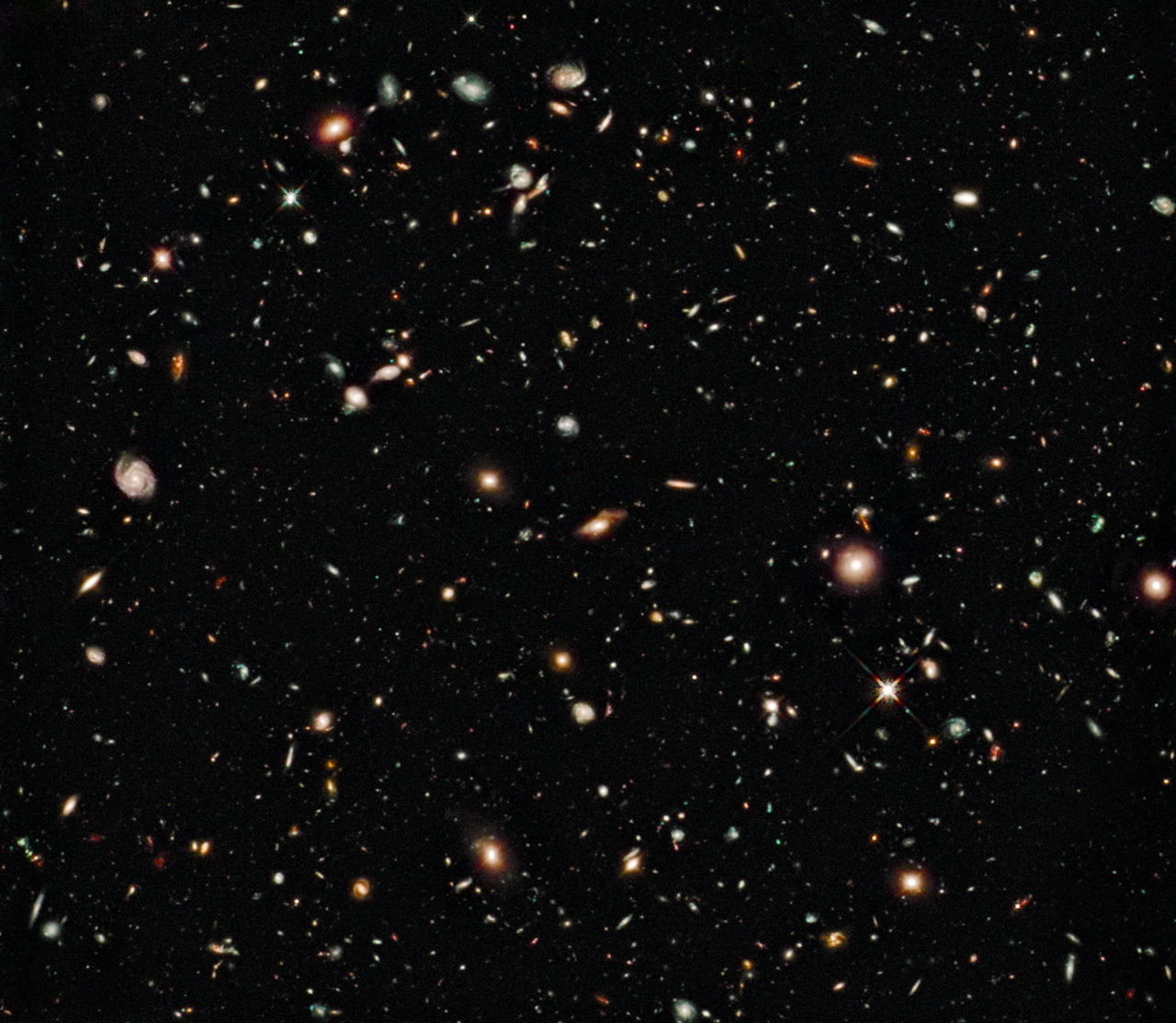
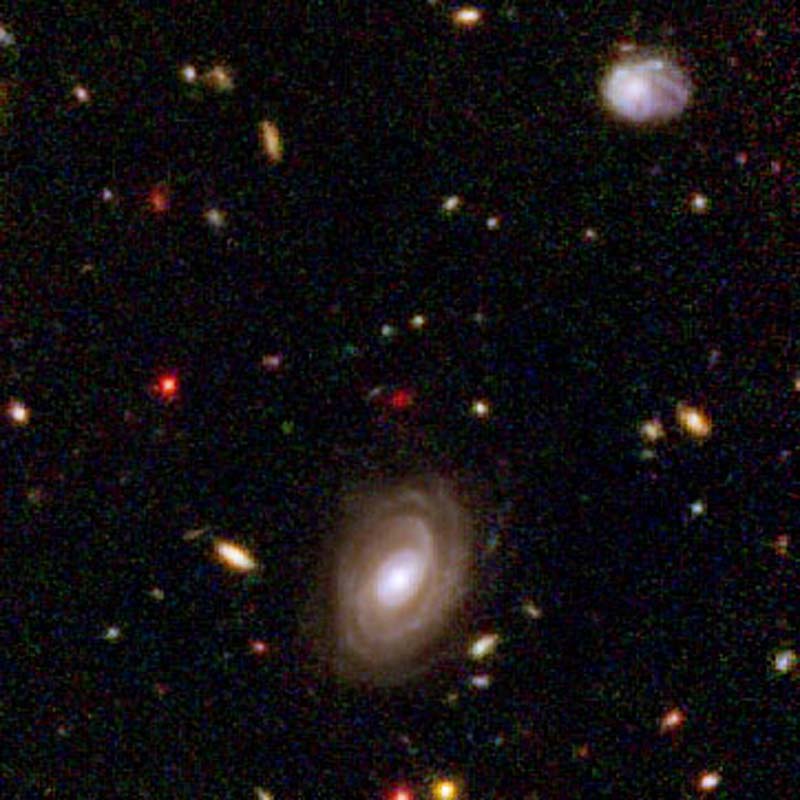
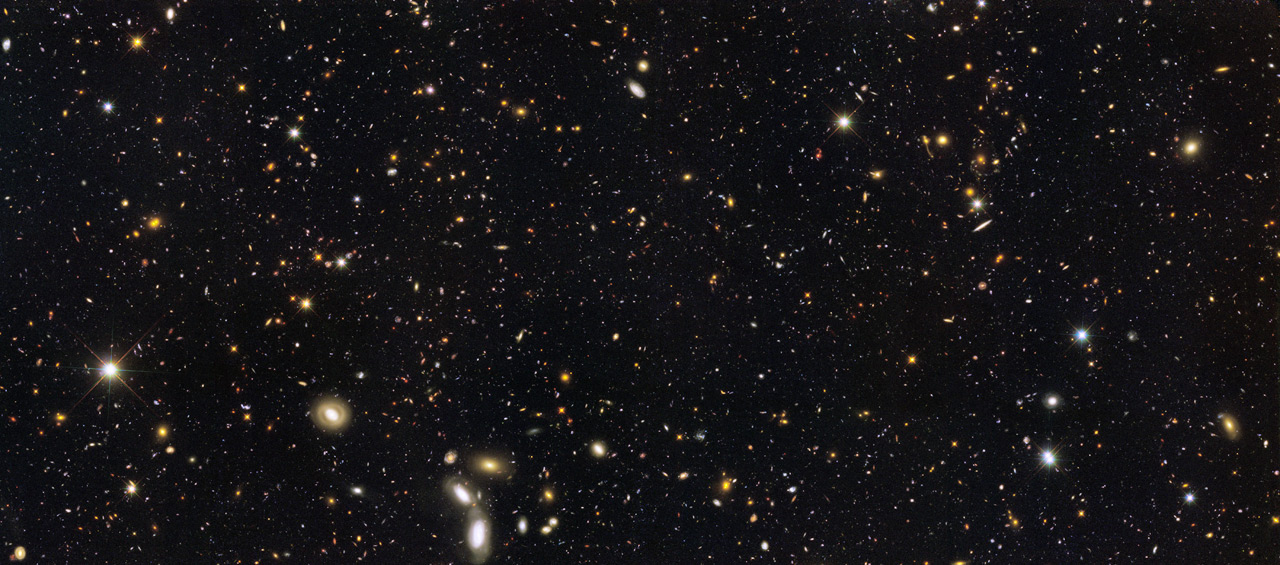
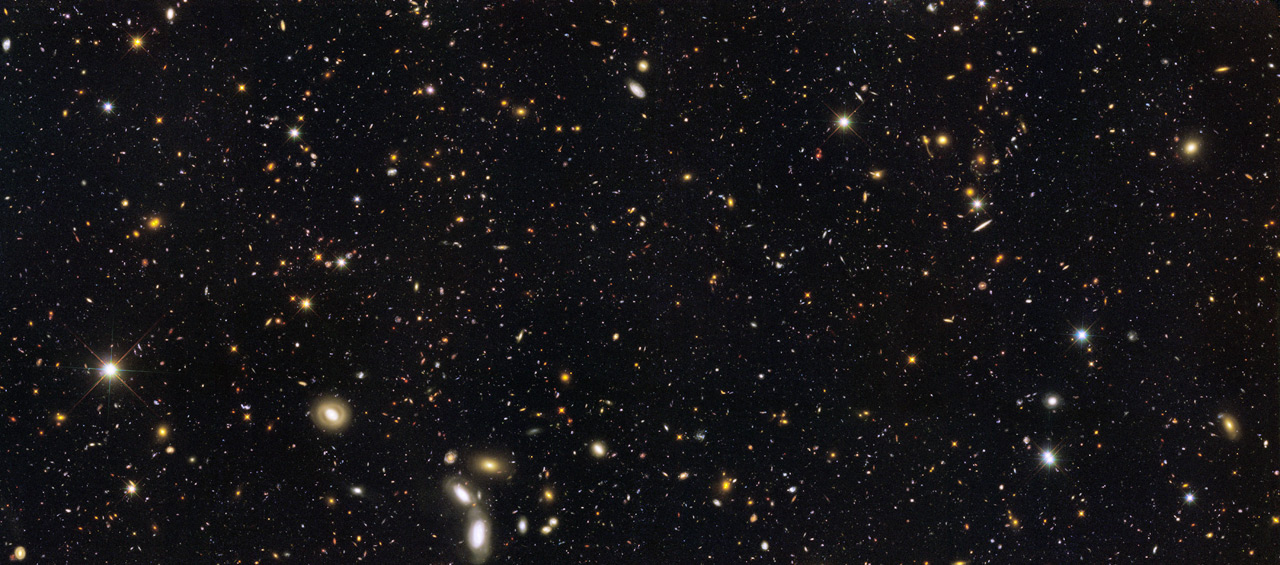
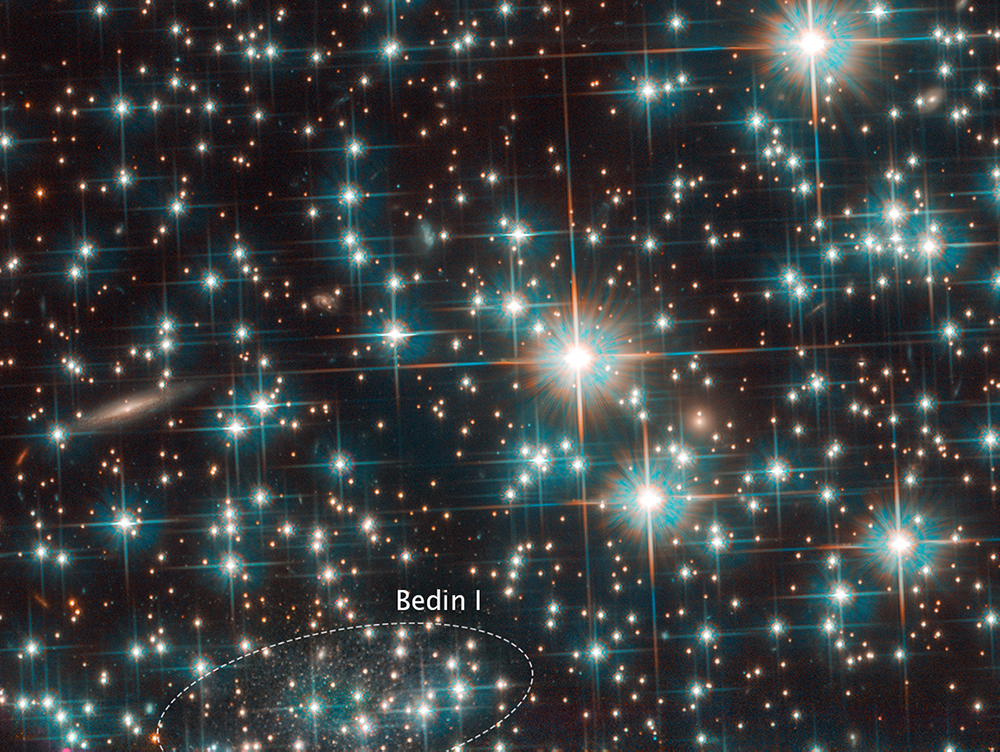
This image shows stars in a small part of the globular cluster NGC 6752. Near the bottom appears a background galaxy, much farther away, that astronomers found while studying this image. It's a dwarf galaxy that is nearly as old as the universe.
Scientific Significance
This field highlights how deep Hubble observations can serve multiple science goals at once. While the primary target was NGC 6752, identification of a very distant background dwarf-like galaxy adds information about early galaxy demographics and the abundance of faint systems near cosmic dawn. Such detections help constrain the faint end of the luminosity function, an important ingredient in models of reionization and hierarchical galaxy growth. The juxtaposition of a nearby globular cluster and a remote galaxy also demonstrates the dynamic range required in photometric pipelines and source-classification methods.
Observation Details
Hubble observed a crowded region of NGC 6752 with high-resolution optical imaging optimized to separate individual cluster stars. During reduction, astronomers identified a compact, red background source with morphology and colors consistent with a distant dwarf galaxy. Analysis required careful point-spread-function fitting to subtract foreground stellar contamination and recover reliable fluxes for the background object. Multi-filter photometry was then compared with template spectra to infer its likely age and redshift range. The result illustrates how archival cluster imaging can produce unexpected extragalactic discoveries.
Location in the Universe
Constellation
Pavo
Distance from Earth
About 13 billion light-years (background source)
Fun Facts
- 1
The foreground stars belong to globular cluster NGC 6752, one of the closest and best-studied clusters in the Milky Way halo.
- 2
The tiny background galaxy was discovered while astronomers were analyzing data originally aimed at cluster stellar populations.
- 3
Chance alignments like this let one Hubble frame probe both nearby stellar archaeology and distant galaxy evolution.
Image credit: NASA, ESA, Hubble Space Telescope