About This Image
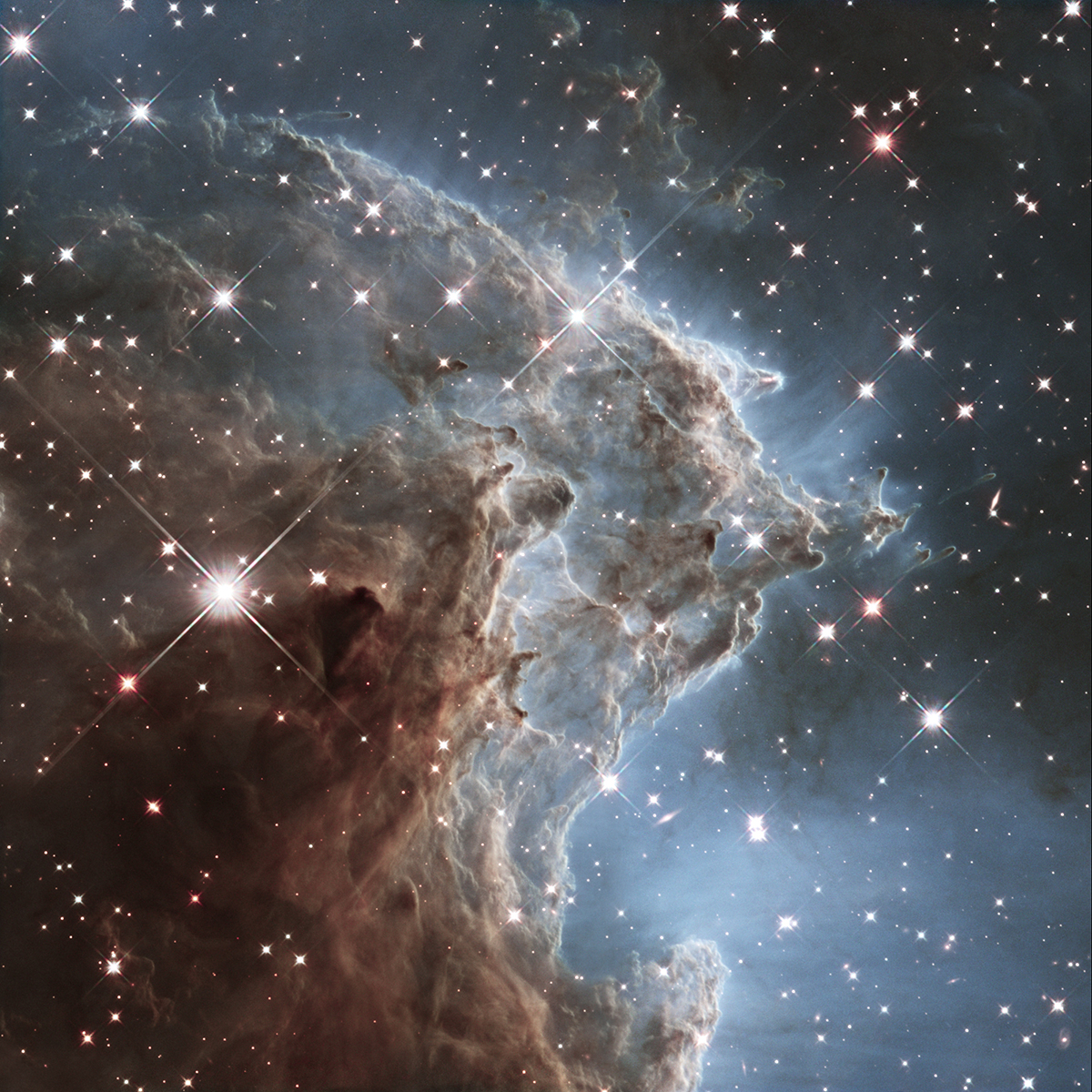
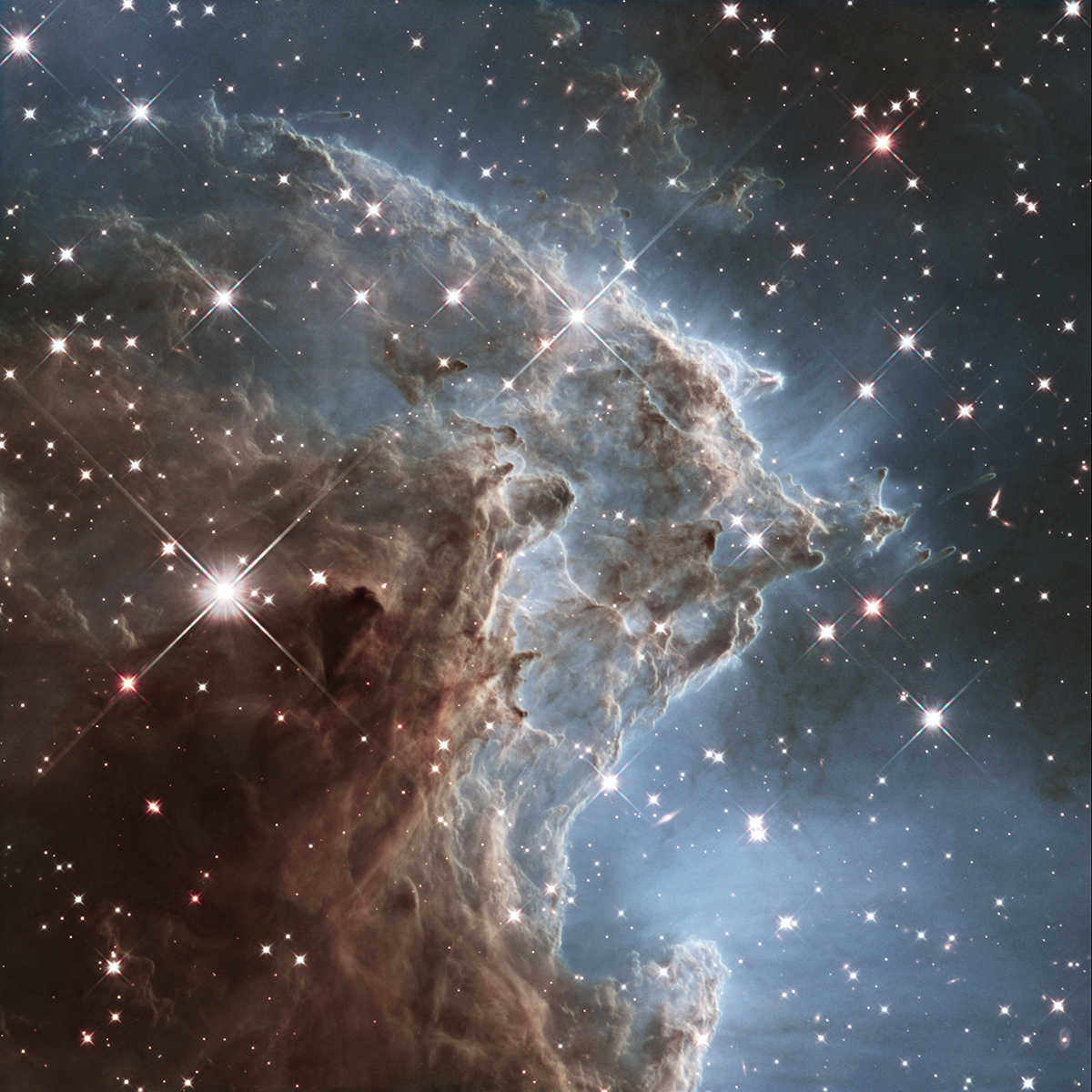
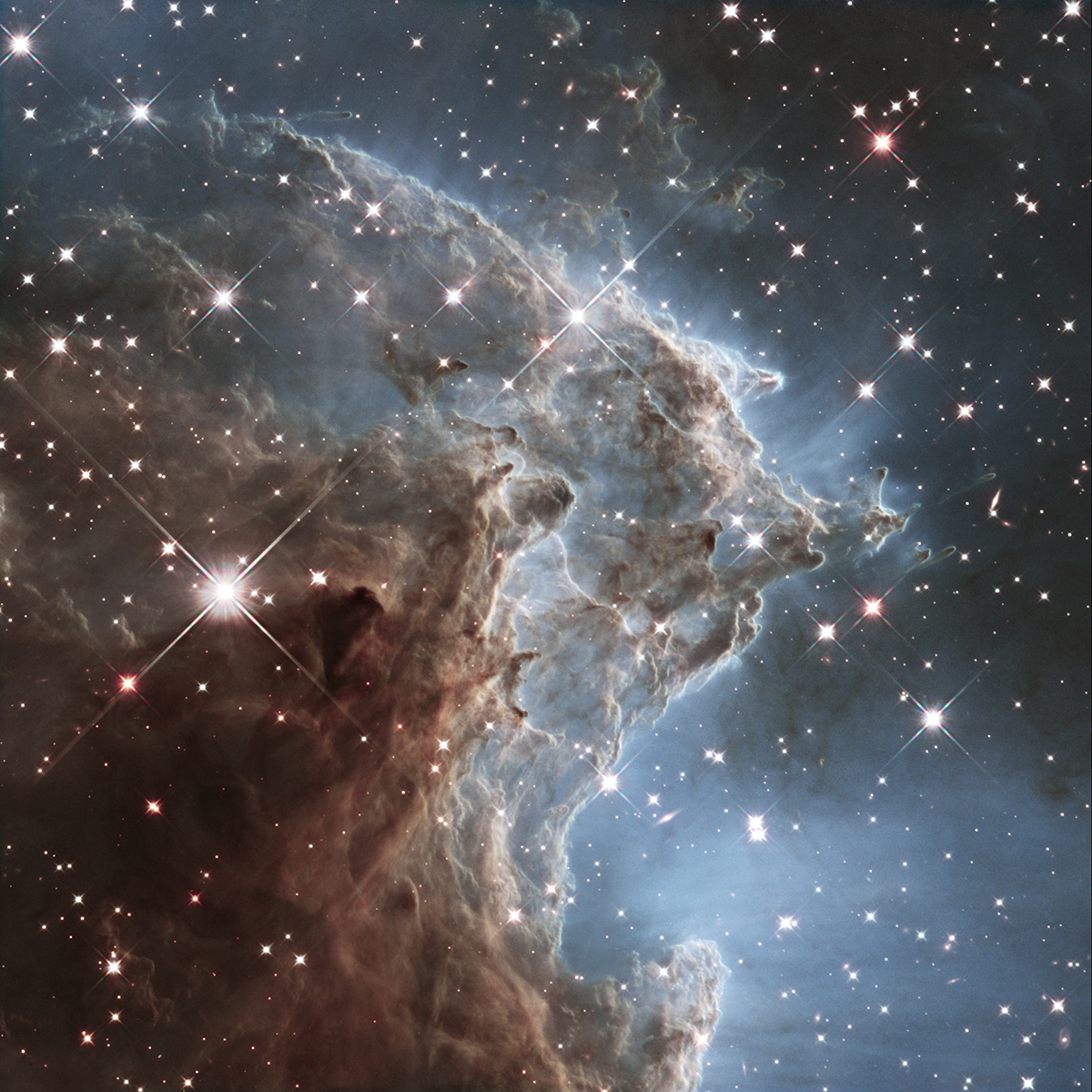
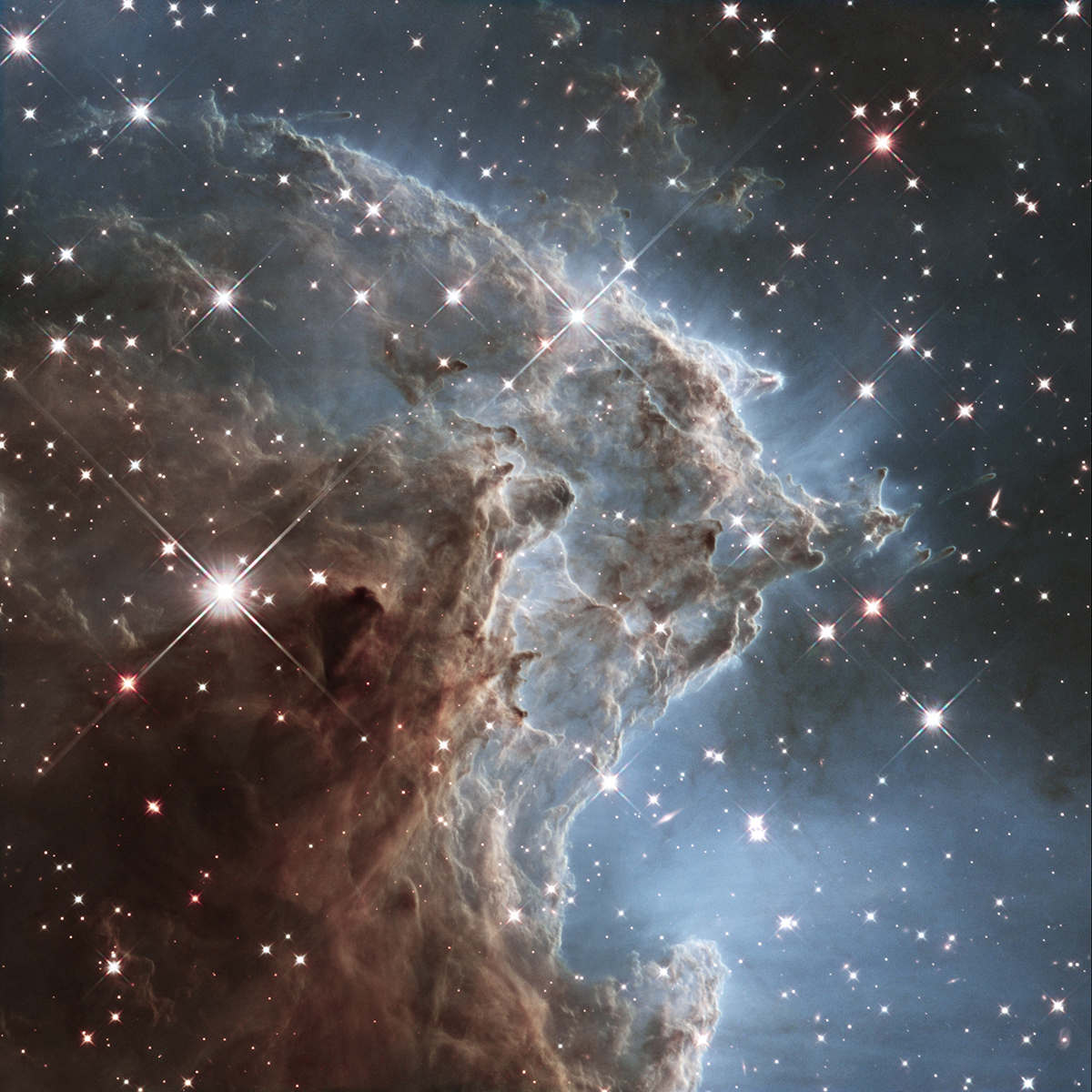
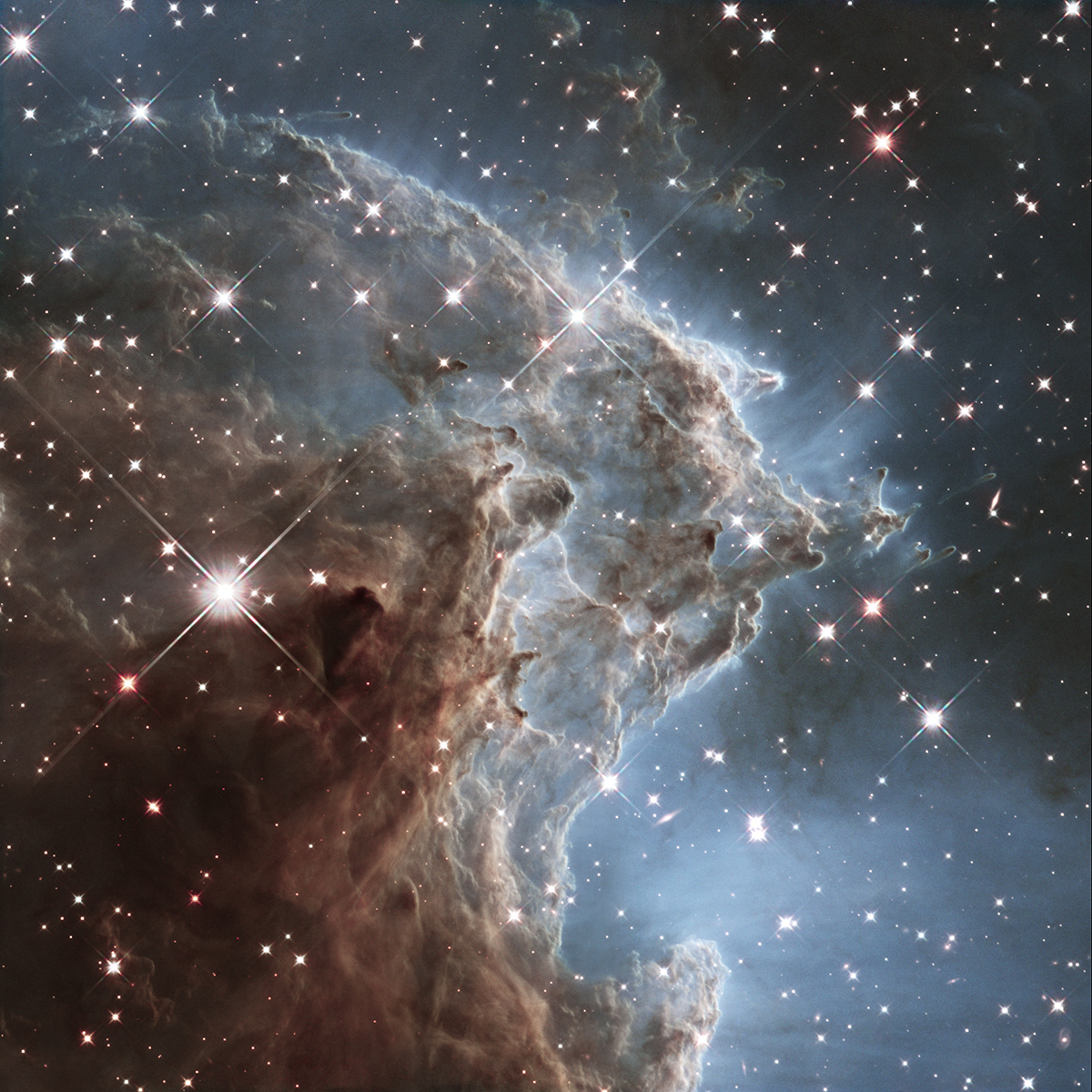
This fourth perspective of the Monkey Head Nebula (NGC 2174) showcases a region where the interplay between stellar radiation and cold molecular gas creates a particularly striking visual composition. Dense knots and filaments of dust are backlit by the bright emission of ionized gas, creating a chiaroscuro effect reminiscent of a Renaissance painting rendered on a cosmic canvas. The structures visible here range from massive pillars spanning light-years in length to tiny, compact globules barely resolvable even with Hubble's optics. Each of these structures tells a story of the ongoing battle between gravity, which seeks to compress gas into stars, and radiation pressure and heating, which work to disperse and destroy the molecular material. In regions where density is sufficiently high, gravity wins and new stars form; where the gas is too diffuse, radiation quickly ionizes and disperses it. This balance, played out across countless individual structures, determines the overall star formation efficiency of the nebula — the fraction of available gas that ultimately becomes stars.
Scientific Significance
This mosaic tile of the Monkey Head Nebula contributes to a comprehensive map of the entire star-forming complex, enabling astronomers to study how star formation efficiency varies across different environments within a single nebula. Statistical analysis of the embedded stellar population revealed by infrared observations shows a correlation between local gas column density and the number of young stars, supporting the theoretical prediction that star formation rate scales with gas density raised to a power of approximately 1.5 — a relationship known as the Kennicutt-Schmidt law. Testing this law at the scale of individual molecular clouds, rather than entire galaxies, is essential for understanding the physical processes that drive it. The Monkey Head Nebula observations also contribute to our understanding of the initial mass function (IMF), which describes the relative numbers of high-mass and low-mass stars formed in a single star-forming episode.
Observation Details
This image was obtained with Hubble's Wide Field Camera 3 (WFC3) using infrared filters as part of a multi-pointing mosaic designed to cover the full extent of the active star-forming region within NGC 2174. The WFC3 infrared channel's 1024×1024 pixel detector provided a field of view of approximately 2.3 arcminutes per pointing, requiring multiple overlapping tiles to map the nebula. Standard infrared reduction procedures including dark subtraction, flat-fielding, and sky background removal were applied, and the individual pointings were combined into a seamless mosaic using the DrizzlePac software suite.
Location in the Universe
Constellation
Orion
Distance from Earth
6,400 light-years
Fun Facts
- 1
The total gas mass in the Monkey Head Nebula is estimated at several thousand solar masses, but only a small percentage — perhaps 5-10% — will actually form stars before the rest is dispersed by stellar feedback.
- 2
The infrared view reveals that many of the apparently dark 'voids' in visible-light images are actually filled with warm dust and embedded protostars invisible to the human eye.
- 3
NGC 2174 was discovered by the French astronomer Jean Marie Stephan in 1877, but its nature as a star-forming nebula was not understood until the development of spectroscopy decades later.
Image credit: NASA, ESA, Hubble Space Telescope