About This Image
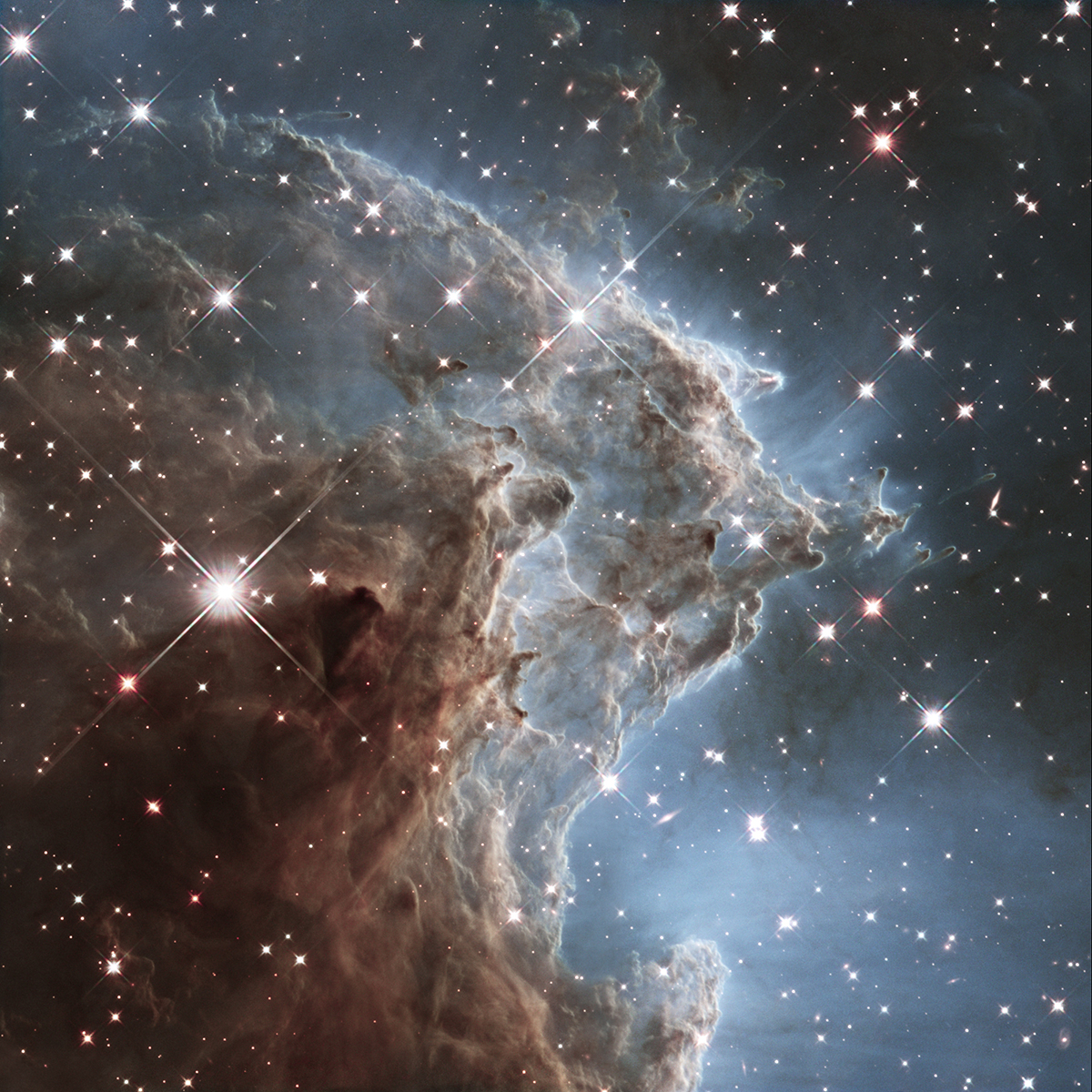
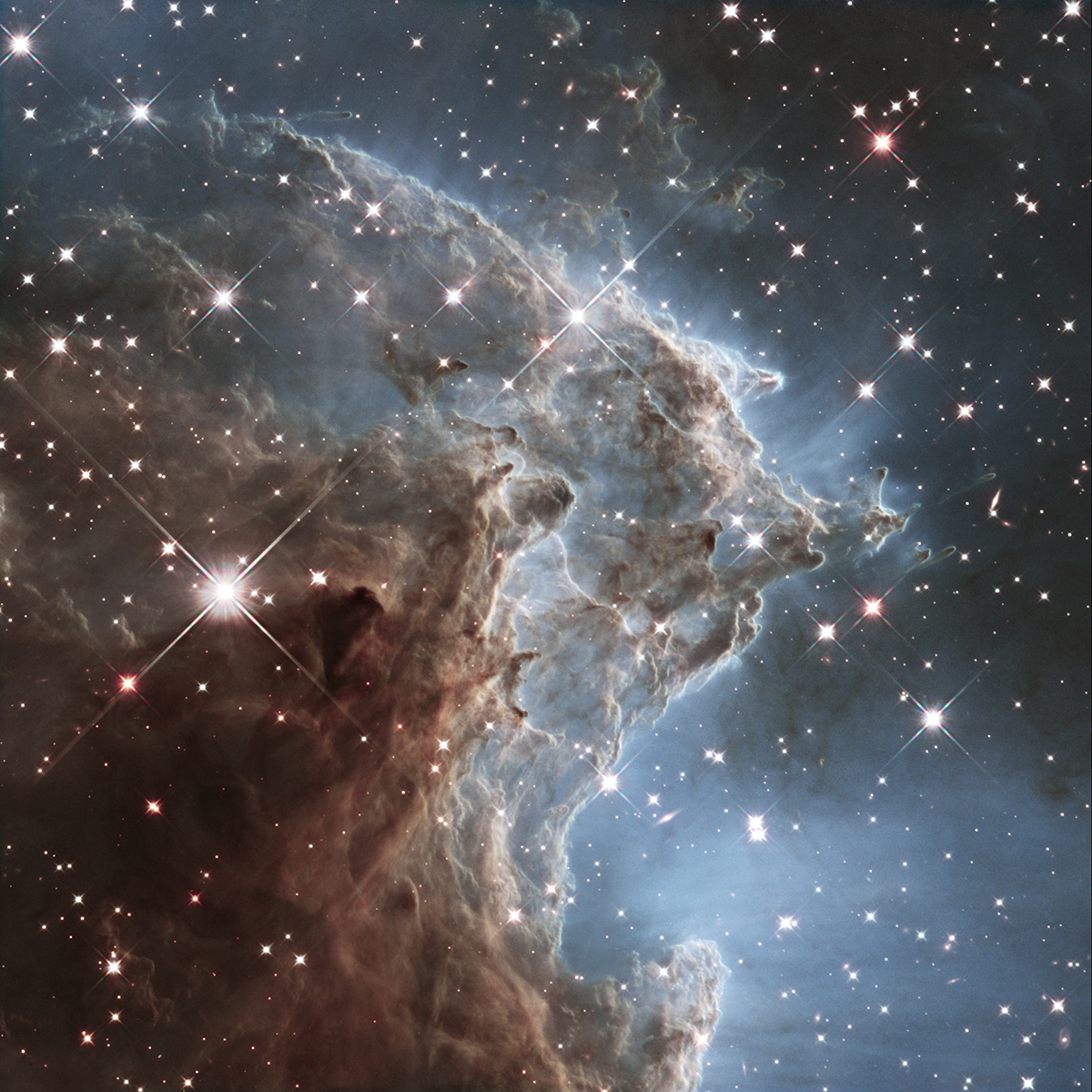
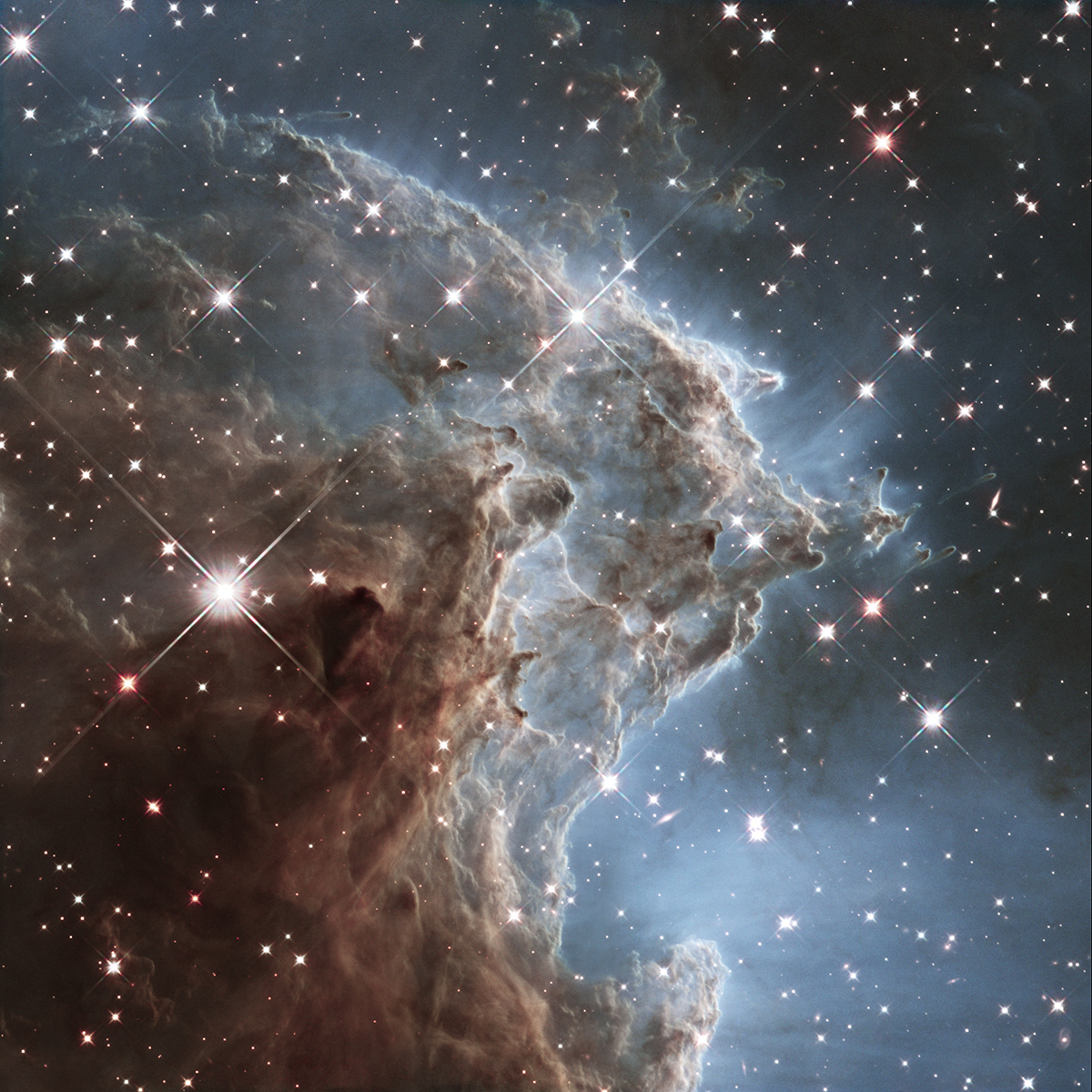
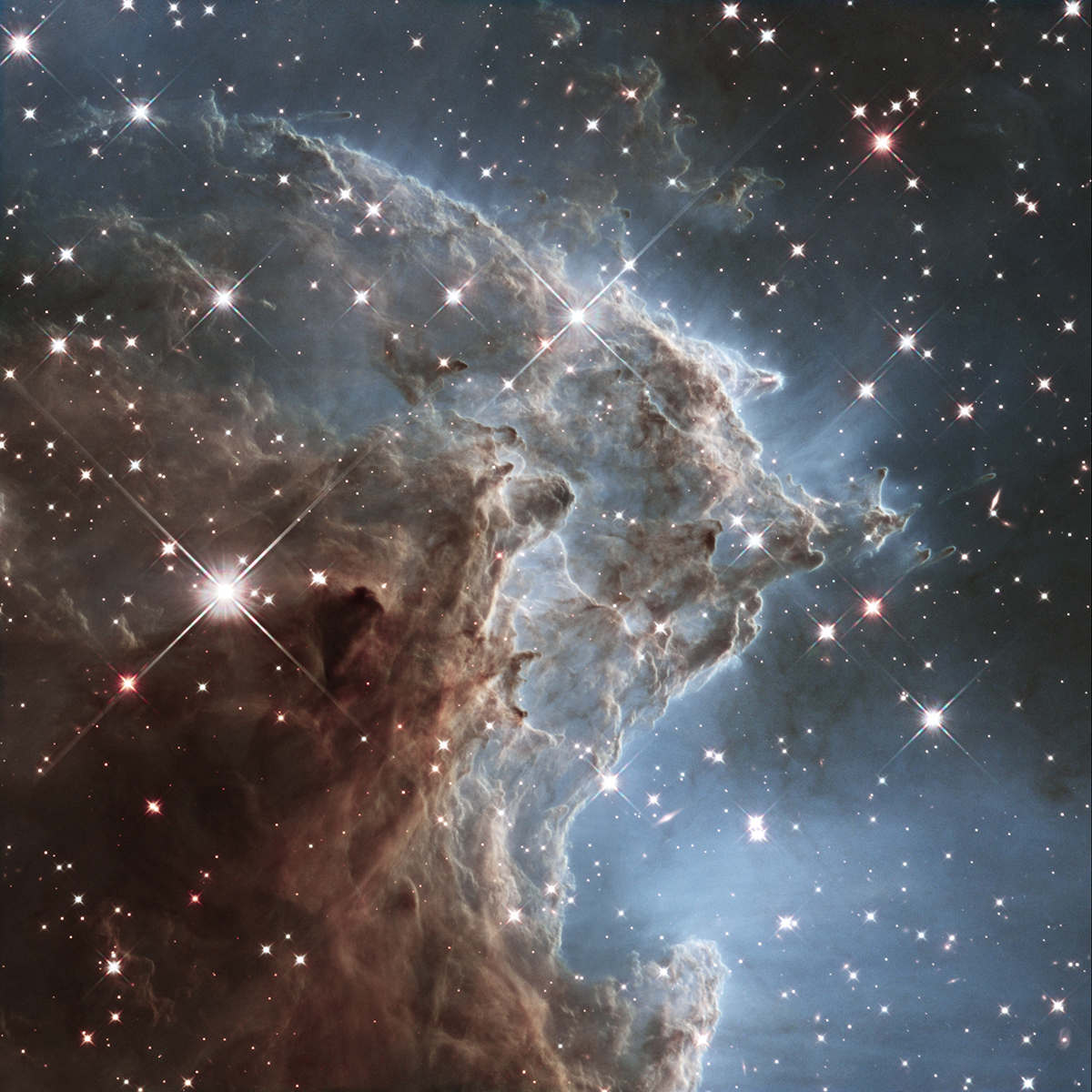
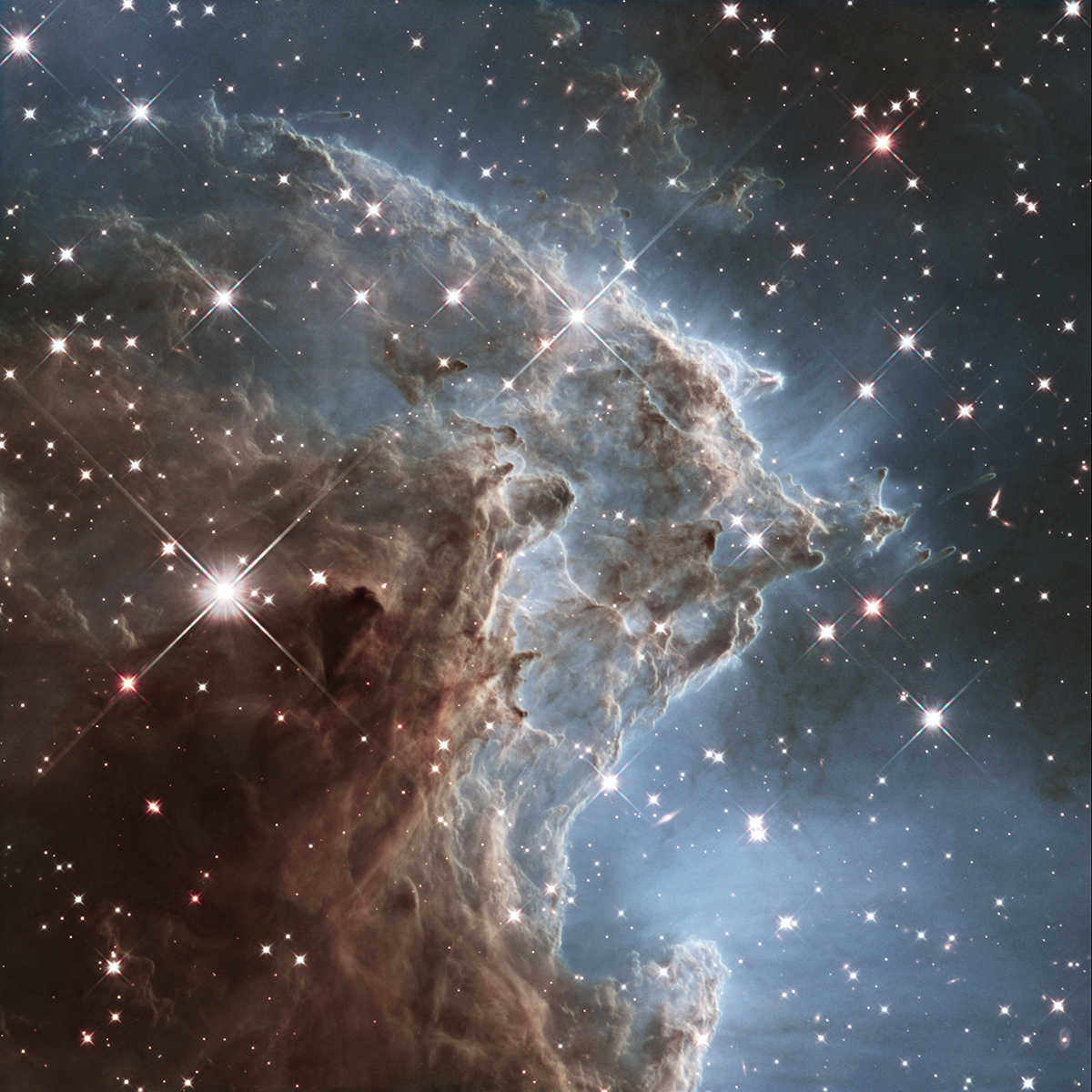
This alternate view of the Monkey Head Nebula (NGC 2174) captures a different region of this spectacular star-forming complex, revealing the delicate interplay between radiation and matter that defines the nebula's ever-changing landscape. In this portion of the nebula, columns and filaments of dense molecular gas are being illuminated and sculpted by the energetic output of nearby OB-type stars — the most massive and short-lived stars in the universe. The boundaries between the dark dust pillars and the glowing ionized gas are particularly sharp, marking the ionization front where stellar radiation meets dense molecular material. Small, compact knots of especially dense gas protrude from the pillar surfaces like fingers reaching into the glowing void, each one a potential site for future star formation. These structures, known as evaporating gaseous globules, represent some of the smallest and most transient features in the star-forming process, lasting only tens of thousands of years before being dissolved by the relentless radiation.
Scientific Significance
This detailed view of the Monkey Head Nebula's ionization front provides important data on the microphysics of photodissociation regions (PDRs) — the transition zones where stellar ultraviolet radiation converts molecular gas into atomic and then ionized gas. These PDRs are critical to understanding the energy balance and chemistry of the interstellar medium throughout the galaxy. The sharp, well-resolved structures visible in Hubble's images allow direct measurement of the density and pressure contrasts across the ionization front, testing theoretical predictions about how radiation-driven implosion works at small scales. The presence of multiple evaporating globules at different stages of evolution within a single image provides a statistical sample for studying how these structures form, evolve, and eventually produce or fail to produce new stars. These observations directly inform models of star formation feedback that are used in simulations of galaxy evolution.
Observation Details
Hubble obtained this image using the Wide Field Camera 3 (WFC3) in both visible and infrared channels. The visible-light observations, employing narrowband hydrogen-alpha and sulfur II filters, reveal the ionized gas emission and the sharp ionization fronts at the pillar boundaries. The infrared observations complement this by showing the warm dust emission and penetrating through the obscuring material to catalog the embedded stellar population. By combining data from both wavelength regimes, astronomers constructed a comprehensive picture of the physical conditions on both sides of the ionization front.
Location in the Universe
Constellation
Orion
Distance from Earth
6,400 light-years
Fun Facts
- 1
The evaporating gaseous globules (EGGs) visible at the tips of the pillars in this image are typically about 100 times the size of our solar system, yet they contain only a fraction of the Sun's mass.
- 2
The hot young stars responsible for sculpting these structures have surface temperatures exceeding 30,000°C and luminosities hundreds of thousands of times greater than the Sun.
- 3
If you could watch the Monkey Head Nebula in a time-lapse spanning millions of years, you would see the pillars slowly retreating like melting ice sculptures, with new stars emerging from their tips as they shrink.
Image credit: NASA, ESA, Hubble Space Telescope