About This Image
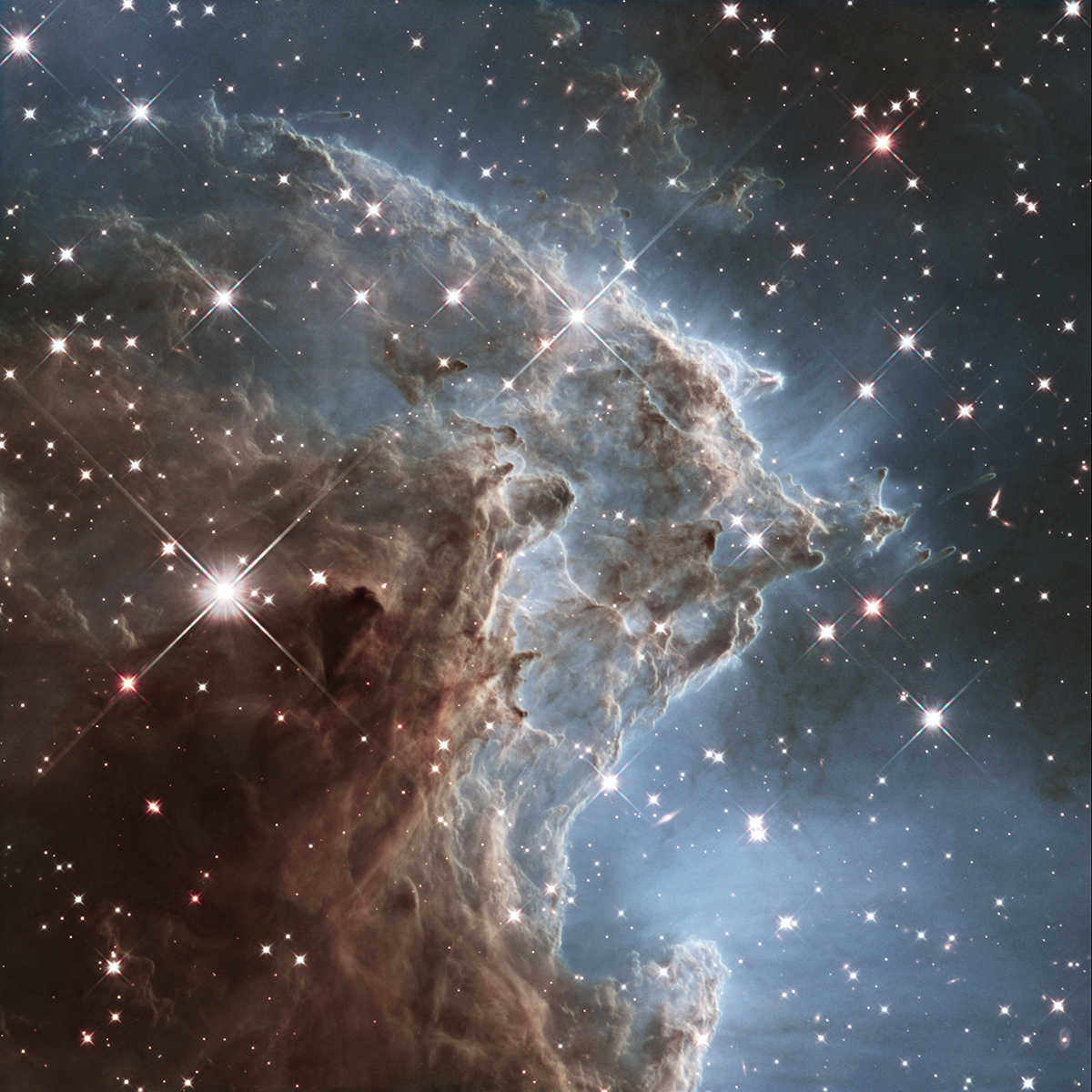
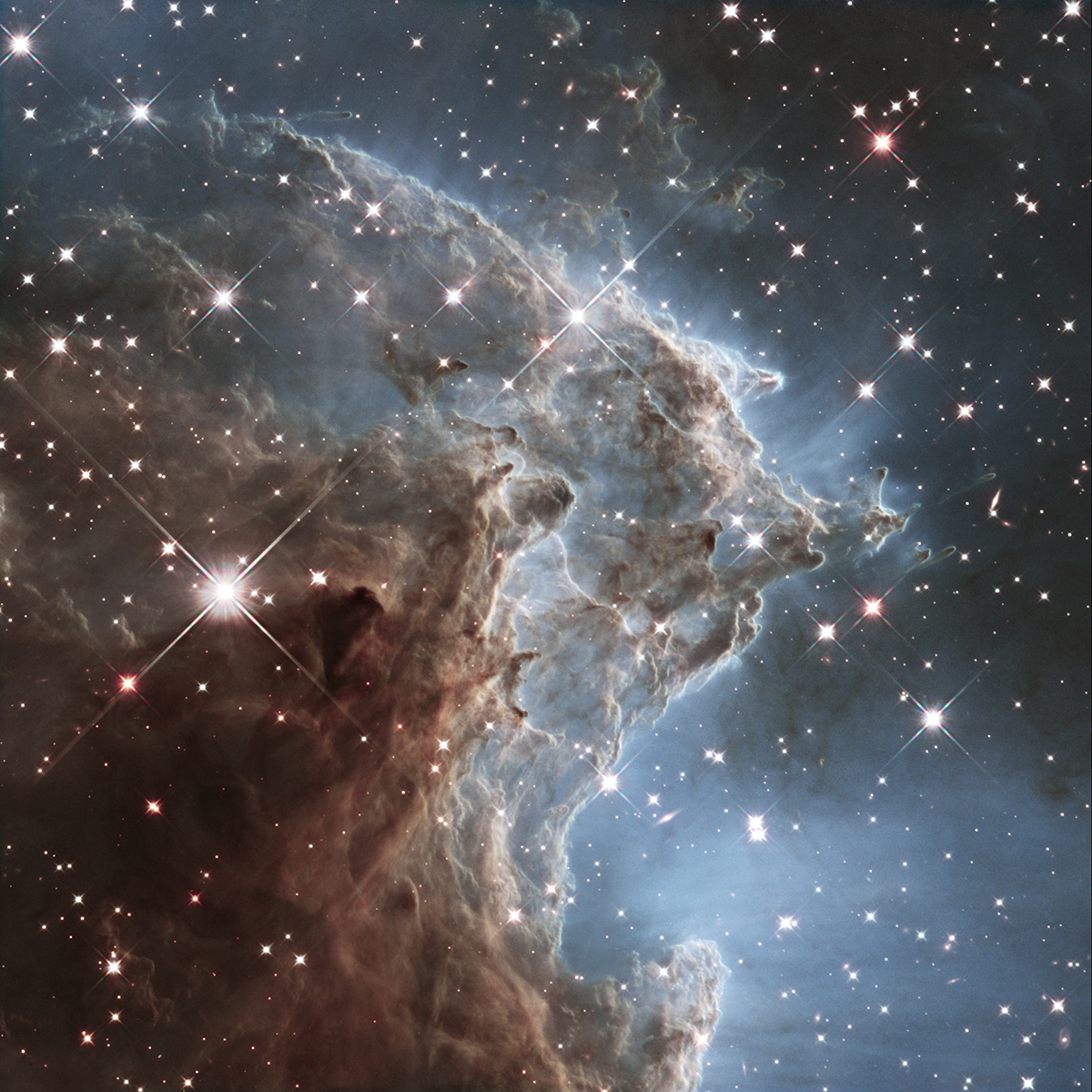
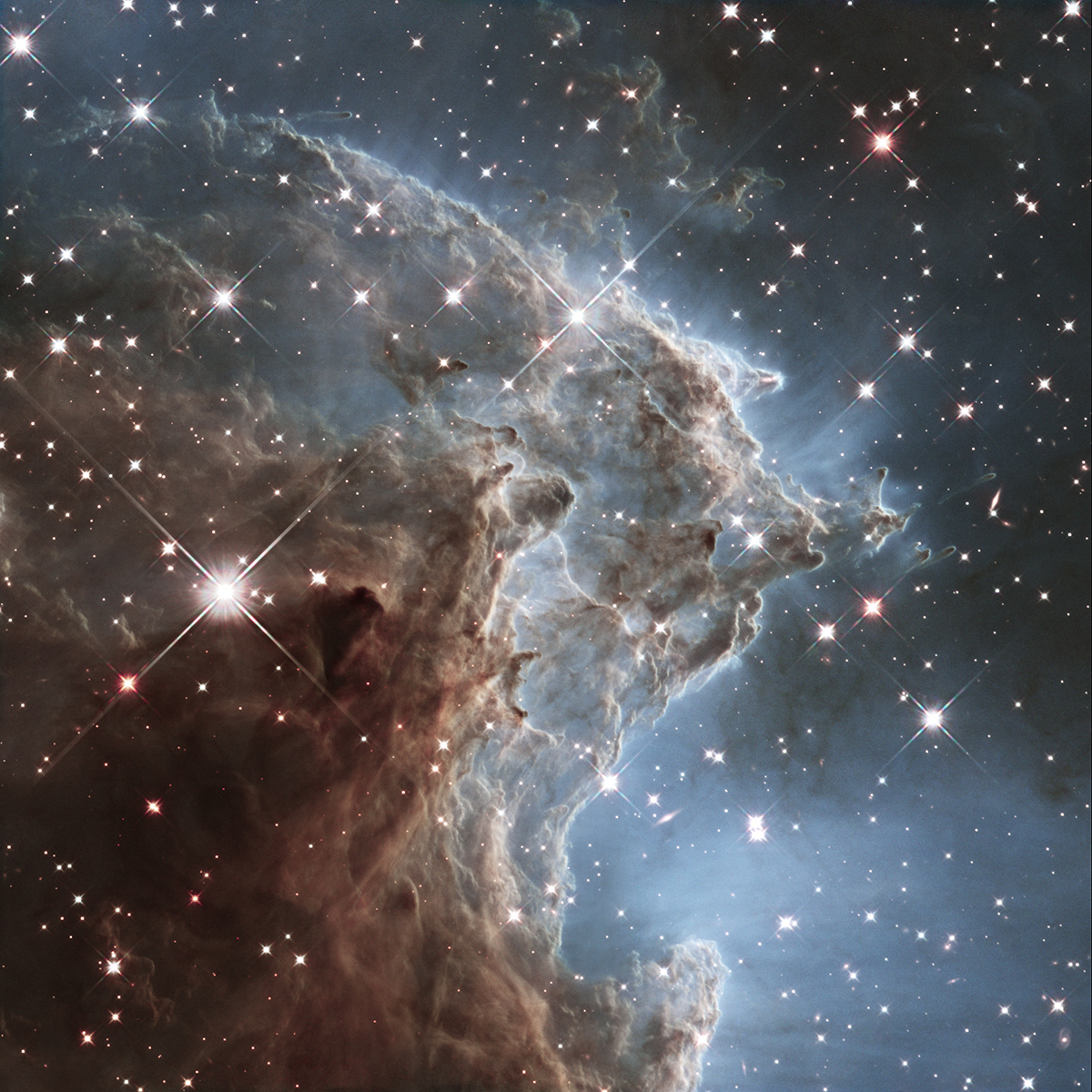
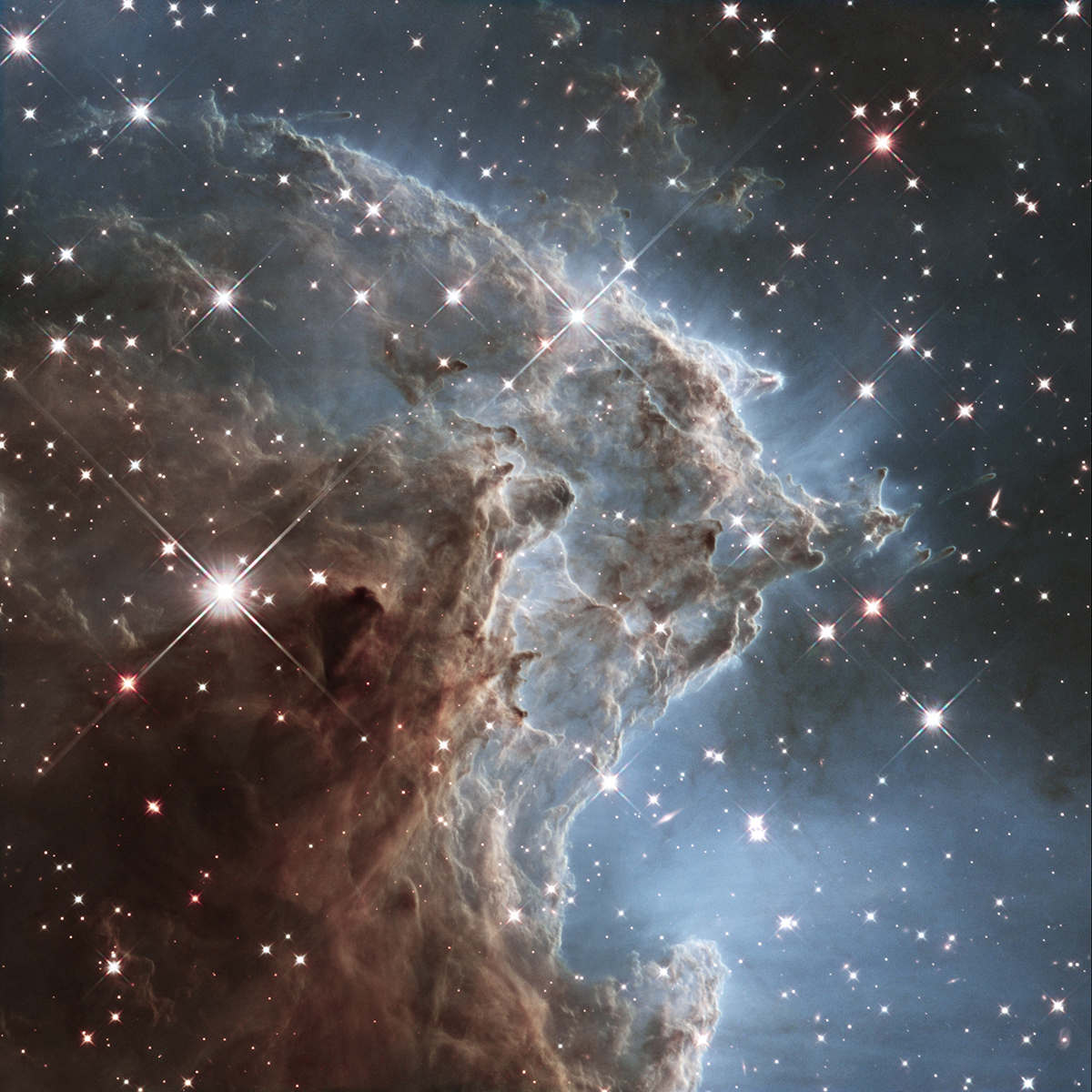
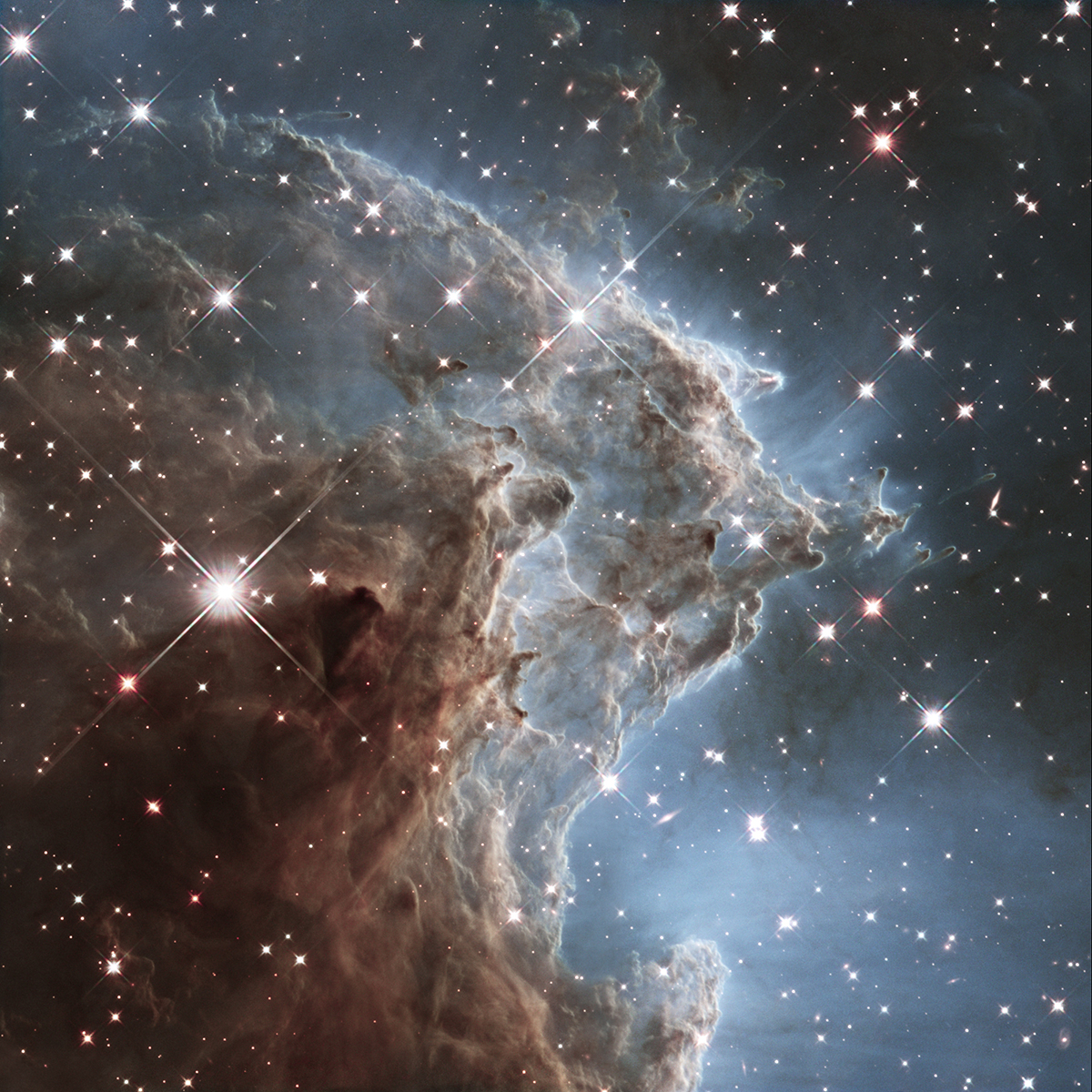
This image reveals intricately carved knots of gas and dust in a small portion of the Monkey Head Nebula, officially cataloged as NGC 2174. Located in the constellation Orion, this vast star-forming region hosts a dramatic landscape where dusky dust clouds are silhouetted against brilliantly glowing ionized gas. The sculpted pillars and ridges visible in this view are being shaped by the fierce ultraviolet radiation from hot, young stars embedded within the nebula, which heats the surrounding hydrogen gas to incandescence while simultaneously eroding the denser dust structures. Within the shadowy recesses of the dust clouds, new stars are quietly forming, shielded from the destructive radiation by the very material that will eventually be stripped away to reveal them. The Monkey Head Nebula derives its whimsical name from its overall shape when viewed in wide-field images, though Hubble's close-up view reveals a far more complex and beautiful reality than any simple animal resemblance could suggest.
Scientific Significance
The Monkey Head Nebula provides an excellent example of sequential star formation, where the energy output from one generation of stars triggers the birth of the next. The massive young stars at the nebula's core have carved out a cavity of hot, ionized gas, and at the boundary of this cavity, radiation-driven compression is initiating new episodes of star formation in the surrounding molecular cloud. Hubble's infrared observations have been particularly valuable for studying this process, as they penetrate the dusty pillars to reveal embedded protostars at various stages of development. The diversity of protostellar ages found within NGC 2174 supports models in which star formation is not a single event but rather a cascading process that propagates outward through a molecular cloud over millions of years. This makes the Monkey Head Nebula a key object for understanding how star-forming regions evolve over time.
Observation Details
This image was captured using Hubble's Wide Field Camera 3 (WFC3) in near-infrared wavelengths as part of the telescope's 24th anniversary observations. The infrared filters (F110W and F160W) penetrate the dusty structures that are opaque in visible light, revealing the embedded young stellar objects hidden within the pillars. The resulting image was processed as a false-color composite where shorter infrared wavelengths appear blue and longer wavelengths appear red. This color mapping highlights temperature and density variations within the dust structures and allows astronomers to distinguish between foreground stars and objects physically embedded in the nebula.
Location in the Universe
Constellation
Orion
Distance from Earth
6,400 light-years
Fun Facts
- 1
The Monkey Head Nebula was the subject of Hubble's 24th anniversary image release in 2014 — this infrared view was specifically chosen to showcase the telescope's ability to peer through cosmic dust.
- 2
NGC 2174 spans approximately 40 light-years across, large enough that light itself would take four decades to cross from one side to the other.
- 3
The nebula sits at the edge of a giant molecular cloud that contains enough gas to form thousands of stars, though only a small fraction of this material will actually collapse to create new stellar systems.
Image credit: NASA, ESA, Hubble Space Telescope