About This Image
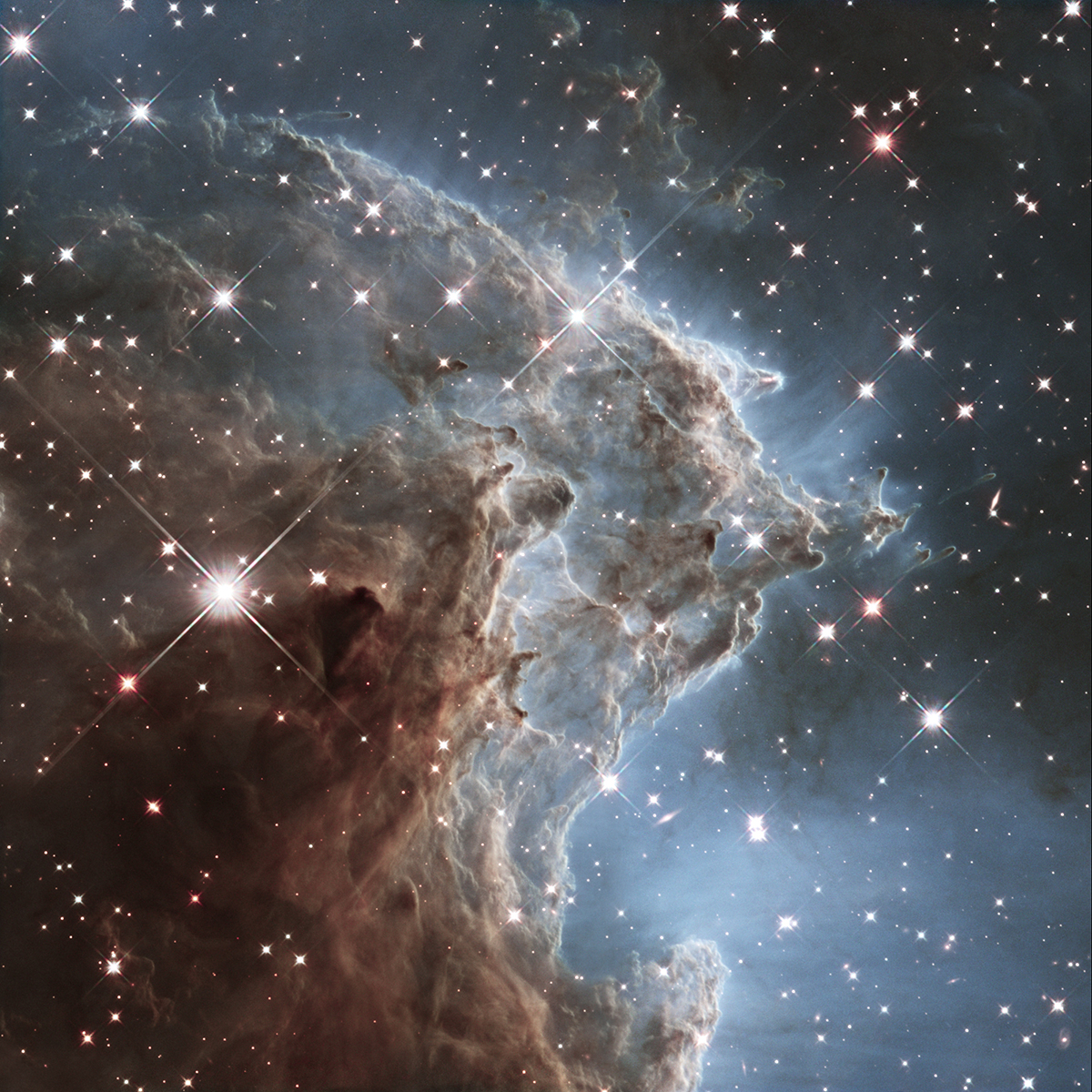
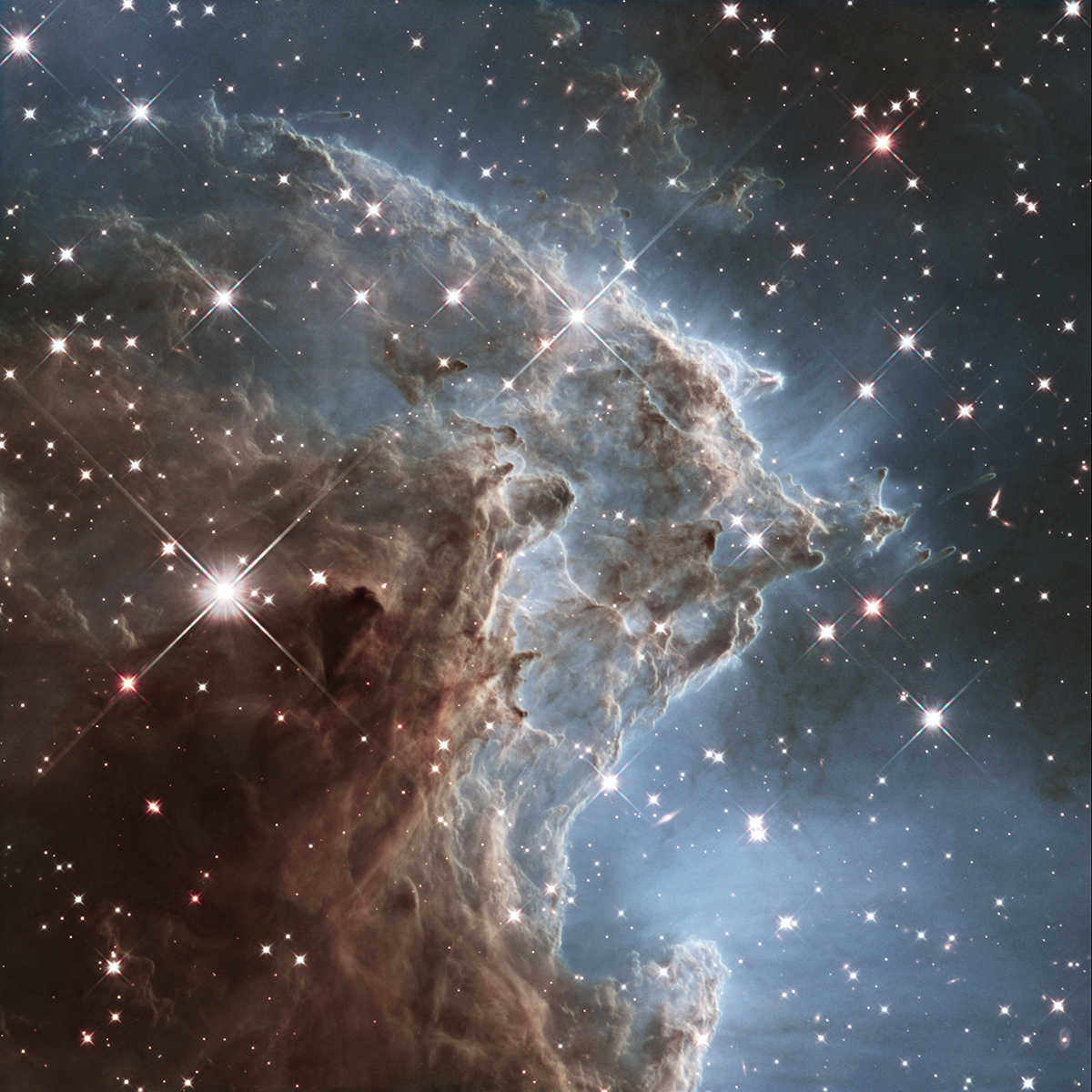
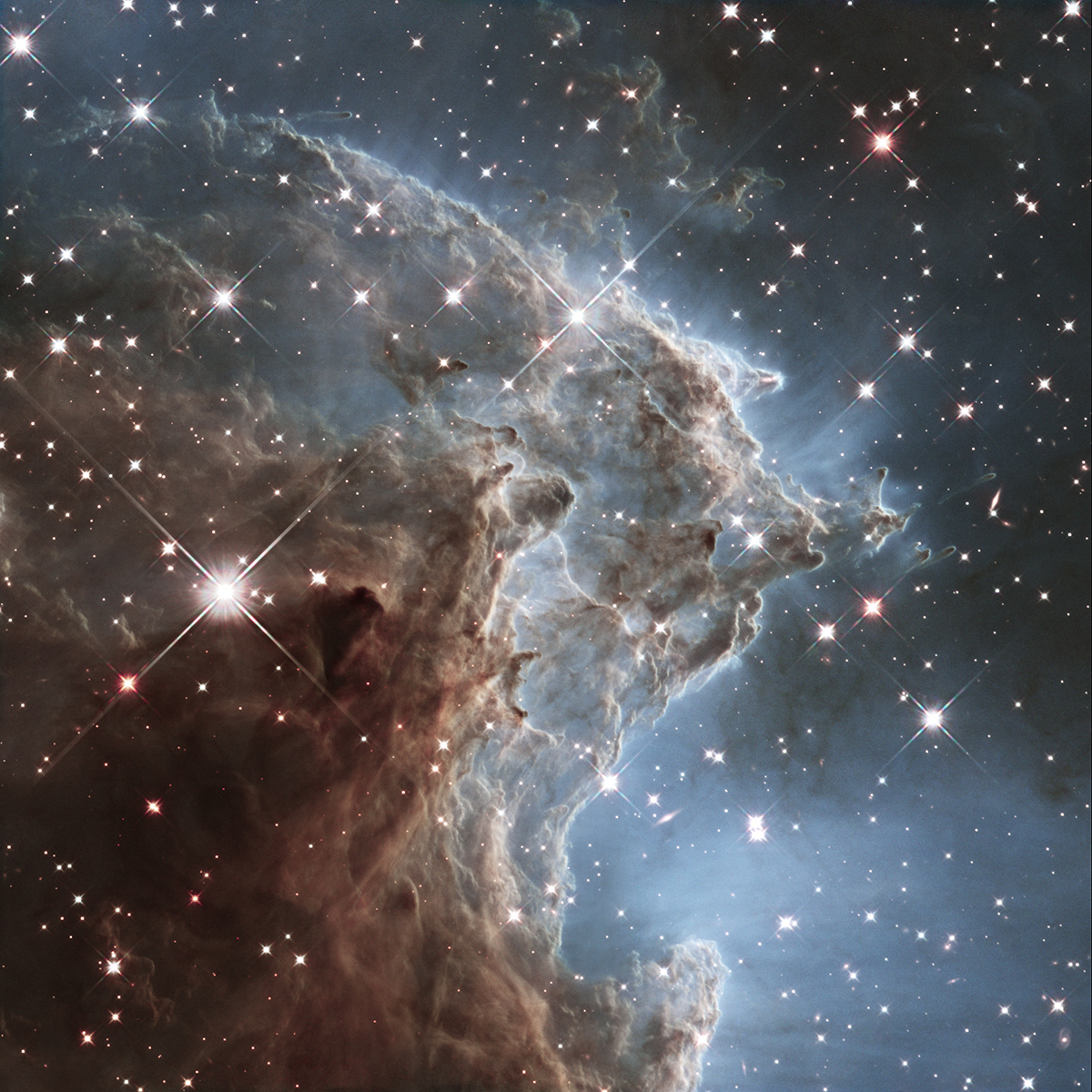
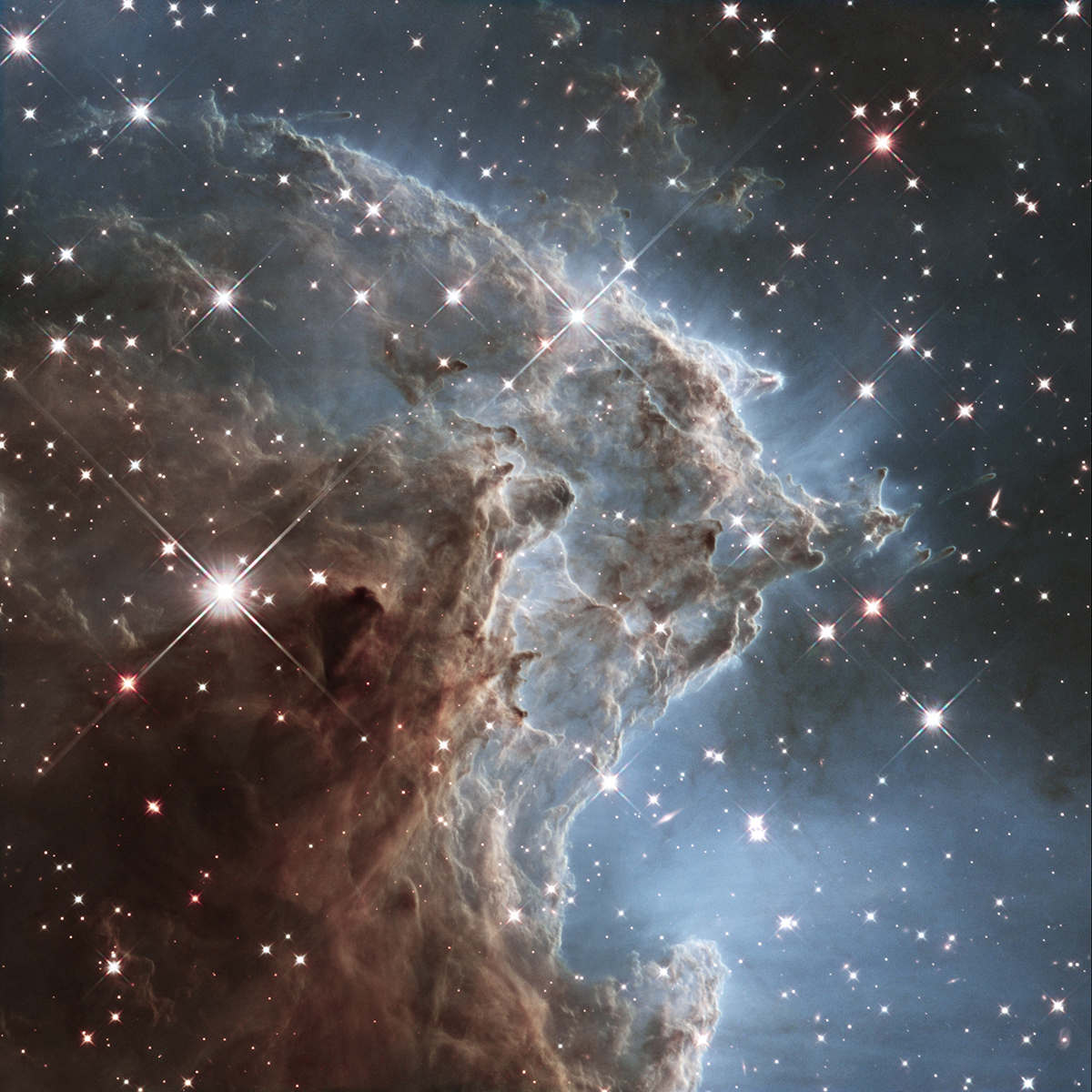
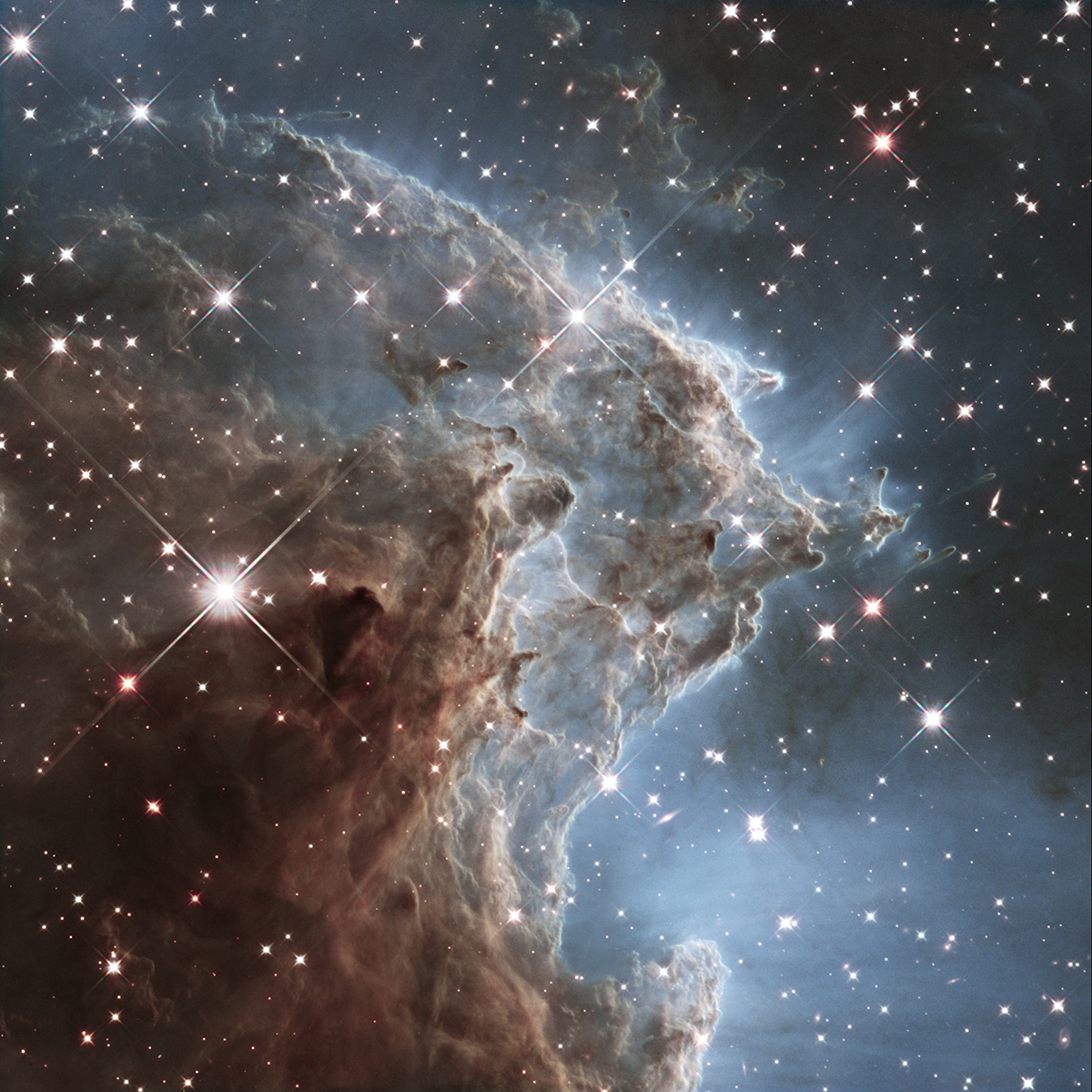
This view of the Monkey Head Nebula (NGC 2174) highlights yet another region of this extensive star-forming complex, where pillars of dense molecular gas stand like ancient monuments against a canvas of glowing ionized hydrogen. In this portion of the nebula, the sculpting effects of stellar radiation are particularly evident — the pillars' surfaces are etched with fine ridges and grooves where the radiation has carved channels into the dense material, while their bases remain rooted in the denser molecular cloud below. Bright rims along the pillar edges mark the advancing ionization front, where stellar ultraviolet photons are actively converting molecular gas into hot, ionized plasma. The overall impression is one of a landscape in transformation, as an entire generation of massive stars works to disassemble the very cloud from which they were born. Between the pillars, the hot ionized gas glows with the characteristic pink-red hue of hydrogen emission, filling cavities that were once occupied by the now-eroded molecular material. Small, dark globules punctuate the scene, each potentially harboring the seeds of future stellar systems.
Scientific Significance
This view of NGC 2174 provides important comparative data for understanding how pillar morphology varies with the intensity and direction of the incident stellar radiation field. The pillars in this region of the Monkey Head Nebula are exposed to a somewhat less extreme radiation environment than those in nebulae like the Carina Nebula or Eagle Nebula, resulting in different erosion rates and structural characteristics. By comparing pillar properties across multiple nebulae with varying radiation intensities, astronomers can calibrate the relationship between radiation field strength and mass-loss rate, a fundamental parameter in feedback-regulated star formation models. The detection of molecular line emission from within these pillars indicates that substantial reservoirs of cold, dense gas persist despite the ongoing photoevaporation, suggesting that the pillars may survive long enough for internal collapse to produce new protostars.
Observation Details
Hubble imaged this region of the Monkey Head Nebula using the Wide Field Camera 3 (WFC3) in infrared wavelengths as part of the same observing program that produced the February 8 and 9 images. The infrared filters (F105W, F110W, F128N, F160W) penetrate dust extinction to reveal embedded stellar populations while also highlighting warm dust emission at the pillar surfaces. The F128N filter captures Paschen-beta hydrogen emission, a near-infrared analog of hydrogen-alpha that traces ionized gas even in dusty environments. Multiple dithered exposures were combined to improve spatial resolution and reject cosmic ray artifacts.
Location in the Universe
Constellation
Orion
Distance from Earth
6,400 light-years
Fun Facts
- 1
NGC 2174 lies near the border of the constellations Orion and Gemini, placing it in one of the richest star-forming regions of the winter sky as seen from the Northern Hemisphere.
- 2
The pillars in this image are similar in nature to the famous 'Pillars of Creation' in the Eagle Nebula, but are located in a less extreme radiation environment, allowing them to persist longer before being destroyed.
- 3
Radio observations have detected dense molecular cores within some of these pillars that show signs of gravitational contraction — the earliest stages of new star formation occurring right before our eyes.
Image credit: NASA, ESA, Hubble Space Telescope