About This Image
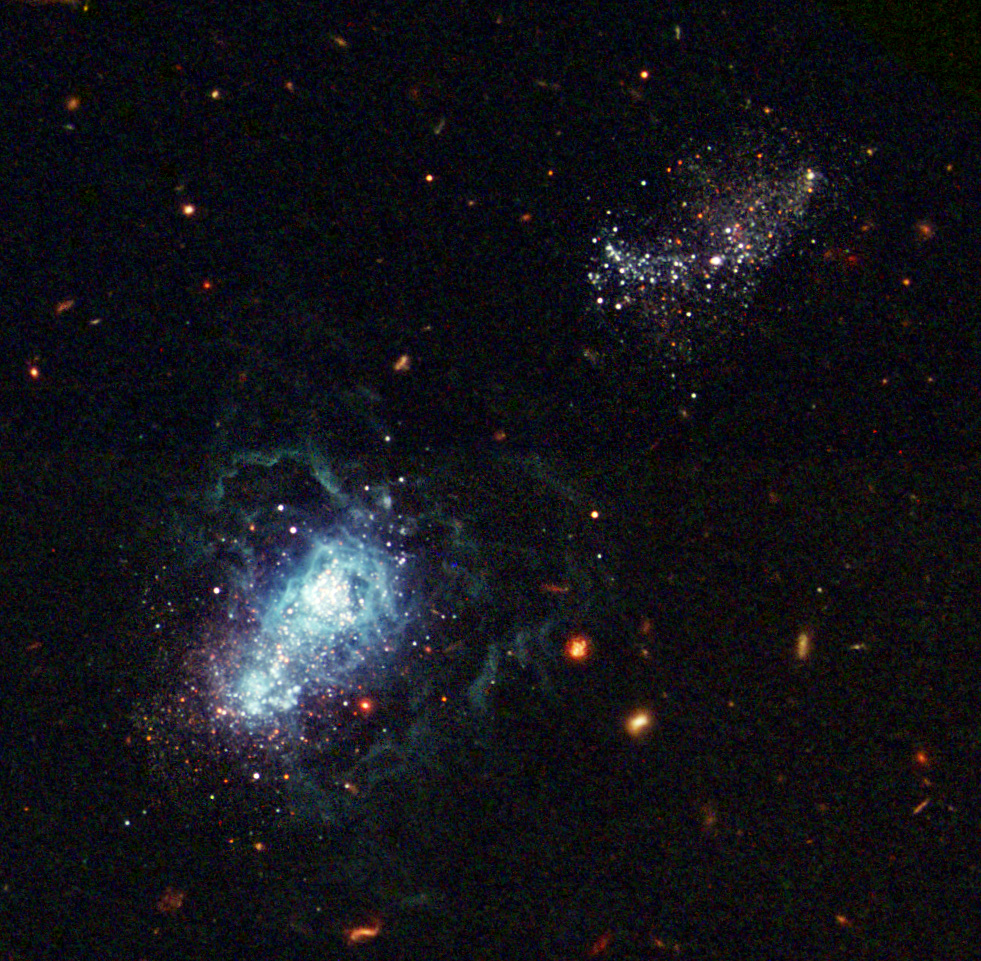
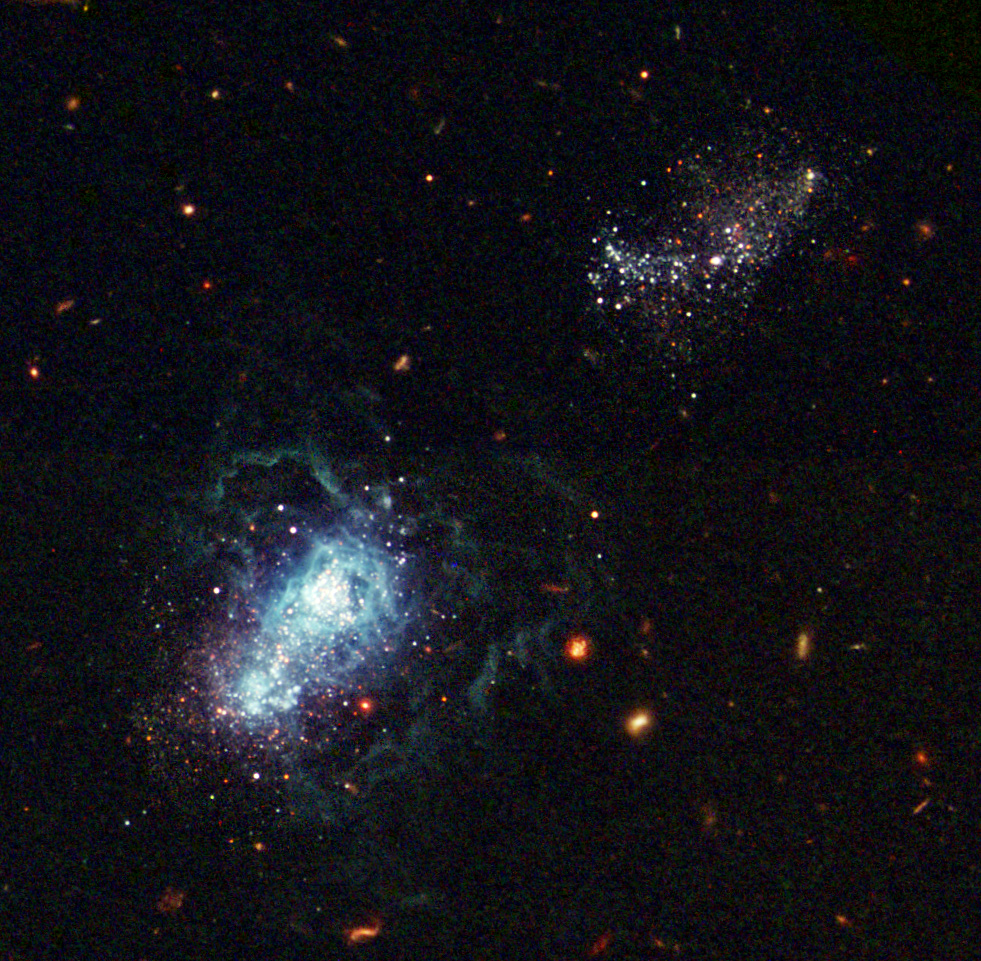
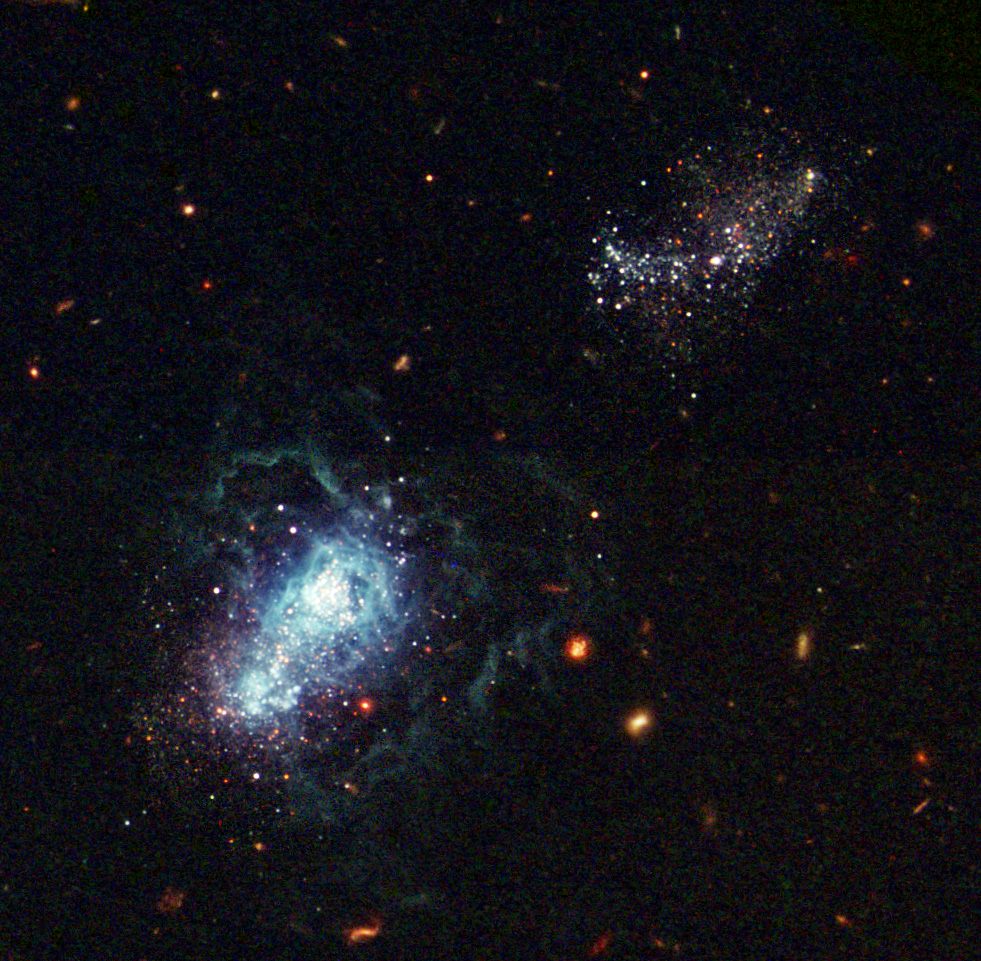
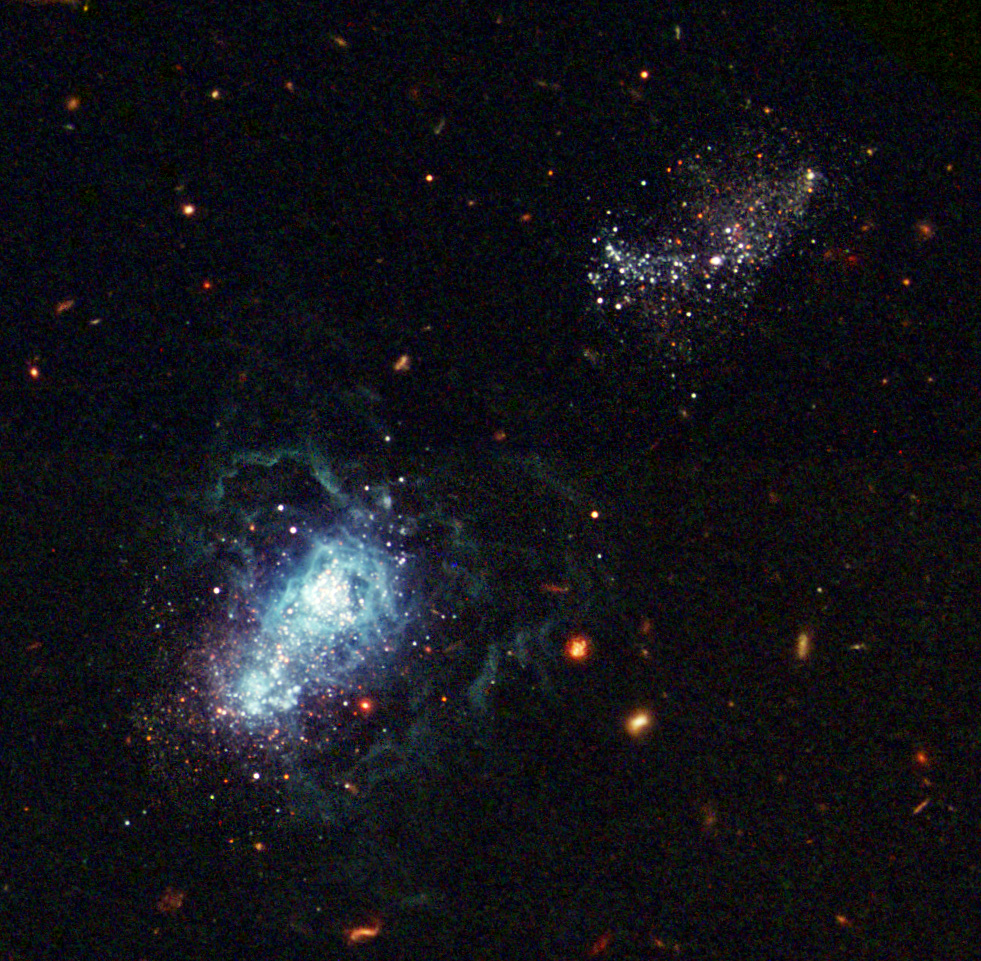
This earlier 1998 Hubble observation of I Zwicky 18 captures the galaxy during a period when it was still widely considered a possible example of a genuinely young galaxy in the local universe. The image reveals the galaxy's intensely blue star-forming regions, where massive hot stars illuminate surrounding clouds of hydrogen gas. The chaotic, irregular morphology of I Zwicky 18 is strikingly different from the graceful spirals and smooth ellipticals that dominate the galaxy population. Filaments of ionized gas extend outward from the main body, shaped by supernova-driven outflows that are actively expelling metal-enriched material into the intergalactic medium, contributing to the galaxy's remarkably low chemical abundance.
Scientific Significance
The 1998 Hubble observations of I Zwicky 18 were pivotal in the ongoing debate about whether genuinely young galaxies could exist in the local universe. At the time, the galaxy's extreme metal deficiency and blue colors were interpreted by many astronomers as evidence that it had only recently begun forming stars. The WFPC2 images reached sufficient depth to resolve individual bright stars but did not quite penetrate deeply enough to conclusively detect the faint old stellar population that would later be found with the more sensitive ACS instrument. These observations nevertheless provided crucial constraints on the star formation history by enabling color-magnitude diagram analysis of its resolved stars. The data revealed a complex structure of multiple star-forming knots embedded in an extended envelope of diffuse emission, suggesting that star formation proceeds in localized bursts rather than uniformly across the galaxy.
Observation Details
The 1998 observations utilized Hubble's Wide Field Planetary Camera 2 (WFPC2) in several broadband filters spanning the optical wavelength range. While WFPC2 had lower sensitivity and a smaller field of view compared to the later Advanced Camera for Surveys, it still provided the sharpest images of I Zwicky 18 available at the time. The exposures were designed to resolve bright blue main-sequence stars and red supergiants within the galaxy, enabling construction of a color-magnitude diagram to constrain the recent star formation history. The resulting images clearly showed the two primary star-forming knots in the main body and the companion galaxy to the northwest.
Location in the Universe
Constellation
Ursa Major
Distance from Earth
59 million light-years
Fun Facts
- 1
The intense blue color of I Zwicky 18 comes from clusters of young, massive O and B type stars that burn through their hydrogen fuel in just a few million years — cosmically brief lifespans compared to our Sun's ten billion year lifetime.
- 2
Supernova explosions in I Zwicky 18 create winds that blow at hundreds of kilometers per second, efficiently sweeping heavy elements out of this low-mass galaxy and into the surrounding intergalactic void.
- 3
Before Hubble's deep imaging resolved its faint old stars, I Zwicky 18 was the strongest candidate for a local primordial galaxy — one essentially unchanged since the earliest epoch of cosmic structure formation.
Image credit: NASA, ESA, Hubble Space Telescope