About This Image
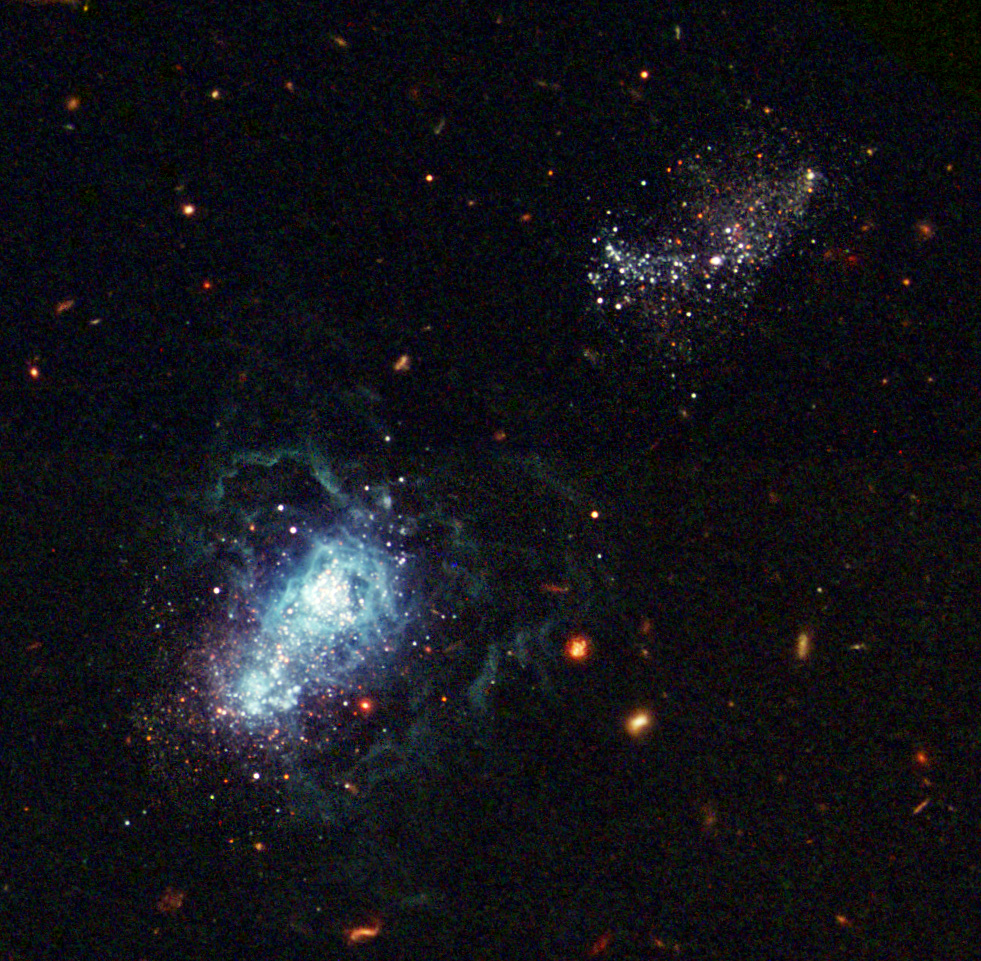
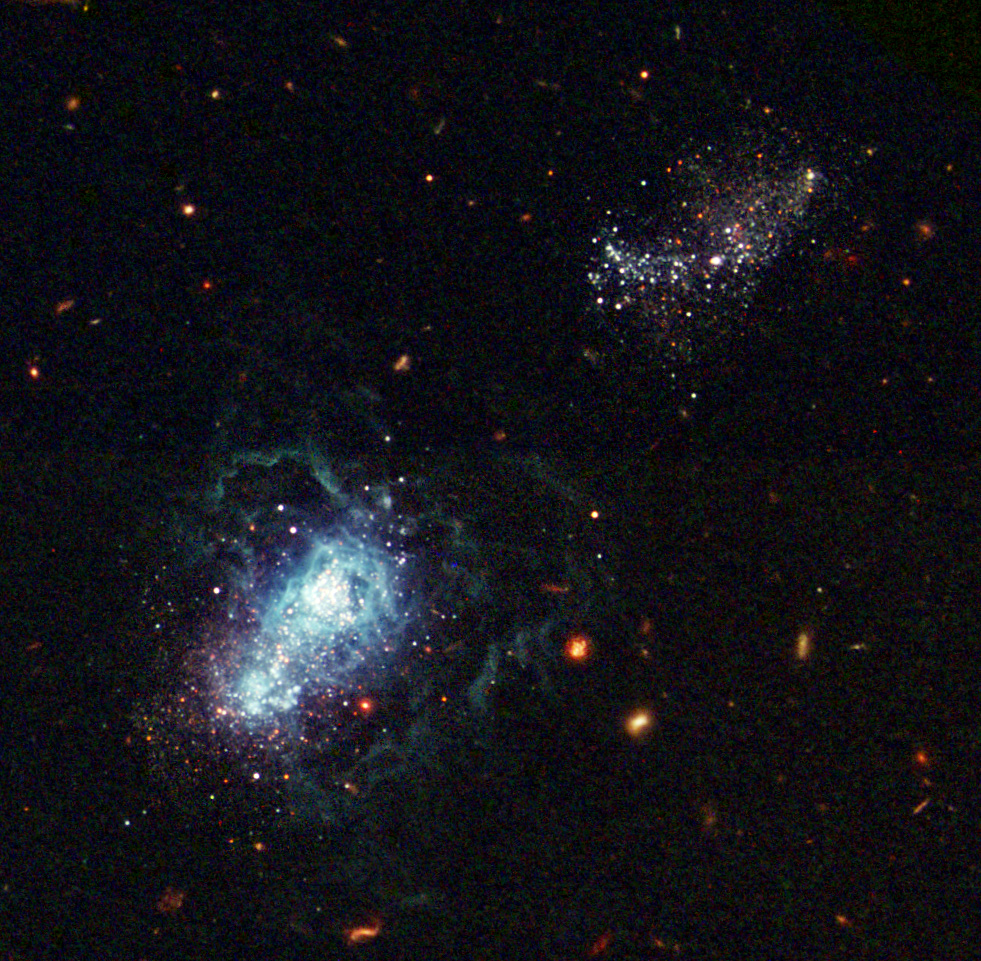
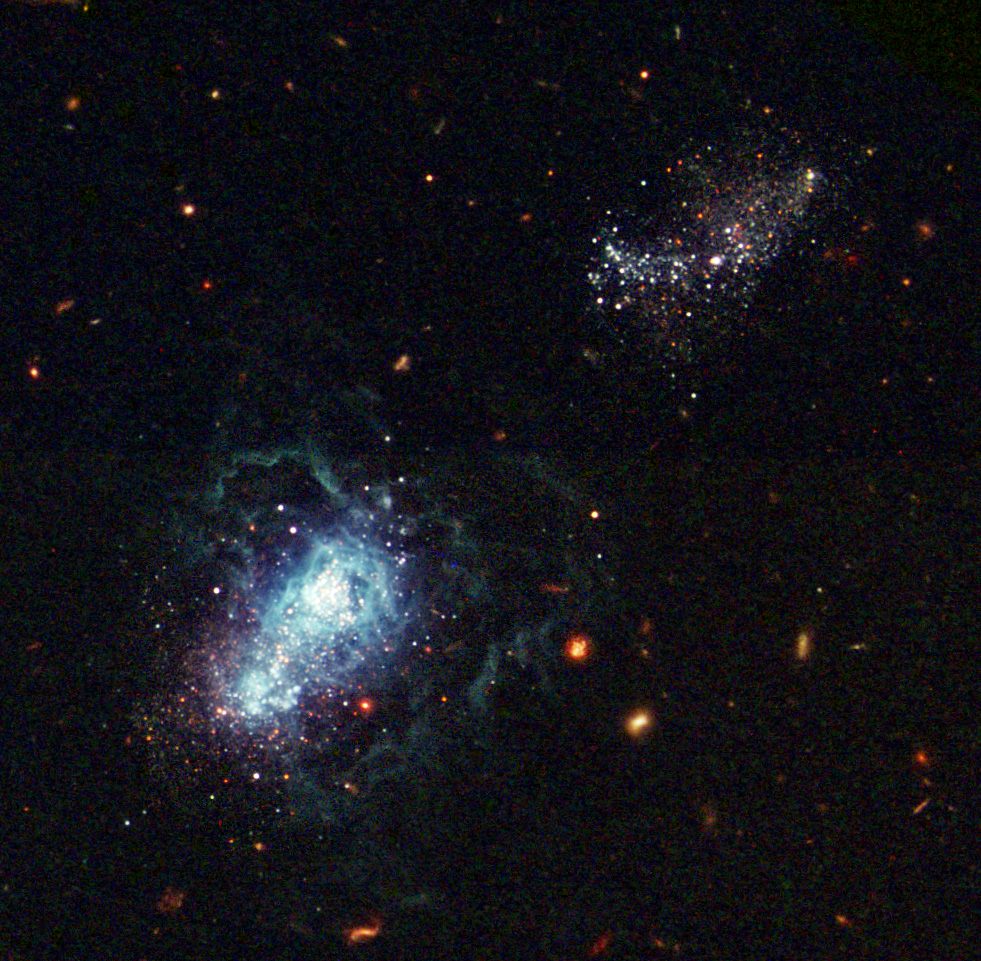
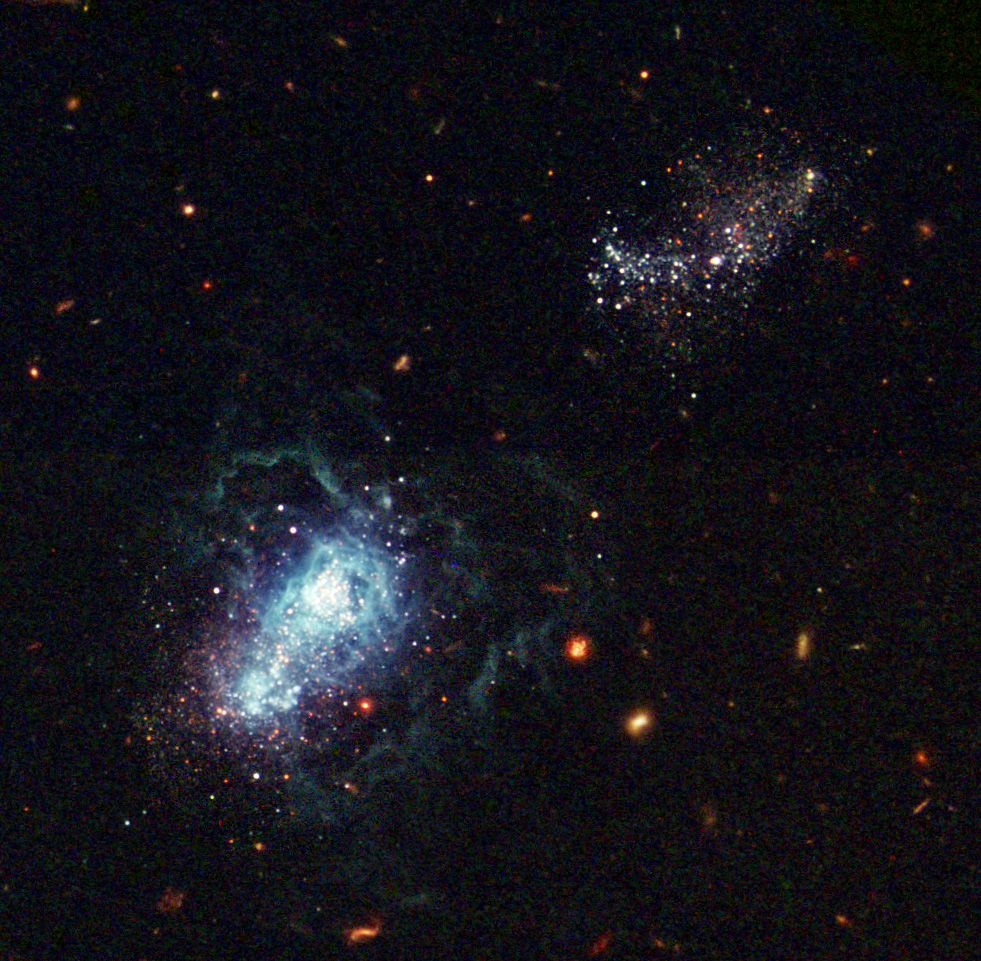
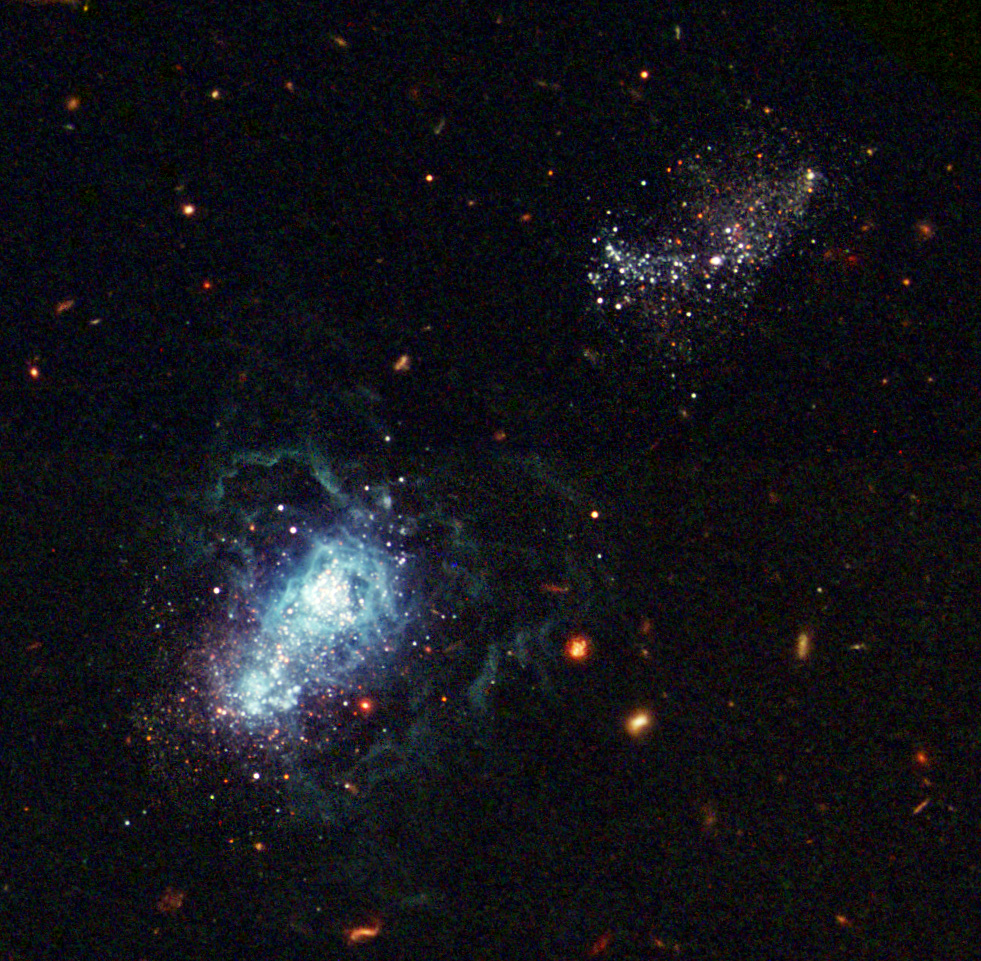
I Zwicky 18 is a peculiar irregular dwarf galaxy located approximately 59 million light-years from Earth in the constellation Ursa Major. This enigmatic galaxy and its smaller companion have fascinated astronomers for decades because of their extraordinarily low metallicity — they contain far fewer heavy elements than almost any other known galaxy. I Zwicky 18 was long thought to be a genuinely young galaxy, possibly only 500 million years old, forming stars for the first time in the relatively recent cosmic past. This 2003 Hubble observation provided critical new data that ultimately revealed the presence of faint, old red giant stars, proving the galaxy is actually billions of years old despite its youthful, blue appearance.
Scientific Significance
I Zwicky 18 occupies a unique position in extragalactic astronomy as one of the most metal-poor star-forming galaxies known in the local universe. For years, it was considered a candidate for a truly young galaxy — one that had somehow delayed its star formation until recent cosmic times. The resolution of this mystery came through deep Hubble imaging that detected a faint population of asymptotic giant branch (AGB) stars, which require at least one to two billion years to evolve. This discovery demonstrated that I Zwicky 18 is not genuinely young but rather has experienced episodic bursts of star formation separated by long quiescent periods. The galaxy's extreme metal deficiency is now understood as a result of efficient metal loss through galactic winds driven by supernova explosions. I Zwicky 18 remains a critical benchmark for calibrating the primordial helium abundance and for testing models of chemical evolution in low-mass galaxies.
Observation Details
This 2003 image was captured using Hubble's Advanced Camera for Surveys (ACS), which provided a significant improvement in depth and resolution over earlier WFPC2 observations. The ACS observations employed both broadband and narrowband filters to separate the galaxy's stellar populations from its ionized gas emission. The deeper exposures were specifically designed to search for faint red giant branch and AGB stars that would indicate an older underlying stellar population. The detection of these faint evolved stars at the distance of I Zwicky 18 pushed Hubble's capabilities to their limits.
Location in the Universe
Constellation
Ursa Major
Distance from Earth
59 million light-years
Fun Facts
- 1
I Zwicky 18 has a metallicity roughly one-fiftieth that of the Sun, making it one of the most chemically primitive galaxies in the local universe and a close analog to the first galaxies that formed after the Big Bang.
- 2
The galaxy was named after Fritz Zwicky, the visionary Swiss-American astronomer who also predicted the existence of dark matter and neutron stars decades before they were observationally confirmed.
- 3
I Zwicky 18's companion galaxy, visible nearby in Hubble images, is connected to the main body by a faint bridge of stars and gas, suggesting the two are gravitationally interacting and may eventually merge.
Image credit: NASA, ESA, Hubble Space Telescope