About This Image
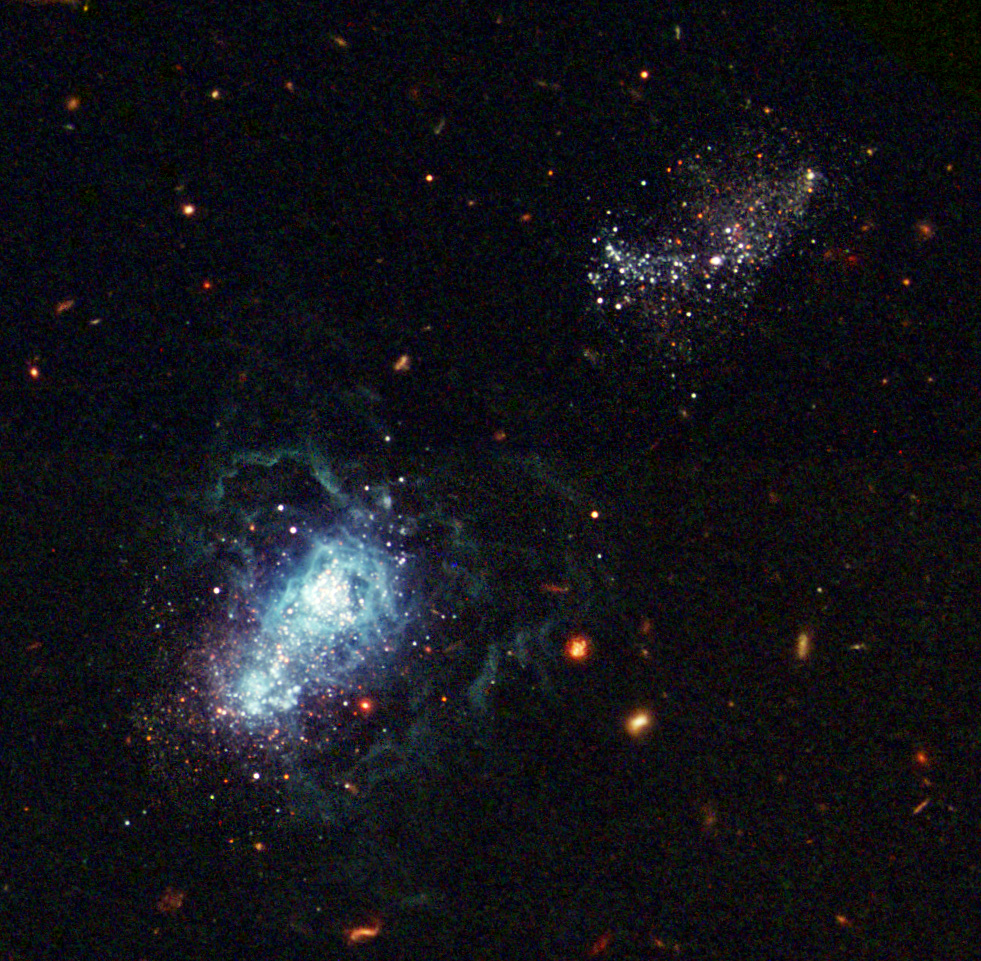
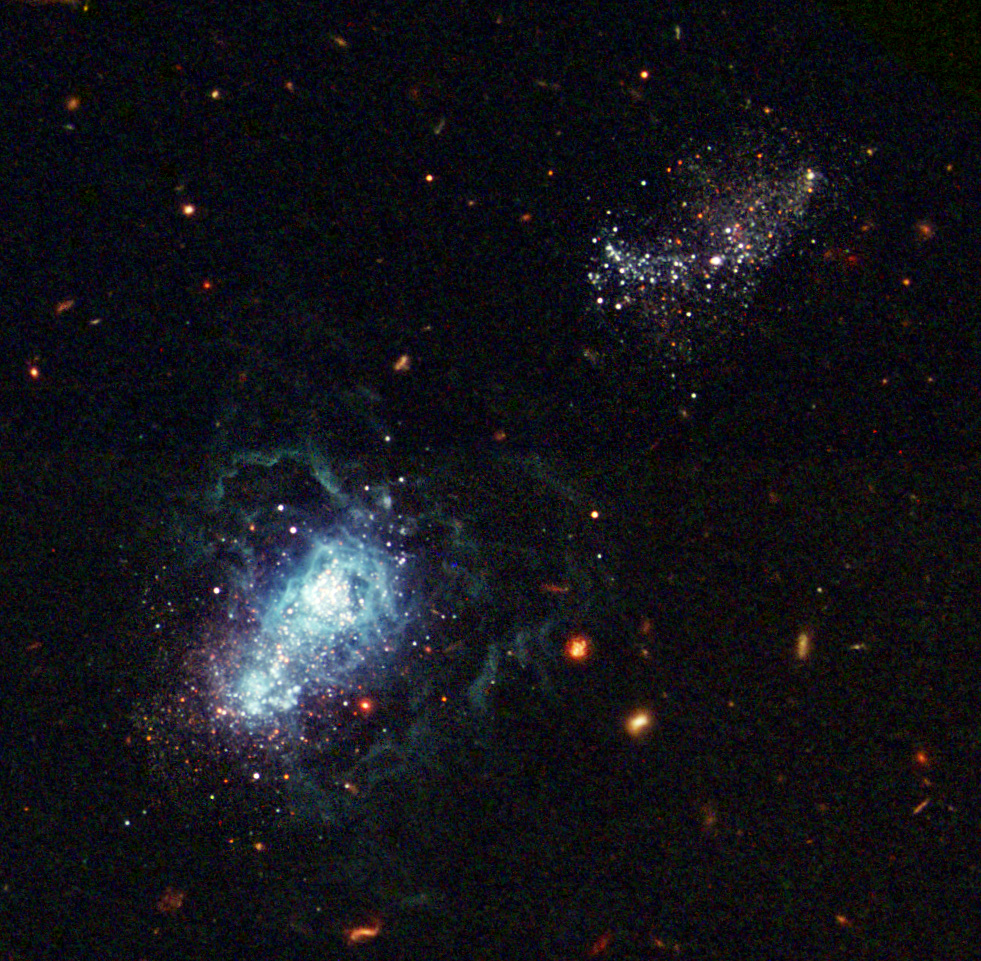
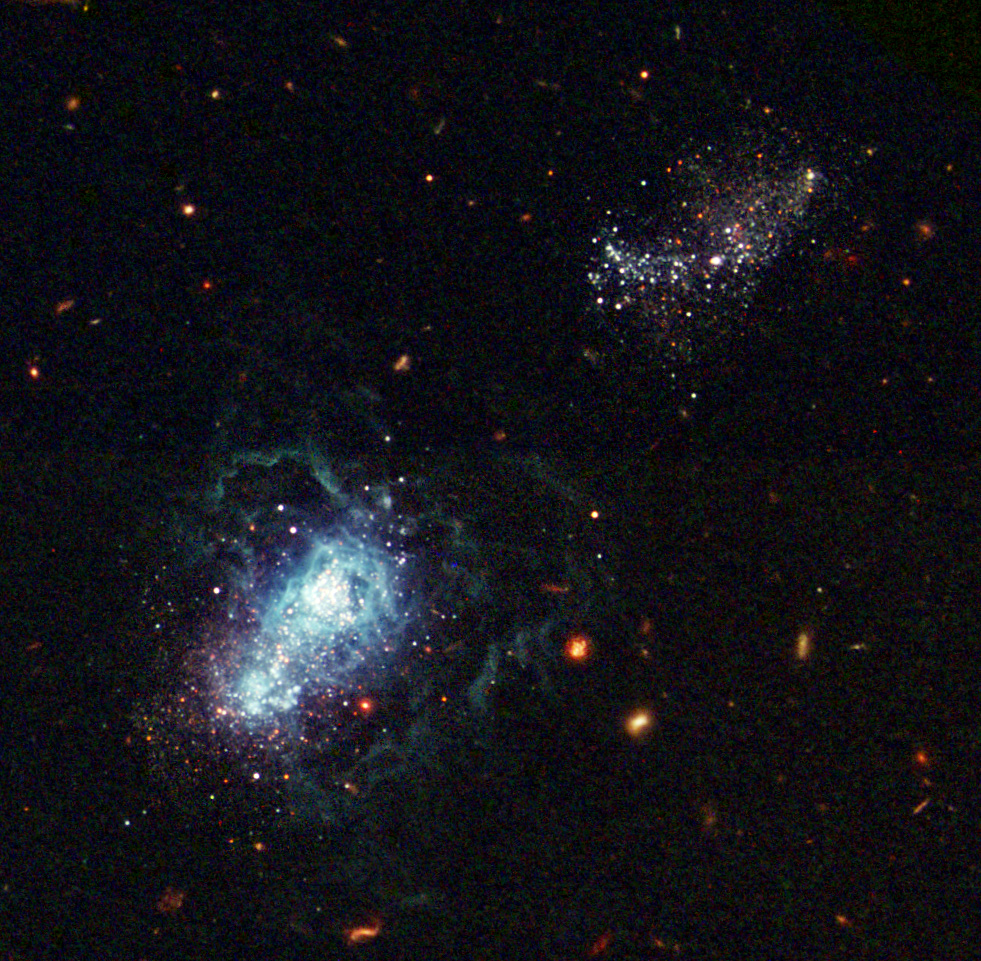
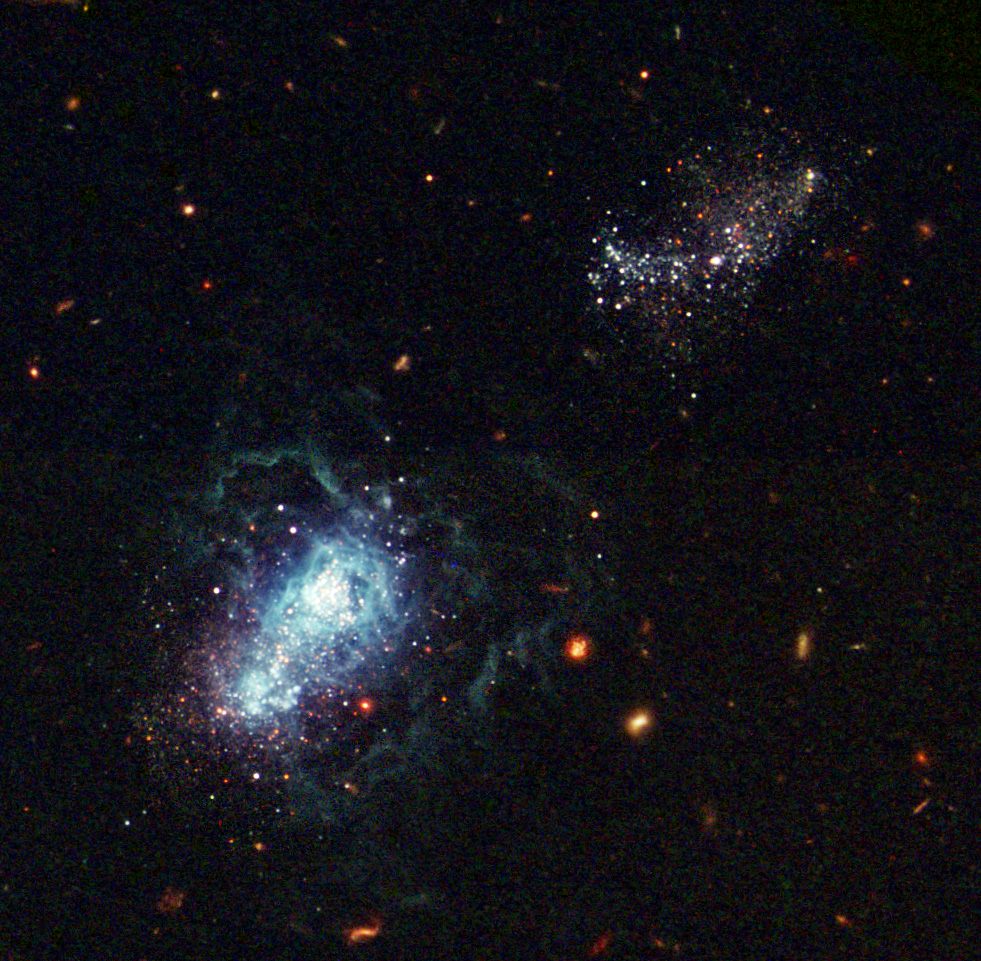
This 2003 Hubble view of I Zwicky 18 represents one of the deepest exposures ever taken of this remarkable dwarf galaxy, finally resolving the long-standing mystery of its true age. For decades, the galaxy's extreme chemical primitiveness and blue color had led many astronomers to believe it might be a truly young galaxy, forming its first stars in the recent cosmic past. However, this deep ACS observation penetrated far enough into the galaxy's faint stellar population to reveal ancient red giant stars lurking beneath the brilliant blue veneer of recent star formation, conclusively demonstrating that I Zwicky 18 began forming stars at least one billion years ago and likely much earlier.
Scientific Significance
The definitive age determination of I Zwicky 18 through deep Hubble ACS imaging represented a landmark result in the study of dwarf galaxy evolution. The detection of asymptotic giant branch stars established a firm lower limit on the galaxy's age of at least one billion years, while the color distribution of the resolved stellar population suggested that the true age may be comparable to other galaxies — around 10 billion years or more. This finding eliminated I Zwicky 18 as a candidate for a genuinely young galaxy and shifted the scientific question from why did this galaxy form so late to why has this galaxy retained so few of its metals despite forming stars over such a long period. The answer lies in the efficiency of supernova-driven galactic winds in low-mass systems. I Zwicky 18 demonstrates that a galaxy can maintain a nearly primordial chemical composition not because it is young, but because it efficiently expels its freshly synthesized heavy elements.
Observation Details
The 2003 observations utilized the Advanced Camera for Surveys in its Wide Field Channel with deep exposures in the F555W (V-band) and F814W (I-band) filters. These broadband observations were optimized for resolving the faintest individual stars in the galaxy's color-magnitude diagram, specifically targeting the tip of the red giant branch and the asymptotic giant branch populations. The total integration time of several orbits provided the depth necessary to reach approximately two magnitudes below the tip of the red giant branch at I Zwicky 18's distance. Careful point-spread function photometry was performed to extract accurate magnitudes for individual stars.
Location in the Universe
Constellation
Ursa Major
Distance from Earth
59 million light-years
Fun Facts
- 1
The faint red giant stars detected by Hubble in I Zwicky 18 are so dim at 59 million light-years that they hover near the absolute detection limit of the telescope, requiring the most sensitive camera and longest exposures available.
- 2
I Zwicky 18's star formation rate fluctuates dramatically over time — it can go through quiescent periods lasting hundreds of millions of years before erupting into another vigorous burst of new star creation.
- 3
Despite being classified as a dwarf galaxy, I Zwicky 18's total gas mass exceeds its stellar mass by a factor of roughly five, giving it an enormous fuel supply for potential future star formation episodes.
Image credit: NASA, ESA, Hubble Space Telescope