About This Image
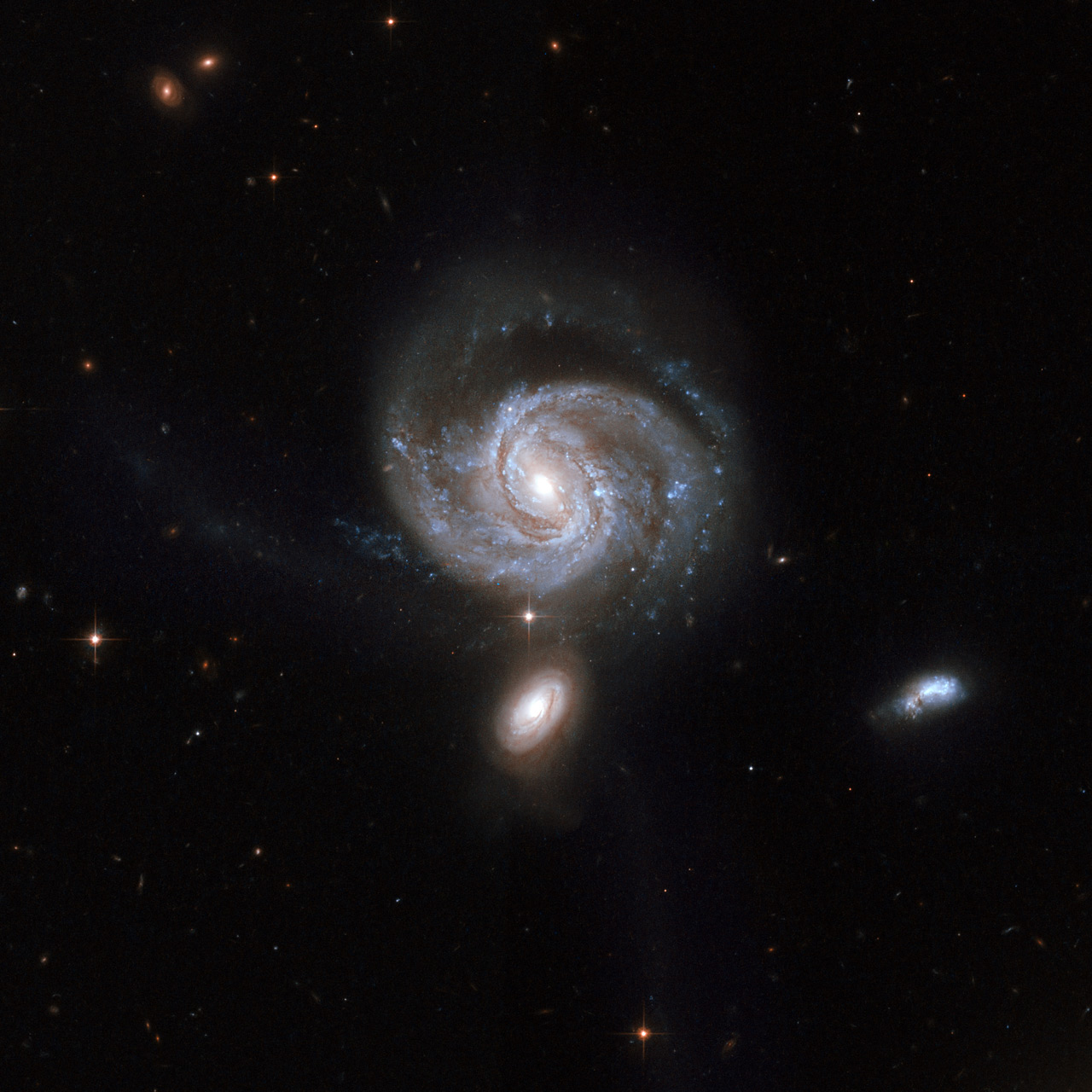
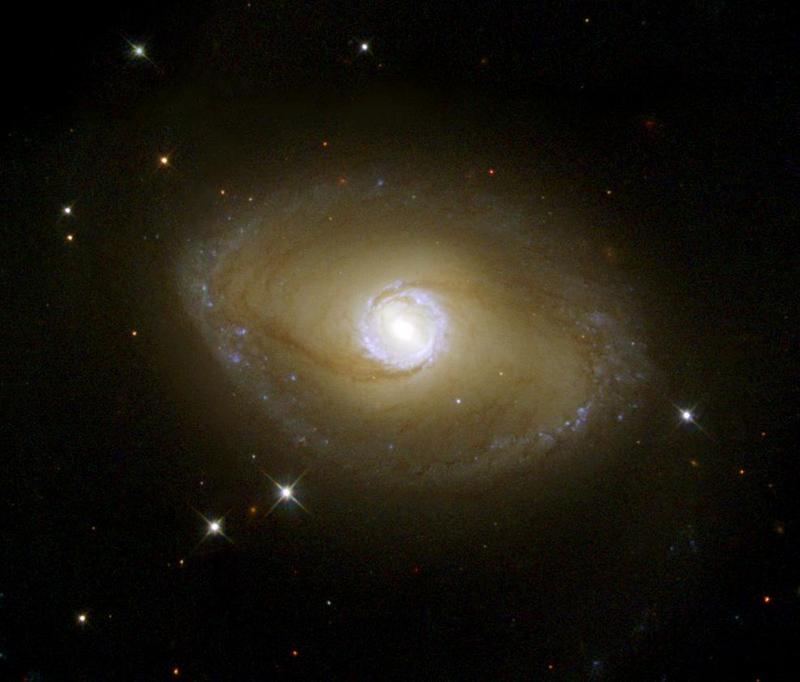
This spiral galaxy, NGC 6782, exhibits tightly wound spiral arms and a spectacular, nearly circular bright ring surrounding its nucleus, creating a stunning celestial target. Located approximately 183 million light-years away in the southern constellation Pavo, NGC 6782 is a prime example of a ringed barred spiral galaxy. The brilliant inner ring is a zone of intense star formation where gas has been channeled by the galaxy's bar structure into a narrow circular orbit, compressing to densities high enough to trigger the birth of massive, luminous blue stars. The ring glows brilliantly in ultraviolet light, indicating that star formation within it has been ongoing for only a few tens of millions of years. Beyond the ring, more diffuse spiral arms extend outward, containing a mixture of older yellow-red stars and scattered regions of newer star formation, creating a beautiful contrast between the galaxy's active core and its more quiescent outer reaches.
Scientific Significance
NGC 6782 is one of the clearest examples of how galactic bars drive the redistribution of gas and the concentration of star formation within spiral galaxies. In barred galaxies, the rotating elongated bar creates gravitational torques that remove angular momentum from orbiting gas, causing it to flow inward along the bar's leading edges. At specific orbital resonance radii — where the orbital period of the gas matches the rotation period of the bar pattern — this inflowing gas accumulates into dense rings. NGC 6782 demonstrates this process spectacularly, with its inner ring tracing the inner Lindblad resonance of the bar. The sharp contrast between the ring's intense blue ultraviolet emission and the redder stellar population of the surrounding disk shows that the ring has been actively forming stars for only a fraction of the galaxy's total age. Numerical simulations of bar-driven gas flows reproduce NGC 6782's ring morphology remarkably well, validating our theoretical understanding of resonance-driven star formation in barred galaxies.
Observation Details
Hubble observed NGC 6782 using the Wide Field Planetary Camera 2 (WFPC2) in ultraviolet, blue, green, and near-infrared filters. The ultraviolet observations were critically important for this galaxy because they directly trace the hot, massive stars that dominate the nuclear ring's luminosity — stars with surface temperatures exceeding 25,000 Kelvin that emit most of their radiation at ultraviolet wavelengths invisible from the ground. The multi-wavelength imaging enabled construction of color maps that reveal the spatial distribution of stellar ages across the galaxy, clearly delineating the young ring population from the older bulge and disk stars. The WFPC2's resolution was sufficient to identify individual bright star-forming complexes within the ring.
Location in the Universe
Constellation
Pavo
Distance from Earth
183 million light-years
Fun Facts
- 1
NGC 6782's nuclear star-forming ring is almost perfectly circular, spanning about 6,000 light-years in diameter — this remarkable geometric regularity is created by gas orbiting at a specific resonance radius where the bar's gravitational influence channels material into a stable circular orbit.
- 2
The ring of NGC 6782 is one of the brightest nuclear rings known, producing new stars at a rate roughly 10 times higher per unit area than the rest of the galaxy's disk, making it visible as a distinct luminous feature even in moderate-resolution ground-based images.
- 3
NGC 6782 resides in the constellation Pavo — the Peacock — a southern hemisphere constellation named by Dutch navigators in the late 16th century and visible primarily from latitudes south of about 30 degrees north.
Image credit: NASA, ESA, Hubble Space Telescope