About This Image
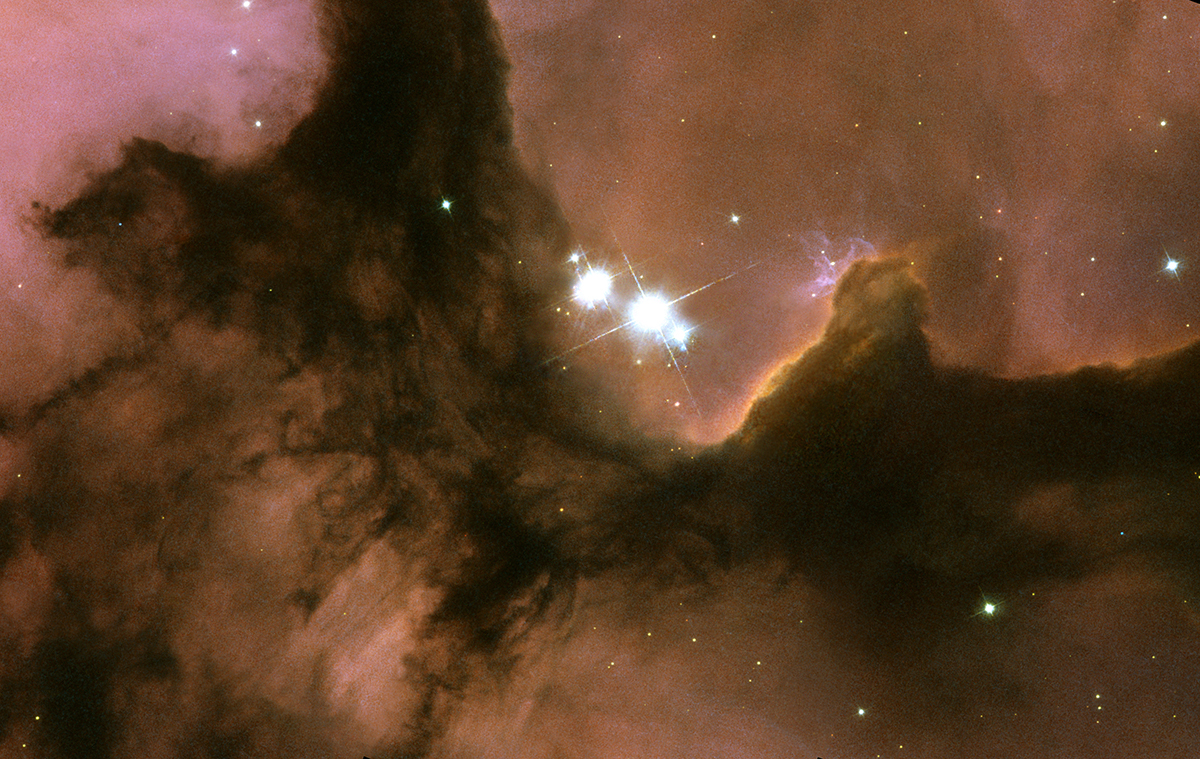
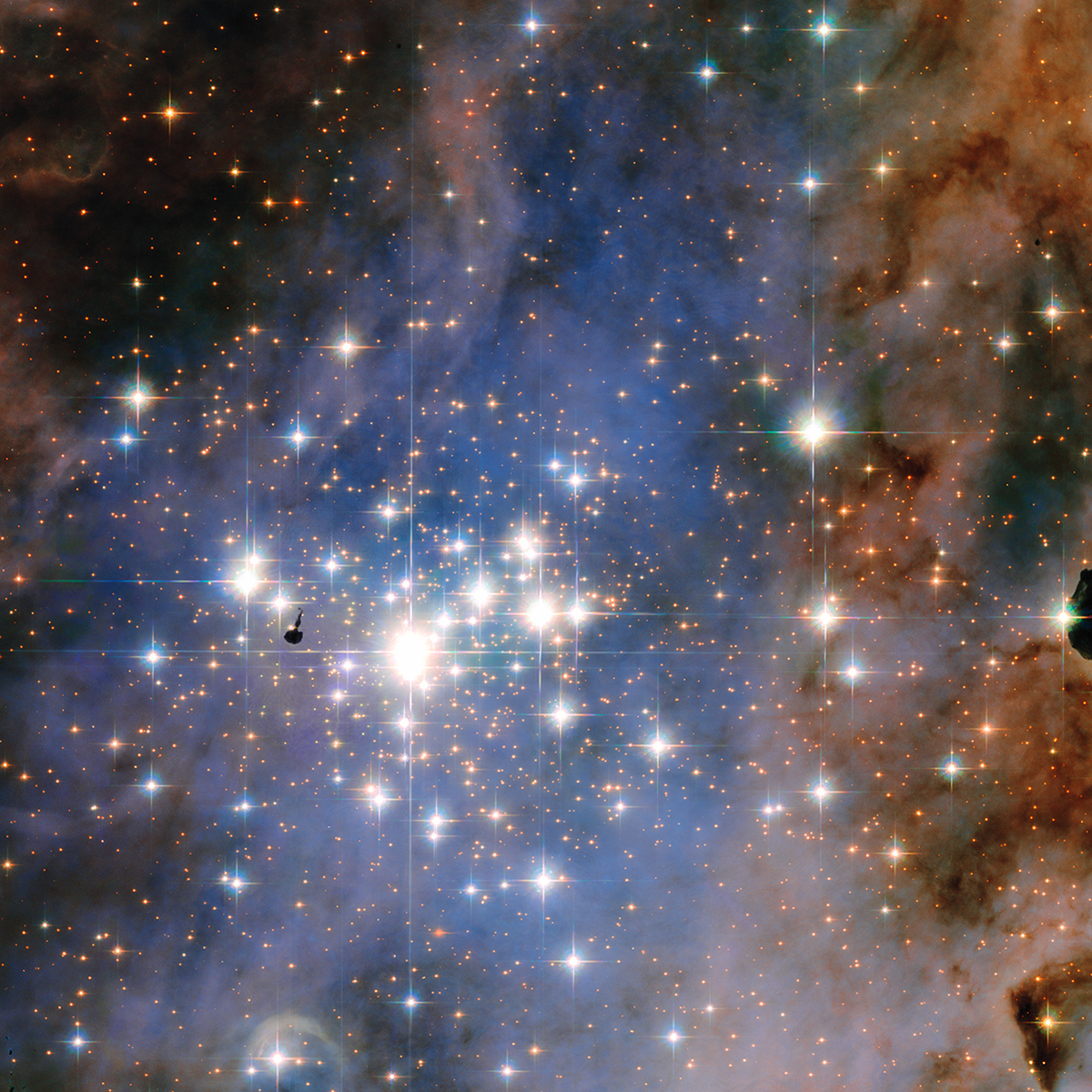
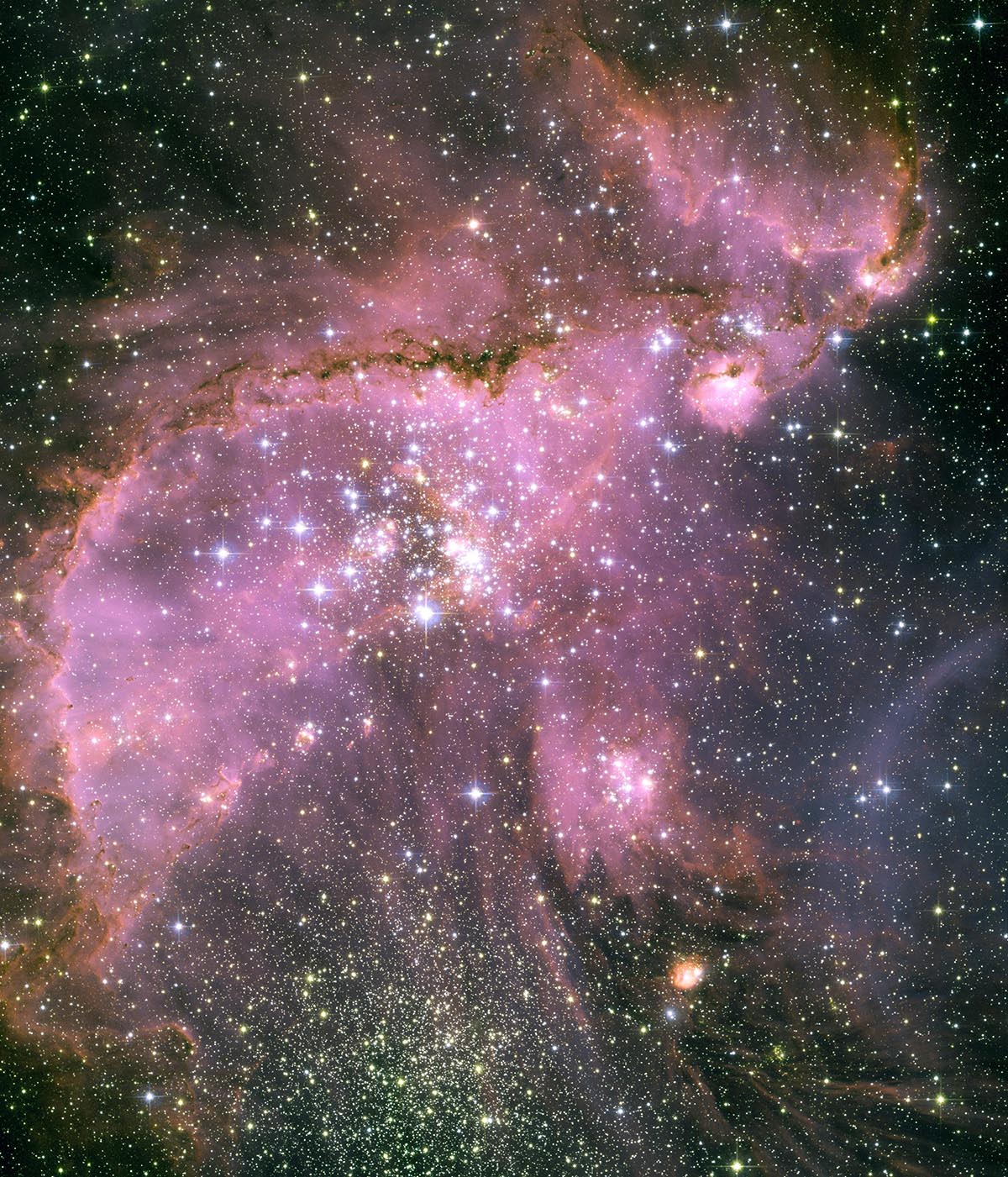
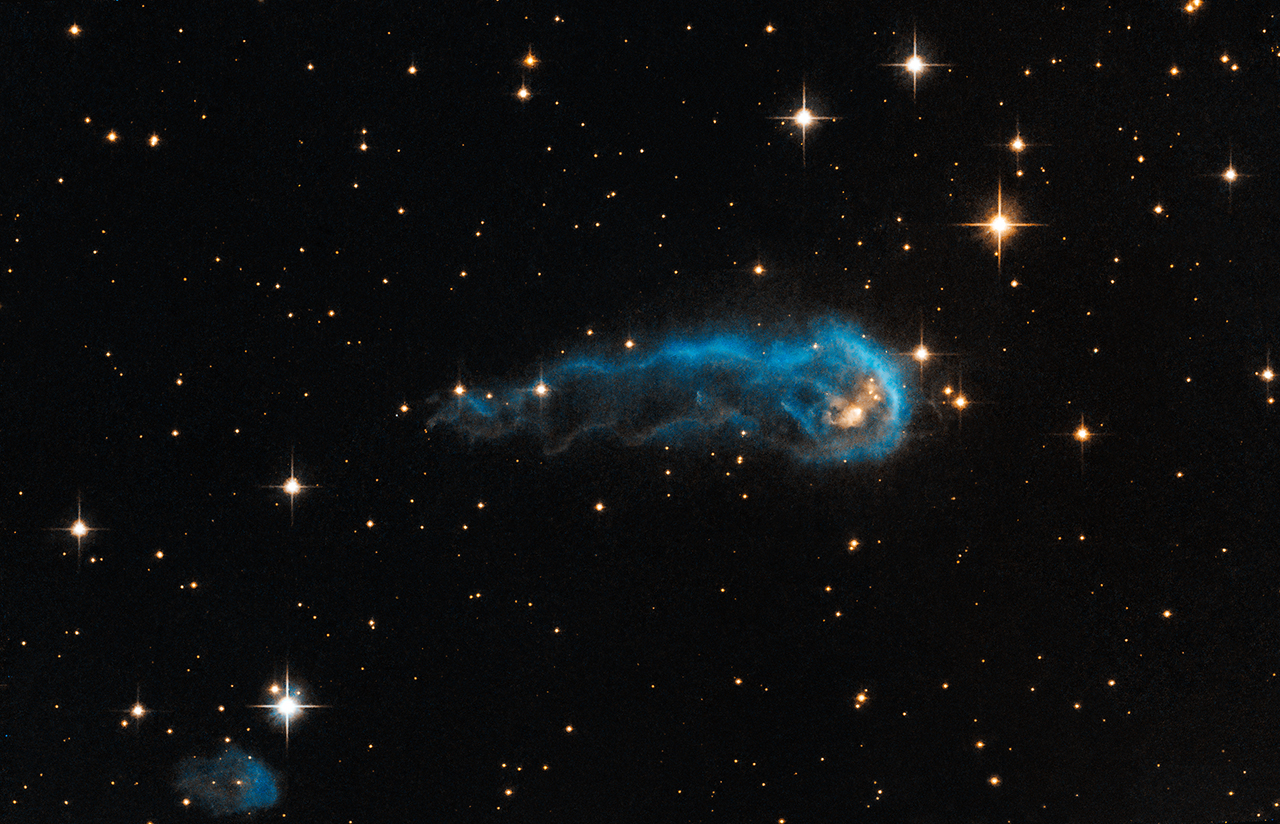
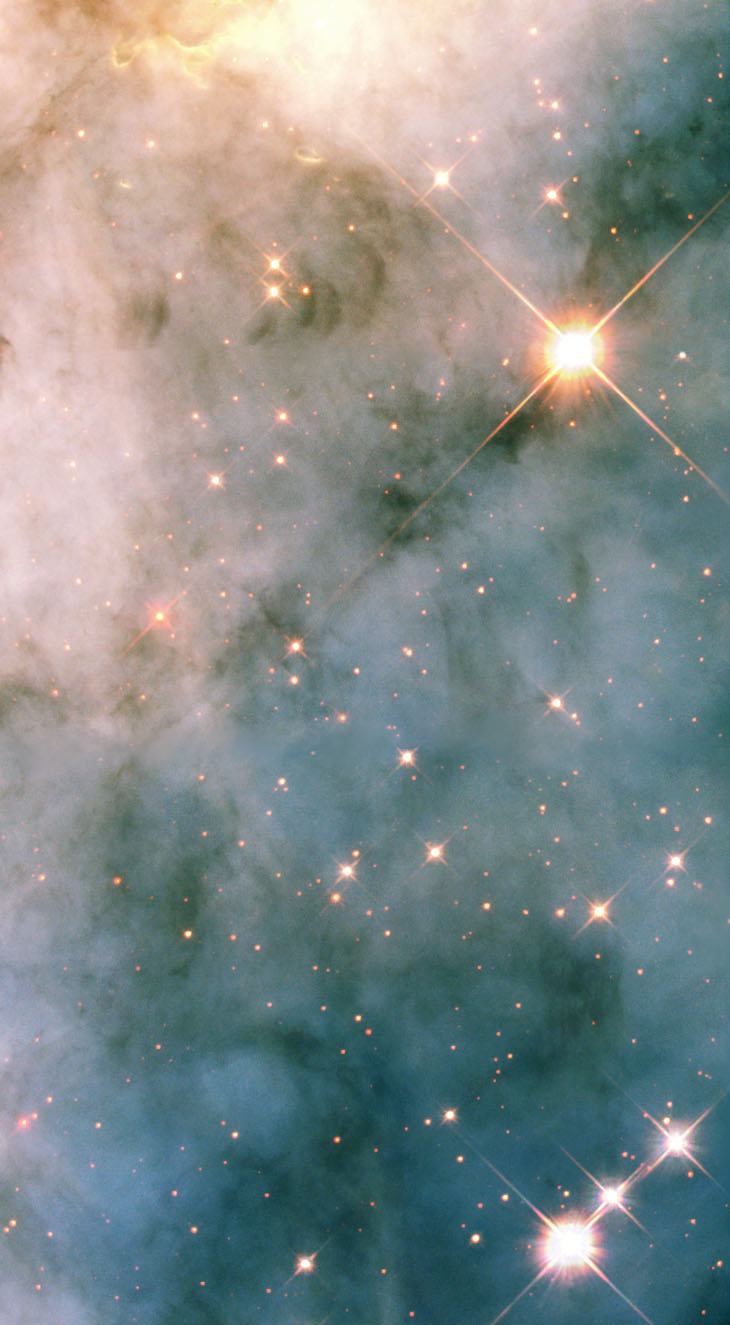
This close-up view shows only a three-light-year-wide portion of the entire Carina Nebula, which has a diameter of over 200 light-years. Located 8,000 light-years from Earth, the nebula can be seen in the southern sky with the naked eye.
Scientific Significance
Carina is one of the most important nearby laboratories for massive star formation and feedback. It shows how ultraviolet radiation, stellar winds, and shocks can both trigger and suppress new star birth in neighboring clouds. These processes scale up to starburst galaxies, so Carina helps bridge local star-forming physics with broader galaxy evolution.
Observation Details
Hubble imaged selected Carina subregions in optical filters sensitive to ionized gas and dust structure. The data resolve interfaces between hot ionized fronts and colder molecular material. Fine features such as evaporating globules and narrow jets are visible, allowing precise comparison with hydrodynamic feedback models.
Location in the Universe
Constellation
Carina
Distance from Earth
Approximately 8,000 light-years
Fun Facts
- 1
The Carina Nebula spans over 200 light-years and includes multiple massive star clusters.
- 2
Powerful winds and radiation from young massive stars carve pillars, arcs, and cavities in the gas.
- 3
The region contains unstable massive stars that are expected to end as supernovae in cosmic terms.
Image credit: NASA, ESA, Hubble Space Telescope