About This Image
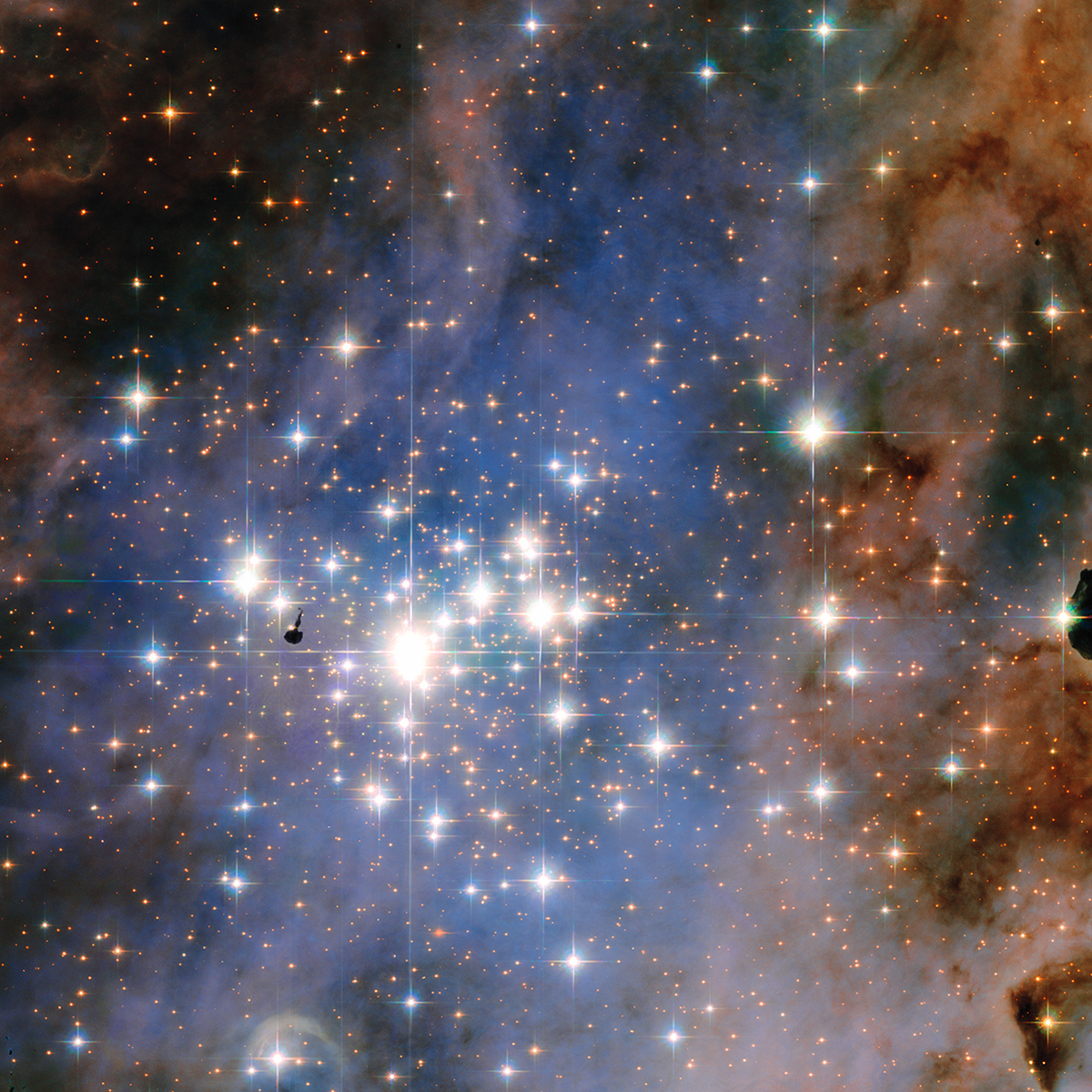
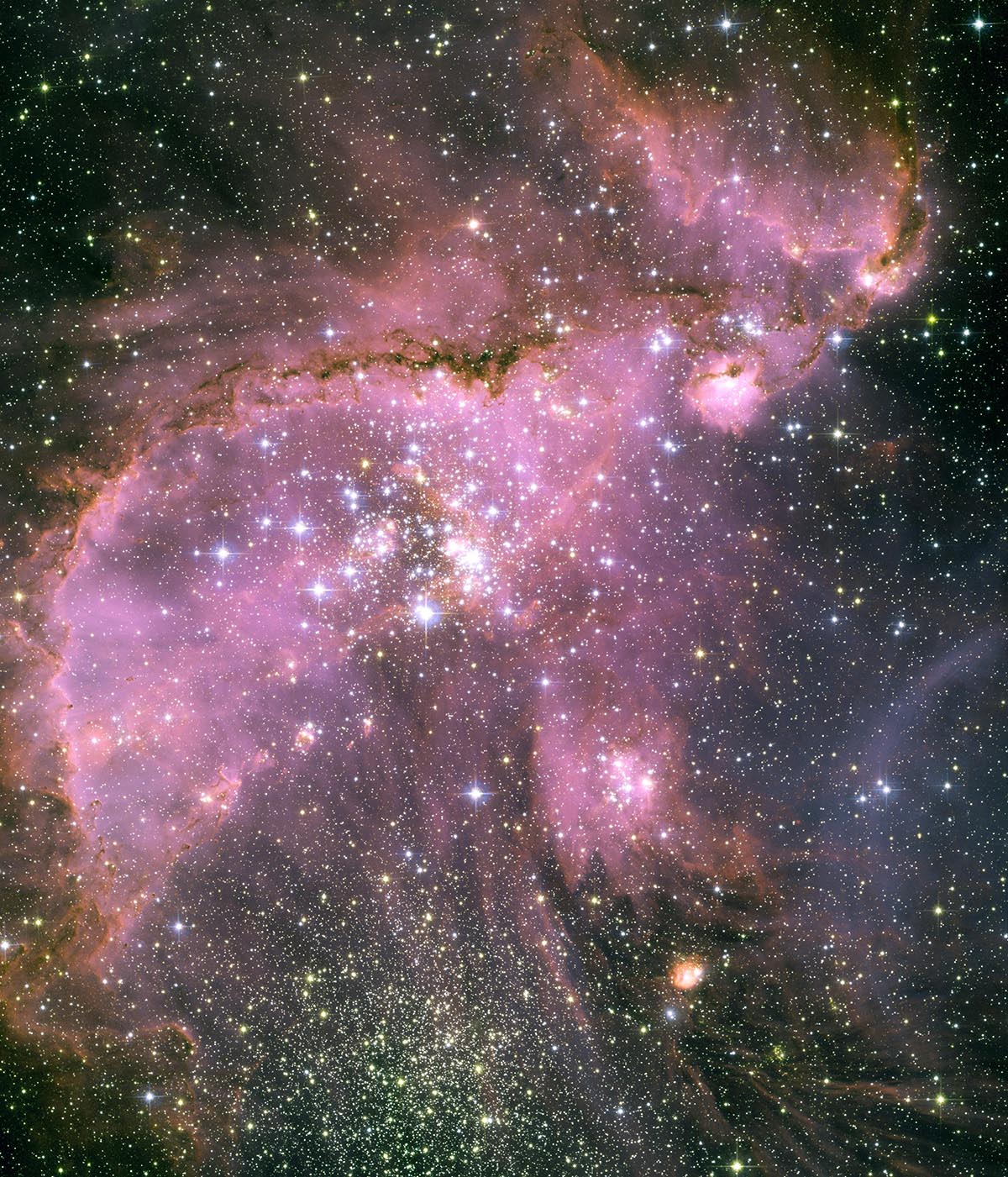
This image captures a dynamic star-forming region in a nearby dwarf galaxy called the Small Magellanic Cloud. At the center is a brilliant star cluster called NGC 346.
Scientific Significance
NGC 346 is a reference target for studying star formation in low-metallicity environments. Because the Small Magellanic Cloud has less heavy-element enrichment than the Milky Way, the physics of cooling, fragmentation, and feedback differ in measurable ways. These data improve models of how stars formed when the universe was younger and chemically poorer.
Observation Details
Hubble observations resolved stellar populations across the cluster and adjacent gas clouds with high angular resolution. Multi-filter photometry enables age dating of young stars and identification of pre-main-sequence candidates. Spatial mapping of stars versus gas reveals how feedback sculpts the region over time.
Location in the Universe
Constellation
Tucana
Distance from Earth
Approximately 210,000 light-years
Fun Facts
- 1
NGC 346 is the most active star-forming region in the Small Magellanic Cloud.
- 2
The region contains many massive young stars that illuminate and erode surrounding gas.
- 3
Its low metallicity makes it a useful analog for star formation conditions in the early universe.
Image credit: NASA, ESA, Hubble Space Telescope