About This Image
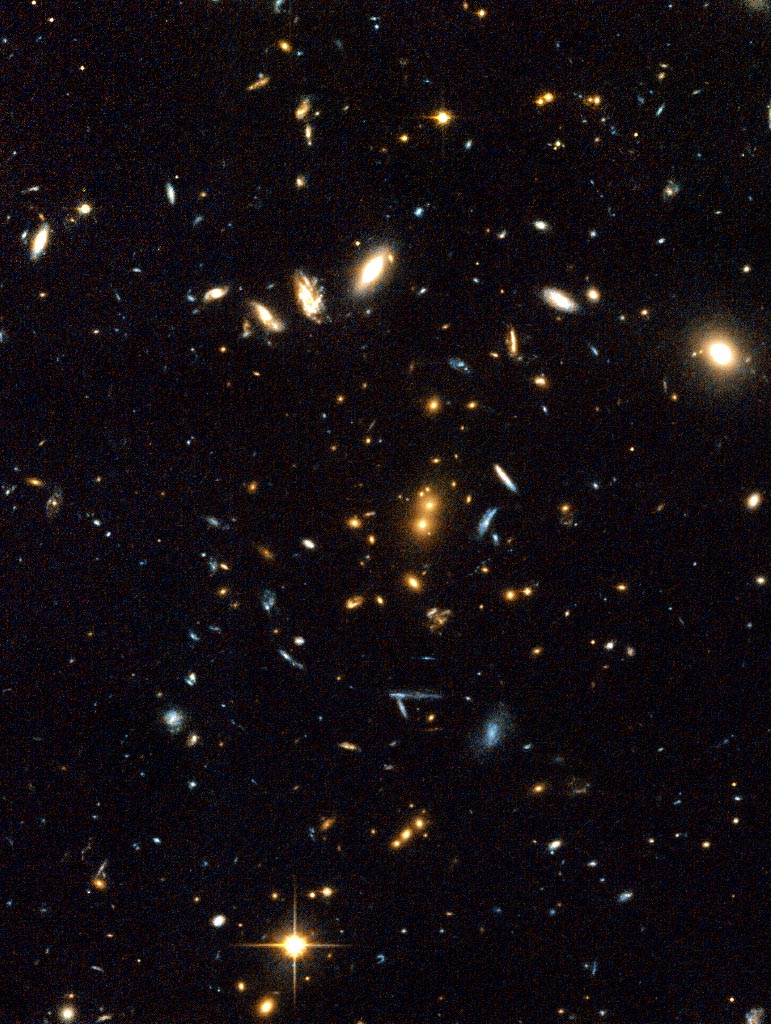
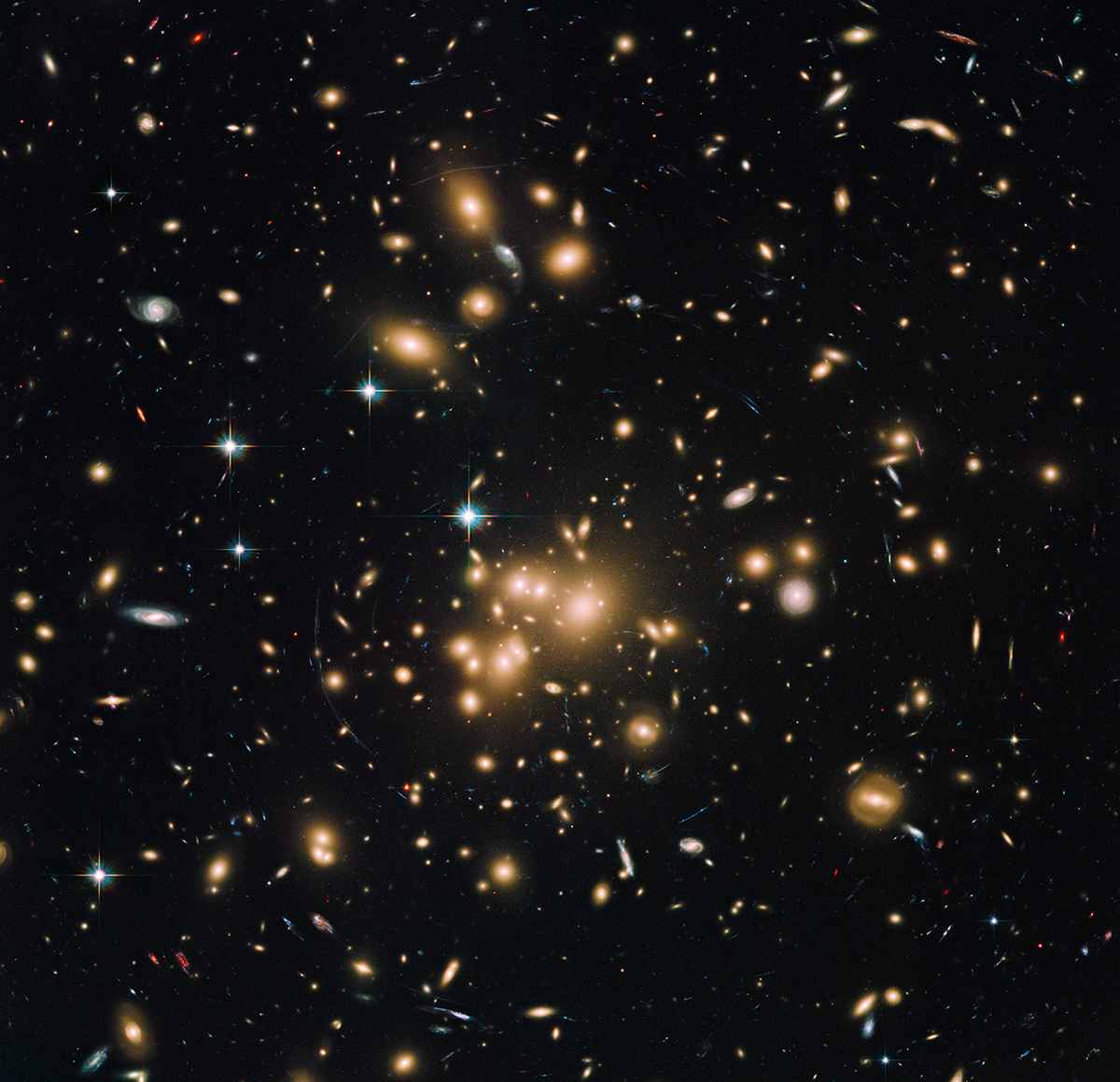
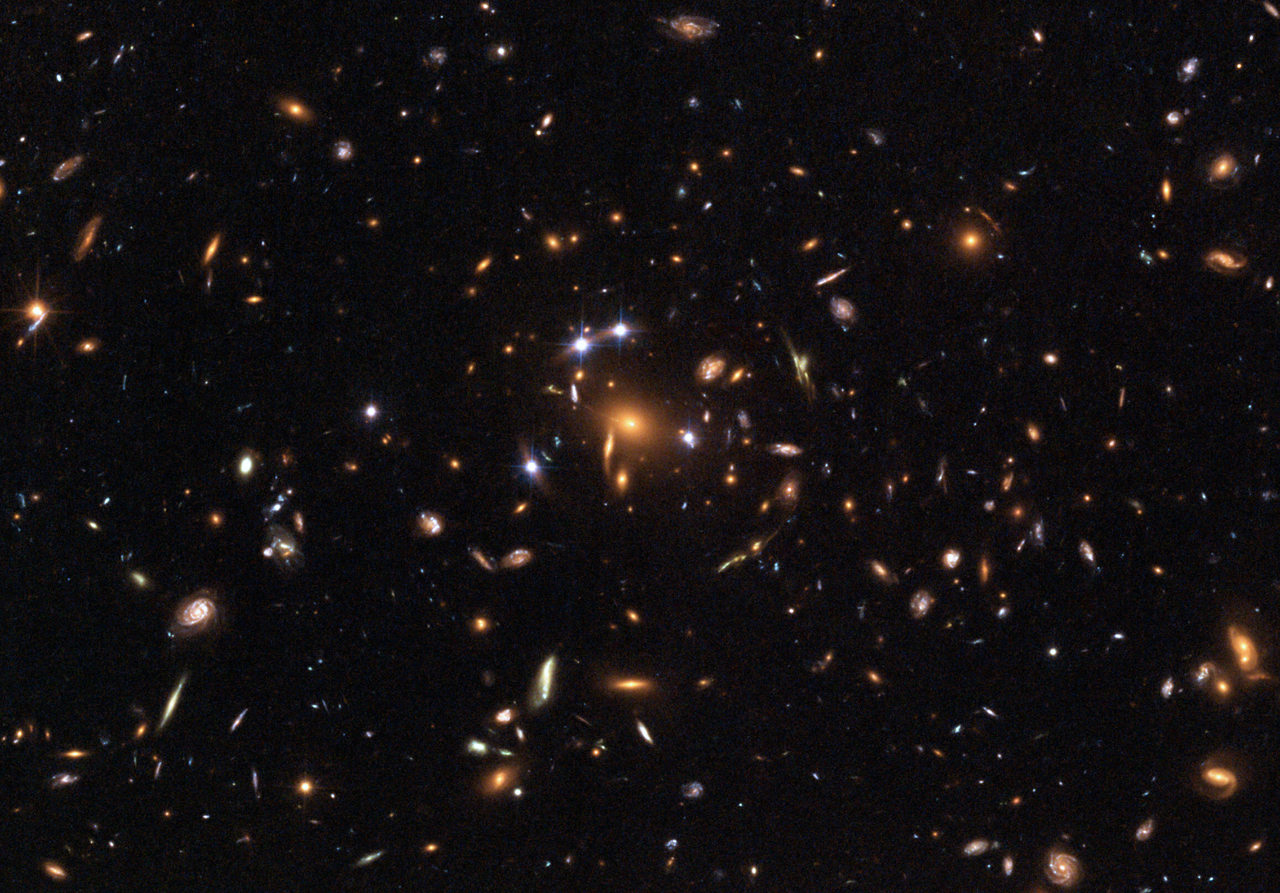
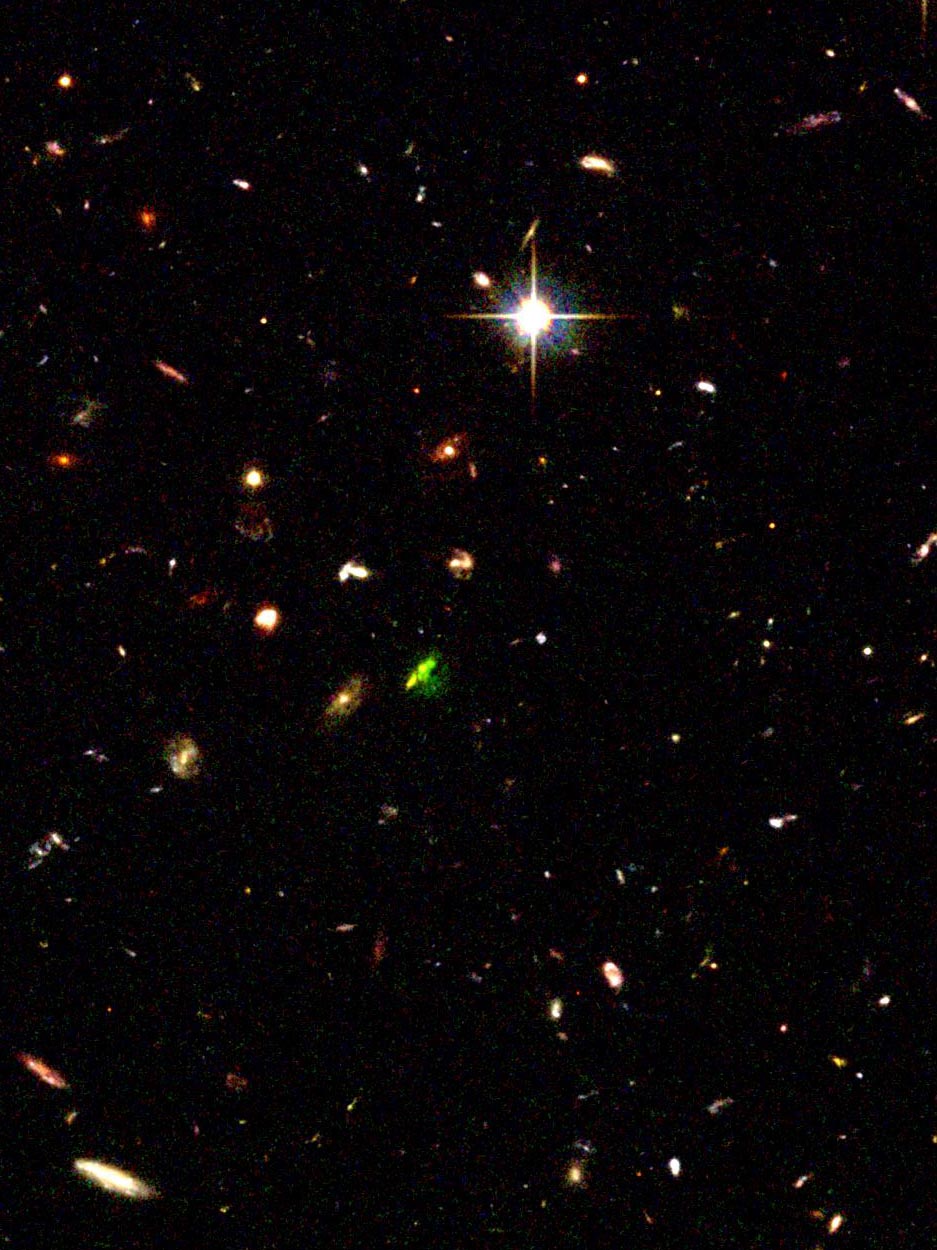
The galaxy cluster TN J1338-1942 contains a massive embryonic galaxy surrounded by smaller developing galaxies. The central galaxy has spectacular radio-emitting jets, fueled by a supermassive black hole deep within the galaxy's nucleus.
Scientific Significance
This system probes cluster assembly in the early universe and the role of AGN feedback in young massive galaxies. The coexistence of rapid growth, jet activity, and nearby forming companions provides constraints on how dense environments evolve. Observations of objects like TN J1338-1942 connect early protoclusters to present-day rich clusters.
Observation Details
Hubble deep imaging resolved small companion galaxies and star-forming structure around the central radio source. Multi-band data, combined with radio measurements, link optical morphology to jet direction and environment. The target is often studied with spectroscopy to confirm redshifts and gas kinematics.
Location in the Universe
Constellation
Virgo
Distance from Earth
Approximately 12 billion light-years
Fun Facts
- 1
TN J1338-1942 is observed at a time when the universe was only about 1.5 billion years old.
- 2
Its central radio galaxy launches jets powered by a supermassive black hole.
- 3
The surrounding environment is a proto-cluster, an early stage of modern galaxy clusters.
Image credit: NASA, ESA, Hubble Space Telescope