About This Image
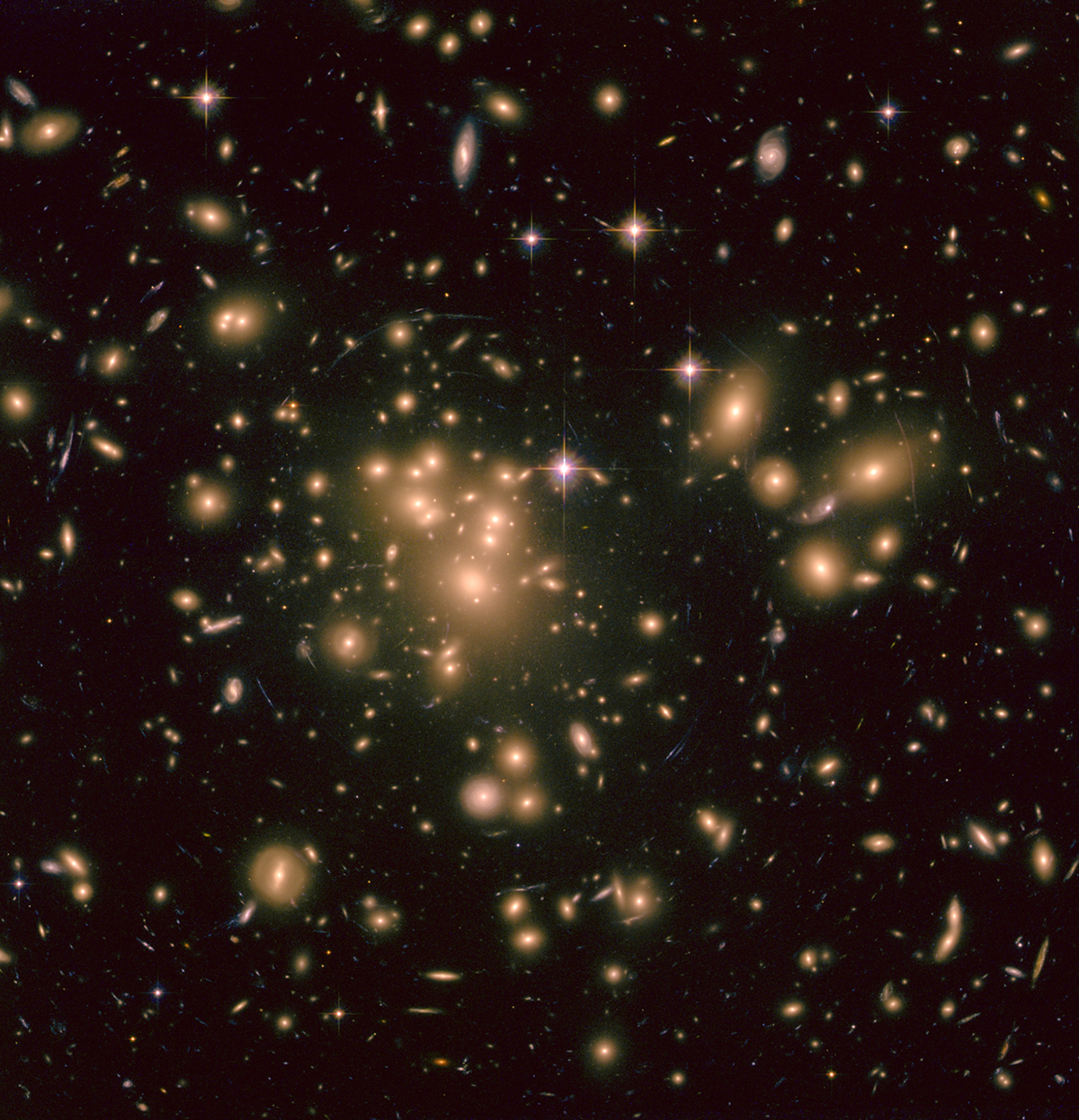
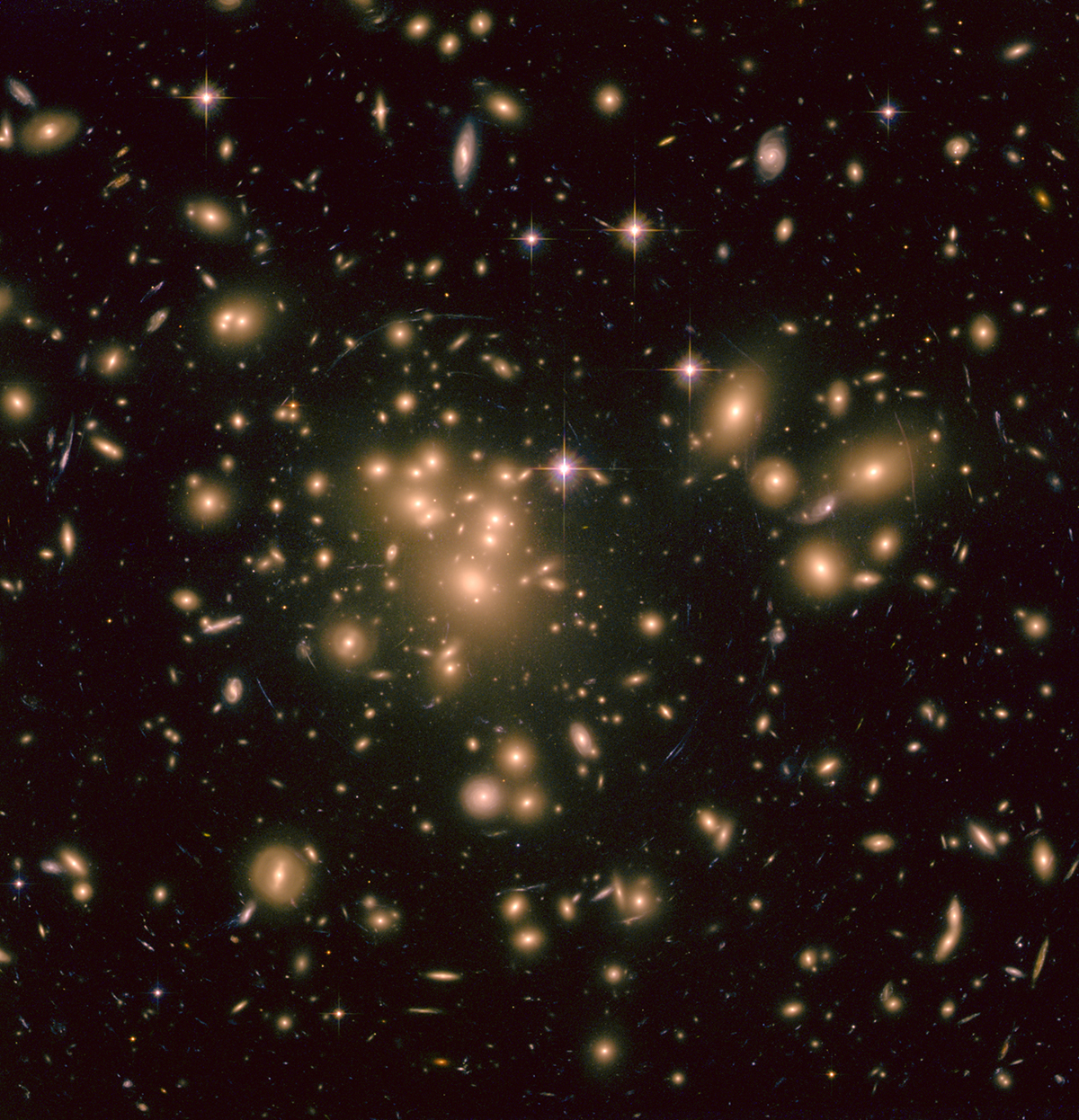
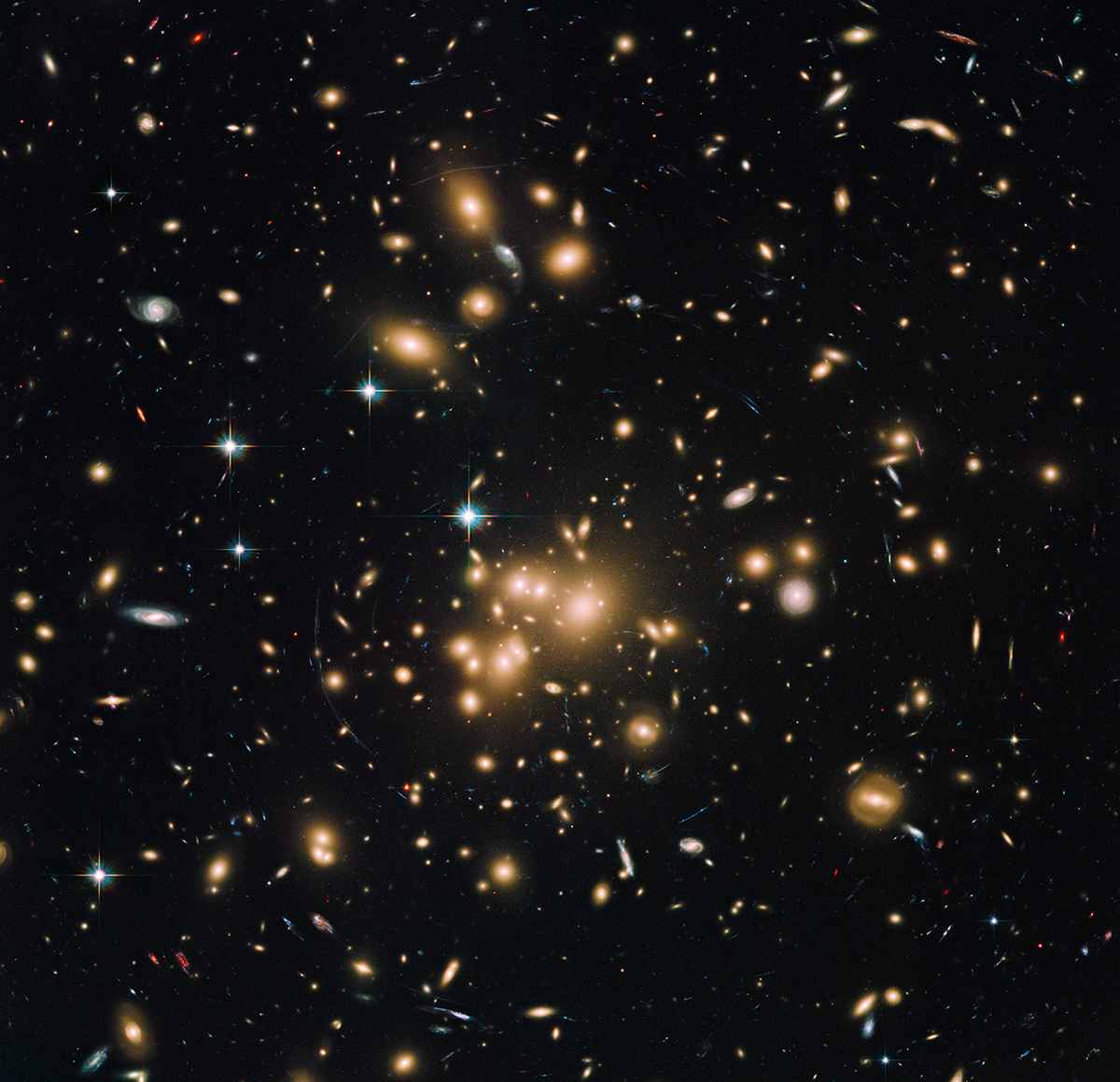
This image shows the center of Abell 1689, an immense cluster of galaxies located 2.2 billion light-years away. Astronomers used Hubble to map the distrubition of dark matter in the galaxy cluster.
Scientific Significance
Abell 1689 is a cornerstone system for dark matter mapping through strong lensing. By modeling arc positions and distortions, astronomers reconstruct the cluster's mass distribution with high precision. This supports tests of structure formation and helps calibrate cosmological simulations of how matter, especially dark matter, assembles on large scales.
Observation Details
Hubble obtained deep multi-filter imaging with ACS to identify dozens of lensed features in the cluster core. Lens models were iteratively refined using photometric and spectroscopic redshifts of background sources. The resulting mass maps are compared with X-ray and weak-lensing measurements to cross-check consistency.
Location in the Universe
Constellation
Virgo
Distance from Earth
2.2 billion light-years
Fun Facts
- 1
Abell 1689 is one of the strongest known gravitational lenses, producing many curved background arcs.
- 2
Most of the cluster mass is dark matter, inferred from how strongly it bends background light.
- 3
The lensing magnification can reveal galaxies that would otherwise be too faint to detect.
Image credit: NASA, ESA, Hubble Space Telescope