About This Image
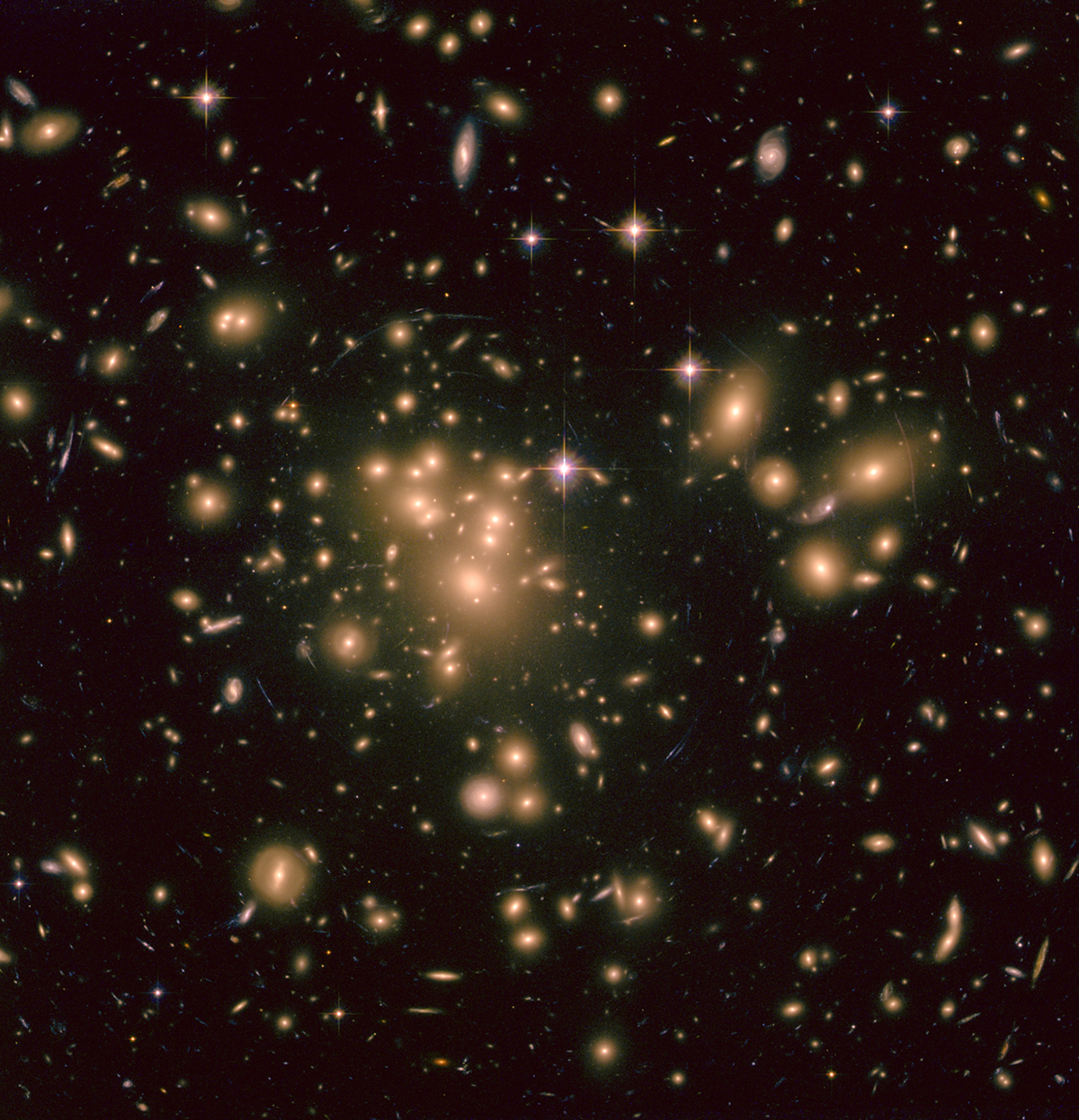
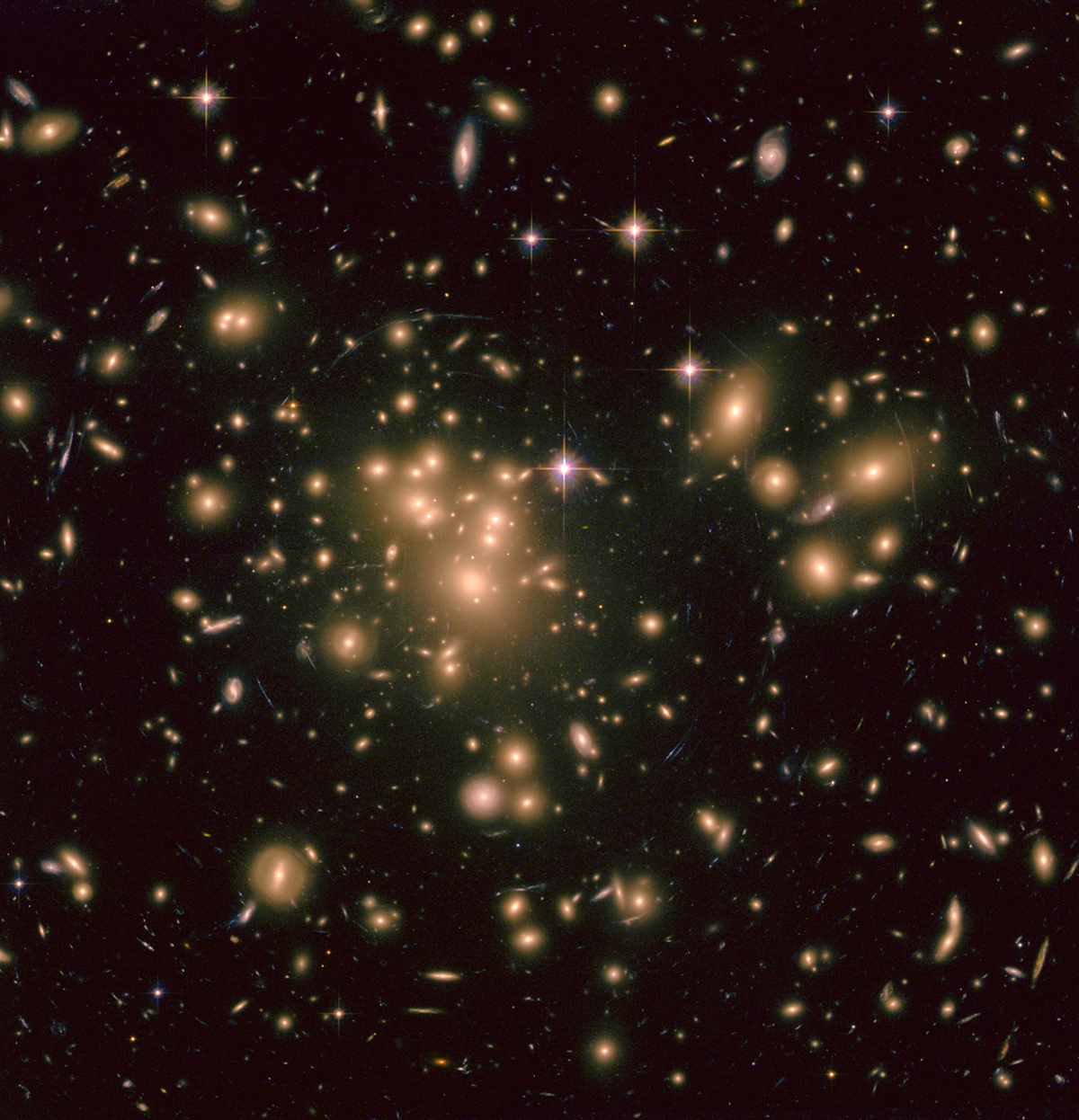
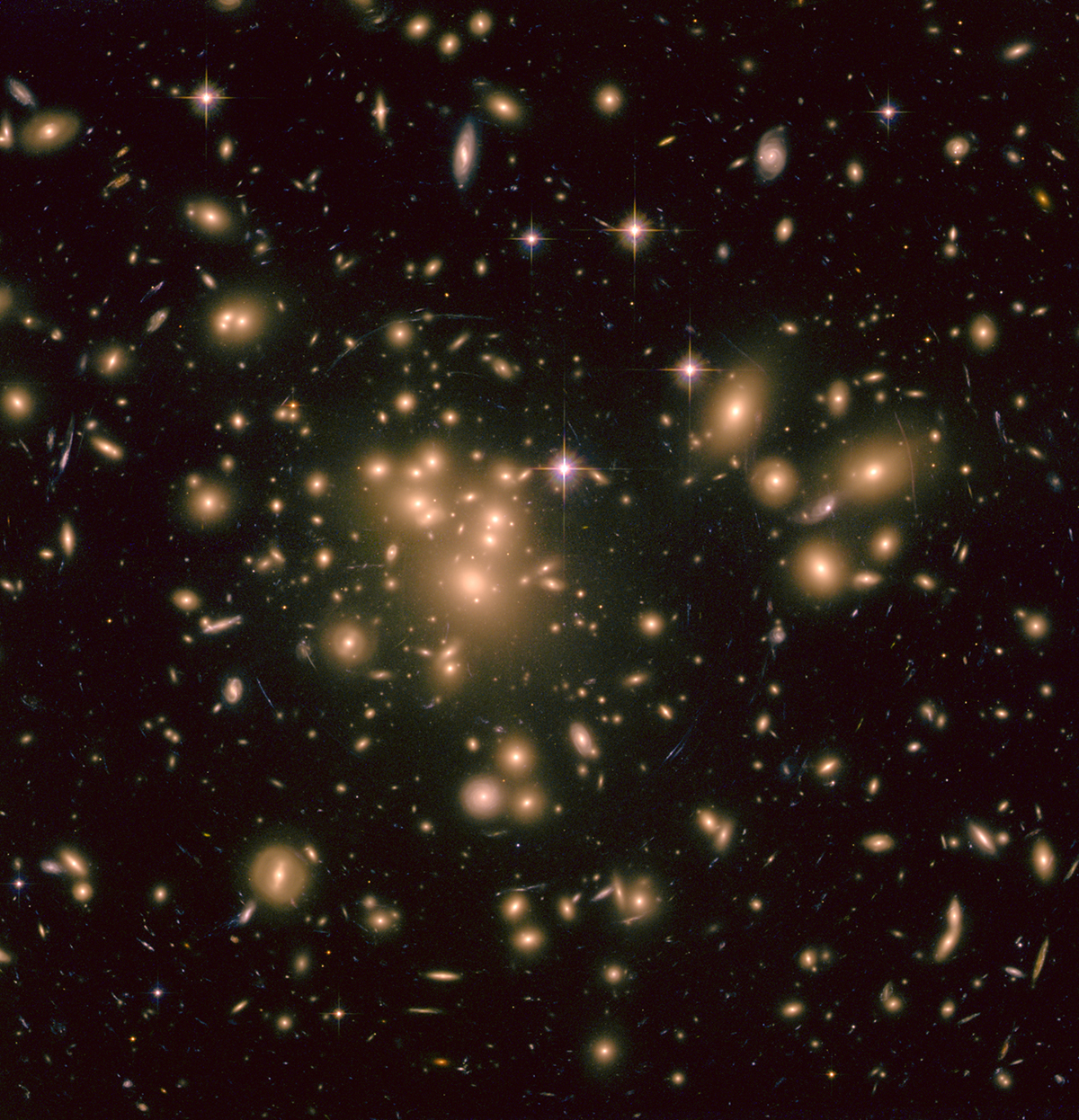
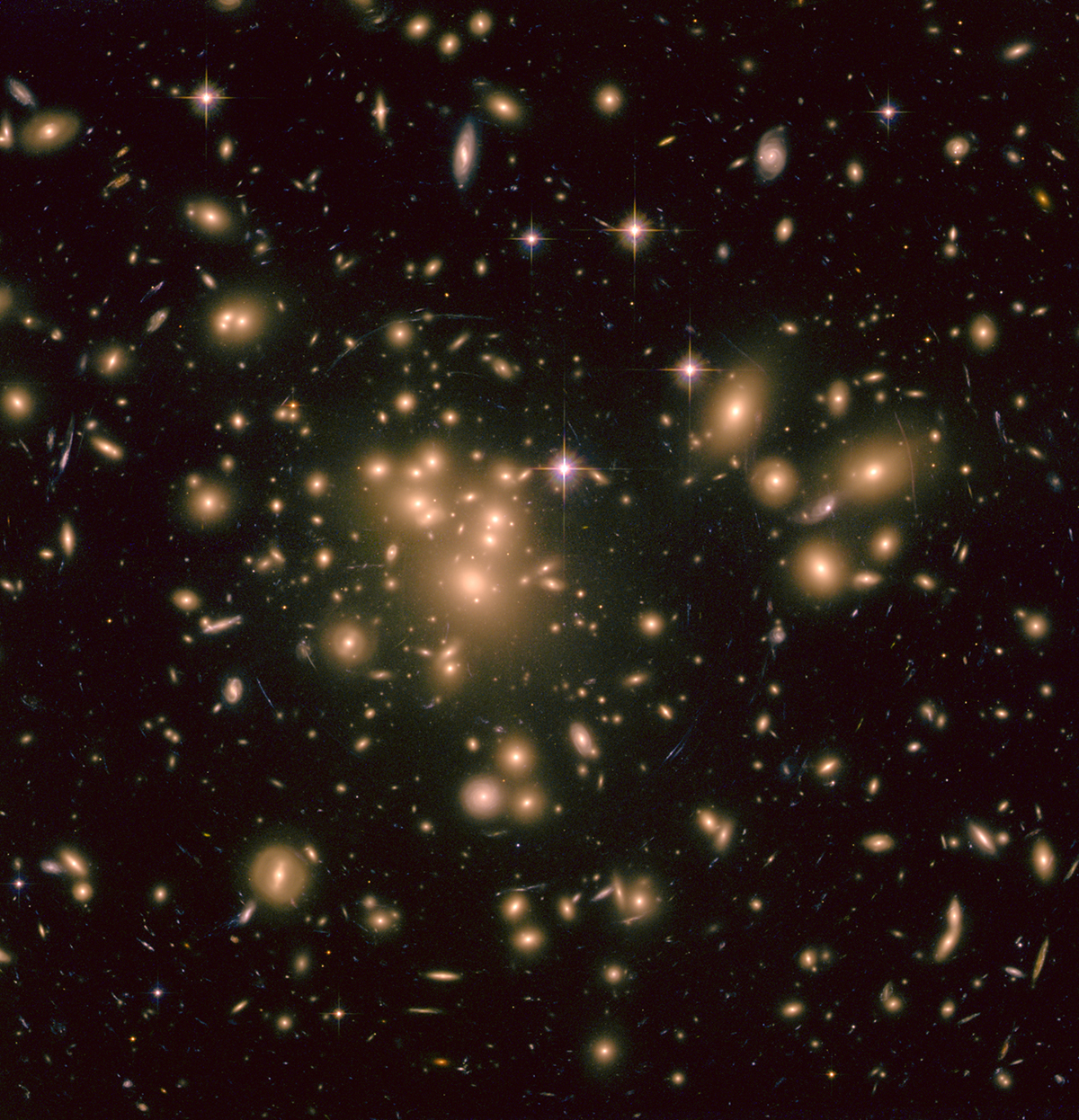
This deep Hubble image of the massive galaxy cluster Abell 1689, located 2.2 billion light-years away in the constellation Virgo, reveals the invisible architecture of dark matter that permeates the cluster. By meticulously analyzing the positions and distortions of gravitationally lensed background galaxies, astronomers constructed one of the most detailed dark matter maps ever produced for any cosmic structure. The map reveals that dark matter is not distributed uniformly throughout the cluster but instead forms a smooth, centrally concentrated halo that extends far beyond the visible galaxies, accounting for approximately 80 percent of the cluster's total mass. This distribution closely matches predictions from computer simulations of cosmic structure formation, providing powerful confirmation of the cold dark matter model. The remaining visible matter consists of hundreds of galaxies and vast reservoirs of superheated intergalactic gas emitting X-rays.
Scientific Significance
The dark matter mapping of Abell 1689 represents one of the most important achievements in observational cosmology, providing a direct window into the distribution and behavior of the invisible substance that constitutes approximately 27 percent of the total energy content of the universe. By exploiting the cluster's exceptional gravitational lensing strength, astronomers produced a mass map with spatial resolution far exceeding what is achievable with X-ray or dynamical methods alone. The resulting dark matter profile revealed a highly concentrated mass distribution, with density increasing steeply toward the cluster center. This concentration parameter was initially higher than predicted by standard cold dark matter simulations, prompting intensive theoretical investigation and ultimately leading to improved models of structure formation that account for the complex baryonic physics occurring within massive clusters. The Abell 1689 dark matter map also provided some of the earliest observational constraints on the cross-section of dark matter self-interaction, helping to rule out certain alternative dark matter models.
Observation Details
The dark matter mapping of Abell 1689 required deep, multi-band imaging with Hubble's Advanced Camera for Surveys (ACS) to measure the weak gravitational lensing signal — tiny, coherent distortions in the shapes of thousands of background galaxies caused by the cluster's dark matter halo. These shape measurements, known as weak lensing shear, were combined with the strong lensing constraints from the bright arcs and multiple images near the cluster core to produce a unified mass reconstruction spanning scales from tens of thousands to millions of light-years. The analysis demanded exquisite control of systematic effects, including the correction of Hubble's own point spread function and the careful exclusion of cluster member galaxies from the background sample.
Location in the Universe
Constellation
Virgo
Distance from Earth
2.2 billion light-years
Fun Facts
- 1
The dark matter halo of Abell 1689 contains roughly 1,000 trillion solar masses of invisible matter — equivalent to the mass of a million Milky Way galaxies — all concentrated within a region about 6 million light-years across.
- 2
Mapping the dark matter in Abell 1689 required measuring the subtle shape distortions of over 10,000 background galaxies, a feat only possible with Hubble's unparalleled angular resolution above Earth's atmosphere.
- 3
The dark matter distribution in Abell 1689 is so centrally concentrated that it posed a significant challenge to early cosmological simulations, which initially predicted flatter density profiles — a discrepancy that spurred improvements in our understanding of dark matter behavior.
Image credit: NASA, ESA, Hubble Space Telescope