About This Image
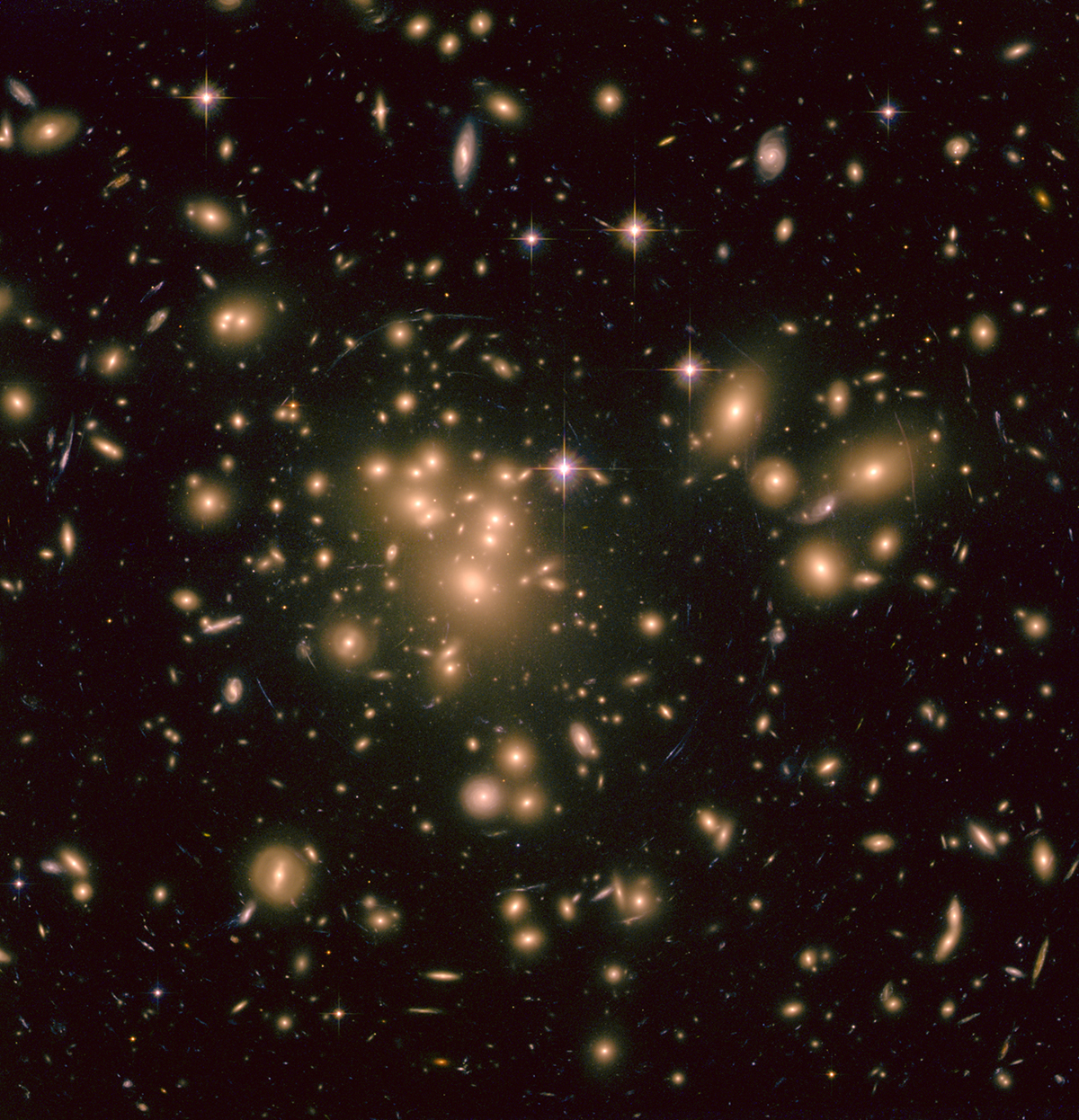
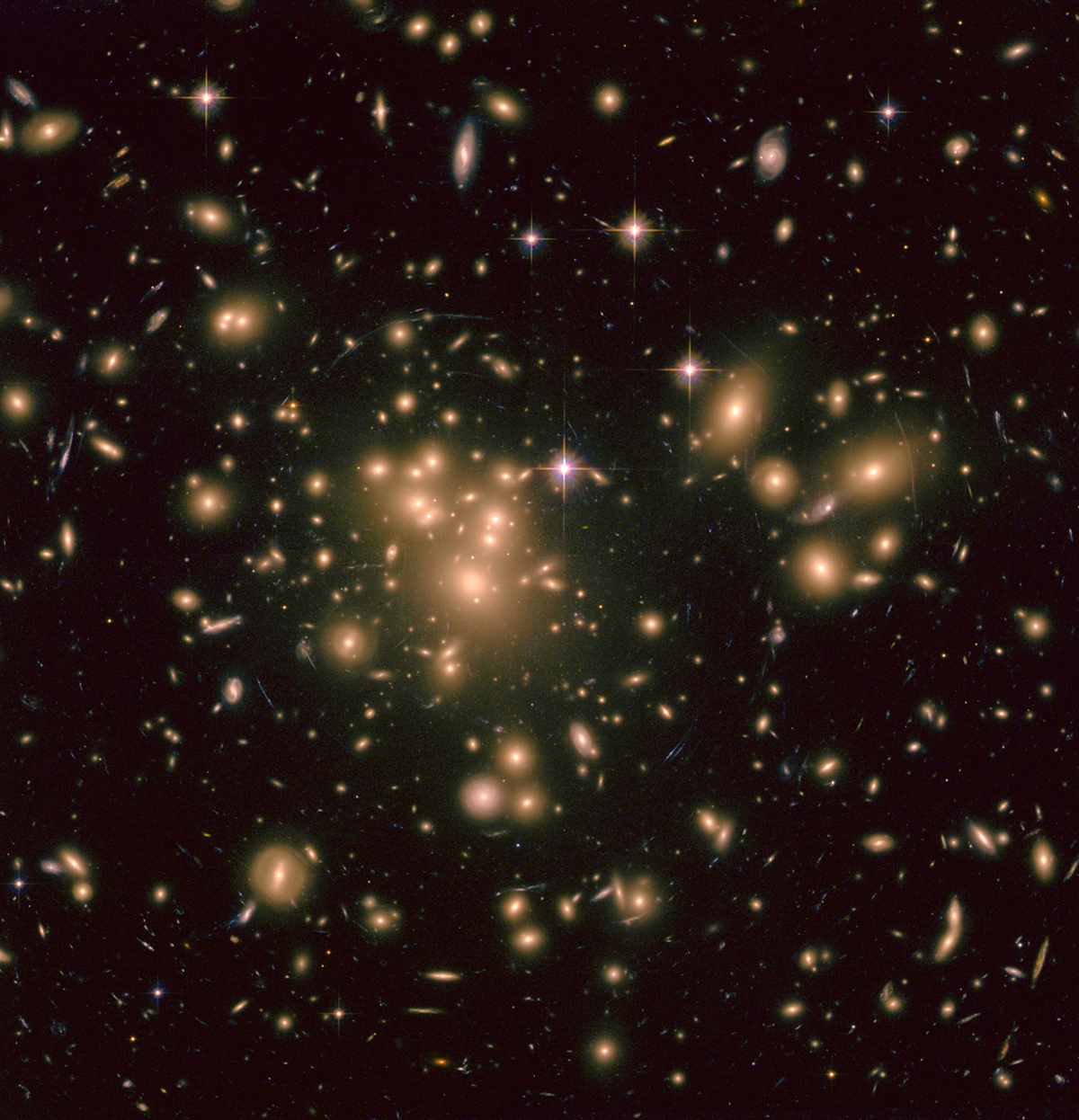
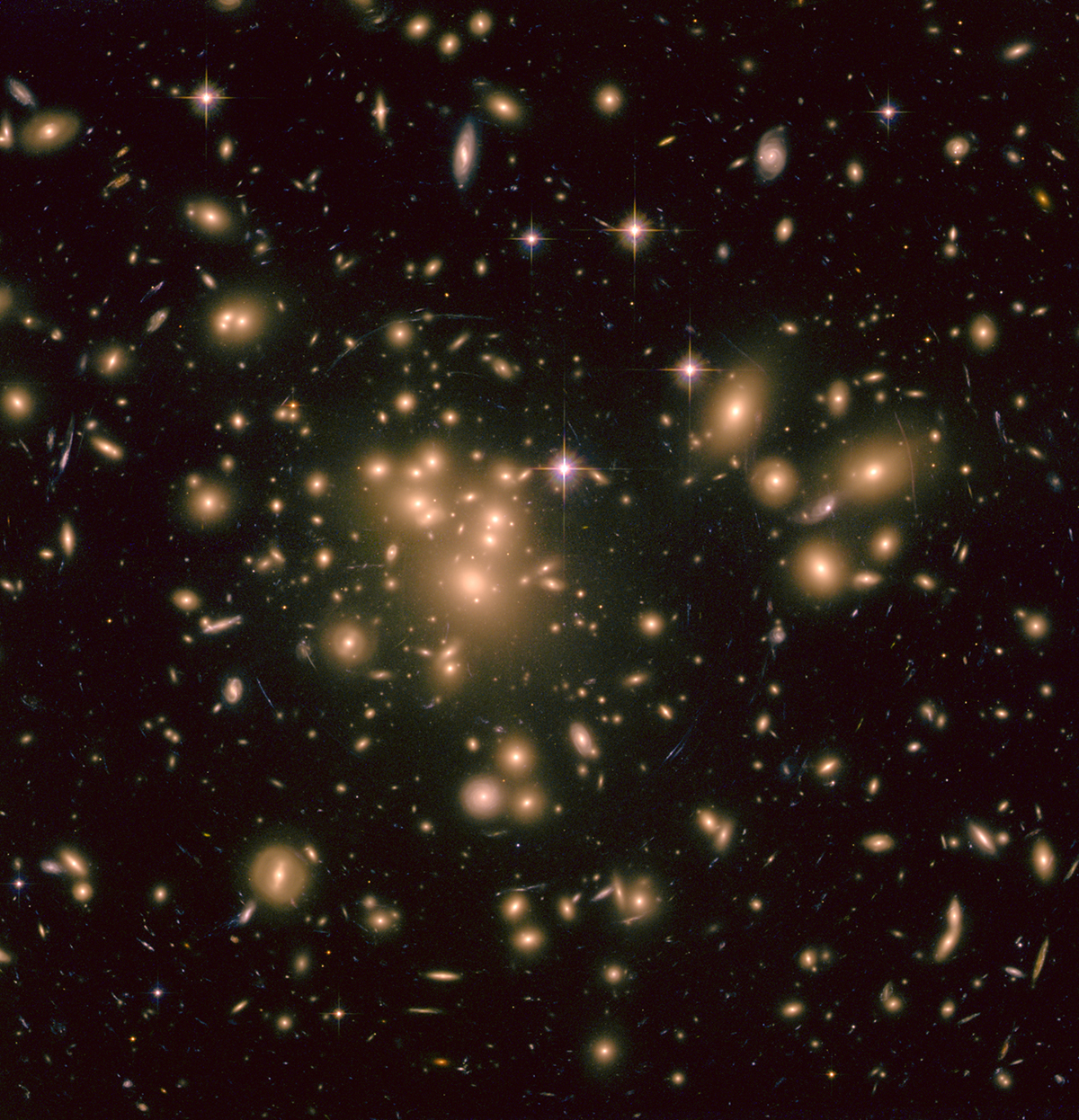
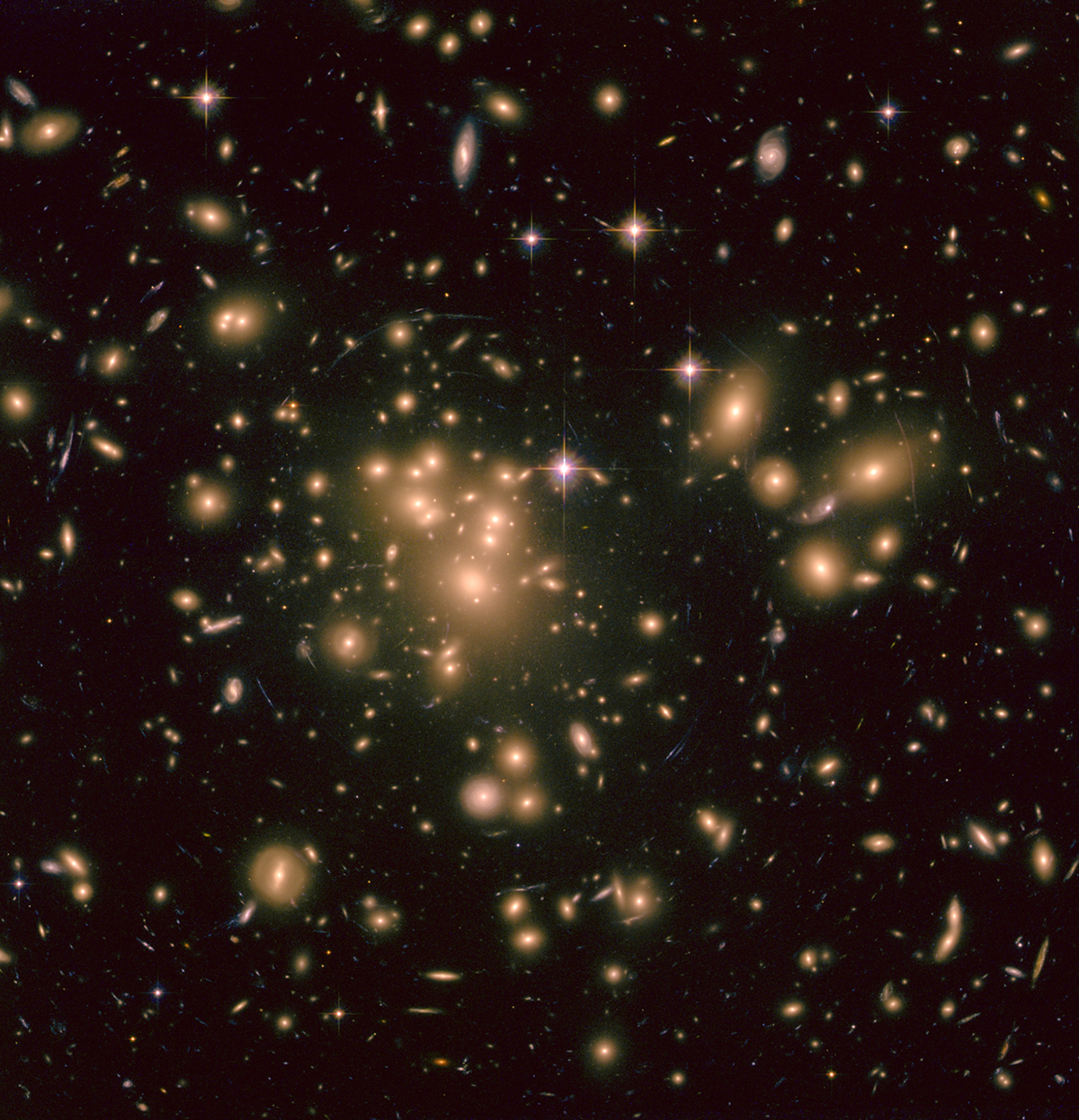
This stunning image of Abell 1689 showcases one of the most powerful gravitational lenses in the known universe. Located approximately 2.2 billion light-years from Earth in the constellation Virgo, this immense galaxy cluster contains such a staggering concentration of mass that it warps the very fabric of spacetime around it, bending and magnifying the light of hundreds of galaxies lying far behind it. The telltale streaks and arcs of distorted light visible throughout the image are gravitationally lensed images of these distant background galaxies, their shapes stretched into thin luminous curves by the cluster's gravitational field. By carefully analyzing the positions and distortions of these lensed arcs, astronomers can reconstruct the total mass distribution of the cluster, revealing that the vast majority of its mass is composed of invisible dark matter rather than the luminous galaxies we can see directly.
Scientific Significance
Abell 1689 is one of the most extensively studied galaxy clusters in the universe, serving as a premier laboratory for gravitational lensing and dark matter research. The extraordinary number of gravitationally lensed arcs produced by this cluster allows astronomers to construct the most detailed mass maps of any cluster, revealing the three-dimensional distribution of dark matter with unprecedented precision. These mass reconstructions have demonstrated that dark matter is distributed more smoothly than the visible galaxies within the cluster, providing critical tests of the cold dark matter paradigm. The cluster's powerful lensing effect also serves as a cosmic telescope, magnifying extremely faint and distant background galaxies that would otherwise be undetectable. Through Abell 1689's gravitational lens, astronomers have discovered some of the youngest and most distant galaxies ever observed, pushing the observational frontier to within a few hundred million years of the Big Bang and providing invaluable data on the earliest stages of galaxy formation in the universe.
Observation Details
This image was captured using Hubble's Advanced Camera for Surveys (ACS) in multiple optical filters spanning visible wavelengths. The deep exposure times were carefully chosen to reveal the faint gravitational arcs produced by background galaxies lensed by the cluster's enormous gravitational field. The ACS's wide field of view allowed astronomers to capture the full extent of the cluster's lensing region in a single pointing, while its exceptional angular resolution enabled the identification and measurement of over 100 individual lensed galaxy images. Follow-up spectroscopic observations from ground-based telescopes confirmed the redshifts of the lensed sources, verifying the distances and magnifications inferred from the lensing geometry.
Location in the Universe
Constellation
Virgo
Distance from Earth
2.2 billion light-years
Fun Facts
- 1
Abell 1689 produces more gravitational arcs than nearly any other galaxy cluster observed, with over 100 distorted background galaxy images identified in deep Hubble exposures, making it one of the most efficient cosmic magnifying glasses known.
- 2
The gravitational lensing effect of Abell 1689 is so strong that it magnifies galaxies up to 20 times fainter than what Hubble could normally detect, effectively turning the cluster into a natural telescope billions of light-years across.
- 3
Light from the most distant lensed galaxies behind Abell 1689 has been traveling for over 13 billion years, meaning these galaxies existed when the universe was less than a billion years old.
Image credit: NASA, ESA, Hubble Space Telescope