About This Image
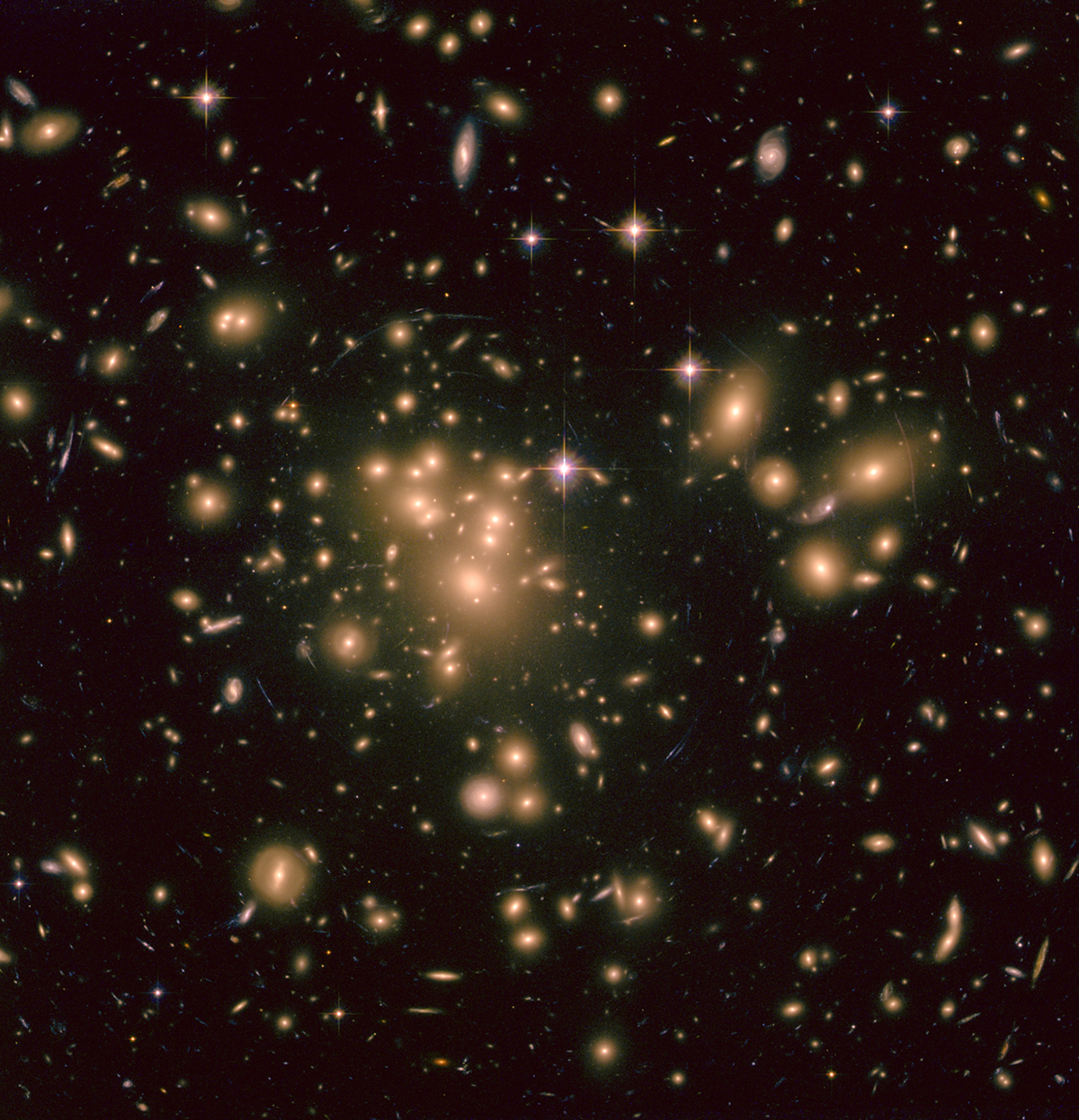
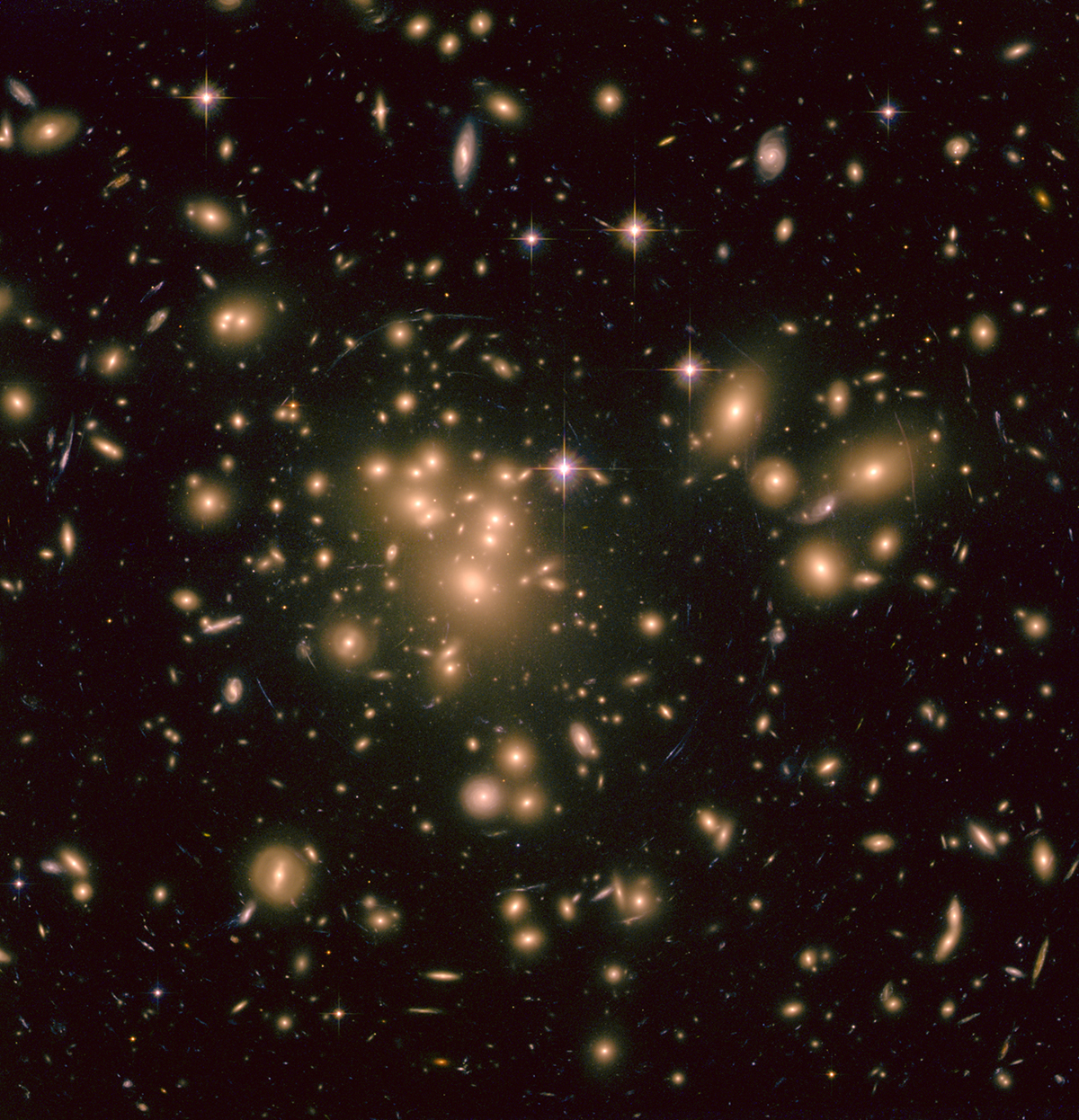
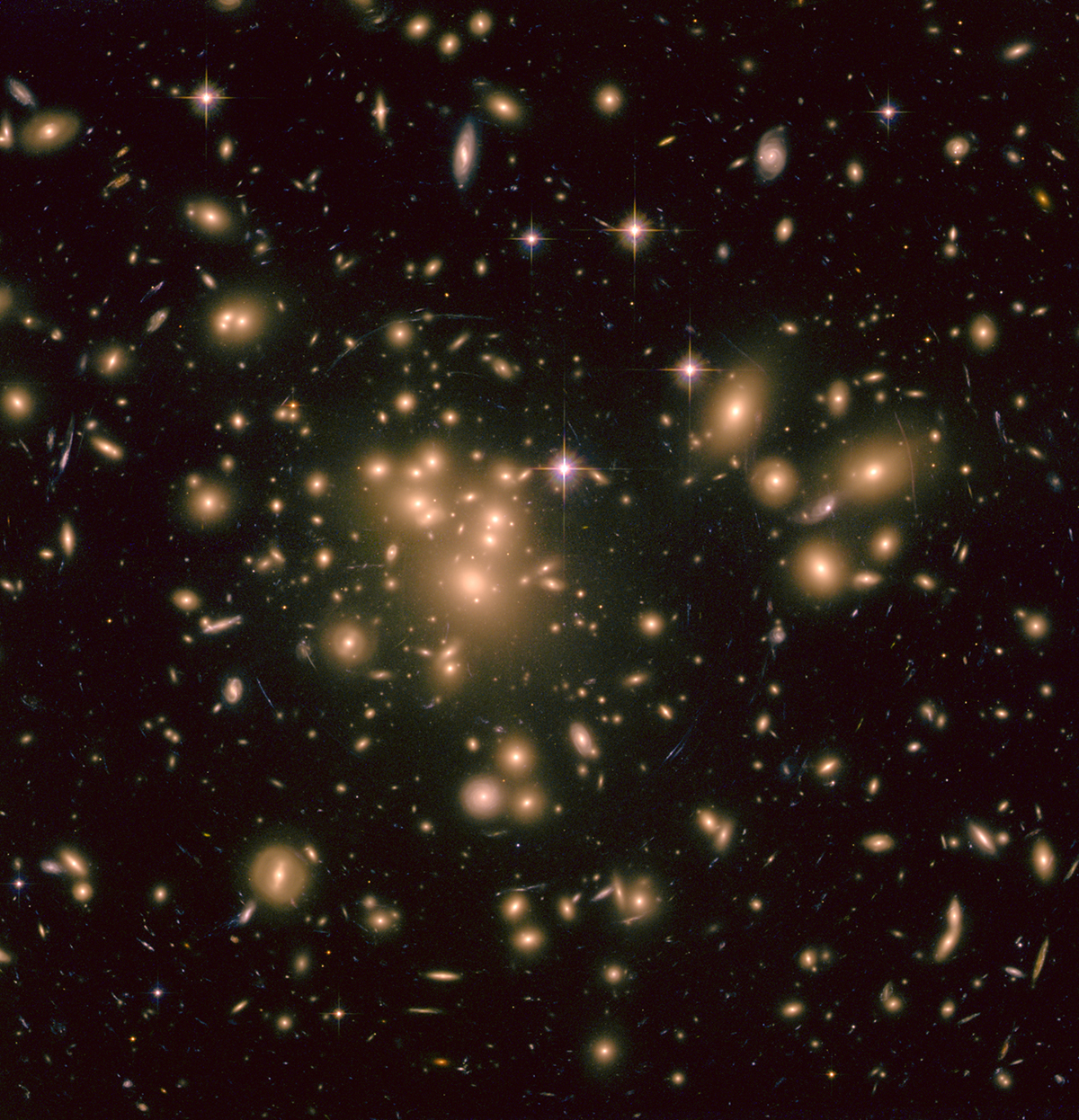
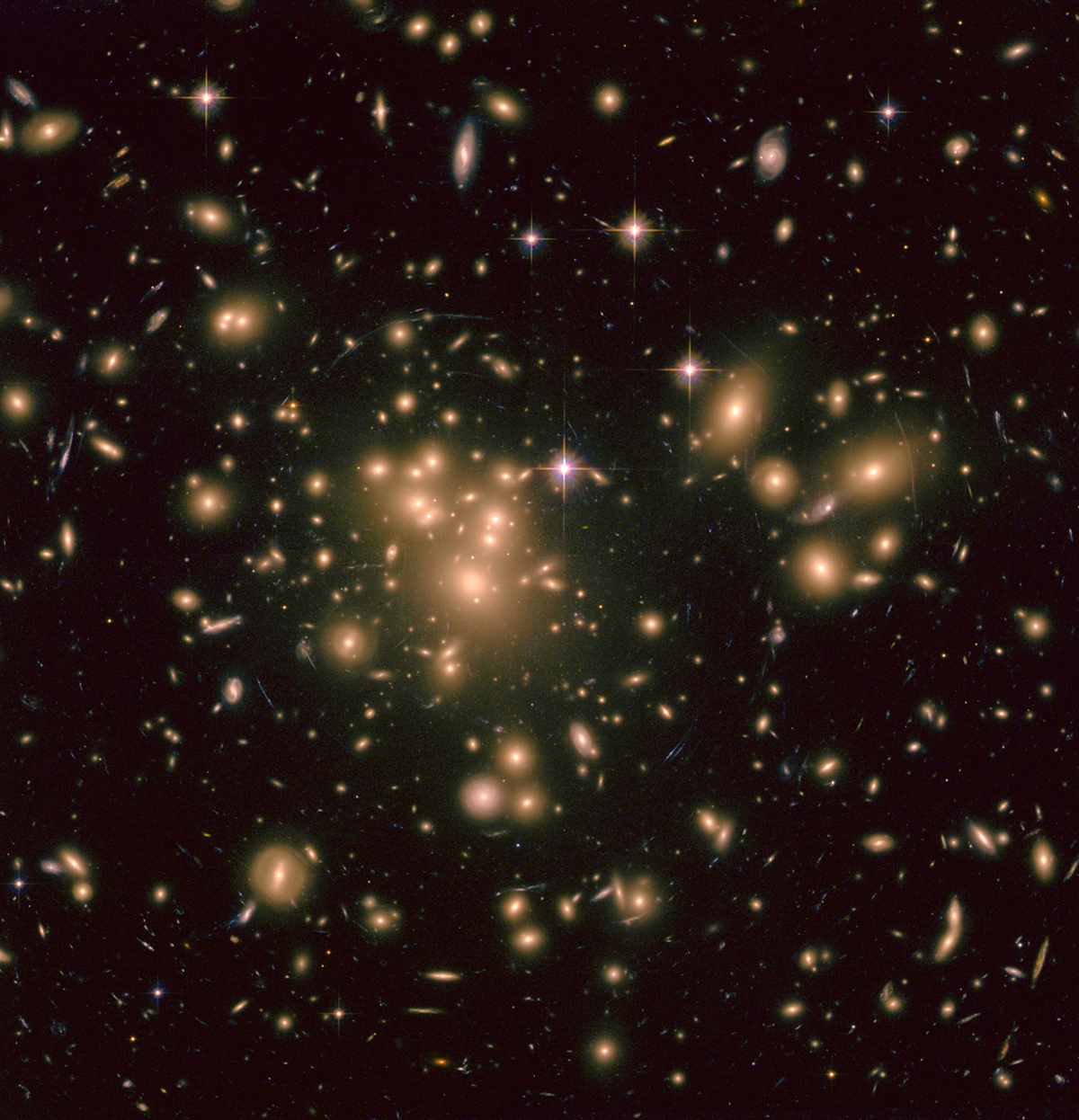
This Hubble image of the galaxy cluster Abell 1689 highlights the remarkable diversity of galaxies populating one of the most massive cosmic structures in the observable universe. Situated 2.2 billion light-years from Earth in the constellation Virgo, the cluster contains over 1,000 galaxies of widely varying types — giant elliptical galaxies with smooth, featureless profiles dominate the cluster core, while spiral galaxies, lenticular galaxies, and irregular dwarfs are scattered throughout the outskirts. The cluster's hot intracluster medium, a vast ocean of superheated gas with temperatures exceeding 100 million degrees, permeates the space between galaxies and emits copious X-ray radiation. This extreme environment profoundly affects the evolution of the member galaxies, stripping gas from spirals as they plunge through the cluster, quenching their star formation, and gradually transforming them into passive, red elliptical systems over billions of years.
Scientific Significance
The galaxy population of Abell 1689 provides a powerful testbed for understanding how environment shapes galaxy evolution. Observations reveal a strong morphology-density relation: the cluster core is dominated by massive elliptical and lenticular galaxies with old, red stellar populations and little ongoing star formation, while the outskirts contain a higher fraction of blue, star-forming spirals. This gradient reflects the cumulative impact of environmental processes including ram-pressure stripping of cold gas by the hot intracluster medium, gravitational harassment from repeated high-speed encounters between galaxies, and tidal stripping by the cluster's overall gravitational potential. Hubble observations of Abell 1689 have been instrumental in quantifying the timescales of these transformation processes by comparing the galaxy populations at different cluster-centric radii. The detection of transition objects — galaxies caught in the act of being transformed from star-forming spirals to quiescent ellipticals — has provided direct observational evidence for the mechanisms driving galaxy evolution in dense environments.
Observation Details
This image was obtained using Hubble's Advanced Camera for Surveys (ACS) through multiple broadband filters spanning from the blue to the near-infrared, enabling detailed characterization of the stellar populations and star-formation activity of individual cluster member galaxies. The multi-band photometry allowed astronomers to construct spectral energy distributions for hundreds of galaxies within the cluster, distinguishing actively star-forming systems from passive, evolved galaxies based on their colors. The wide field of view of the ACS captured galaxies from the dense cluster core out to the sparser periphery, enabling a comprehensive census of the galaxy population across a range of local environmental densities within a single observation.
Location in the Universe
Constellation
Virgo
Distance from Earth
2.2 billion light-years
Fun Facts
- 1
The hot gas filling the space between galaxies in Abell 1689 has a temperature exceeding 100 million degrees and actually contains more mass than all the visible galaxies in the cluster combined, yet it is still dwarfed by the cluster's invisible dark matter component.
- 2
Spiral galaxies falling into Abell 1689's dense core experience ram-pressure stripping — the intergalactic gas tears away their own gas reserves like wind ripping an umbrella inside out — effectively killing their ability to form new stars.
- 3
The giant elliptical galaxies at the center of Abell 1689 have grown to enormous sizes by cannibalizing smaller galaxies over billions of years, a process that continues to this day as the cluster's gravitational pull draws in new victims.
Image credit: NASA, ESA, Hubble Space Telescope