About This Image
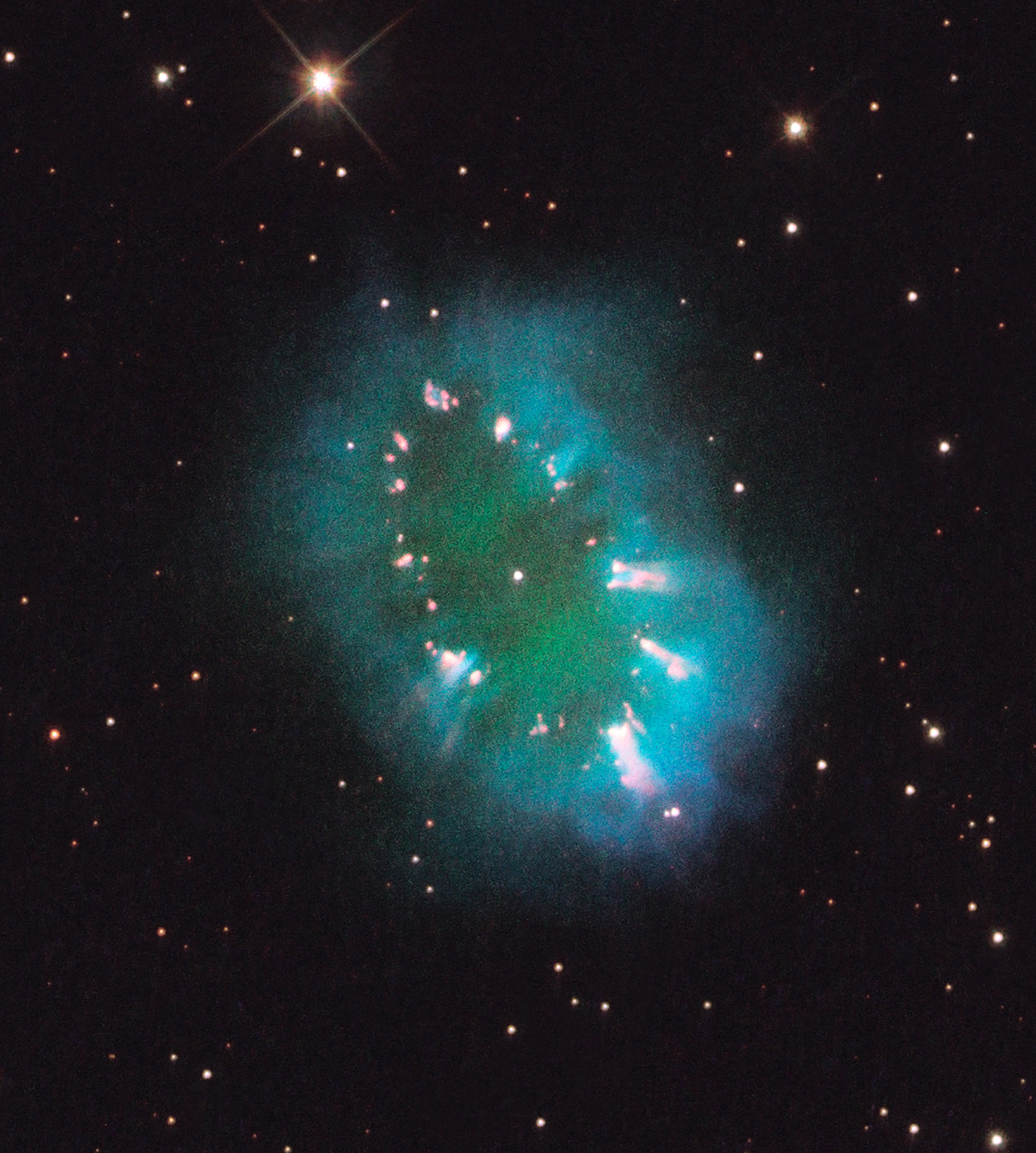
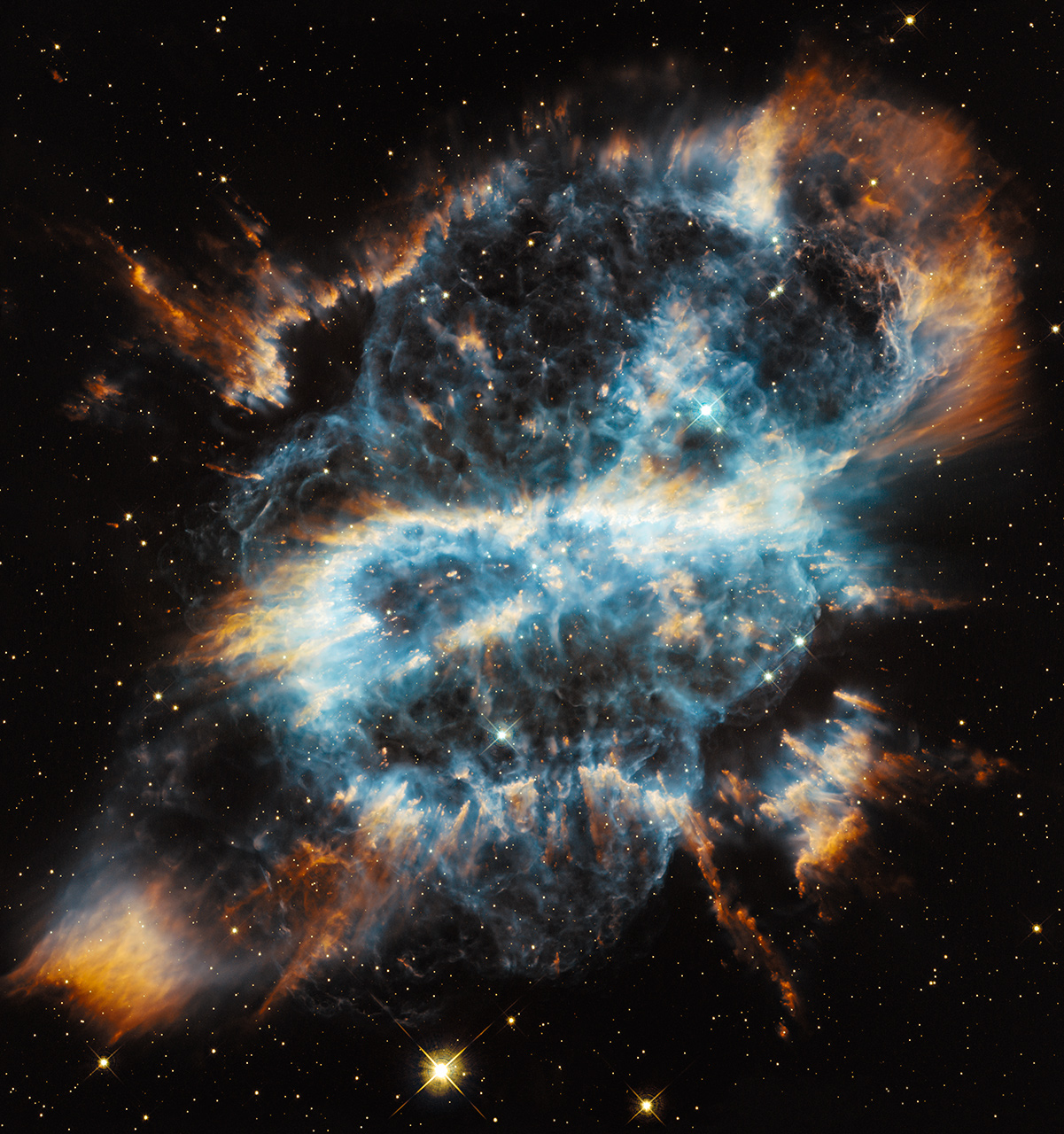
The knotty, filamentary structure of NGC 5189 formed as a dying star shed its outer layers. Interestingly, this planetary nebula has two nested structures tilted with respect to each other.
Scientific Significance
NGC 5189 is valuable for testing how binary systems sculpt planetary nebulae. The misaligned structures indicate time-variable outflows and changing ejection geometry, likely linked to orbital dynamics. Objects like this challenge single-star models and improve understanding of the late evolution of intermediate-mass stars.
Observation Details
Hubble used narrowband imaging to map ionized gas components with different excitation levels. The observations resolve small filaments, knots, and shell boundaries across the nebula. Morphology in multiple filters helps separate shock-heated regions from photoionized gas driven by the central source.
Location in the Universe
Constellation
Musca
Distance from Earth
Approximately 3,000 light-years
Fun Facts
- 1
NGC 5189 shows twisted filaments and multiple lobes rather than a simple spherical shell.
- 2
Astronomers suspect a binary central star helps produce the tilted nested structures.
- 3
Its knotty gas network reveals several mass-loss episodes instead of one smooth ejection.
Image credit: NASA, ESA, Hubble Space Telescope