About This Image
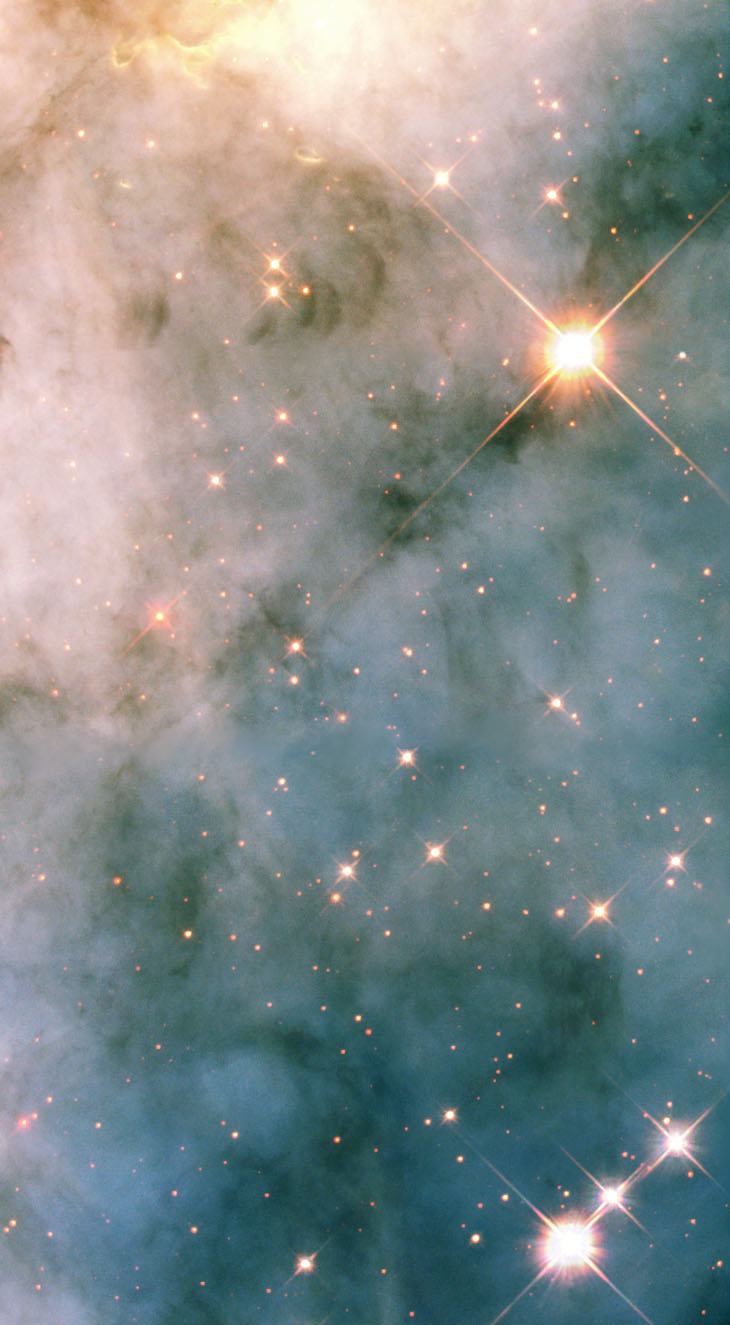
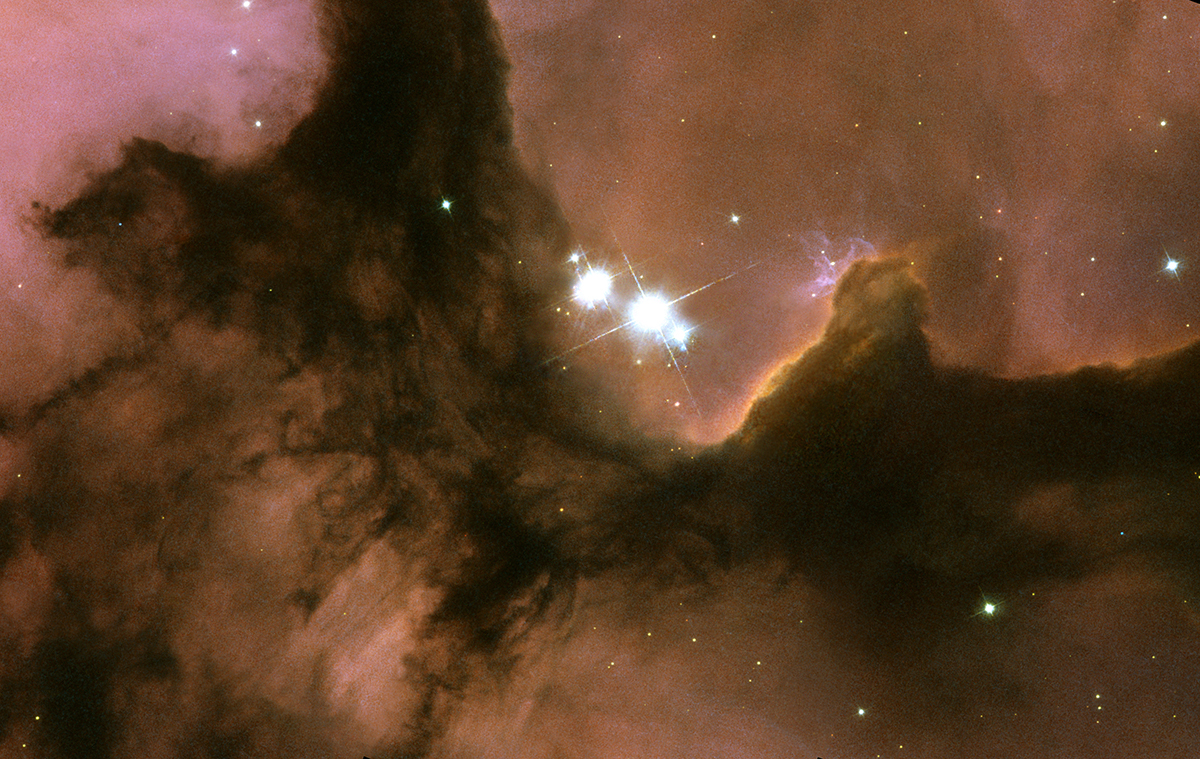
The Trifid Nebula is a stellar nursery criss-crossed by huge, dark lanes of dust. This image provides a close-up view of the center of the nebula, near the intersection of the dust bands, and a group of recently formed, massive, bright stars.
Scientific Significance
The Trifid Nebula is a compact laboratory for early star formation and feedback. Dense dust lanes, ionized fronts, and young stars coexist in one field, making it useful for testing how newborn stars reshape natal clouds. Its mixed emission and reflection components also help calibrate models of dust scattering, gas ionization, and triggered collapse.
Observation Details
Hubble captured the nebula's central region with broadband and narrowband optical imaging to separate stars, dust, and glowing gas. The close-up view resolves bright rims and embedded structures around massive young stars. These data are often combined with infrared observations to trace obscured protostars behind the dust lanes.
Location in the Universe
Constellation
Sagittarius
Distance from Earth
Approximately 4,100 light-years
Fun Facts
- 1
The Trifid Nebula's dark dust lanes divide the bright gas into three main lobes, giving it its name.
- 2
It combines both an emission nebula and a reflection nebula in the same target.
- 3
Young massive stars near the center are actively shaping the cloud with intense radiation.
Image credit: NASA, ESA, Hubble Space Telescope