About This Image
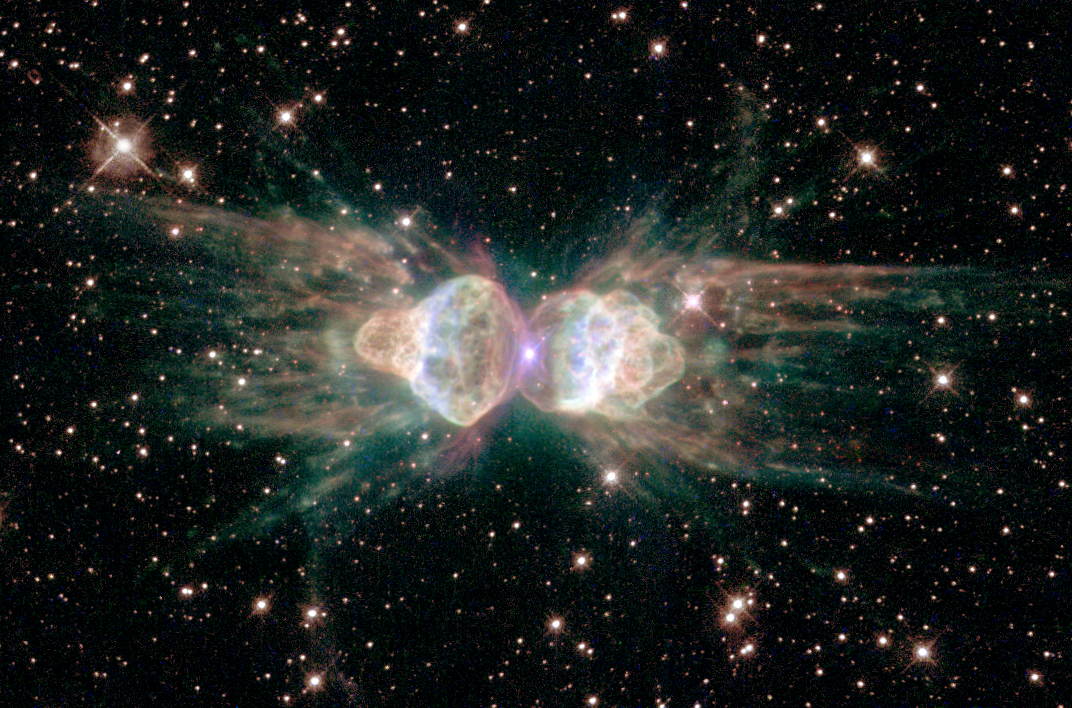
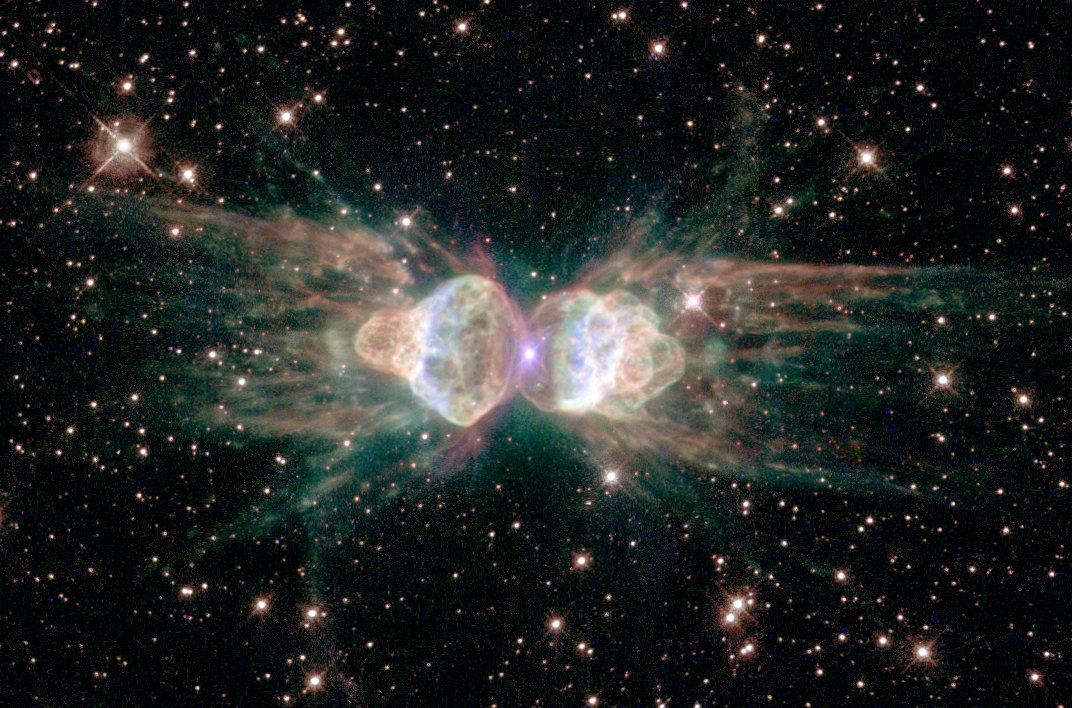
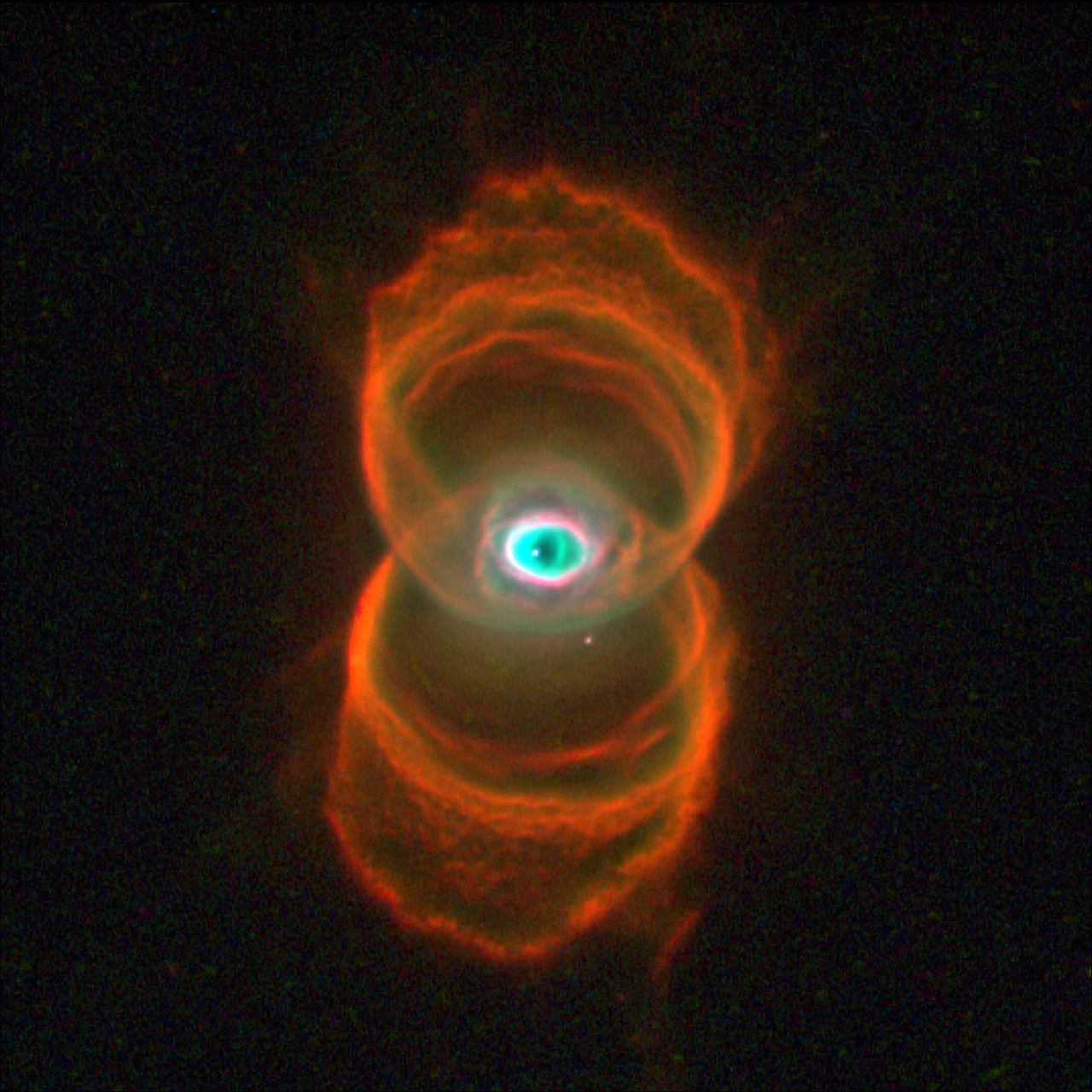
The Hourglass Nebula has been formed by a dying Sun-like star shedding its outer layers of gas. One theory suggests that the hourglass shape is produced as a fast stellar wind encounters a slowly expanding cloud that is more dense near the star's equator than near its poles.
Scientific Significance
The Hourglass Nebula is a classic example of bipolar shaping in planetary nebulae. It demonstrates that stellar mass loss near the end of life is often directional and likely influenced by binarity, rotation, or magnetic structure. The object is widely used to test models of wind interaction and symmetry breaking in evolved stars.
Observation Details
Hubble observed MyCn 18 with narrowband filters targeting strong nebular emission lines to map structure and excitation. The images resolve the bright waist, extended lobes, and fine filamentary detail. Morphological comparisons with velocity-resolved spectroscopy help reconstruct its three-dimensional geometry.
Location in the Universe
Constellation
Musca
Distance from Earth
Approximately 8,000 light-years
Fun Facts
- 1
The Hourglass Nebula (MyCn 18) is famous for its near-perfect bipolar shape.
- 2
Its narrow waist suggests dense equatorial material collimated the outflow.
- 3
Planetary nebulae represent a brief late-life stage of Sun-like stars.
Image credit: NASA, ESA, Hubble Space Telescope