About This Image
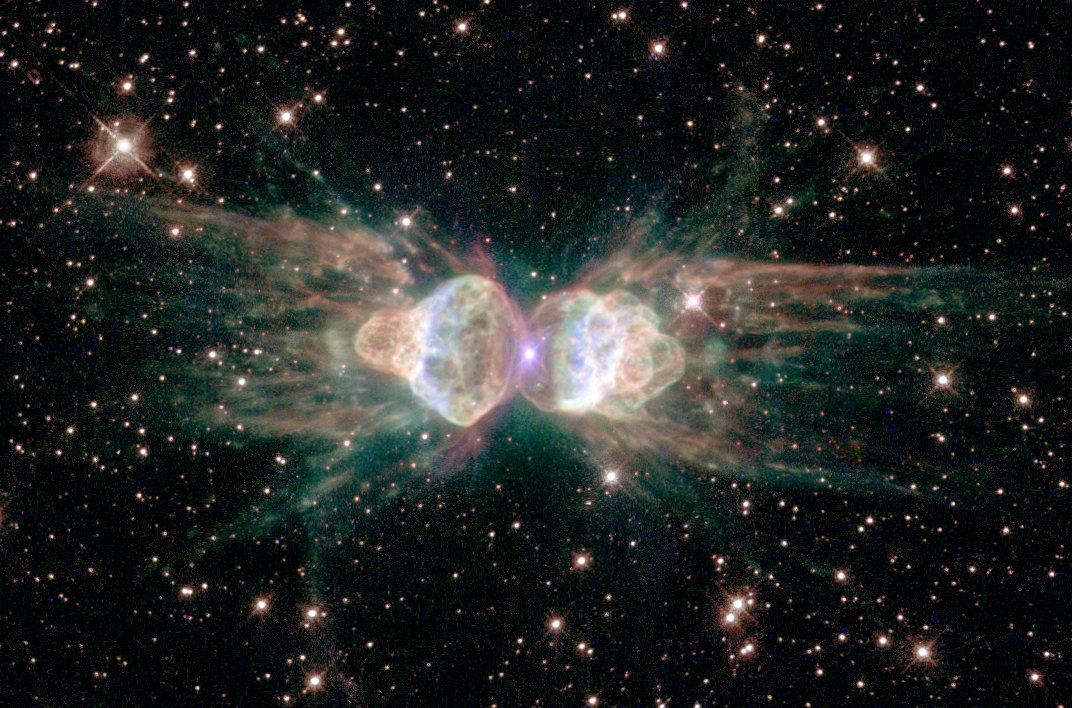
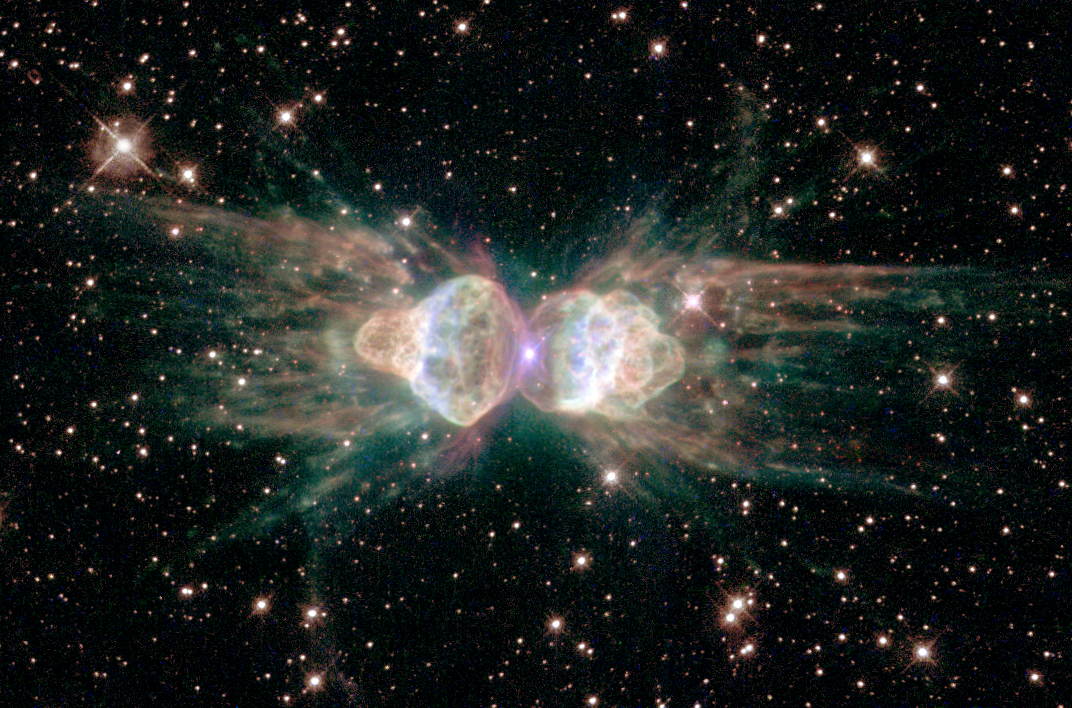
The Ant Nebula displays intriguing symmetrical patterns in the lobes of gas being ejected from a dying Sun-like star at its center.
Scientific Significance
The Ant Nebula is a benchmark for studying how bipolar planetary nebulae are formed. Its structure indicates that collimated outflows, likely linked to binarity or magnetic effects, shape the ejecta. These observations improve models of late stellar mass loss and the pathways that produce highly non-spherical nebulae.
Observation Details
Hubble observed the nebula with narrowband filters targeting major optical emission lines. The images resolve nested shells, filaments, and ionization differences across both lobes. Fine structural detail allows direct comparison with hydrodynamic jet and wind-collision simulations.
Location in the Universe
Constellation
Norma
Distance from Earth
Approximately 8,000 light-years
Fun Facts
- 1
The Ant Nebula's bipolar lobes are unusually symmetric for a dying Sun-like star.
- 2
Its shape suggests the central system may include a close binary companion.
- 3
Gas in the lobes is moving rapidly and will disperse into interstellar space over time.
Image credit: NASA, ESA, Hubble Space Telescope