About This Image
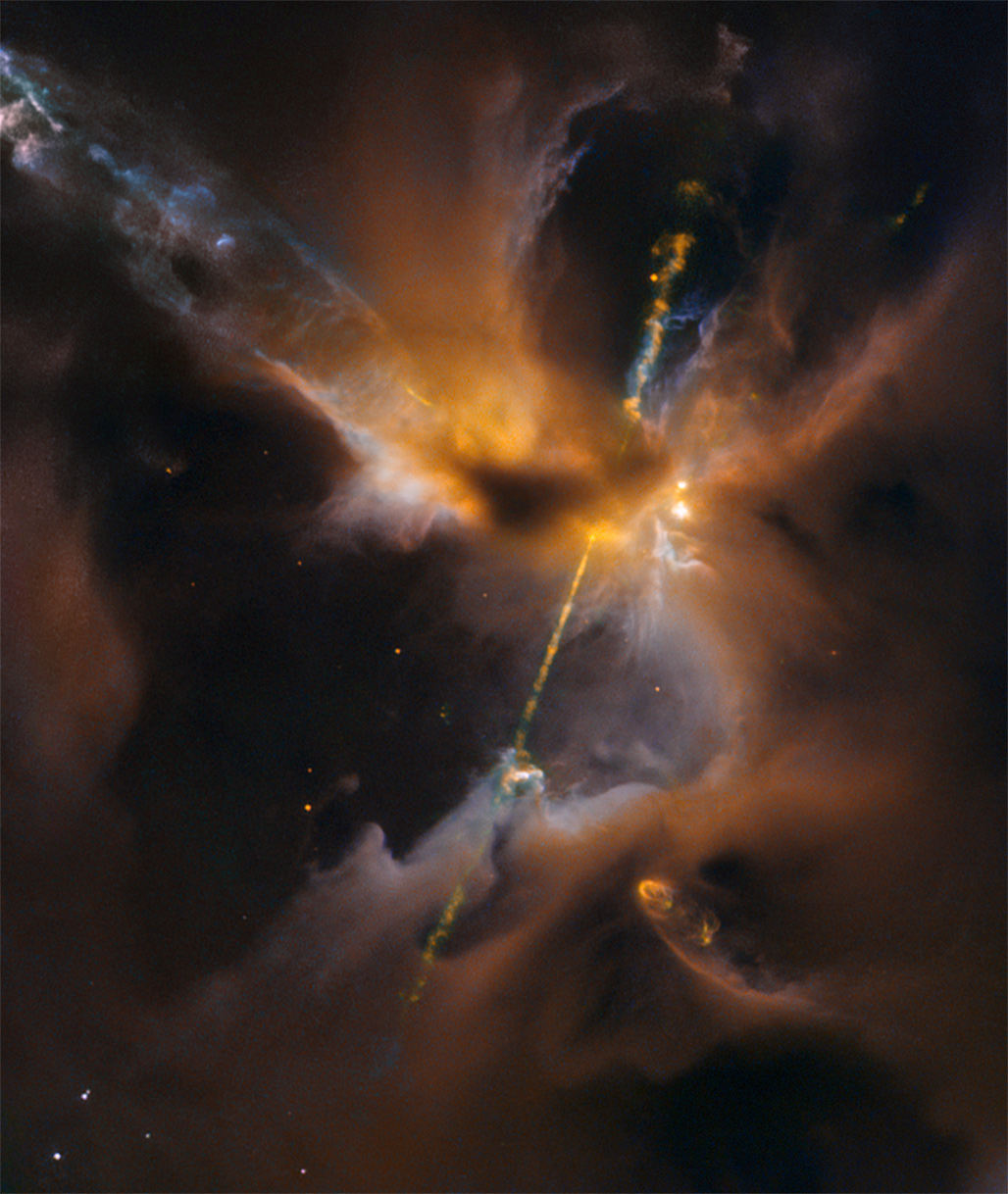
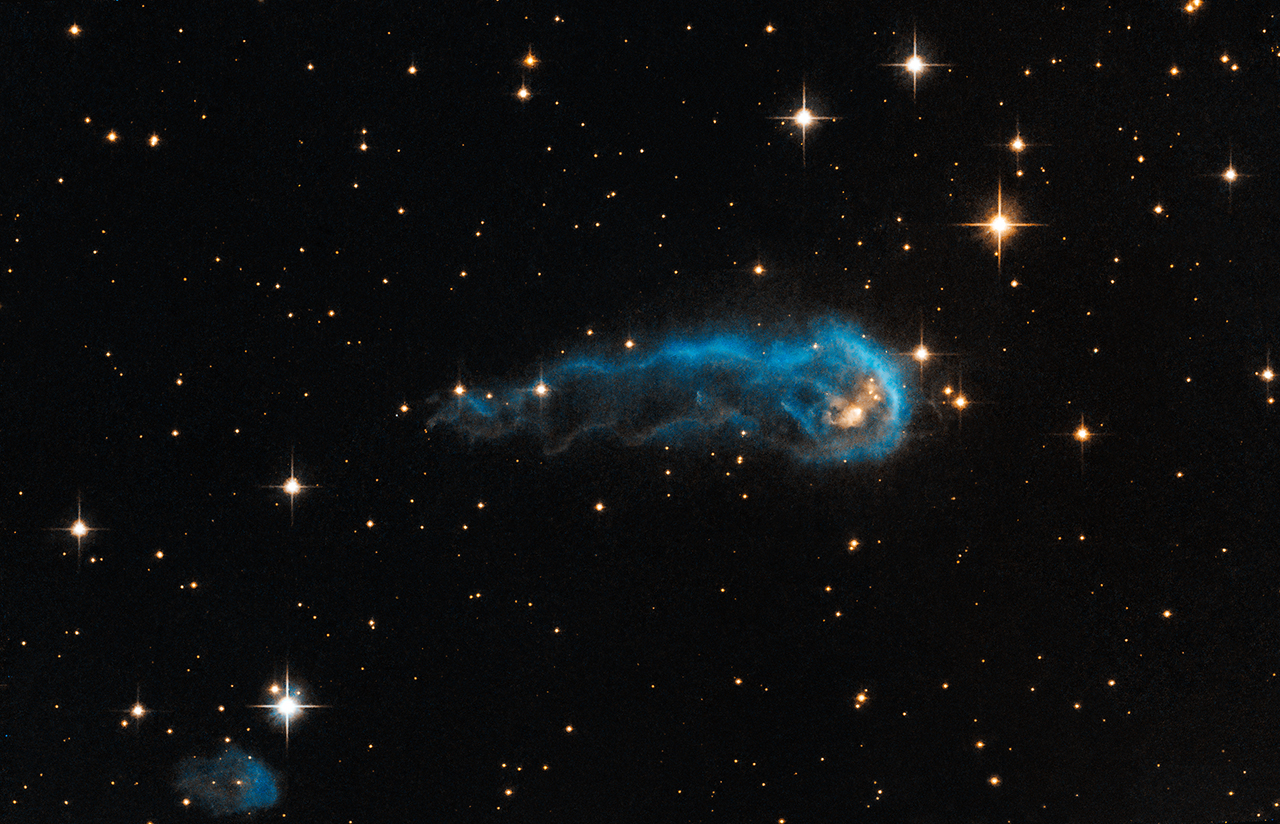
This caterpillar-shaped knot, called IRAS 20324+4057, is a protostar that is in the process of growing from the dust and gas surrounding it. However, other bright stars are blasting ultraviolet radiation at this "wanna-be" star and sculpting the gas and dust into its long shape.
Scientific Significance
This object illustrates the race between star growth and environmental destruction in harsh UV fields. It helps quantify how external radiation regulates the final masses of stars and protoplanetary material in massive star-forming regions. Such feedback processes are central to understanding cluster-scale star formation efficiency.
Observation Details
Hubble observed the target in optical bands that highlight ionized rims, dusty cores, and shadowed structures. The data reveal a bright ionization front and a dense interior where accretion may still continue. Morphology is often compared with infrared images to track embedded material that optical light cannot penetrate.
Location in the Universe
Constellation
Cygnus
Distance from Earth
Approximately 6,000 light-years
Fun Facts
- 1
IRAS 20324+4057 is nicknamed the Cosmic Caterpillar because of its elongated dusty shape.
- 2
Strong ultraviolet radiation from nearby massive stars is photoevaporating its outer layers.
- 3
The protostar is still accreting material while its environment is being rapidly eroded.
Image credit: NASA, ESA, Hubble Space Telescope