About This Image
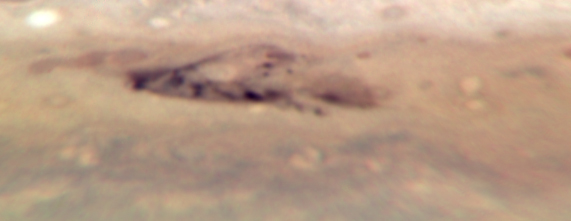
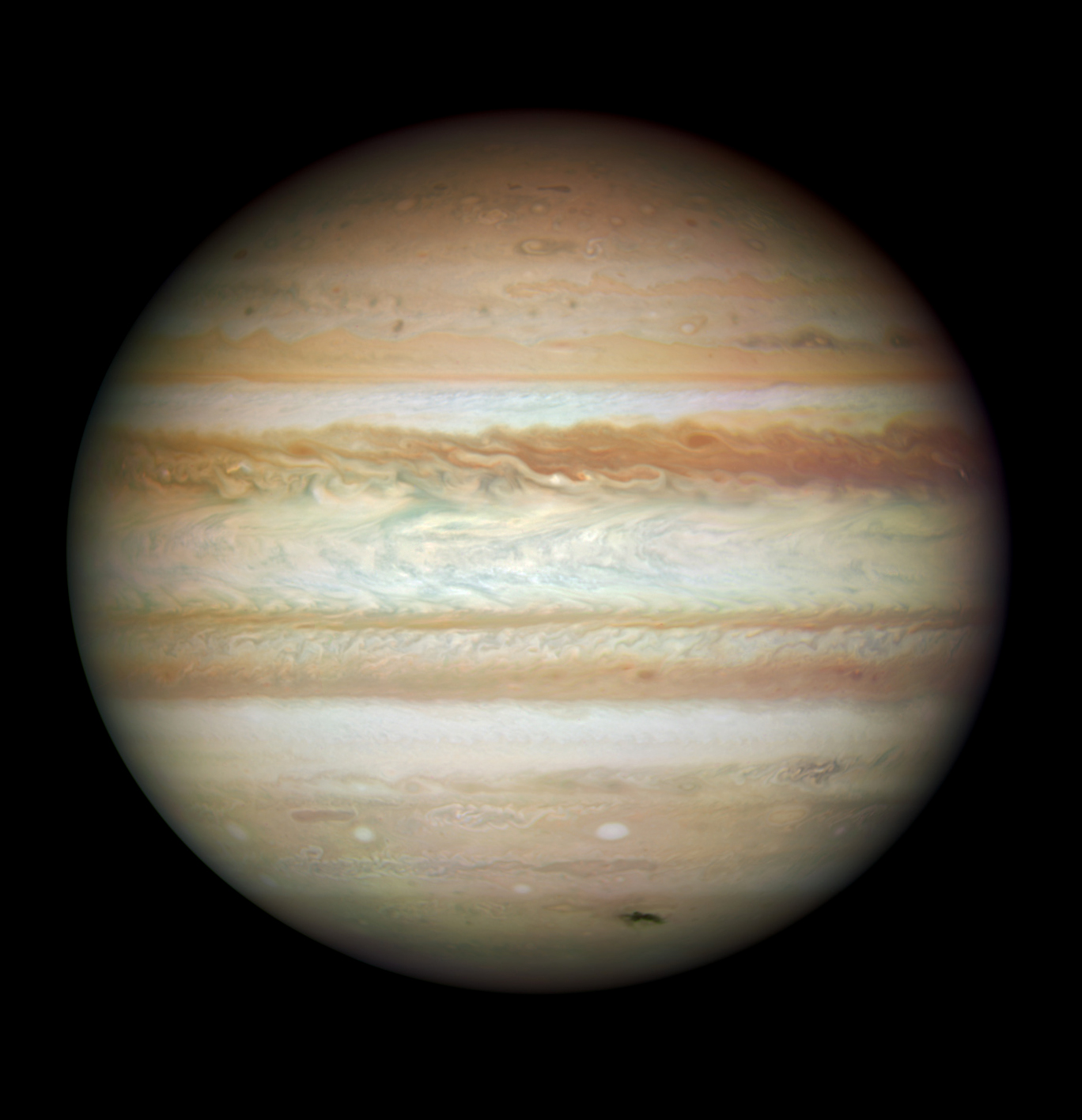
This image of Jupiter reveals an elongated, dark spot at lower right. The unexpected blemish was created when an asteroid plunged into Jupiter and exploded, scattering debris into the giant planet's cloud tops.
Scientific Significance
Impact scars on Jupiter provide rare empirical constraints on impact rates and impact physics in the outer solar system. Because the atmosphere records large collisions visibly, these events help estimate how often kilometer-scale objects strike giant planets. The observations also improve models of plume rise, debris dispersal, and atmospheric mixing after impacts.
Observation Details
Hubble tracked the scar in visible and methane-sensitive filters to measure contrast and altitude-dependent cloud changes. Time-series observations followed how winds stretched and diluted the debris pattern. These data were combined with amateur and professional monitoring to reconstruct event timeline and evolution.
Location in the Universe
Constellation
N/A (Solar System)
Distance from Earth
365 to 600 million miles (varies)
Fun Facts
- 1
The dark blemish was created by an impact event discovered in July 2009.
- 2
The scar size indicated an impactor likely much larger than typical small meteoroids.
- 3
Jupiter's large gravity well makes it a frequent target for comets and asteroids.
Image credit: NASA, ESA, Hubble Space Telescope