About This Image
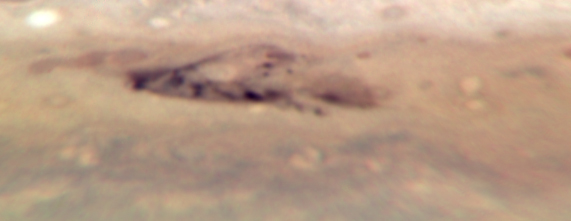
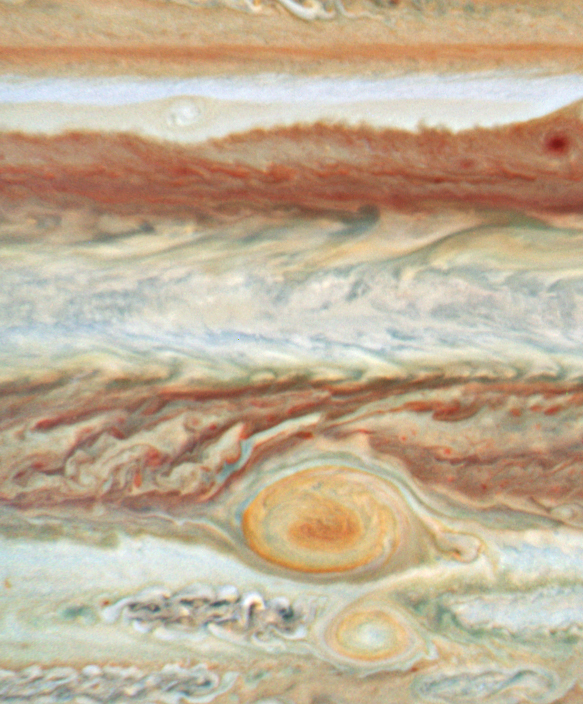
This image provides a close look at Jupiter's famous Great Red Spot and a smaller storm dubbed "Red Spot Jr." below it. To the right of the Great Red Spot is the remnant of an even smaller spot that has faded and is being consumed by the much larger storm.
Scientific Significance
Jupiter's storm systems provide a natural laboratory for atmospheric fluid dynamics at planetary scale. Monitoring the Great Red Spot and neighboring vortices constrains models of jet streams, vertical mixing, and storm longevity. Long time-baseline images also reveal how energy cascades through bands and eddies in giant-planet atmospheres.
Observation Details
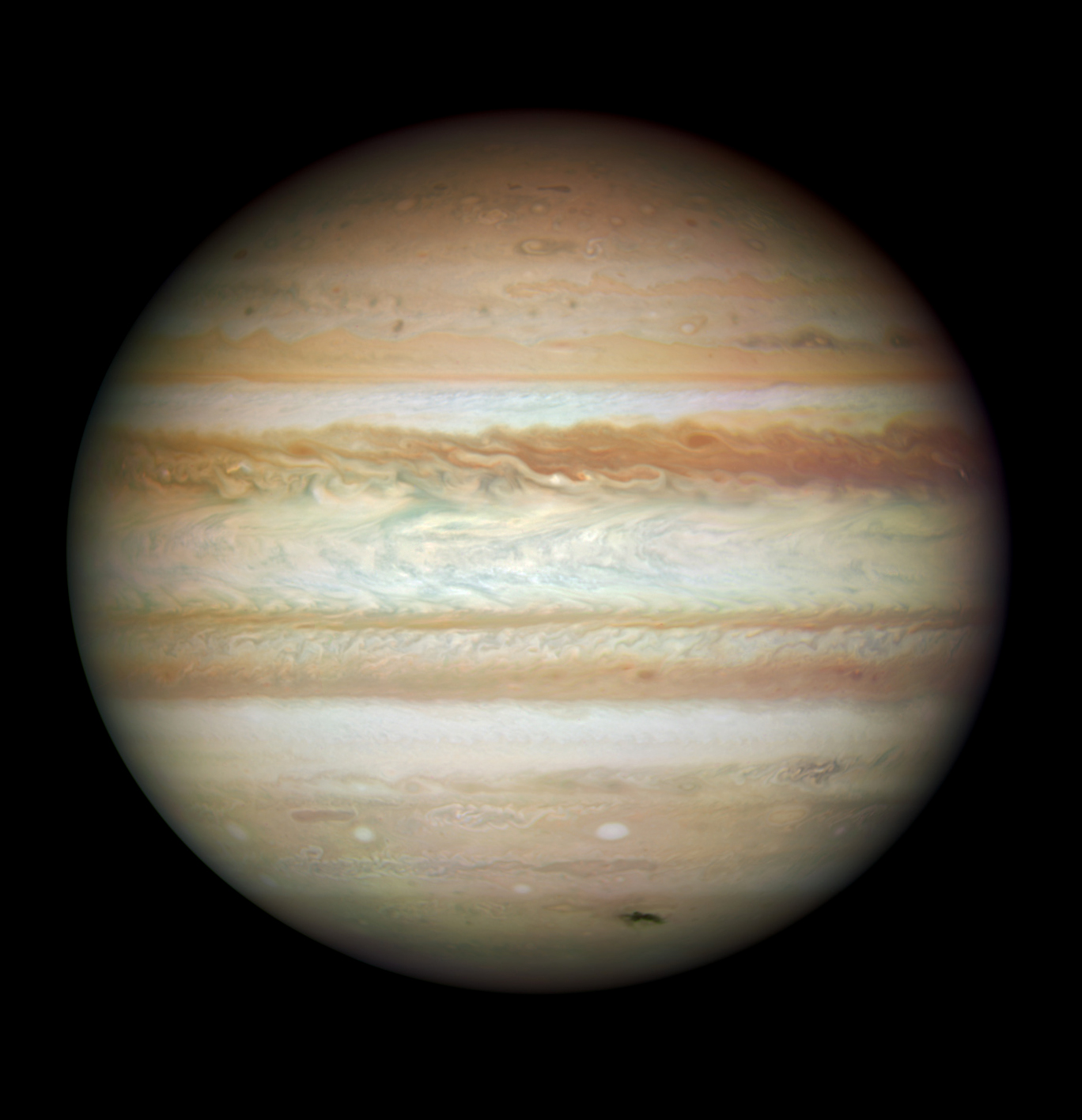
Hubble observed Jupiter in visible filters that enhance contrast between belts, zones, and storm cores. Repeated snapshots allow measurements of drift rates, color changes, and shape evolution of major vortices. These observations complement spacecraft data by extending temporal coverage across many years.
Location in the Universe
Constellation
N/A (Solar System)
Distance from Earth
365 to 600 million miles (varies)
Fun Facts
- 1
The Great Red Spot is a long-lived anticyclonic storm larger than Earth.
- 2
Red Spot Jr. formed from the merger of smaller white ovals and later developed a reddish hue.
- 3
Smaller storms near the major spots can be stretched, sheared, or absorbed by stronger vortices.
Image credit: NASA, ESA, Hubble Space Telescope