About This Image
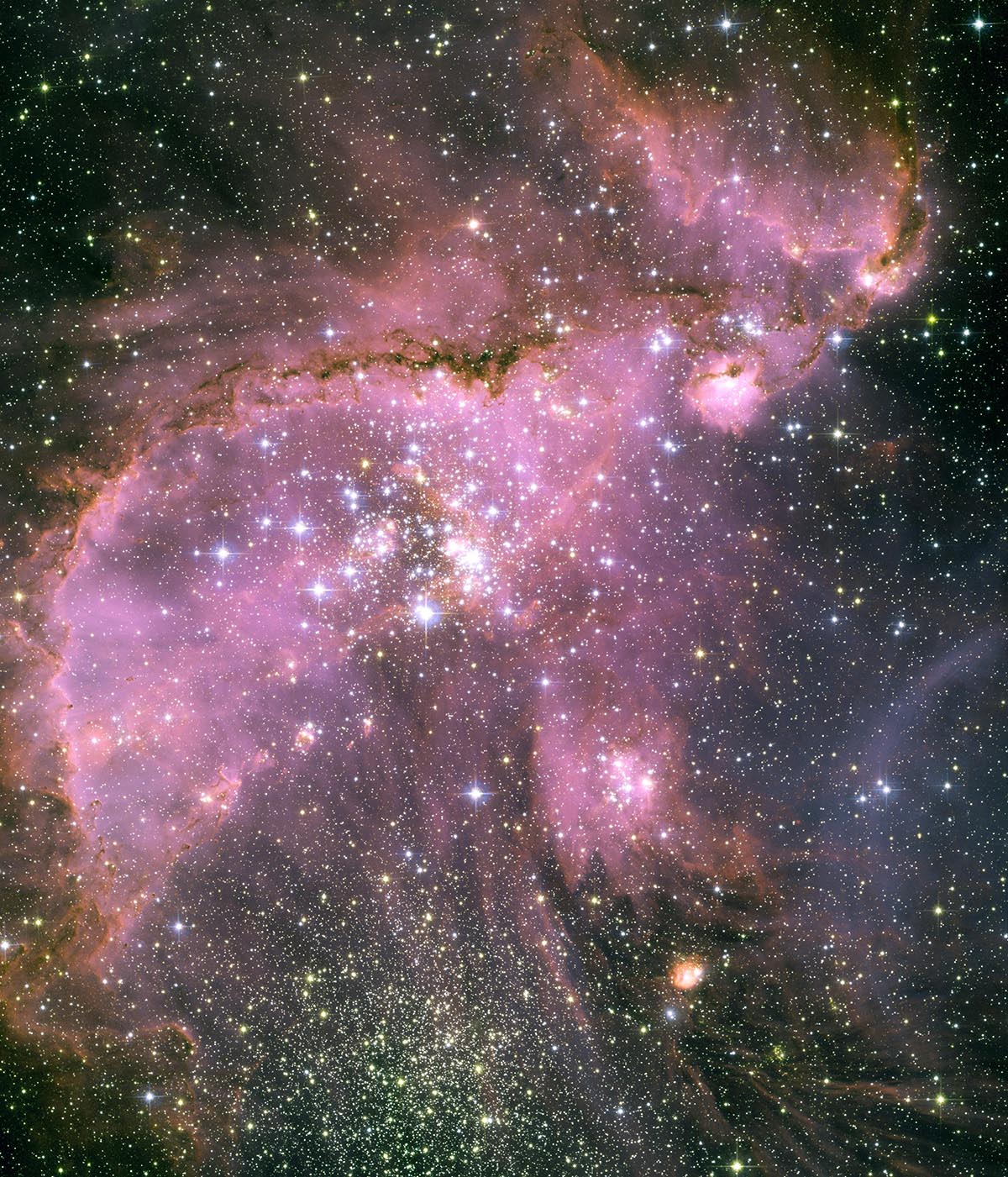
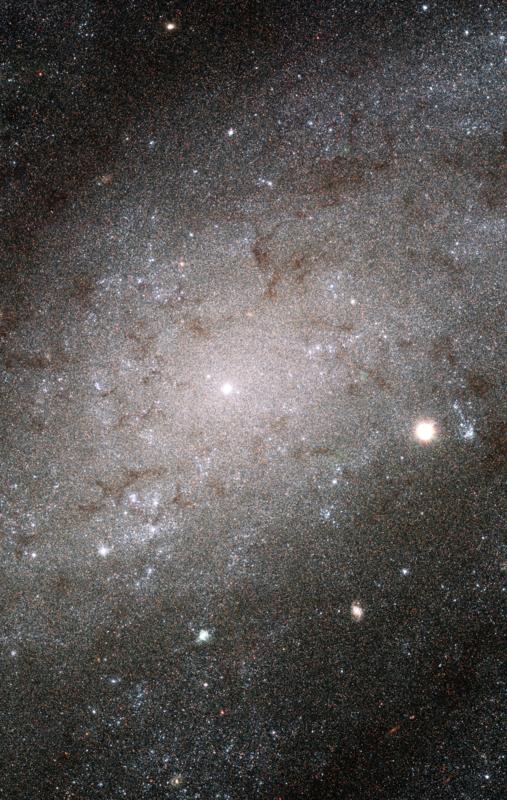
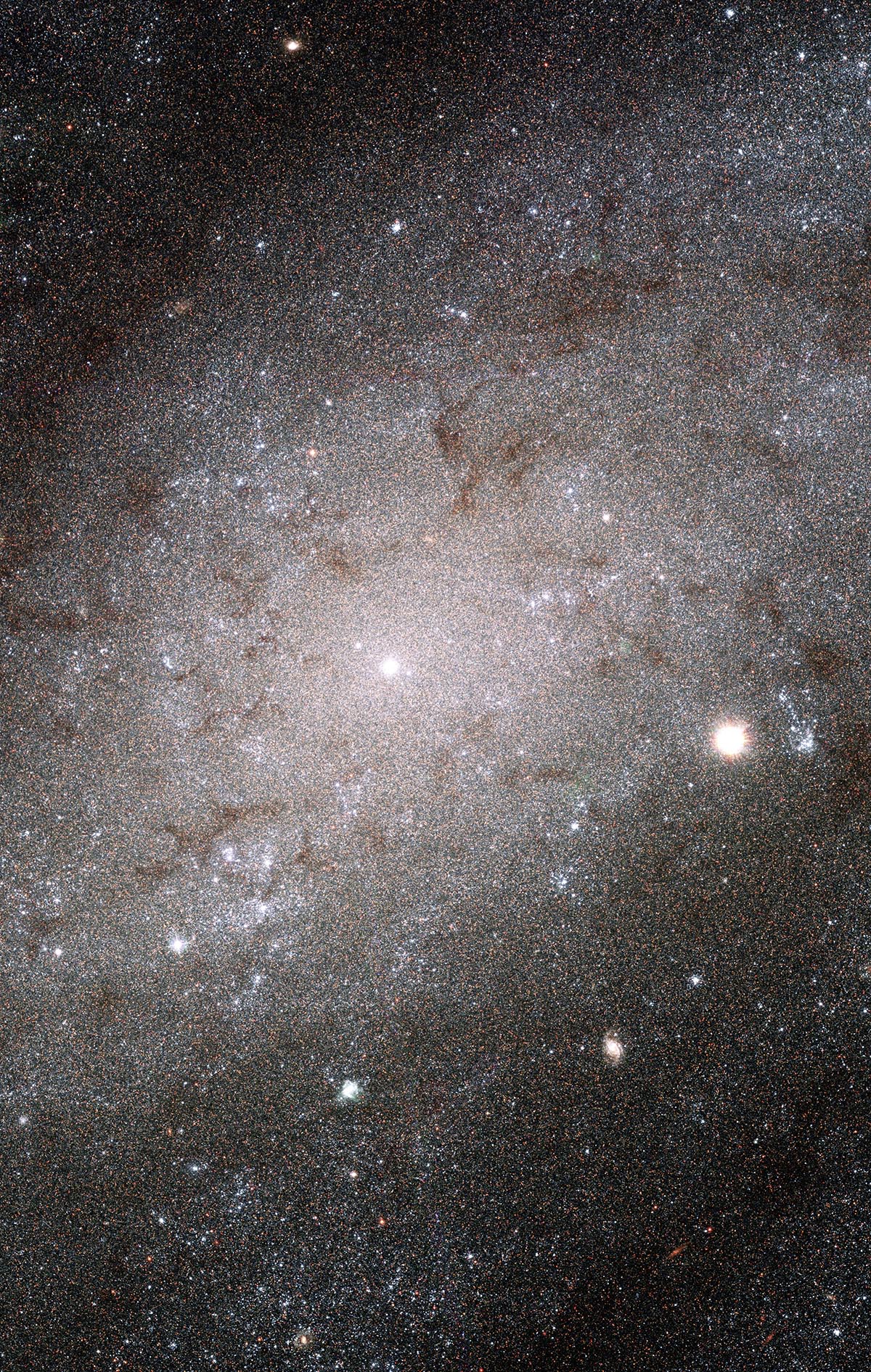
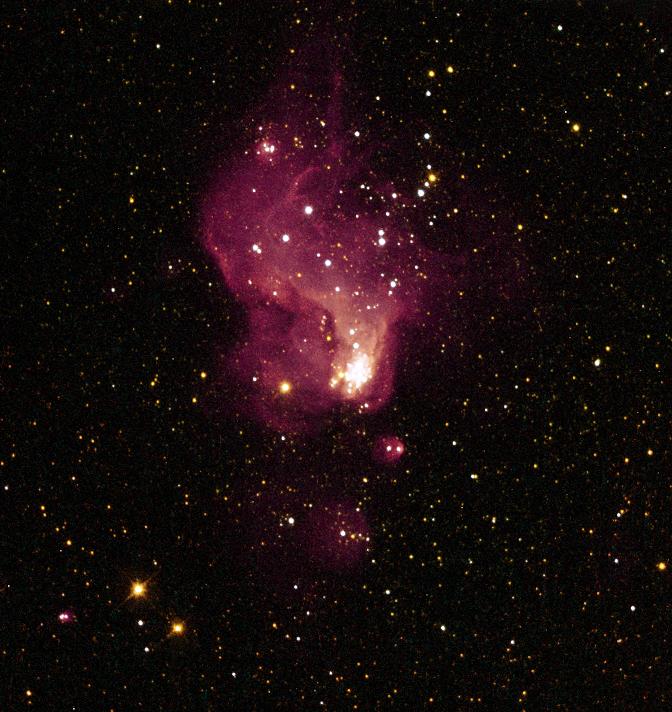
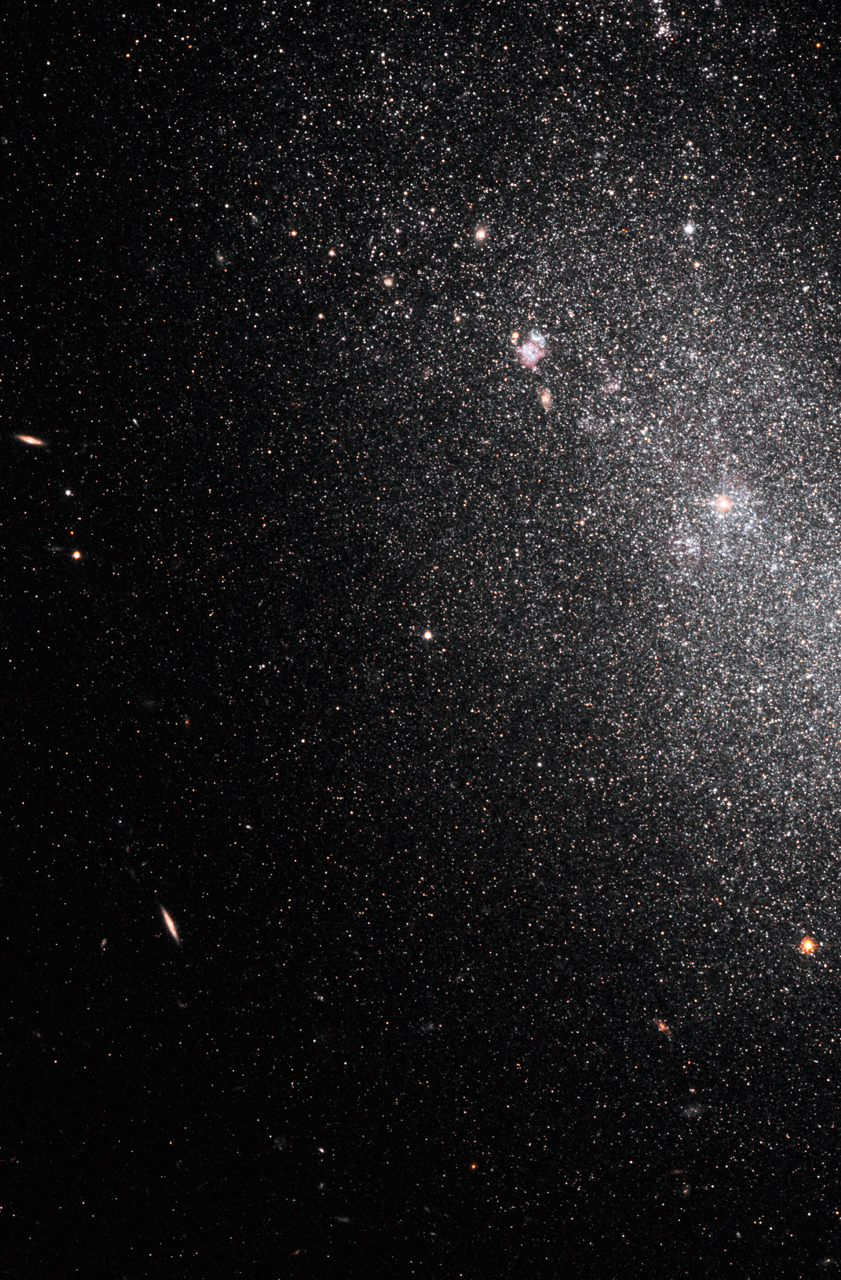
This image captures a starburst region in the dwarf galaxy NGC 4068. Starburst regions are areas of intense star formation.
Scientific Significance
Dwarf galaxies such as NGC 4068 are critical for understanding star formation in low-mass systems. Their shallow gravitational potential makes them sensitive to feedback from supernovae and stellar winds, which can expel gas and regulate future star birth. These processes are central to galaxy evolution models, especially for the faint galaxy population in the early universe.
Observation Details
Hubble imaged NGC 4068 in optical bands to resolve bright clusters and ionized gas complexes in the starburst region. Photometry of individual stars and clusters helps estimate recent star-formation history. Morphological comparison with nearby dwarfs provides context for burst-driven structural evolution.
Location in the Universe
Constellation
Ursa Major
Distance from Earth
Approximately 13 million light-years
Fun Facts
- 1
NGC 4068 is a compact dwarf galaxy with patchy, active star-forming regions.
- 2
Its brightest knots are powered by short-lived massive stars that strongly ionize nearby gas.
- 3
Dwarf starbursts like this can be strongly affected by stellar feedback and outflows.
Image credit: NASA, ESA, Hubble Space Telescope