About This Image
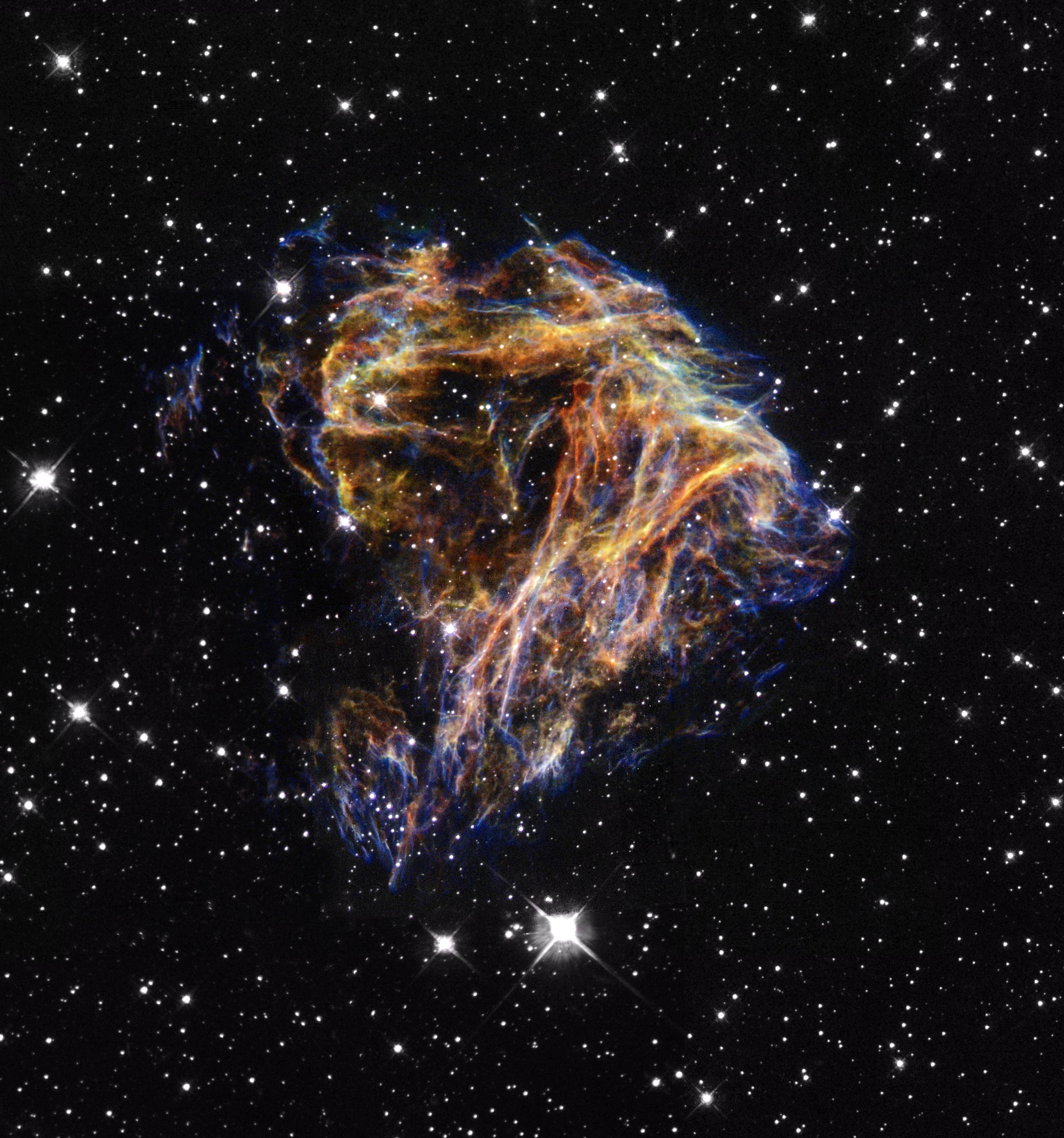
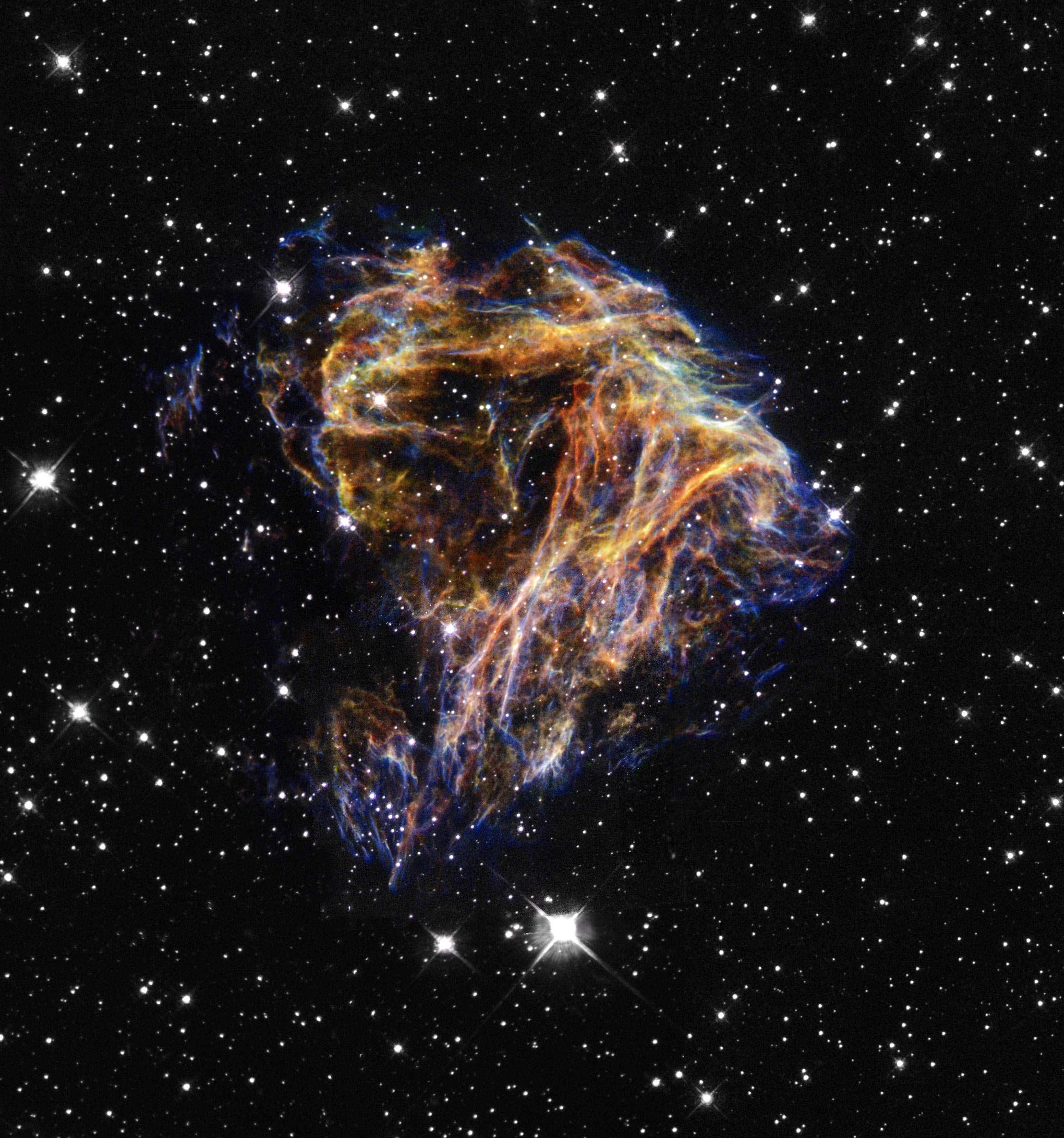
N 49 is a supernova remnant in a neighboring galaxy called the Large Magellanic Cloud. The delicate filaments are sheets of debris from a stellar explosion whose light would have reached Earth thousands of years ago.
Scientific Significance
N 49 helps astronomers study how supernova shocks heat, compress, and chemically enrich the interstellar medium. Its filament network captures the interaction between fast ejecta and non-uniform ambient gas. The remnant is also relevant for connecting stellar death, compact remnants, and feedback processes that regulate future star formation in galaxies.
Observation Details
Hubble used narrowband filters to isolate emission from hydrogen, sulfur, and oxygen in shocked gas. The high-resolution images reveal fine filamentary structure and density contrasts across the shell. Comparing these maps with X-ray data constrains shock speed, temperature, and remnant energetics.
Location in the Universe
Constellation
Dorado
Distance from Earth
Approximately 160,000 light-years
Fun Facts
- 1
N 49 is one of the brightest supernova remnants in the Large Magellanic Cloud.
- 2
It is associated with a magnetar candidate linked to extreme high-energy outbursts.
- 3
The filaments trace shock waves plowing into surrounding interstellar material.
Image credit: NASA, ESA, Hubble Space Telescope