About This Image
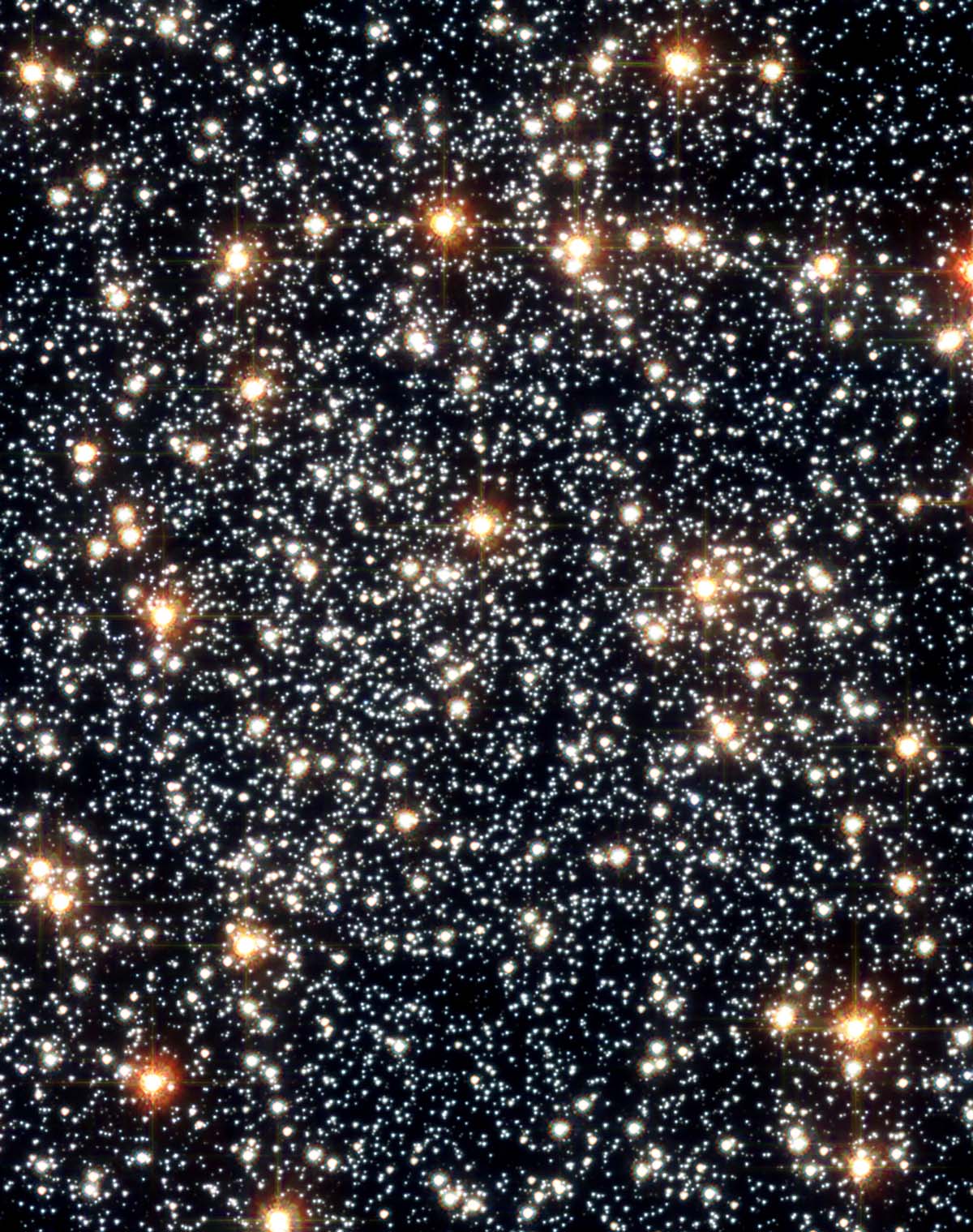
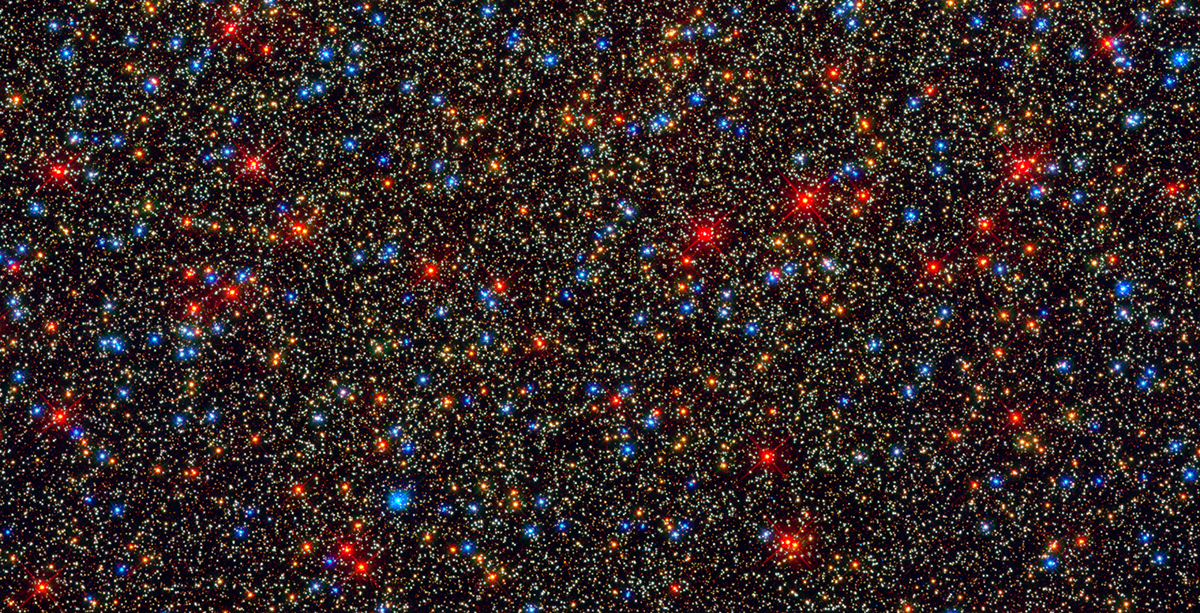
This view shows stars at the heart of Omega Centauri, one of roughly 150 globular clusters in our Milky Way galaxy. The behemoth stellar grouping is the biggest and brightest globular cluster in the Milky Way, and one of the few that can be seen by the unaided eye.
Scientific Significance
Omega Centauri is essential for understanding the boundary between globular clusters and dwarf galaxies. Its complex stellar populations challenge the classic view that globular clusters form in a single burst. The system informs models of hierarchical assembly and the long-term dynamical evolution of dense stellar systems in the Galactic halo.
Observation Details
Hubble core imaging resolves extremely crowded stellar fields and enables precise photometry. Color-magnitude diagrams built from these data separate subpopulations and support age-metallicity analysis. Repeated observations can also detect internal motions and constrain mass distribution in the cluster center.
Location in the Universe
Constellation
Centaurus
Distance from Earth
Approximately 15,800 light-years
Fun Facts
- 1
Omega Centauri is the largest and most massive globular cluster in the Milky Way.
- 2
It contains multiple stellar populations with different ages and chemical compositions.
- 3
Some astronomers suspect it may be the stripped core of a dwarf galaxy.
Image credit: NASA, ESA, Hubble Space Telescope