About This Image
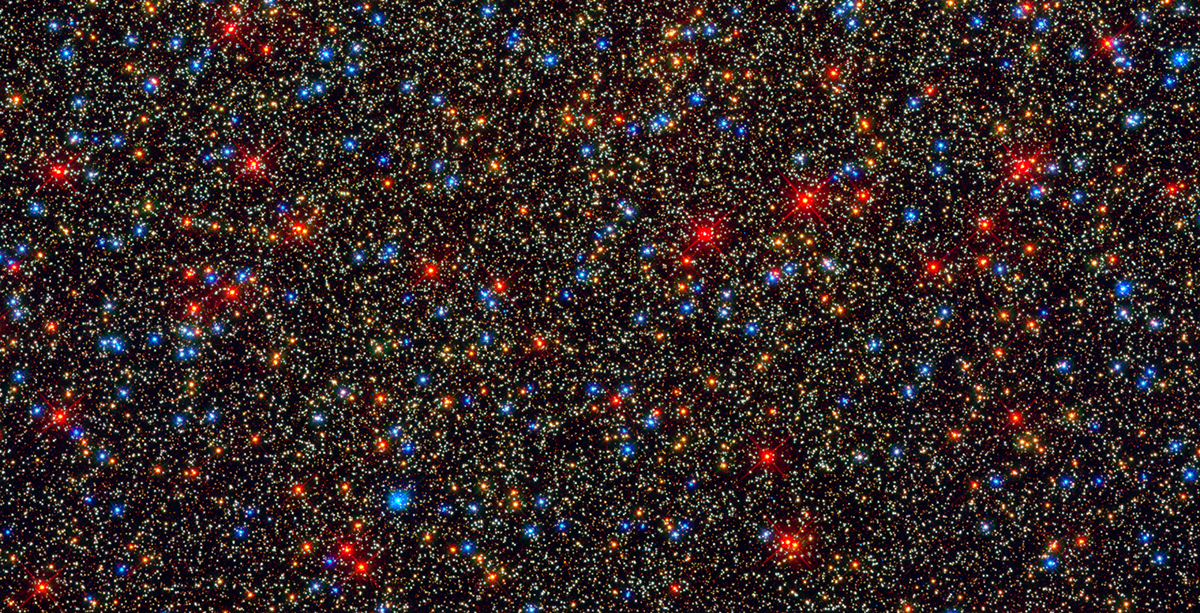
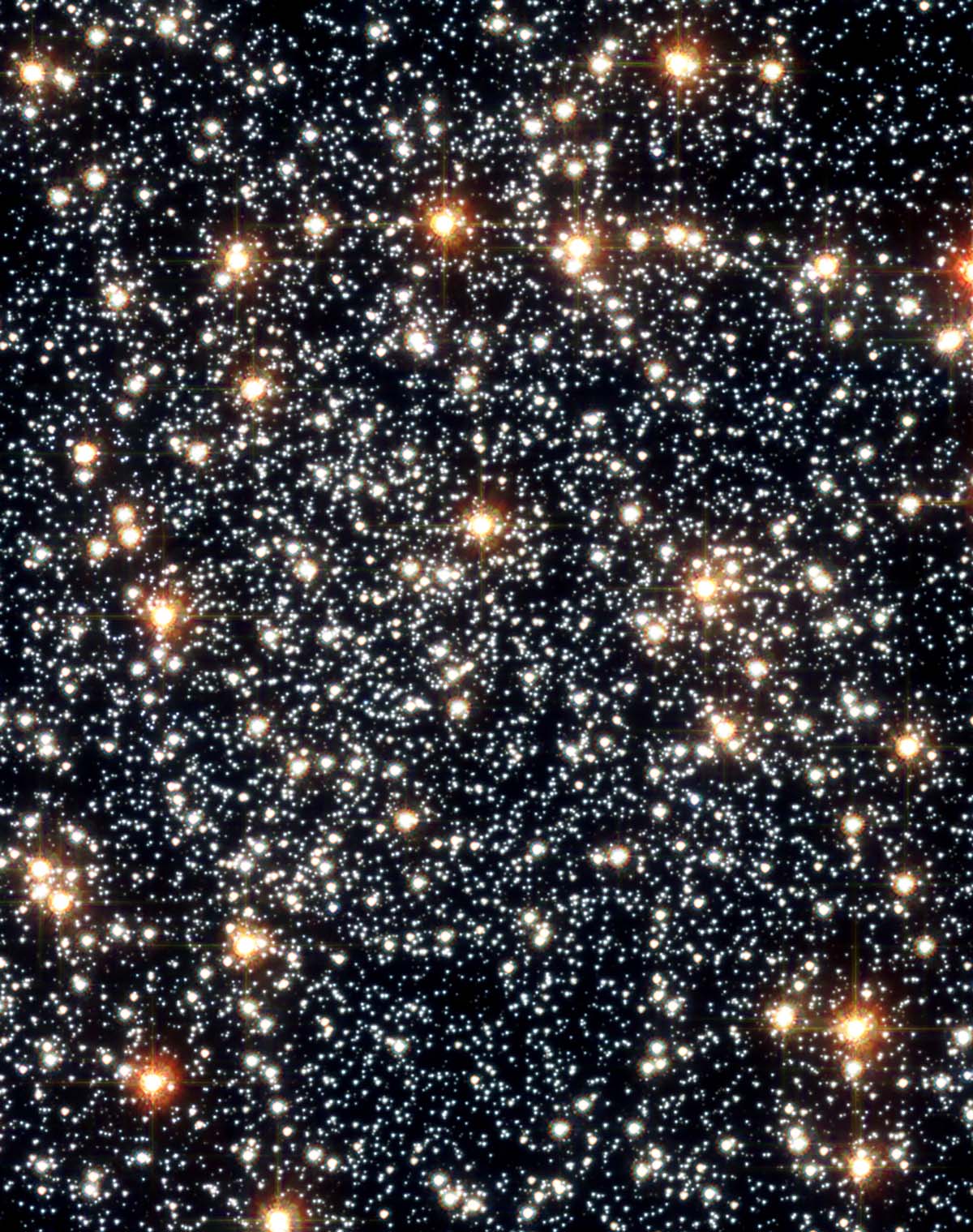
This image shows the core of the globular star cluster 47 Tucanae. The entire cluster contains about a million stars, with many packed tightly in the core.
Scientific Significance
47 Tucanae is a benchmark for stellar dynamics in extreme-density environments. Because stars are tightly packed, gravitational interactions happen often enough to reshape binary populations and produce unusual stellar remnants. The cluster also provides constraints on old stellar ages and chemical enrichment, making it important for reconstructing early Milky Way history.
Observation Details
Hubble observed the core with high spatial resolution to separate stars that appear blended in ground-based images. Multi-filter photometry was used to build color-magnitude diagrams and identify distinct stellar populations. Repeated imaging also supports proper-motion studies that map internal kinematics and mass segregation.
Location in the Universe
Constellation
Tucana
Distance from Earth
Approximately 16,700 light-years
Fun Facts
- 1
47 Tucanae contains hundreds of thousands to about a million stars packed into a dense spherical halo.
- 2
Its crowded core is one of the best places to study stellar encounters and binary interactions.
- 3
The cluster hosts many exotic systems, including millisecond pulsars and blue straggler stars.
Image credit: NASA, ESA, Hubble Space Telescope