About This Image
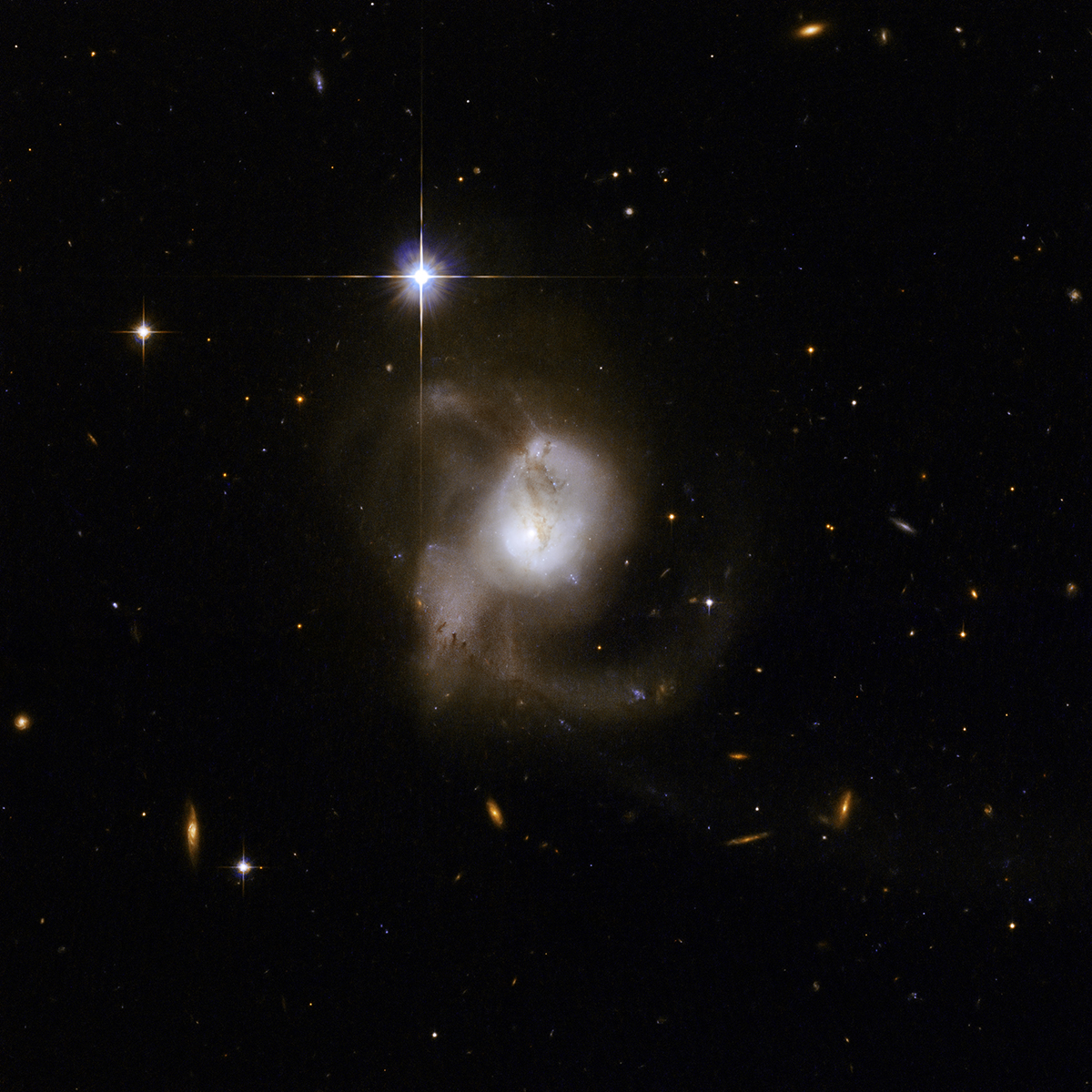
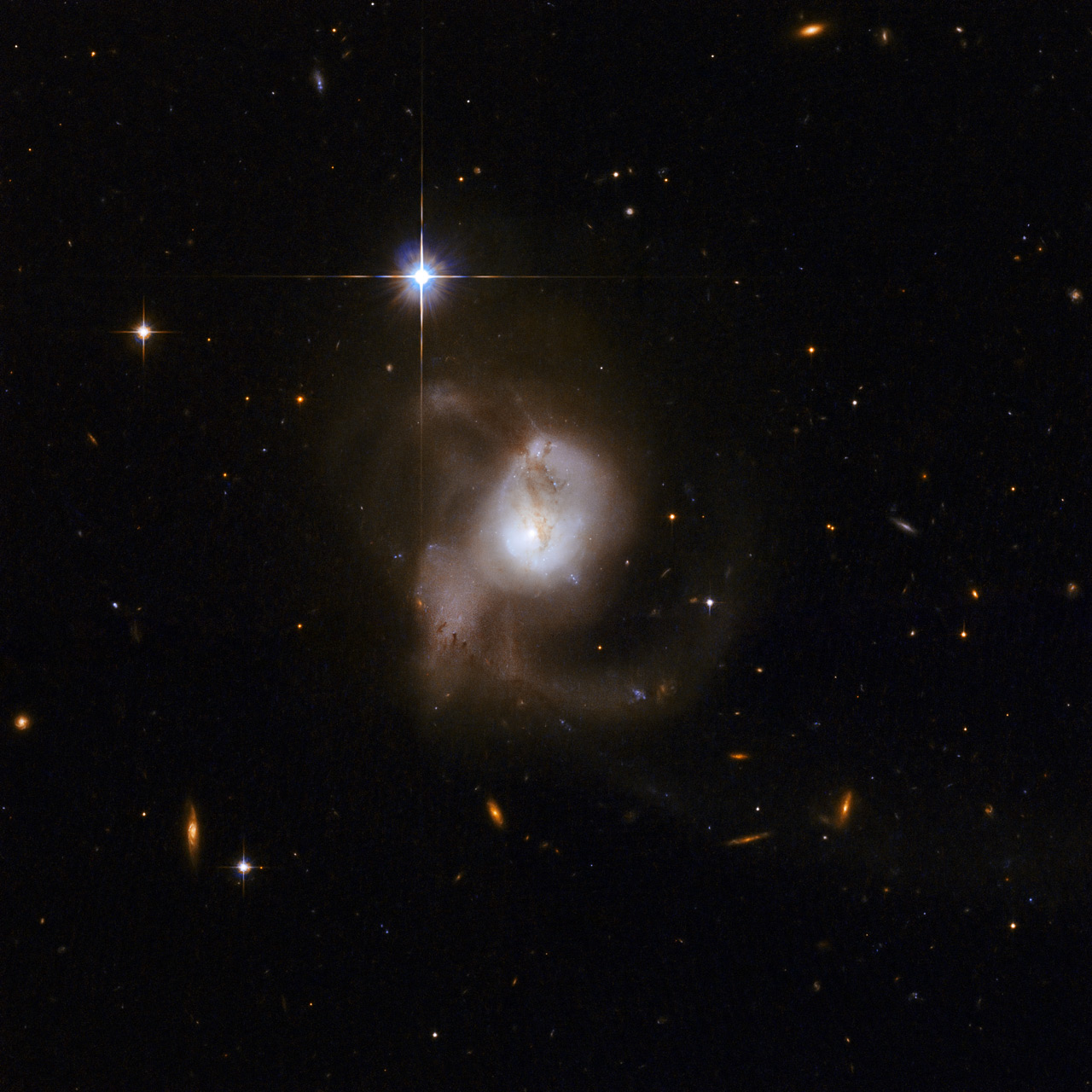
ESO 239-2 is the result of a cosmic collision between galaxies that will eventually result in a larger "elliptical" galaxy. The intermediate stage captured here shows a galaxy with long tails of dust and gas that envelope the galaxy's core.
Scientific Significance
ESO 239-2 provides a snapshot of morphological transformation during galaxy merging. Such systems help calibrate how quickly tidal debris fades and when remnants settle toward elliptical-like profiles. Understanding these timescales is important for interpreting merger rates across cosmic history and linking observed structure to evolutionary stage.
Observation Details
Hubble optical imaging resolves dust lanes, tidal structures, and bright star-forming knots around the core. The data support visual and quantitative classification of merger stage. Combined with spectroscopy, these images can constrain stellar ages and whether nuclear activity is merger-driven.
Location in the Universe
Constellation
Unknown
Distance from Earth
Approximately 650 million light-years
Fun Facts
- 1
ESO 239-2 shows tidal tails and dust features that indicate a past galaxy collision.
- 2
The object represents a transition stage between a disturbed pair and a smoother remnant.
- 3
Mergers like this can strongly reshape stellar orbits and central gas distribution.
Image credit: NASA, ESA, Hubble Space Telescope