About This Image
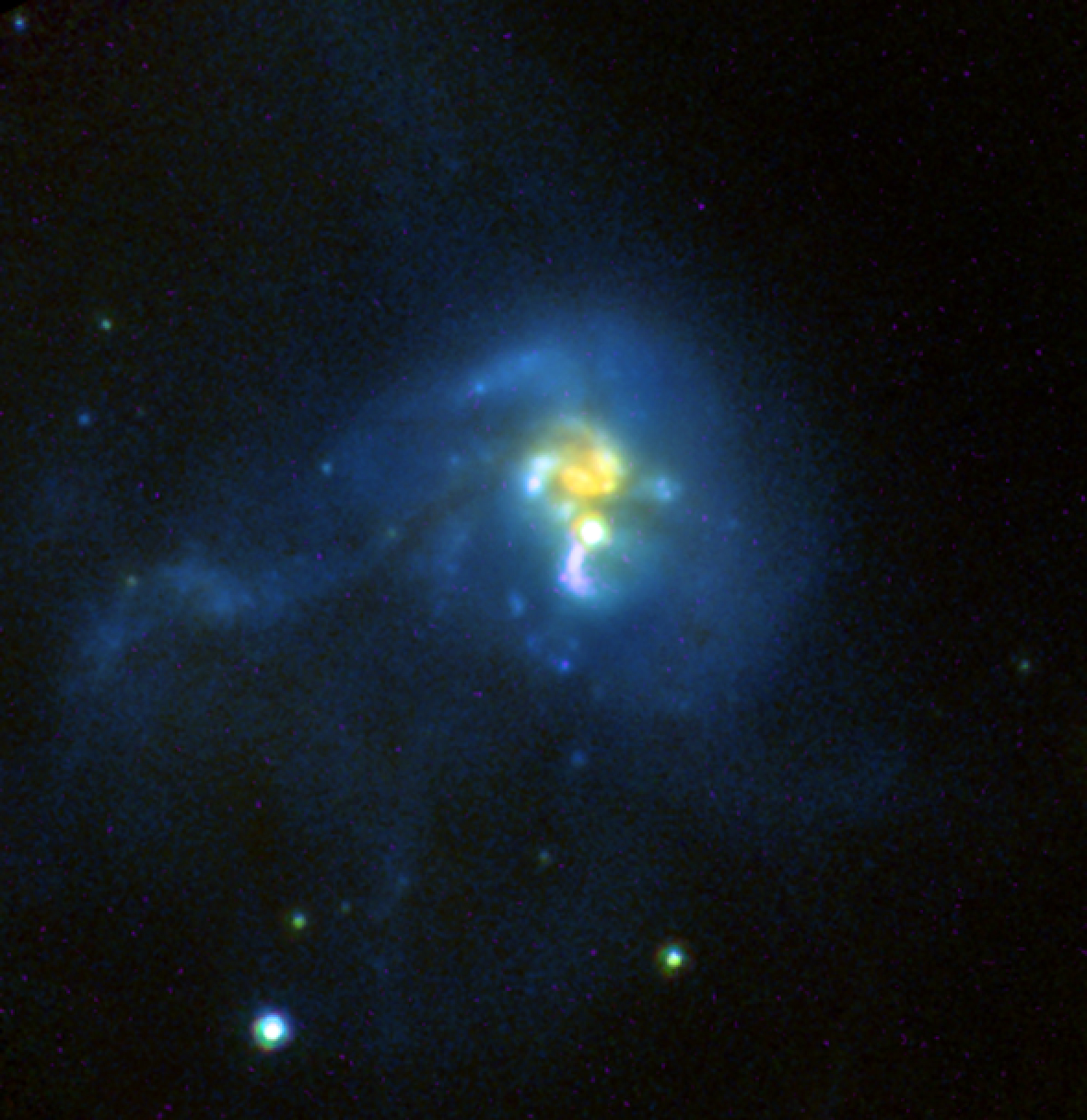
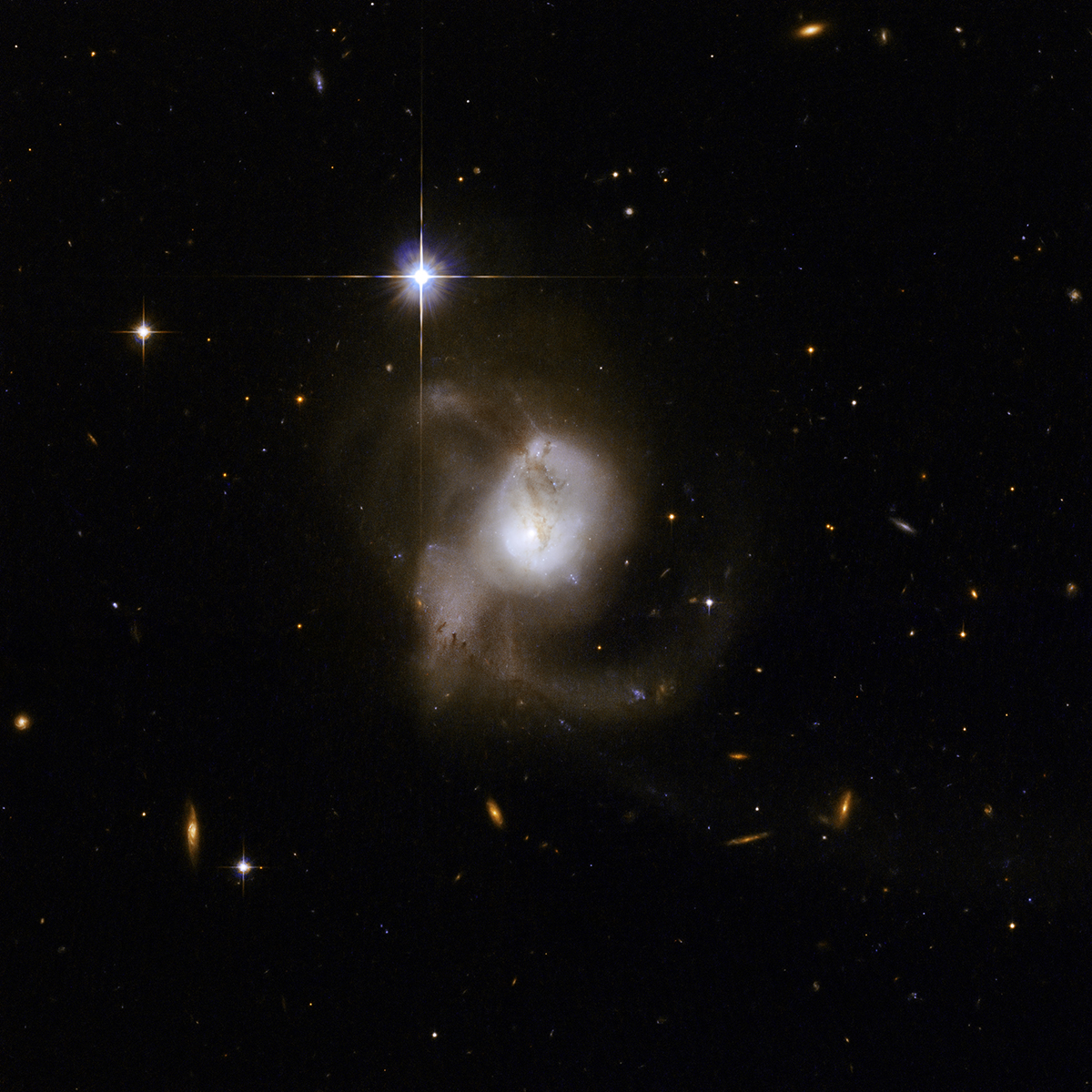
ESO 239-2 is a dramatic example of a galaxy in the throes of a cosmic collision, the result of two galaxies that have merged to create a disturbed, chaotic structure that will eventually settle into a larger elliptical galaxy. The intermediate stage captured here shows a galaxy with long sweeping tails of dust and gas that envelope the galaxy's core, pulled outward by immense tidal forces during the merger. Located in the southern constellation Tucana, roughly 550 million light-years from Earth, this system displays the telltale signatures of galactic interaction: distorted morphology, enhanced star formation triggered by compressed gas clouds, and luminous tidal debris stretching far beyond the main body. Such mergers are fundamental events in galaxy evolution, driving the transformation of spiral galaxies into the massive elliptical galaxies that dominate galaxy clusters.
Scientific Significance
ESO 239-2 is a valuable laboratory for studying the physics of galaxy mergers at an intermediate stage of the process. Major mergers — collisions between galaxies of comparable mass — are believed to be a primary mechanism for building the most massive galaxies in the universe and for triggering powerful bursts of star formation and active galactic nuclei. The distorted morphology and tidal features of ESO 239-2 provide direct constraints on the geometry and timing of the merger, which can be compared to numerical simulations to reconstruct the initial conditions and predict the system's future evolution. The enhanced infrared luminosity of such merging systems indicates intense star formation hidden behind thick veils of dust, and ESO 239-2 helps bridge the gap between normal star-forming galaxies and the extreme ultra-luminous infrared galaxies that represent the most vigorous merger-driven starbursts.
Observation Details
Hubble observed ESO 239-2 using the Advanced Camera for Surveys (ACS) in broadband optical filters that captured both the bright central merger remnant and the faint tidal tails extending into the surrounding intergalactic space. Deep exposures were necessary to trace the outermost reaches of the tidal debris, which contains important information about the gravitational dynamics of the encounter. The ACS resolution revealed fine-scale structures within the tidal tails, including compact star-forming knots and dust lanes that would be unresolvable from the ground at this distance.
Location in the Universe
Constellation
Tucana
Distance from Earth
550 million light-years
Fun Facts
- 1
Galaxy mergers like ESO 239-2 can take hundreds of millions of years to complete, with the two galaxies orbiting each other in an ever-tightening spiral before finally coalescing into a single new galaxy.
- 2
The tidal tails visible in ESO 239-2 contain not just stars pulled from the merging galaxies but also massive quantities of gas and dust that can fragment under their own gravity to form entirely new dwarf galaxies called tidal dwarf galaxies.
- 3
Our own Milky Way is on a collision course with the Andromeda Galaxy, and in roughly 4.5 billion years they will undergo a merger process similar to what we see in ESO 239-2, eventually forming a giant elliptical galaxy sometimes nicknamed Milkomeda.
Image credit: NASA, ESA, Hubble Space Telescope