About This Image
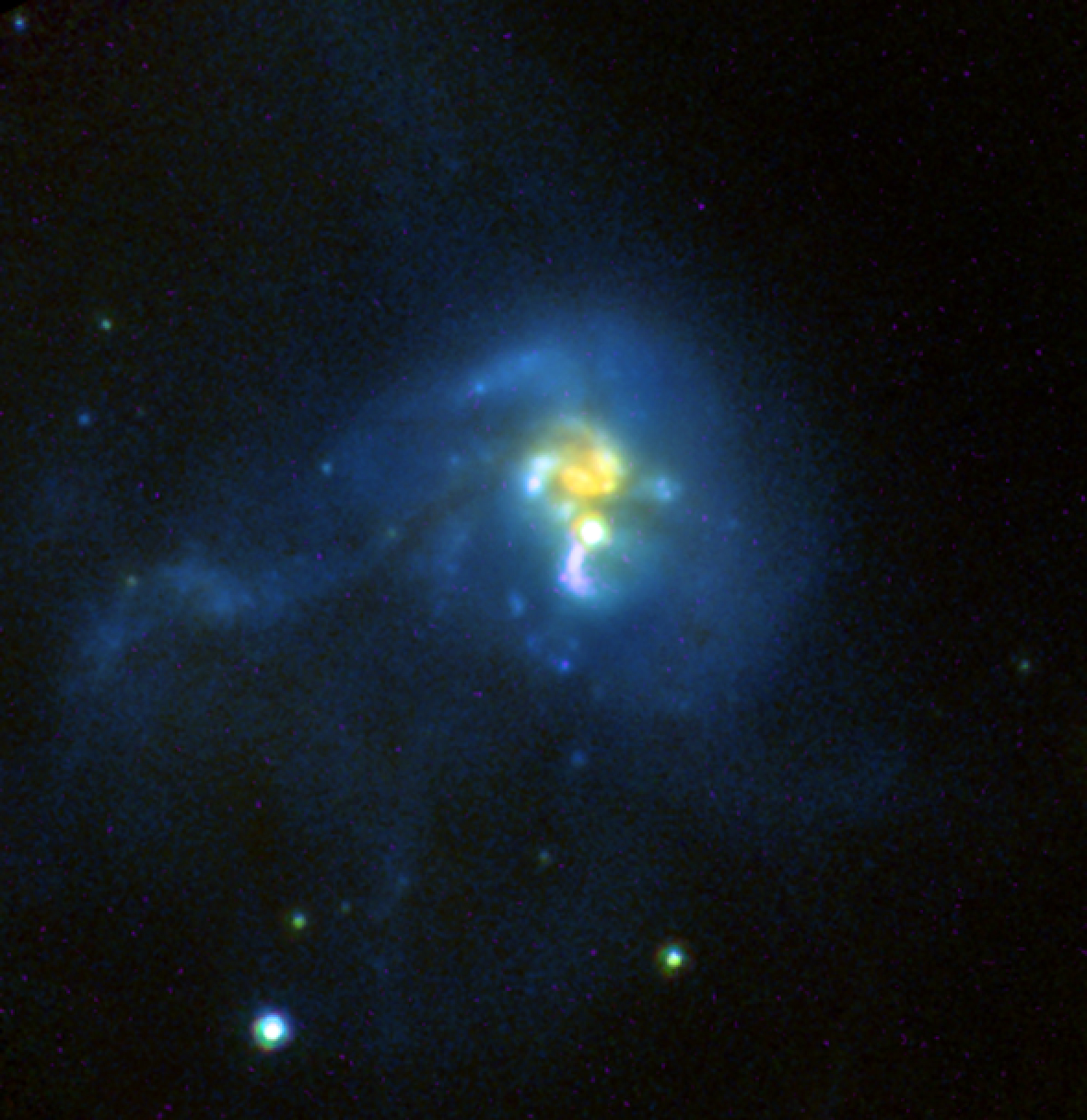
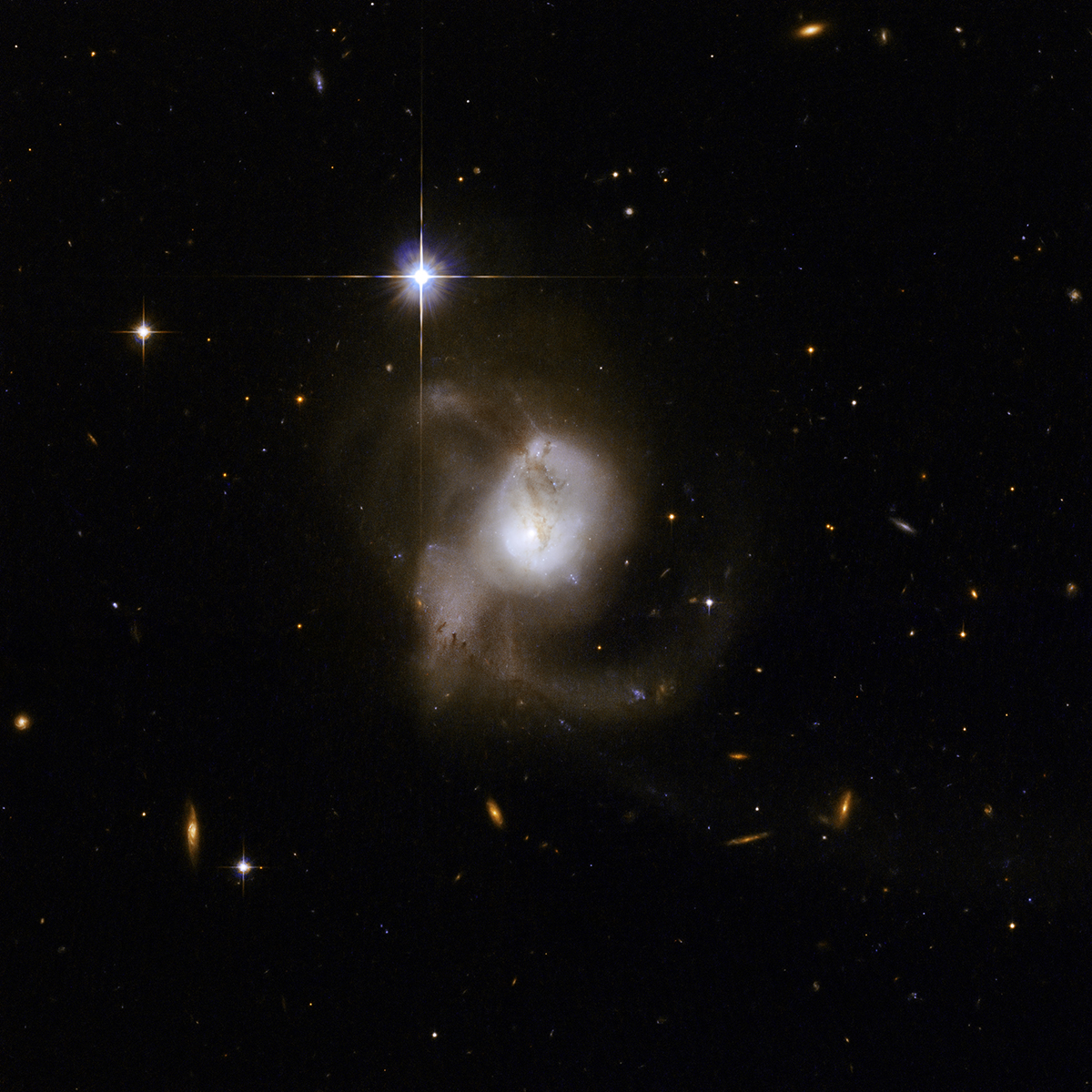
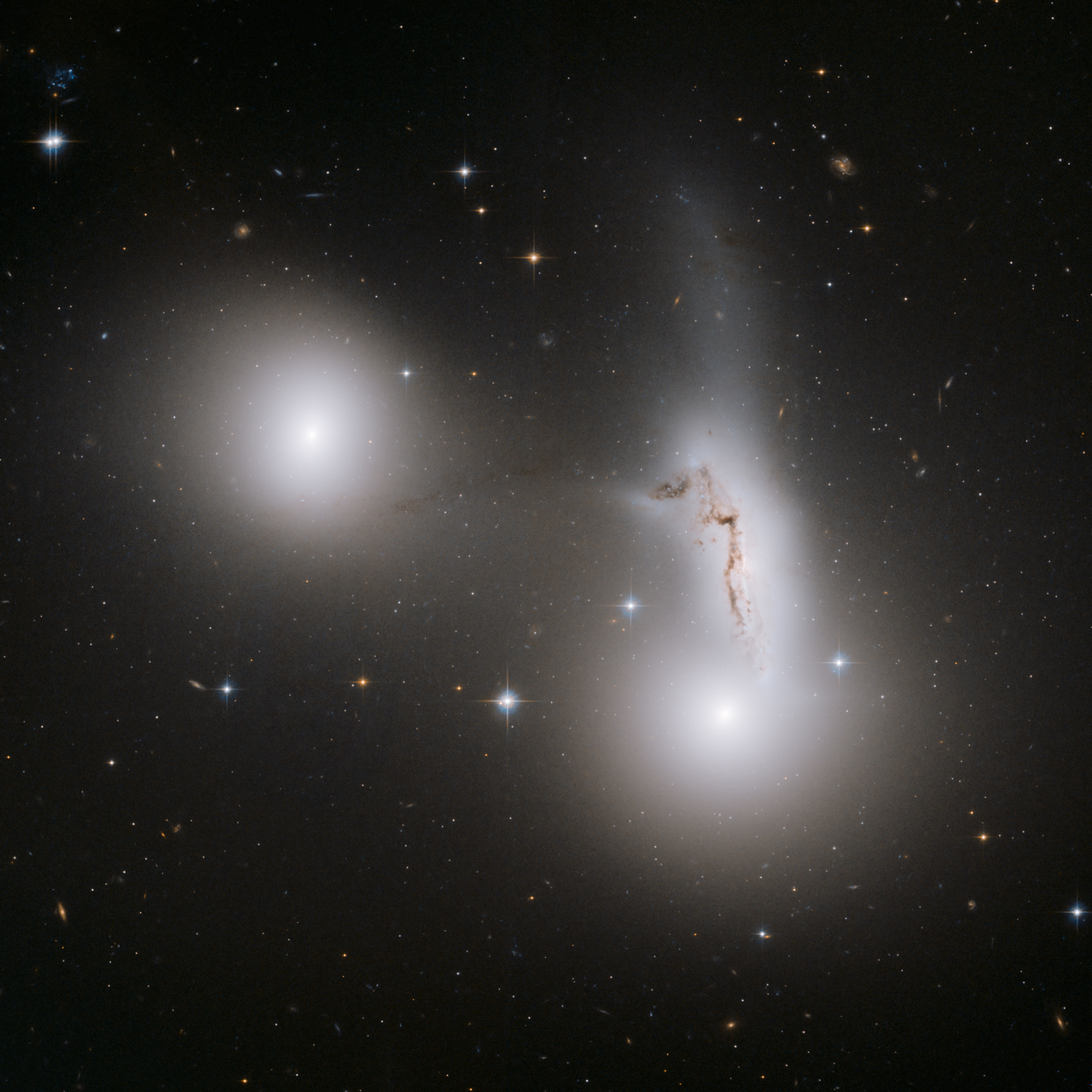
Hickson Compact Group 90 (HCG 90) is a tightly packed ensemble of galaxies centered on three prominent members — NGC 7173, NGC 7174, and NGC 7176 — locked in a slow gravitational embrace in the constellation Piscis Austrinus. Located roughly 100 million light-years away, this group exemplifies the dramatic consequences of close galactic encounters. NGC 7174 is visibly distorted, with streams and tidal tails of stars being pulled away by the gravitational influence of its elliptical neighbors NGC 7173 and NGC 7176. The interactions have triggered bursts of star formation in the disturbed spiral galaxy while the ellipticals appear largely quiescent. HCG 90 offers a vivid snapshot of an intermediate stage in group evolution that will ultimately end in a single merged galaxy.
Scientific Significance
HCG 90 is a benchmark system for studying galaxy evolution in extremely dense environments. Compact groups provide a unique regime between isolated galaxy pairs and massive clusters, where repeated close encounters and tidal interactions profoundly reshape galaxies over relatively short timescales. The ongoing disruption of NGC 7174 allows astronomers to observe tidal stripping in real time, measuring the rate at which stars and gas are removed from a spiral galaxy during a merger. X-ray observations have revealed hot intragroup gas, a diffuse medium that accumulates as interactions heat and expel gas from individual galaxies. Studying the stellar populations across all three galaxies provides a timeline of interaction-driven star formation and quenching, offering insights into the evolutionary pathways that transform gas-rich spirals into gas-poor ellipticals.
Observation Details
Hubble imaged HCG 90 with the Advanced Camera for Surveys (ACS) in broadband optical filters, providing exquisite resolution of the tidal features connecting and surrounding the three main galaxies. The ACS data revealed previously unseen fine structure in the tidal tails of NGC 7174, including compact star-forming knots and luminous blue star clusters born from compressed tidal debris. Deep exposures were necessary to capture the faint diffuse light envelope surrounding the group, which traces stars that have been stripped from their parent galaxies and now orbit freely within the group's collective gravitational potential.
Location in the Universe
Constellation
Piscis Austrinus
Distance from Earth
100 million light-years
Fun Facts
- 1
Hickson Compact Groups are among the densest galaxy environments in the universe — in HCG 90, three large galaxies are packed into a volume of space only a few hundred thousand light-years across, closer than the Milky Way is to the Andromeda Galaxy.
- 2
NGC 7174, the spiral galaxy in the group, is being tidally shredded by its two elliptical companions, and within a few hundred million years its spiral structure will be completely destroyed as it merges with them.
- 3
Canadian astronomer Paul Hickson cataloged 100 compact galaxy groups in 1982, and HCG 90 remains one of the most studied because its interactions are particularly advanced and visually dramatic.
Image credit: NASA, ESA, Hubble Space Telescope