About This Image
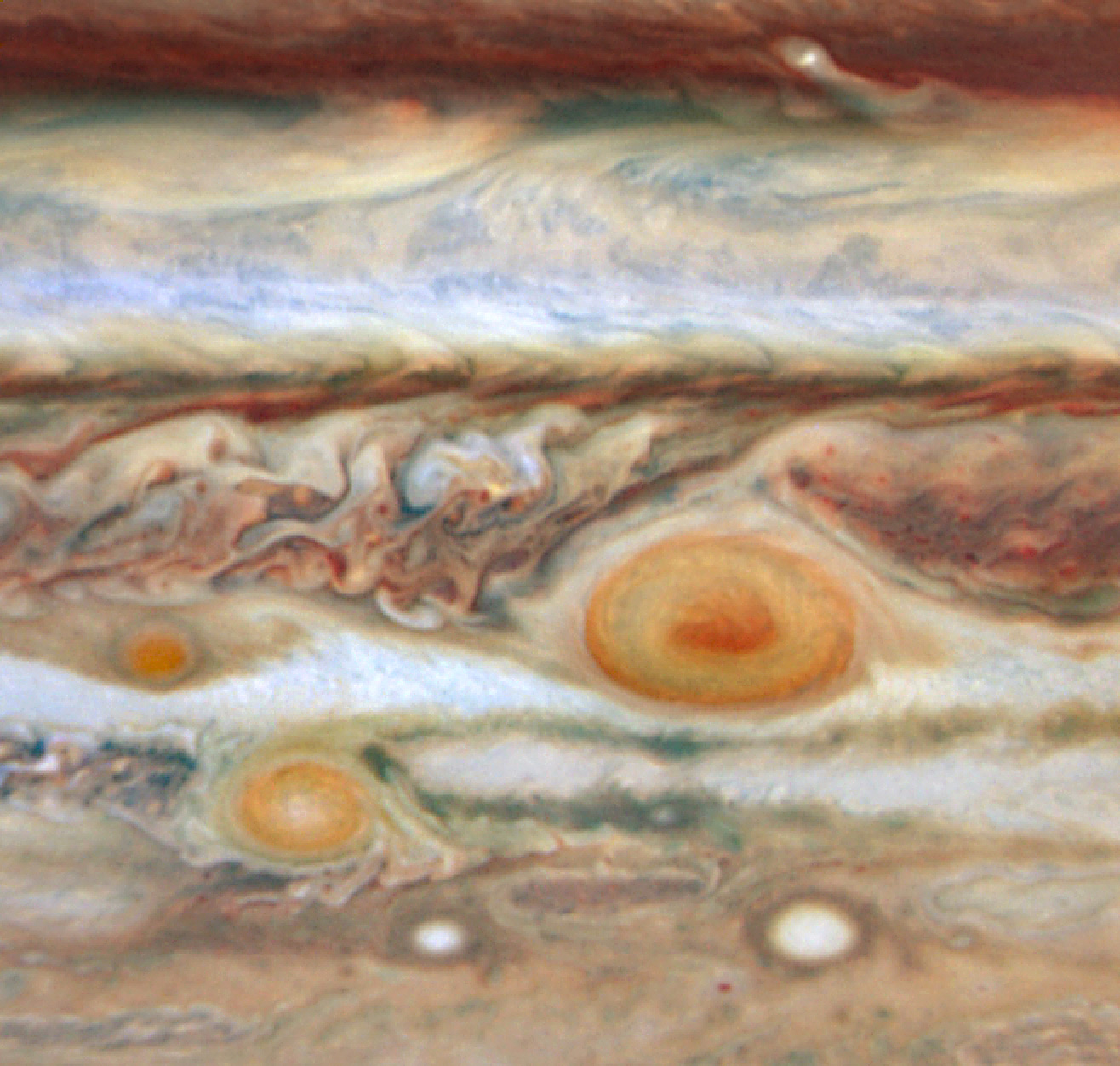
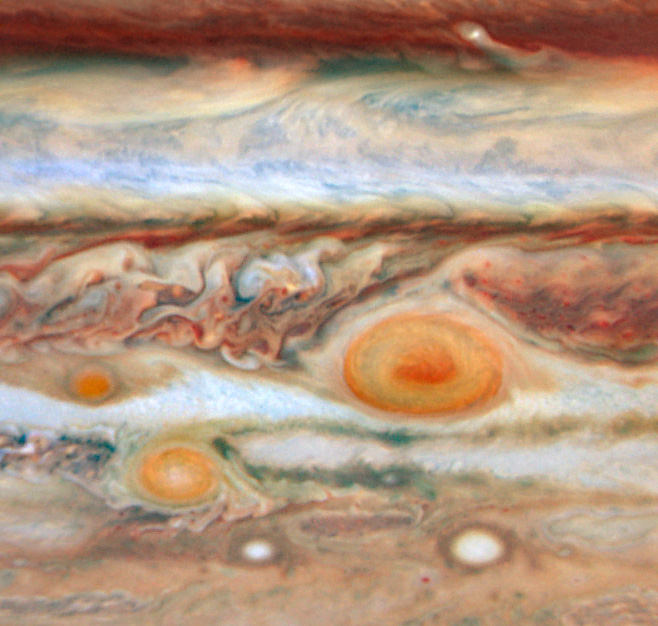
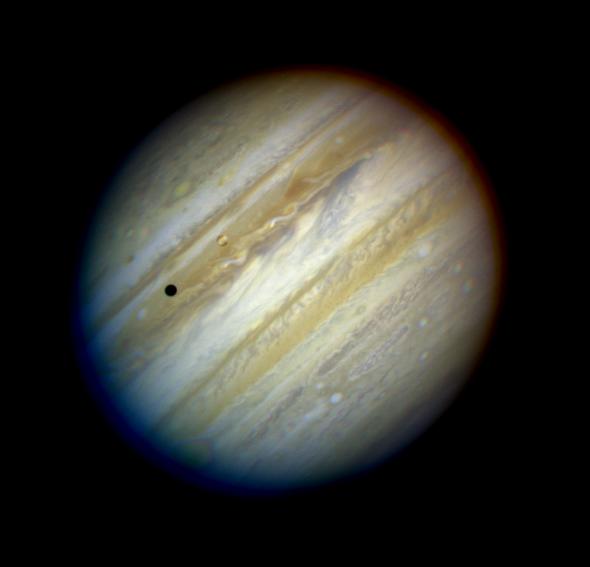
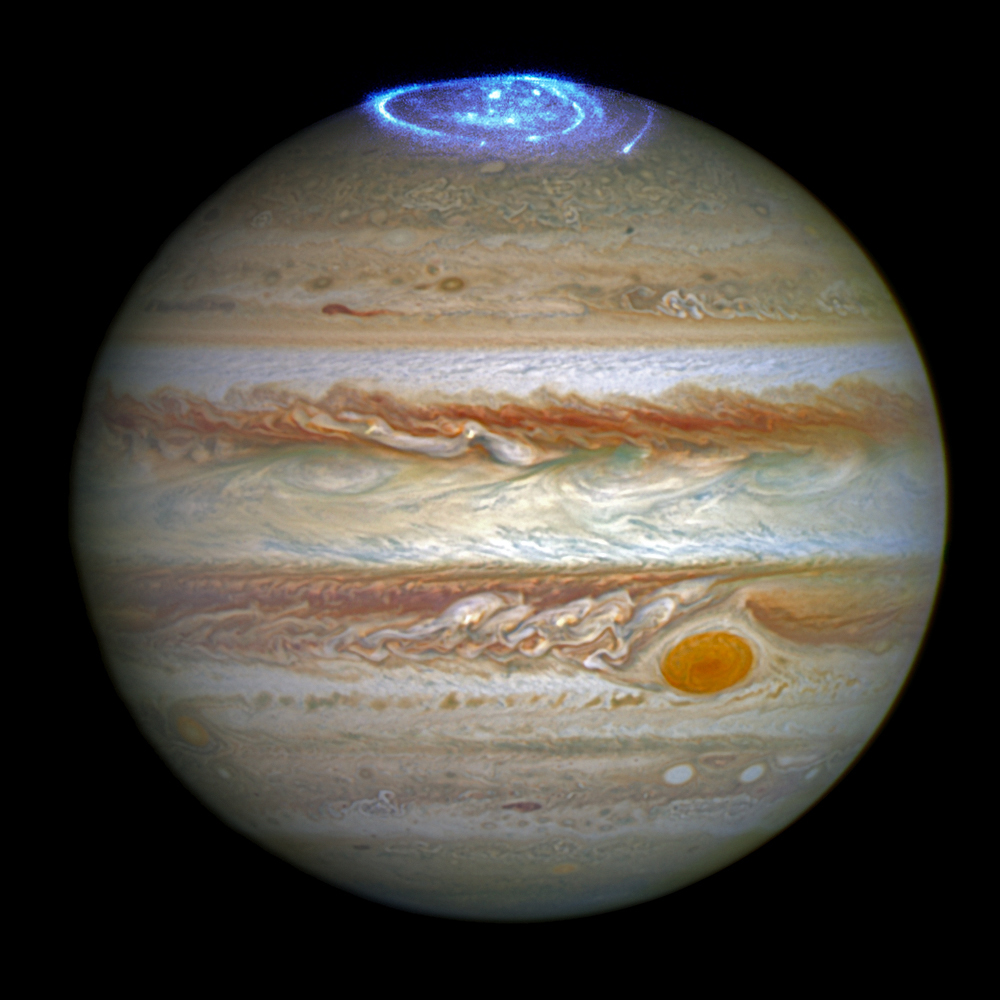
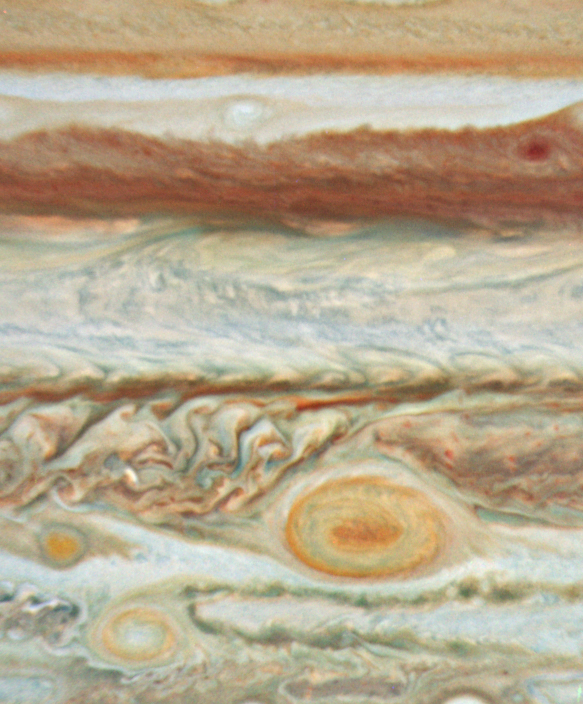
In 2008, Hubble captured a remarkable portrait of Jupiter featuring three prominent red storm systems in its turbulent atmosphere. The Great Red Spot, a massive anticyclonic storm that has raged for at least 350 years, was joined by two smaller but notable red ovals — Red Spot Junior (officially Oval BA), which had turned red only two years earlier, and a third even smaller storm that had recently developed a reddish hue. This rare triple-red configuration provided astronomers with an extraordinary opportunity to study the dynamics, chemistry, and evolution of Jovian storm systems. The image also revealed the complex banding of Jupiter's atmosphere, with zones of rising gas and belts of sinking gas creating the planet's signature striped appearance.
Scientific Significance
The 2008 observation of three simultaneous red spots on Jupiter provided a rare natural experiment in comparative storm dynamics. By studying storms of different sizes and ages exhibiting the same red coloration, scientists could test hypotheses about what causes the reddening phenomenon. The prevailing theory suggests that powerful updrafts within these anticyclonic storms lift ammonia ice and other compounds to high altitudes, where solar ultraviolet radiation triggers photochemical reactions that produce red-tinted chromophores. Long-term monitoring of these storms has revealed how energy cascades through Jupiter's atmosphere, with smaller vortices occasionally being absorbed by larger ones. These observations feed directly into general circulation models of giant planet atmospheres and have implications for understanding atmospheric dynamics on exoplanets.
Observation Details
Hubble observed Jupiter using the Wide Field Planetary Camera 2 (WFPC2) in multiple visible-light filters to capture the full color palette of the planet's atmospheric features. The timing was carefully chosen to capture all three red spots on the same hemisphere simultaneously. Multiple exposures at different wavelengths allowed scientists to probe different atmospheric depths, since shorter wavelengths are scattered at higher altitudes while longer wavelengths penetrate deeper into the cloud deck. The observations were part of a long-term Jupiter monitoring campaign that tracked the evolution of these storms over several years.
Location in the Universe
Constellation
N/A (Solar System)
Distance from Earth
588 million miles (at time of observation)
Fun Facts
- 1
Jupiter's Great Red Spot is so enormous that Earth could fit inside it with room to spare, yet the storm has been gradually shrinking over the past century and is now only about half the size it was in the late 1800s.
- 2
Red Spot Junior formed when three smaller white oval storms, which had existed since the 1930s, merged between 1998 and 2000 to create Oval BA, which then unexpectedly turned red in 2006.
- 3
The red color of Jupiter's storms is thought to come from complex organic molecules or sulfur compounds dredged up from deeper atmospheric layers and altered by ultraviolet sunlight at high altitudes.
Image credit: NASA, ESA, Hubble Space Telescope