About This Image
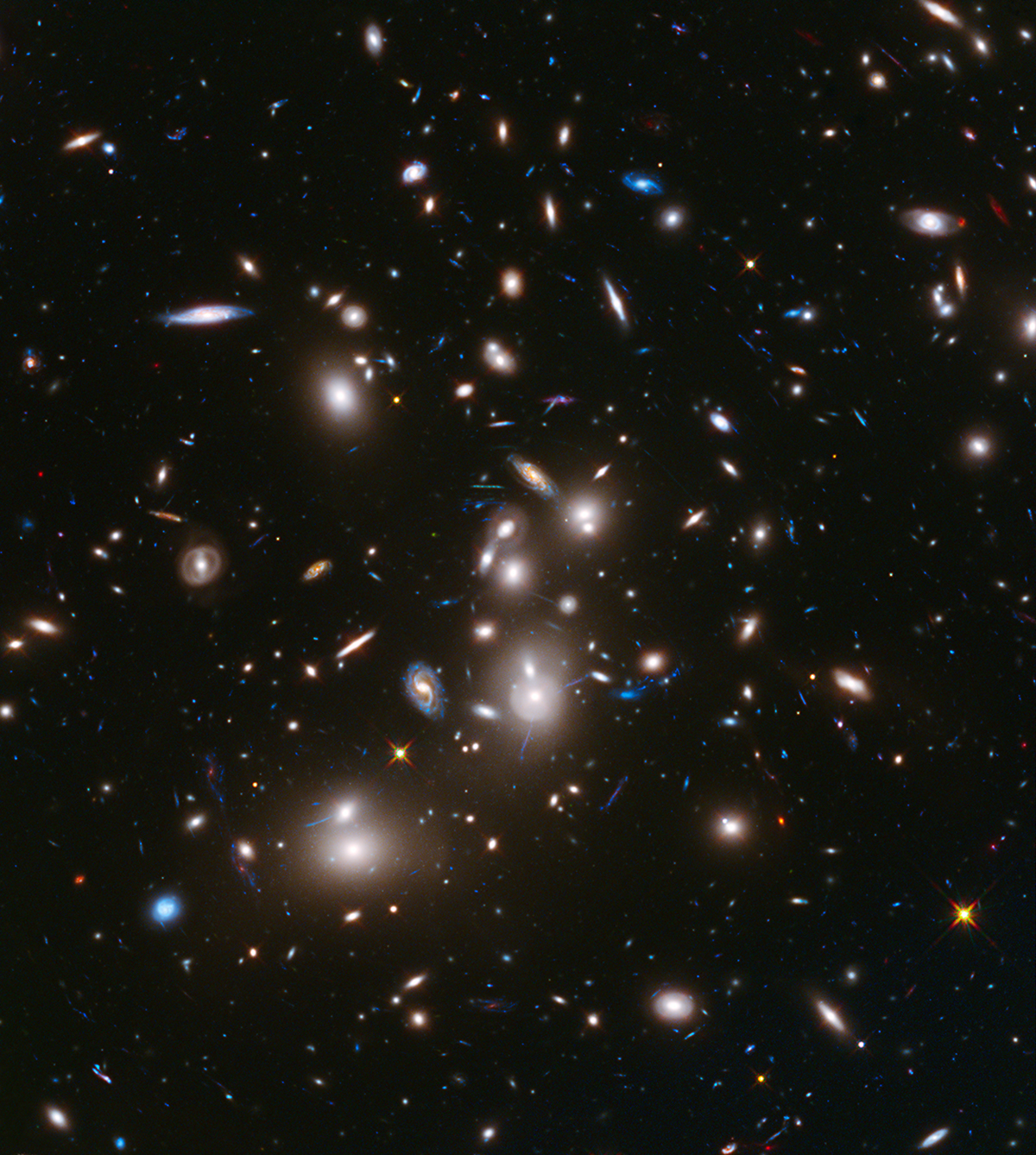
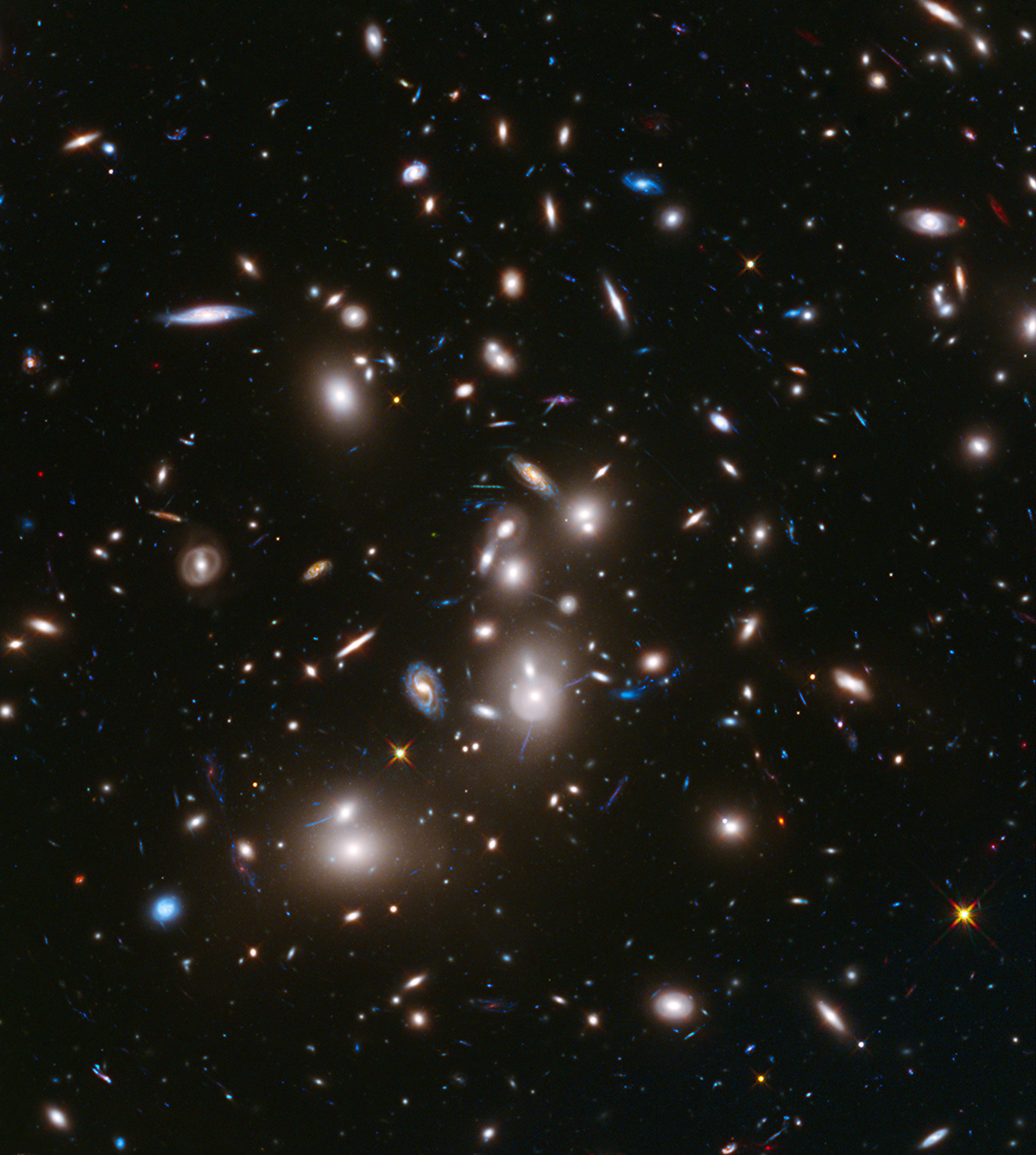
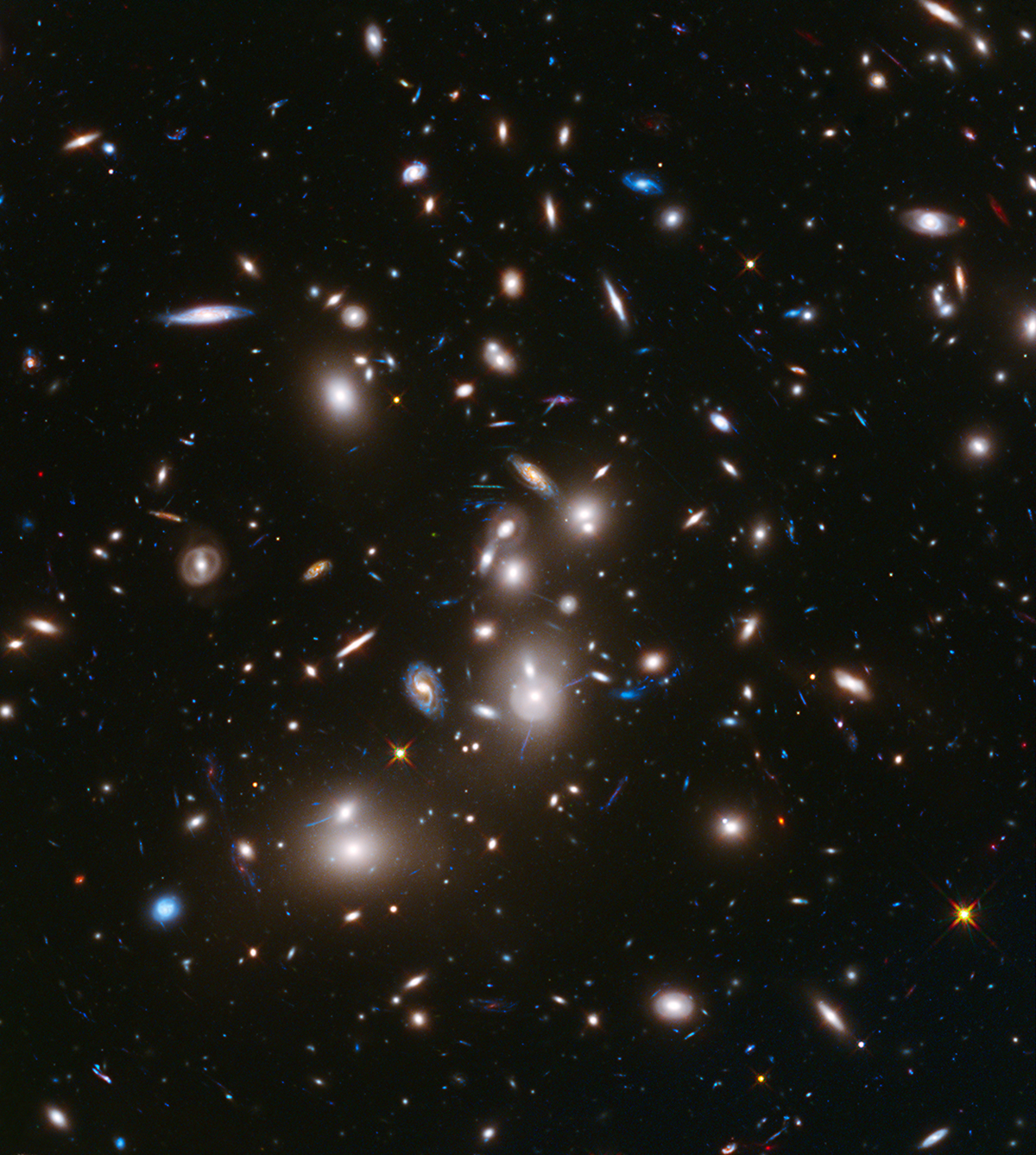
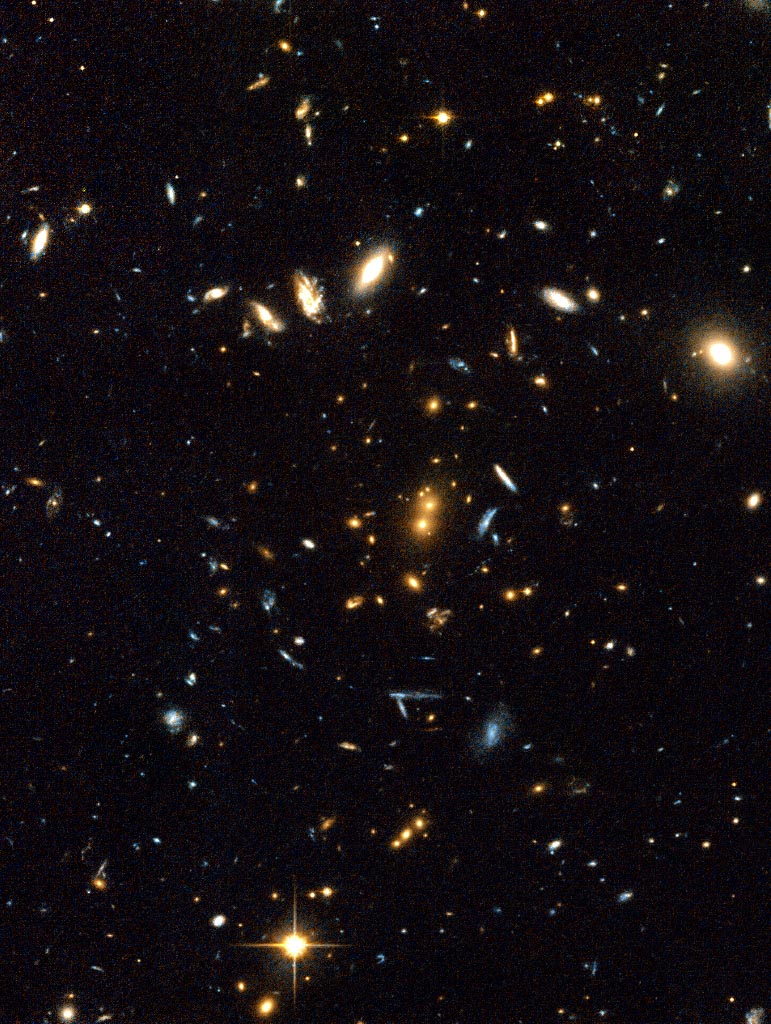
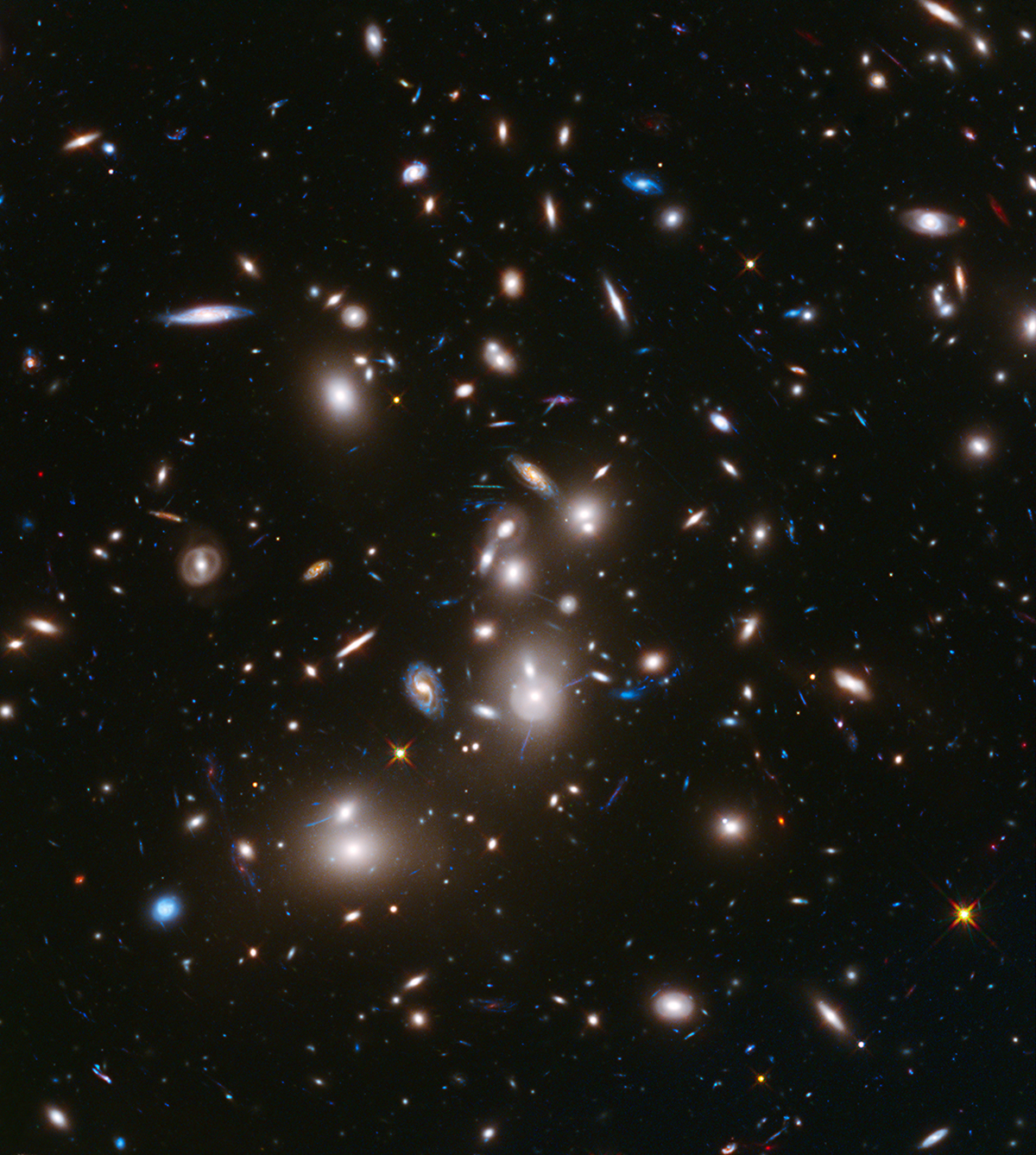
Abell 2744, nicknamed Pandora's Cluster, is a colossal galaxy cluster located approximately 3.5 billion light-years from Earth in the constellation Sculptor. It is one of the most complex and dynamically active galaxy clusters known, formed through the simultaneous collision of at least four smaller galaxy clusters over a period of 350 million years. The merging process has separated the cluster's dark matter, hot gas, and galaxies into distinct spatial components, creating a cosmic forensic scene that astronomers have painstakingly reconstructed. Hubble's deep-field observations revealed thousands of galaxies within and behind the cluster, including some of the most distant and faintest galaxies ever detected, magnified by the cluster's immense gravitational lensing effect.
Scientific Significance
Abell 2744 is one of the most scientifically productive galaxy clusters ever observed, serving as a centerpiece of the Hubble Frontier Fields program. This ambitious initiative used the gravitational lensing power of massive clusters to peer deeper into the universe than Hubble could achieve on its own, detecting galaxies at redshifts beyond 9, corresponding to a time when the universe was less than 500 million years old. The complex merger history of Abell 2744 has provided unique constraints on the self-interaction cross-section of dark matter, because the spatial separation between dark matter and hot intracluster gas during the collision depends on how dark matter particles interact with each other. X-ray observations from Chandra combined with Hubble's optical data and gravitational lensing maps have allowed astronomers to reconstruct the three-dimensional merger geometry.
Observation Details
Hubble devoted approximately 100 orbits to observing Abell 2744 as part of the Frontier Fields program, using both the Advanced Camera for Surveys (ACS) and the Wide Field Camera 3 (WFC3) across optical and near-infrared wavelengths. The deep multi-band imaging enabled photometric redshift estimates for thousands of background galaxies distorted by the cluster's gravitational field. Parallel fields offset from the cluster center provided comparison data free of strong lensing effects. The observations were coordinated with deep Chandra X-ray imaging and Spitzer infrared observations to build a comprehensive multi-wavelength picture.
Location in the Universe
Constellation
Sculptor
Distance from Earth
3.5 billion light-years
Fun Facts
- 1
Abell 2744 earned the nickname Pandora's Cluster because the collision of its constituent clusters unleashed a bewildering array of strange phenomena, much like opening Pandora's legendary box of surprises.
- 2
The cluster's total mass is estimated at roughly four quadrillion times the mass of our Sun, with about 75 percent consisting of invisible dark matter detected only through its gravitational effects.
- 3
Hubble used Abell 2744 as a natural gravitational lens, magnifying galaxies behind it by factors of 10 to 20 times, revealing infant galaxies that existed when the universe was only a few hundred million years old.
Image credit: NASA, ESA, Hubble Space Telescope